
TL;DR

Get pool and patio gear delivered free with Prime
- Fast, free delivery on millions of items
- Prime Video, Amazon Music and more included
- Member-only deals all year
A Gardening Know How report outlines three steps for preparing container plants for the first frost: move tender plants to suitable shelter, group hardy pots in a protected spot and insulate exposed containers and soil. The advice comes from a professional gardener quoted in the report; local conditions and each plant’s cold tolerance affect what protection it needs.
Gardening Know How has published three recommendations for protecting container plants before the first frost: move tender plants somewhere suitable, group outdoor pots in a sheltered place and insulate exposed containers. The advice, attributed to the report’s author’s husband, a professional gardener, matters because roots in pots face greater exposure to cold than roots in the ground.
The first step is to identify which plants can tolerate cold and which need protection. The gardener advises moving tender plants while the weather is still mild, giving them time to adjust. Depending on a plant’s light requirements, a suitable location could be indoors, a frost-free greenhouse, a conservatory or a garage. The report also recommends checking leaves, stems and potting mix for pests before bringing plants inside.
For plants that will remain outside, the gardener recommends grouping pots in a sheltered spot, such as beside a protected wall. He says this can reduce exposure to cold winds and make the containers easier to protect. Pots should be grouped according to similar plant needs, and their drainage holes should remain clear. Raising containers on pot feet or bricks can help excess water drain away.
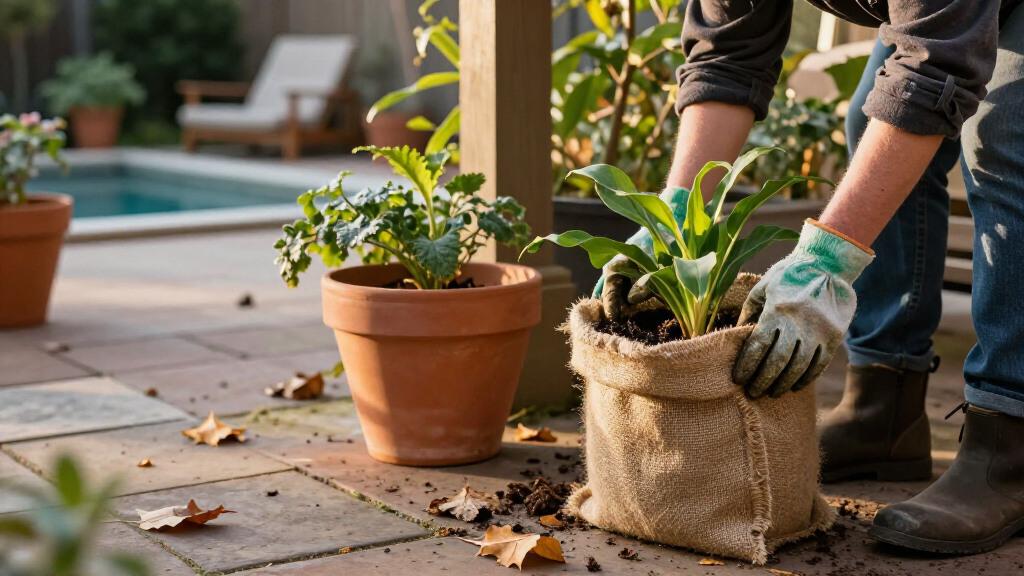
The third step is to insulate exposed pots and the compost surface. The report suggests wrapping containers in bubble wrap or hessian and adding mulch, such as bark chips, straw or shredded leaves. The gardener cautions that mulch should stay clear of plant stems and crowns and that water must still drain freely. Insulation can help protect roots, but it does not make a frost-sensitive plant frost-hardy.
Cold Reaches Roots in Pots
Container plants face a different cold exposure than plants growing in the ground: soil does not surround and insulate their roots on every side. The report says that makes roots in pots more exposed to cold. For gardeners, the practical consequence is that a plant with hardy foliage may still need attention at its container and root zone as temperatures fall.
The recommendations also address different levels of risk. Moving a tender plant to an appropriate protected location is the main measure for plants that cannot tolerate freezing conditions. Grouping and insulating outdoor pots can help reduce exposure for plants that can stay outside, but the report does not present these steps as a guarantee against frost damage. It says the right approach depends on the plant, container and local winter conditions.
Terracotta pots may also crack when moisture freezes and expands, according to the report. Protecting the pot can therefore help address both root exposure and the risk to the container itself. Drainage remains part of that preparation: cold, wet compost can put additional stress on roots, and standing water can undermine the protection a sheltered position is meant to provide.
garden plant frost protection covers
As an affiliate, we earn on qualifying purchases.
As an affiliate, we earn on qualifying purchases.
Preparing Pots Before Frost
The report frames its advice as preparation to do before frost arrives, rather than a response to an overnight freeze. Its quoted gardener says tender plants should be moved while conditions are still mild enough for them to adjust. It recommends considering a plant’s light needs when choosing an indoor or sheltered location, rather than assuming that any garage or indoor corner will suit every plant.
The source also mentions erratic temperatures and an unpredictable winter, attributing that expectation to ongoing El Niño conditions. It does not provide a publication date, a local forecast or specific climate data to support a regional assessment. Readers should treat the seasonal framing as the report’s account, not as a precise prediction for their own area.
The three steps are presented as a short checklist: sort plants by cold tolerance, arrange the outdoor pots that can remain outside, then protect exposed containers and compost. The report’s practical tips include pest checks before moving plants indoors, keeping drainage open and choosing mulch suited to the plant. It does not specify a single temperature threshold for action, since frost tolerance varies by plant.
Local Frost Risks Vary
The report does not identify the plants in a specific garden, give local frost dates or set temperature thresholds for moving containers. It also provides no measured results showing how much a particular wrap or mulch changes root temperatures or improves survival. Its recommendations are general advice attributed to one professional gardener, not a guarantee that plants will survive winter.
Gardeners still need to check the cold tolerance and light requirements of their own plants and consider the conditions where they live. The source does not say how long each plant should remain indoors, how to manage watering in every sheltered location or which plants can safely stay outside through a hard freeze.
Check Plants and Forecasts
The report’s recommended next step is to assess the containers before the first frost: identify tender plants, select suitable sheltered locations, and prepare materials for wrapping pots or adding mulch. Gardeners can then monitor local forecasts and adjust the timing to their own area, rather than relying on the report’s general reference to an unpredictable winter.
After moving plants, check them for pests and watch whether their new location provides suitable light. For pots left outdoors, keep drainage clear and make sure mulch does not touch stems or crowns. The source does not provide a later update or report on plant survival, so the results of these measures remain dependent on local weather and individual plant needs.
Key Questions
What are the three recommended steps before the first frost?
The report recommends moving tender plants to a suitable protected location, grouping outdoor pots in a sheltered spot and insulating exposed containers and compost with wrapping and mulch.
Should tender container plants stay outside if their pots are wrapped?
Not necessarily. The report says insulation can help protect roots but cannot make a frost-sensitive plant frost-hardy. It recommends moving plants that cannot tolerate freezing temperatures to a sheltered or frost-free place.
What can be used to insulate an outdoor pot?
The report suggests wrapping the outside of a pot with bubble wrap or hessian. It also recommends mulch such as bark chips, straw, shredded leaves or well-rotted garden compost, while keeping drainage clear and mulch away from stems and crowns.
Why group outdoor pots together?
The gardener quoted in the report says grouping pots in a sheltered place can reduce exposure to cold winds and make them easier to protect. He advises grouping plants with similar needs and avoiding blocked drainage or standing water.
Source: rss
Halloween Picks
halloween
As an affiliate, we earn on qualifying purchases.