The small habit that keeps your water gear ready is to rinse it thoroughly with fresh water after every use, removing salt, dirt, and debris. Shake off excess water and let it air dry in a well-ventilated area to prevent mold and odors. Regular inspections and repairs are also key to maintaining gear condition. Keep everything organized and maintain parts to guarantee safety. Stay tuned to discover more tips to keep your gear in top shape.

Get pool and patio gear delivered free with Prime
- Fast, free delivery on millions of items
- Prime Video, Amazon Music and more included
- Member-only deals all year
Key Takeaways
- Rinse your gear thoroughly with fresh water after each use to prevent salt and dirt buildup.
- Shake off excess water and air dry gear in a well-ventilated area promptly.
- Regularly inspect for damages or wear to catch issues early before use.
- Store gear in a dedicated, organized space away from sunlight and extreme temperatures.
- Replace worn parts immediately to ensure safety and optimal performance.
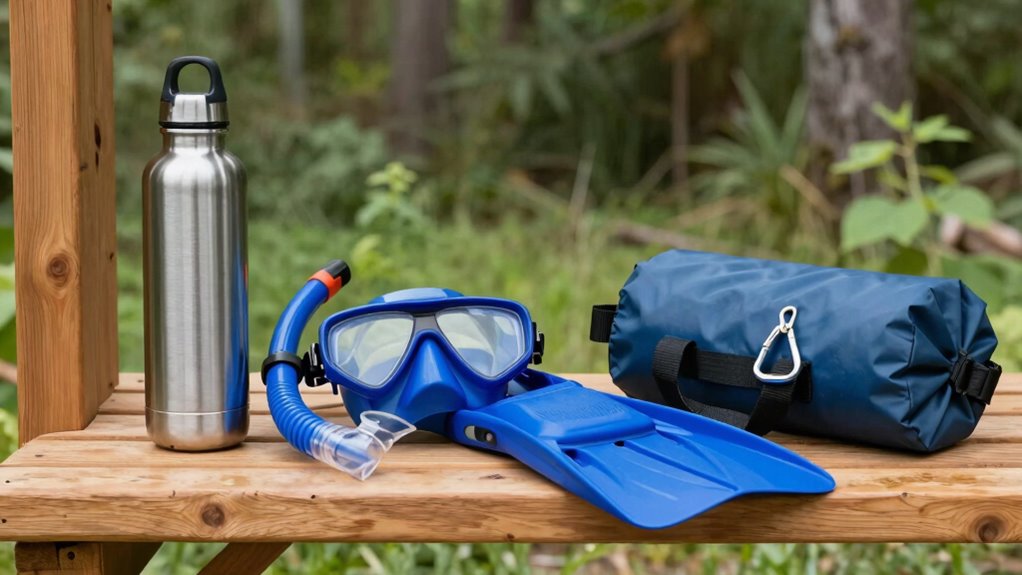
Keeping your water gear ready doesn’t have to be a chore; a simple daily habit can make all the difference. In fact, staying prepared for your water adventures often comes down to consistent, manageable routines. One small habit that can greatly improve your experience is dedicating a few minutes each day to gear maintenance. This isn’t about spending hours on cleaning or repairs—it’s about simple, effective hydrate tips that keep your equipment in top shape, guaranteeing it’s always ready when you need it.
Start by rinsing your gear with fresh water after each use. Whether it’s a hydration pack, snorkel, or diving mask, removing salt, dirt, and debris prevents buildup that can compromise performance or cause damage over time. This quick rinse is a crucial hydrate tip because it keeps your gear hygienic and extends its lifespan. It’s easy to do, and it only takes a minute or two. After rinsing, gently shake off excess water and let your gear air dry in a well-ventilated area. Proper drying prevents mold and unpleasant odors, which can make even the best gear unusable if ignored. Incorporating a gear maintenance routine into your schedule can help you stay on top of small repairs and inspections, ensuring your equipment remains in peak condition. Regularly inspecting your gear is especially important because preventive maintenance can significantly extend the life of your equipment and enhance safety. Additionally, understanding how equipment care impacts overall gear longevity can motivate consistent upkeep.
Rinse gear with fresh water after each use to keep it hygienic and extend its lifespan.
A good habit is also to keep a checklist of common issues to look for during your inspections. This way, you can quickly identify problems before they escalate, saving you time and money. Moreover, paying attention to the material quality of your gear can help you choose products that are more durable and easier to maintain over time. To further support your gear longevity, learning about proper storage practices can help prevent unnecessary damage caused by environmental factors.
Incorporate a routine of inspecting your gear regularly. Look for cracks, tears, or worn-out seals that could lead to leaks or failures during your water activities. Check the valves, straps, and hinges to ensure they’re functioning smoothly. These small checks are part of good gear maintenance and can help you catch issues early—saving you money and frustration in the long run. Keep your gear organized in a dedicated space so it’s easy to access and store. Proper storage keeps it away from dust, sunlight, and extreme temperatures, all of which can deteriorate materials.
Another hydrate tip is to keep your gear clean and dry when not in use. For example, store your hydration bladder with the residual water removed, and occasionally disinfect it with a mixture of water and mild vinegar or specialized gear cleaner. This prevents mold and bacteria growth, which can be harmful and unpleasant. Additionally, maintaining your gear’s parts—like replacing worn mouthpieces or worn straps—ensures safety and comfort during use.
As an affiliate, we earn on qualifying purchases.
Frequently Asked Questions
How Often Should I Check My Water Gear for Maintenance?
You should check your water gear for maintenance at least once a month to guarantee gear durability and safety. Regular inspections help catch wear and tear early, preventing failures during use. Follow a consistent maintenance schedule, looking for cracks, mold, or damage. Clean and dry your gear thoroughly after each use, and store it properly. Staying proactive keeps your gear reliable, safe, and ready whenever you need it.
What Is the Best Way to Dry Water Gear After Use?
You should air dry your water gear thoroughly, ensuring it’s free of moisture before storage. Use gear drying techniques like hanging it in a well-ventilated area and avoiding direct sunlight to prevent damage. Follow water gear storage tips by folding or hanging your gear properly, keeping it dry and accessible. This process preserves your gear’s integrity, extends its lifespan, and keeps it ready for your next adventure.
Can I Store Water Gear in a Humid Environment?
Storing your water gear in a humid environment isn’t ideal because humidity concerns can lead to mold and unpleasant odors. To prevent this, use proper storage solutions like a dry, ventilated area or a breathable bag. Always guarantee your gear is completely dry before storing, and consider adding silica gel packs to absorb excess moisture. This keeps your gear fresh, ready, and in good condition for your next adventure.
How Do I Prevent Mold and Mildew on My Water Gear?
To prevent mold and mildew growth on your water gear, make certain it’s thoroughly dry before storing. Mold prevention relies on good ventilation, so store your gear in a cool, dry place with airflow. Regularly inspect and clean your gear with a mild solution to remove any potential mold spores. Avoid humid environments, and always let your gear dry completely after each use to keep it fresh and mold-free.
Are There Specific Cleaning Products Recommended for Water Gear?
They say “prevention is better than cure,” and that’s true for your water gear. Use gentle cleaning solutions or gear disinfectants designed specifically for water equipment. Avoid harsh chemicals that can damage materials. Look for products labeled safe for your gear type, and always rinse thoroughly. Regular cleaning with recommended solutions keeps mold and mildew at bay, ensuring your gear stays fresh, safe, and ready for your next adventure.
Conclusion
By adopting this simple habit, you’ll never have to scramble when you’re ready for your water adventures. Sure, it might feel like just a small step, but over time, it guarantees your gear is always prepared, saving you stress and hassle. Don’t let excuses hold you back—this tiny change can make your water outings more enjoyable and worry-free. Trust me, your future self will thank you for making this easy, yet powerful, habit a part of your routine.
Evergreen bestsellers Picks
bestsellers
As an affiliate, we earn on qualifying purchases.