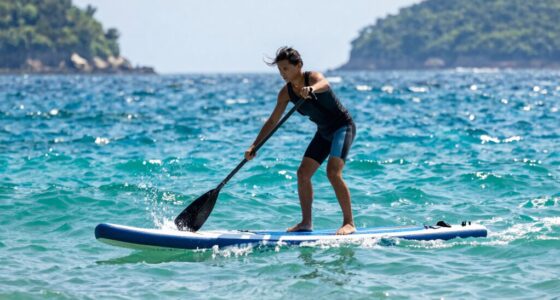

To save your shoulders later, focus on your paddling posture by keeping your back straight, shoulders relaxed, and core engaged. Adjust your paddle length and grip so you’re not overreaching or straining your shoulders. Use proper technique with smooth, efficient strokes to minimize tension. Consistently stretch and strengthen your shoulder muscles to prevent injuries. Paying attention to these fundamentals now will pay off long-term, and you’ll discover more tips to protect your shoulders as you continue.

Get pool and patio gear delivered free — and shop member deals
- Fast, free delivery on millions of items
- Access to Prime Big Deal Days deals on October 6–7
- Prime Video, Amazon Music and more included
Key Takeaways
- Maintain a straight back and relaxed shoulders to promote proper paddling mechanics and reduce shoulder strain.
- Adjust paddle length and grip to prevent overreaching and awkward positions that can cause shoulder fatigue.
- Focus on consistent, efficient stroke technique with correct body mechanics to minimize unnecessary shoulder tension.
- Incorporate shoulder strengthening and flexibility exercises to support joint health and prevent injury.
- Regularly review and refine your paddling posture to ensure even effort distribution and avoid shoulder overuse.
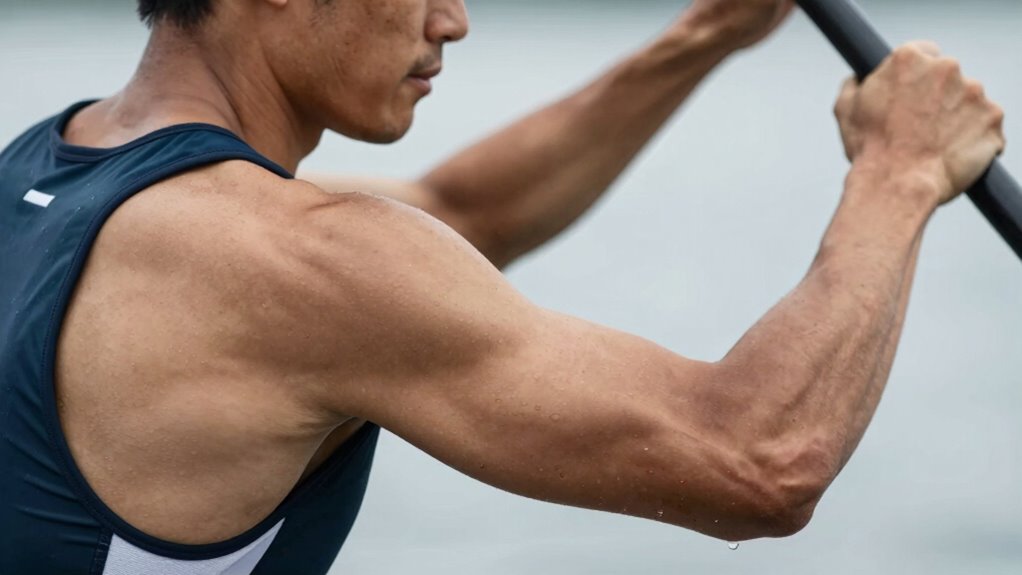
Improving your paddling form can substantially boost your efficiency and reduce the risk of injury on the water. One of the most vital aspects of achieving this is paying close attention to your paddling posture. When you sit with a straight back, relaxed shoulders, and engaged core, you create a stable, balanced position that minimizes strain on your shoulders. Poor paddling posture often leads to overusing shoulder muscles, which can cause fatigue and long-term damage. Instead, aim to keep your shoulders down and back, avoiding the tendency to hunch or lift them during each stroke. This simple adjustment helps distribute effort more evenly across your body, preventing unnecessary shoulder stress.
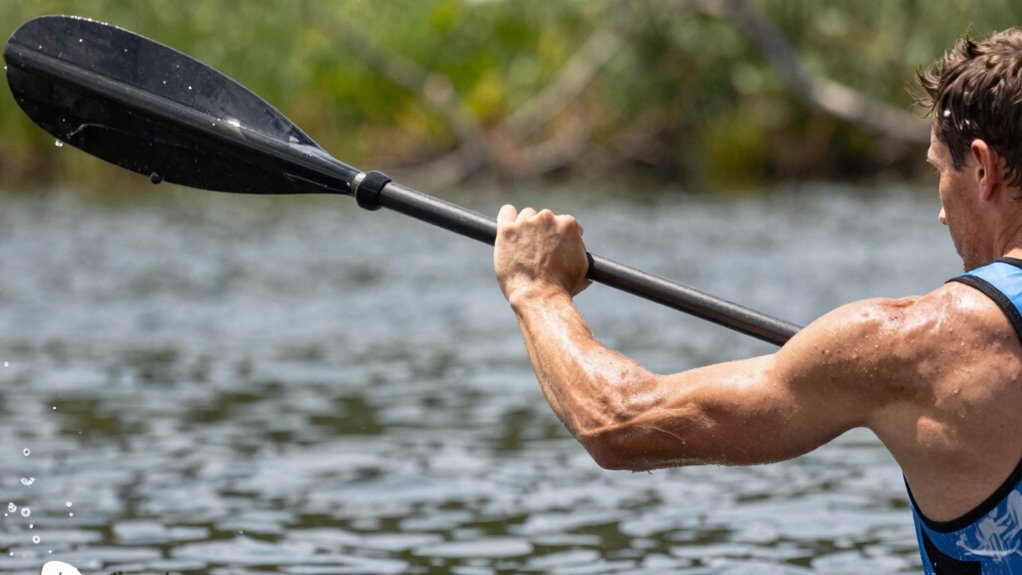
Alongside focusing on paddling posture, making proper equipment adjustments can greatly influence your comfort and injury prevention. An improperly adjusted paddle length or grip can force you into awkward positions, increasing shoulder strain. Make sure your paddle is the right length for your height; a paddle that’s too long or too short can cause overreaching or excessive bending, both of which put undue stress on your shoulders. Similarly, grip your paddle lightly but firmly, avoiding a death grip that tightens your shoulders and arms. Adjusting your paddle shaft angle, if possible, can also help maintain a natural paddling motion and reduce shoulder fatigue. These equipment tweaks may seem minor, but they have a notable impact on your paddling efficiency and shoulder health. Additionally, paying attention to paddle positioning can help you optimize your stroke and minimize shoulder discomfort. Developing a consistent paddling technique that emphasizes efficient movement patterns will further protect your shoulders from strain. Recognizing the importance of proper paddling biomechanics can also guide you in refining your technique for better shoulder safety. Moreover, being aware of your body mechanics during each stroke ensures you avoid unnecessary tension and promotes longevity in your paddling routine. Incorporating regular stretching and exercises designed to strengthen your shoulder muscles can also play a crucial role in injury prevention and maintaining flexibility.
As an affiliate, we earn on qualifying purchases.
Frequently Asked Questions
How Often Should I Practice the Paddling Form Fix?
You should practice the paddling form fix daily or at least every other day, especially when focusing on improving your paddling techniques. Consistent practice helps ingrain proper movements and prevents shoulder strain. Use equipment adjustments to support good form, like correct paddle length and grip. Short, focused sessions are more effective than infrequent, lengthy ones, so stay committed to daily practice to see faster progress and protect your shoulders long-term.
Can This Fix Improve Overall Paddling Speed?
Yes, this fix can improve your overall paddling speed by increasing paddling efficiency and reducing fatigue. When you correct your paddling form, you use your muscles more effectively, allowing for faster strokes with less effort. Additionally, it helps prevent shoulder injuries by promoting proper movement. As a result, you’ll paddle more smoothly and confidently, ultimately boosting your speed and endurance on the water.
Is the Form Fix Suitable for Beginners?
Yes, this paddling form fix is suitable for beginners. It simplifies your paddle technique and helps you develop good habits early on. By focusing on proper form, you’ll avoid common mistakes and build your skills faster. Use these beginner tips to stay mindful of your posture and stroke. Practicing this fix consistently will make paddling more efficient and enjoyable, setting a strong foundation for future improvement.
What Signs Indicate Incorrect Paddling Form?
Signs of incorrect paddling form include poor paddle posture, like slouching or overextending your arms, and inefficient technique adjustments that cause inconsistency. You might notice shoulder pain, fatigue, or reduced power in your strokes. Pay attention to your body’s signals, and regularly check your paddle technique to confirm proper alignment. Making small technique adjustments can help prevent injury and improve your efficiency on the water.
Does This Fix Require Professional Coaching?
This fix doesn’t necessarily require professional coaching, but having an instructor review your paddling techniques can guarantee proper execution. Focus on maintaining good equipment maintenance and proper paddling techniques to avoid shoulder issues. If you’re unsure about your form, consider a quick session with a coach or using video analysis tools. These steps help you perfect the fix safely, preventing future injuries and improving your overall paddling efficiency.
Conclusion
By mastering this mindful motion, you’ll minimize muscle missteps and maximize your paddling prowess. Remember, refined form fosters fluidity, freeing your shoulders from strain and stress. With consistent correction, you’ll cultivate comfort and confidence on the water, turning every stroke into a smooth, seamless symphony. So, stay steady, stay focused, and let your newfound finesse flow freely. Your future on the water will be flawless, fueled by focus, form, and fearless fun.
Fall Picks
fall essentials
As an affiliate, we earn on qualifying purchases.