
Accessible features like adaptive surfboards, wheelchair-friendly pathways, and supportive infrastructure make beach trips possible for more people. These upgrades guarantee safety, comfort, and independence for visitors with mobility challenges. Smooth, durable pathways let you easily reach the shoreline, while specialized surfboards and assistance enable participation in ocean activities. This inclusive environment encourages everyone to enjoy the beach’s beauty and connection to nature. Keep exploring to uncover how these features transform the beach experience for all.
Key Takeaways
- Adaptive surfboards enable surfers with disabilities to participate safely and confidently in ocean activities.
- Wheelchair-friendly beach access pathways prevent wheelchairs from becoming stuck in sand, ensuring easy shoreline transition.
- Supportive infrastructure and trained staff provide safe transfer areas and assistance during beach activities.
- Inclusive amenities like accessible restrooms and showers enhance comfort and full-day enjoyment for all visitors.
- These features collectively remove barriers, fostering social interaction and inclusive outdoor recreation experiences.
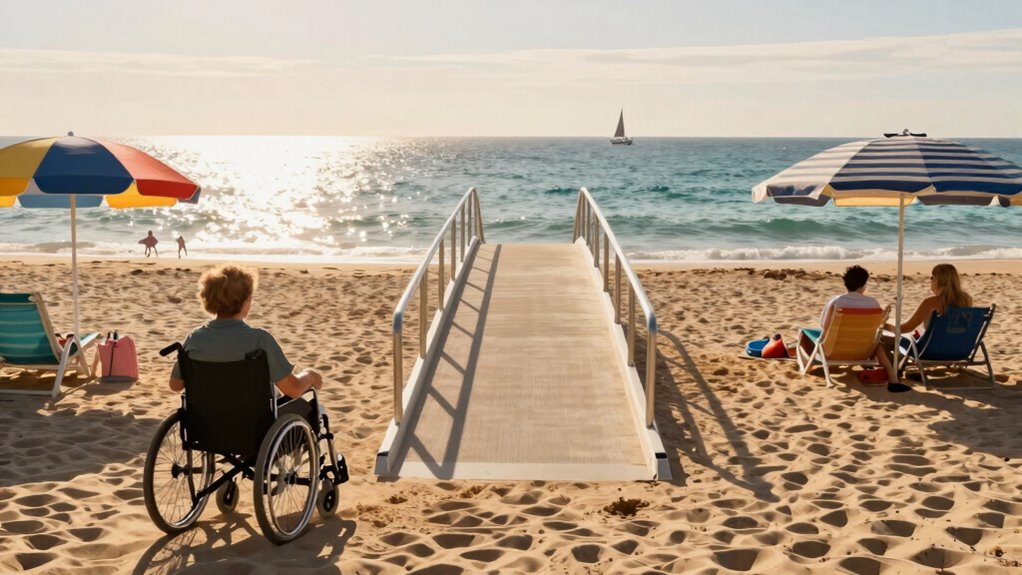
Planning a beach trip can be exciting, but accessibility concerns often pose challenges for visitors with mobility issues. Fortunately, recent innovations have made it easier for everyone to enjoy the sun, sand, and surf. One of the most significant advancements is the introduction of adaptive surfboards, designed specifically to accommodate surfers with disabilities. These boards often feature stability enhancements and specialized attachments that allow individuals with limited mobility to participate in surfing safely and confidently. Whether you’re an experienced surfer or trying it for the first time, adaptive surfboards open up new possibilities for engaging with the ocean, fostering independence and a sense of adventure.
Adaptive surfboards with stability features enable safe, confident surfing for individuals with mobility challenges.
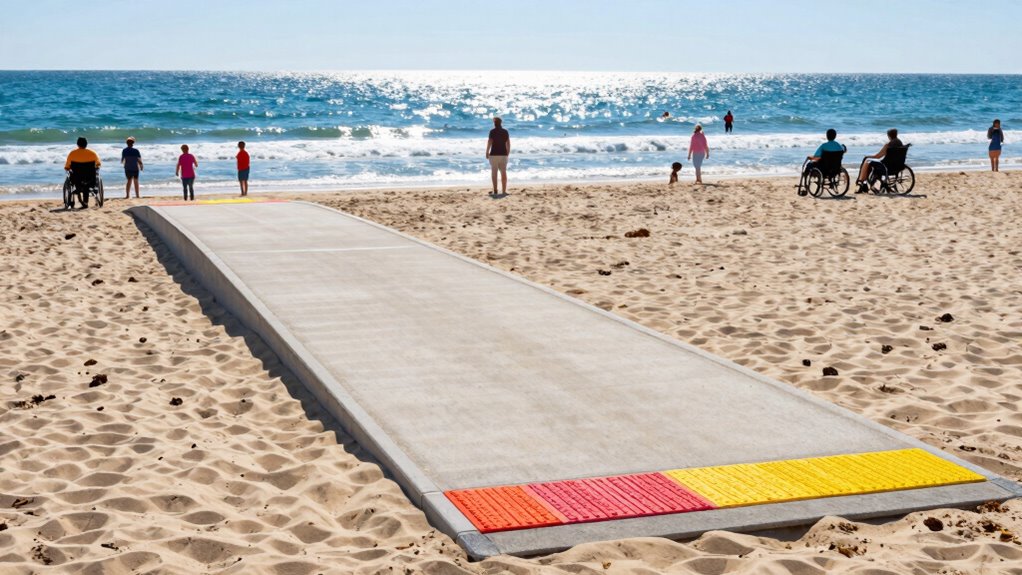
Alongside adaptive surfboards, many beaches now boast wheelchair-friendly paths that make it easier to access the shoreline. These paths are crafted from smooth, durable materials that prevent wheelchairs from getting stuck in the sand, providing a seamless changeover from the parking lot or promenade directly onto the beach. With these accessible routes, you no longer have to worry about steering through uneven terrain or feeling excluded from the fun. Instead, you can focus on enjoying the scenery, taking in the salty air, or simply relaxing with friends and family without logistical worries. Innovative navigation solutions have further supported these efforts by providing real-time assistance and guidance on the sand, making the experience even more accessible and enjoyable.
The combination of adaptive surfboards and wheelchair-friendly paths markedly enhances the overall beach experience for visitors with mobility challenges. When you arrive, you’ll find designated areas where you can easily transfer from your wheelchair to a specialized surfboard, often with the help of trained staff or supportive equipment. This setup guarantees safety and comfort, making surfing more approachable than ever before. These features also promote a more inclusive atmosphere, encouraging social interaction and shared experiences with others who might have previously felt left out. Additionally, the inclusive design of these facilities demonstrates a commitment to accessibility and community engagement. Incorporating accessible infrastructure, such as ramps and adaptive equipment, further supports these initiatives and ensures that everyone can participate fully.
Moreover, the accessibility features aren’t limited to just surfing. Many beaches incorporate accessible restrooms, showers, and picnic areas to cater to diverse needs. This holistic approach means you can plan an entire day at the beach without missing out on essential amenities. Accessible amenities are crucial for ensuring a comfortable and enjoyable experience for all visitors, regardless of physical ability. The focus on inclusive design demonstrates a commitment to making outdoor recreation available to everyone, regardless of physical ability.
In essence, adaptive surfboards paired with wheelchair-friendly paths are transforming beach trips into truly inclusive experiences. They remove barriers that once seemed insurmountable, allowing you to connect with nature and enjoy the ocean’s beauty fully. Whether surfing, strolling along the coast, or simply soaking up the sun, these features guarantee that more people can share in the joy of a day at the beach without limitations.
adaptive surfboards for disabled
As an affiliate, we earn on qualifying purchases.
As an affiliate, we earn on qualifying purchases.
Frequently Asked Questions
How Do I Find Beaches With Accessible Features Nearby?
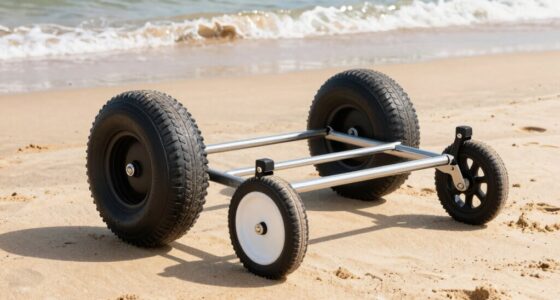
To find beaches with accessible features nearby, start by searching online for local beaches that offer beach wheelchair rentals and have accessible parking options. Check official park or beach websites for detailed accessibility information, or call their visitor centers. You can also use apps or reviews from visitors who highlight accessible amenities. Planning ahead guarantees you’ll find the right facilities, making your beach trip enjoyable and stress-free.
Are There Costs Associated With Accessible Beach Equipment Rentals?
About 60% of accessible beach equipment rentals have associated costs. Yes, there are costs involved, but they often vary based on location and equipment type. You’ll want to compare costs through a simple cost comparison to find the best deal. Rental procedures typically involve reservations or on-site rentals, and fees can include a deposit and daily rates. Always check ahead to understand what’s included and any additional charges.
Can the Accessibility Features Be Used by Children?
Yes, many accessibility features are designed to be child-friendly, allowing children to enjoy inclusive play. Child-friendly ramps provide safe, easy access for kids, making the beach experience more enjoyable for families. These features are built with safety and ease in mind, encouraging children to explore and play freely. By incorporating inclusive play elements and ramps, beaches become more welcoming for children of all abilities, ensuring everyone can have fun.
What Should I Bring to Ensure a Comfortable Beach Experience?
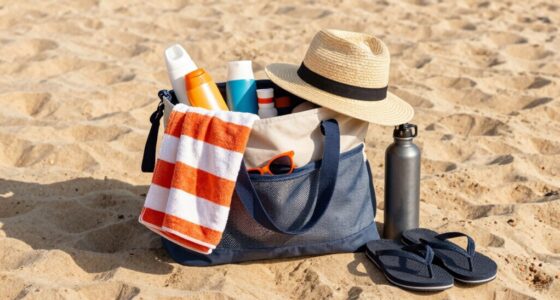
To guarantee a comfortable beach experience, you should bring essential beach gear like a wide-brimmed hat, sunglasses, and a lightweight blanket or chair. Pack comfort accessories such as a portable fan, waterproof phone case, and cooling towels. Don’t forget sunscreen, plenty of water, and snacks. These items will keep you protected, relaxed, and ready to enjoy your time at the beach comfortably.
Are There Accessible Restrooms and Changing Facilities at the Beach?
Yes, many beaches now offer accessible restrooms and changing facilities, enhancing your beach safety and comfort. These features are designed to accommodate everyone, including those with mobility challenges. When visiting, be mindful of the environmental impact by avoiding waste and staying on designated paths. This helps preserve the beach’s natural beauty and guarantees that everyone can enjoy the environment safely and responsibly.
Conclusion
With accessible beach features, everyone can get a taste of sun and surf, turning dreams into reality. These innovations break down barriers, proving that with a little effort, nothing is out of reach. By embracing these improvements, you’re not just crossing off a bucket list item—you’re opening the door to countless joyful moments. Remember, a journey of a thousand miles begins with a single step, and every step toward accessibility brings us closer to inclusive fun for all.