Your feeling of security on a floating platform depends heavily on choosing the right anchoring system for seabed conditions like rocky, sandy, or muddy terrain. The type of anchor and mooring setup you select affects how well the platform resists environmental forces like currents, waves, and wind. Properly designed anchoring systems guarantee stability and safety, minimizing movement. Keep exploring to discover how different conditions influence your options for a more secure, reliable platform.
Key Takeaways
- The type of anchor suited to seabed conditions ensures stable attachment and reduces platform movement.
- Proper mooring system design, such as catenary or taut-leg, influences platform stability and perceived security.
- Adequate anchoring force and holding capacity prevent excessive shifting caused by currents, waves, or wind.
- Correct installation and maintenance of anchors and moorings ensure ongoing platform stability.
- Matching anchoring methods to environmental factors enhances overall safety and platform confidence.
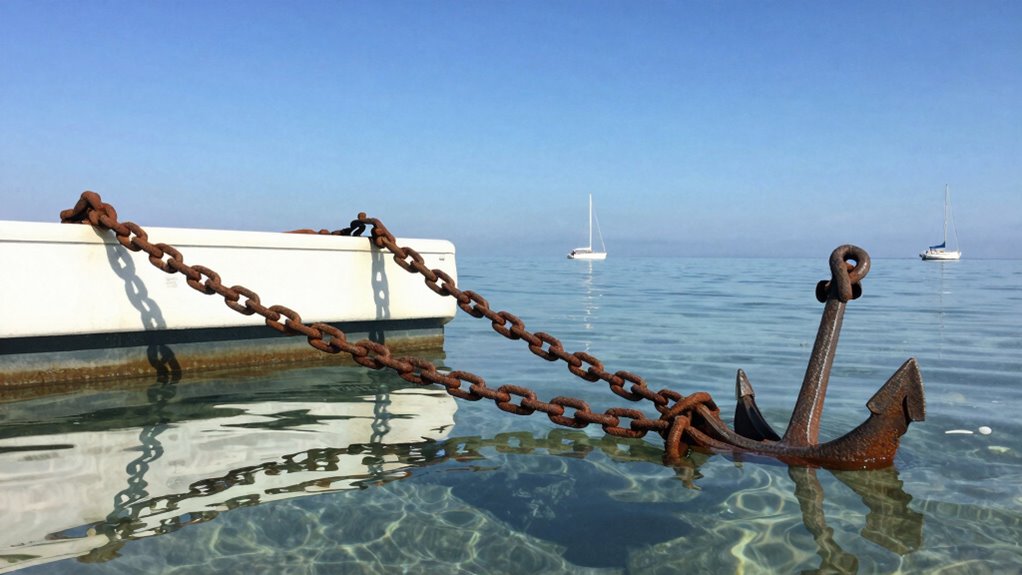
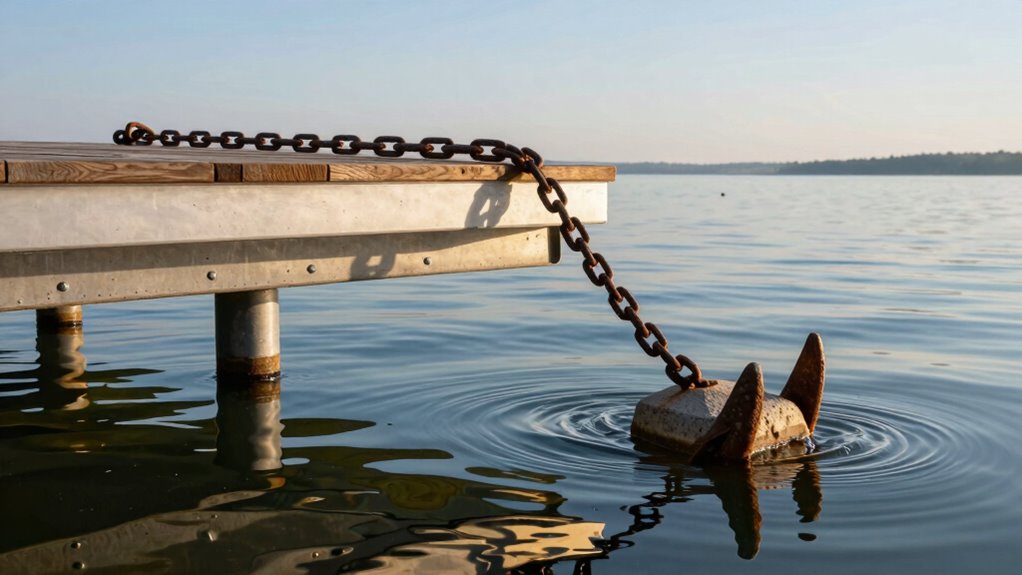
Have you ever wondered how floating platforms stay securely in place despite challenging water conditions? The key lies in choosing the right anchoring method, which primarily involves underwater anchoring and mooring systems. These systems are designed to keep your platform stable, preventing unwanted drifting caused by currents, waves, or wind. When selecting an anchoring approach, understanding how underwater anchoring works is essential. It involves deploying anchors beneath the water’s surface that grip the seabed, providing a solid hold. The type of seabed—whether rocky, sandy, or muddy—determines the kind of anchor you’ll need, such as driven piles, gravity anchors, or screw anchors. Proper underwater anchoring ensures that your floating platform can withstand environmental forces without shifting excessively, maintaining safety and operational stability.
Underwater anchoring secures floating platforms by gripping seabed types like rocky, sandy, or muddy surfaces for stability.
Mooring systems play a significant role in complementing underwater anchors. They connect your platform to the anchors via chains, cables, or tethers, forming a secure linkage that accommodates movement without losing stability. The design of a mooring system influences how well your platform responds to water dynamics. For example, catenary moorings use slack in the lines to absorb wave energy, while taut-leg moorings offer more rigidity and precise positioning. You need to weigh factors like water depth, wave height, and current strength when selecting a mooring system. The goal is to strike a balance between flexibility and firmness, so your floating platform remains steady yet adaptable to changing conditions. Additionally, understanding seabed conditions is crucial for choosing the appropriate anchoring method, which can vary significantly based on the underwater terrain and sediment type. Considering environmental factors can also help optimize your anchoring strategy, ensuring durability and minimal ecological impact. Incorporating advanced anchoring techniques can further enhance stability in complex seabed environments.
Choosing the right underwater anchoring and mooring system isn’t just about stability; it also impacts safety, maintenance, and operational longevity. A poorly chosen or installed system can lead to excessive movement, damage to the platform, or even environmental hazards. That’s why it’s important to work with experts who understand seabed conditions and engineering principles. They’ll help you determine the ideal anchor type, mooring configuration, and materials suited for your specific location. Remember, the better your anchoring choice, the more confident you’ll feel knowing your floating platform is securely anchored, regardless of water conditions.
Ultimately, your decision on anchoring methods sets the foundation for your platform’s stability and safety. Whether it’s underwater anchoring techniques or comprehensive mooring systems, selecting the right combination ensures your floating platform stays put, providing peace of mind and operational efficiency. It’s not just about holding position; it’s about creating a reliable, resilient platform that can withstand nature’s challenges while functioning smoothly for years to come.

Anchor Buoy and Retrieval Ring, 12" Inflatable Vinyl Boat Buoy Balls
- Supports up to 35 lbs anchors: Helps retrieve anchors up to 35 lbs
- Bright, durable vinyl construction: High visibility neon orange buoy
- Complete set with accessories: Includes buoy, line, clip, ring, pump, and tools
As an affiliate, we earn on qualifying purchases.
As an affiliate, we earn on qualifying purchases.
Frequently Asked Questions
How Does Water Depth Affect Anchoring Effectiveness?
Water depth impacts anchoring effectiveness because deeper water requires more robust anchoring techniques to guarantee platform stability. As depth increases, you need longer, stronger anchors and secure lines to resist movement from currents or waves. Shallow water makes anchoring easier, but in deep water, you must select appropriate anchors and techniques to maintain stability. Properly adapting your anchoring methods ensures your floating platform remains secure regardless of water depth.
What Materials Are Best for Floating Platform Anchors?
Think of your anchor as the backbone of your floating haven—sturdy and reliable. Steel and galvanized chain are your best bets, offering unmatched durability and strength. Rope and chain combinations with proper anchor design guarantee flexibility and secure hold in varying conditions. Choose materials that resist corrosion and wear, because a resilient anchor keeps your platform steady, turning it into a steadfast refuge amid shifting waters.
Can Anchoring Be Adjusted After Installation?
Yes, you can adjust anchoring after installation. Depending on your anchor types and installation techniques, you’ll want to carefully loosen or tighten the anchors to improve stability. For example, if your anchors are movable or adjustable, you can reposition or modify tension to enhance security. Always follow manufacturer guidelines and inspect regularly to guarantee your floating platform remains secure and stable, making adjustments as needed for maximum safety.
How Do Currents Influence Anchoring Stability?
Currents act like invisible hands, constantly tugging at your floating platform. They considerably influence anchoring stability by causing sediment shift and stirring up marine life, which can undermine the anchor’s grip. Strong, unpredictable currents may loosen or drag anchors, reducing security. To guarantee stability, you need to take into account local current patterns, and possibly reinforce anchors or adjust their placement to withstand ongoing sediment movement and marine activity.
What Maintenance Is Required for Underwater Anchors?
You need to regularly inspect your underwater anchors for signs of corrosion and damage to guarantee stability. Perform routine anchor inspections, checking for corrosion prevention measures like protective coatings or sacrificial anodes. Maintain the anchors by cleaning off marine growth and addressing any corrosion promptly. Proper maintenance extends the lifespan of your anchors and keeps your floating platform secure, especially in changing conditions.
Conclusion
Choosing the right anchor can make or break your floating platform’s stability, so don’t underestimate its importance. With the right setup, you’ll feel as steady as a rock, even amid shifting tides. Remember, it’s not just about securing the platform but about creating a space where you can relax and enjoy the serenity of your surroundings. So, pick wisely—your peace of mind depends on it. After all, even in an age of steam, a good anchor remains timeless.