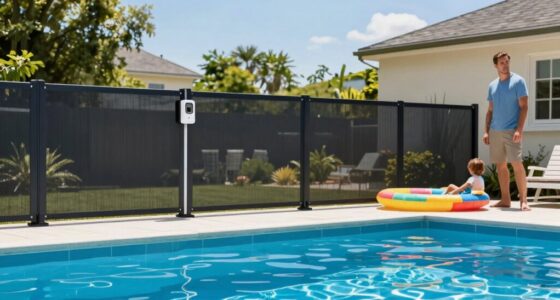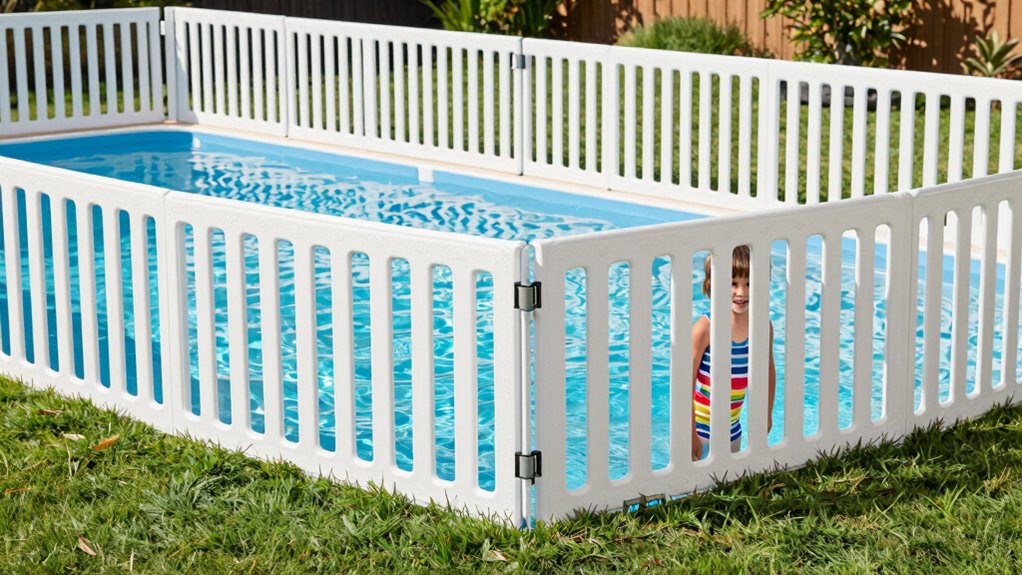

To keep kids safe, place your removable pool fence securely around the entire pool area, guaranteeing no gaps or misaligned sections that kids could crawl through. Install the fence at the proper height—around 4 feet—with no more than 2 feet of clearance from the pool edge, and make sure all hinges and latches are secure. Use bright visual cues and double-check installation regularly. To find out how to ensure your fence stays safe and effective, keep going.

Get pool and patio gear delivered free — and shop member deals
- Fast, free delivery on millions of items
- Access to Prime Big Deal Days deals on October 6–7
- Prime Video, Amazon Music and more included
Key Takeaways
- Ensure removable fences are installed with no gaps, misalignments, or openings that children can exploit.
- Place fences at least 2 feet away from the pool edge to prevent slipping underneath.
- Secure all access points, including gates, with child-proof latches and warning signs for added safety.
- Incorporate highly visible cues like bright tape or reflective markers on fence tops and posts.
- Regularly inspect and maintain removable sections to prevent damage, loosening, or gaps that compromise safety.
removable pool fence with child-proof latch
As an affiliate, we earn on qualifying purchases.
As an affiliate, we earn on qualifying purchases.
Why Proper Placement of Removable Pool Fences Is Critical for Child Safety
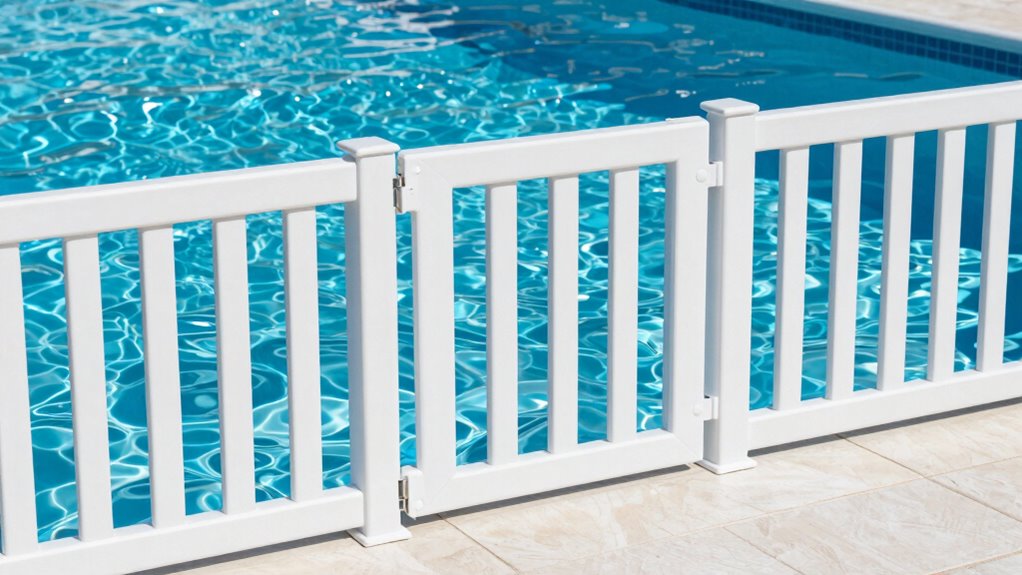
Proper placement of removable pool fences is essential because even a small gap or misaligned barrier can allow a child to access the pool area unsupervised. You need to guarantee the fence is securely installed, with no openings that a curious or determined child could slip through. Child supervision is critical, but a well-placed fence acts as a vital safety layer, preventing accidental falls or unauthorized access. While fence aesthetics matter, they shouldn’t compromise safety; choose a design that blends well with your yard without creating gaps or weak points. Regularly check the fence’s positioning and stability, especially after removal or reinstallation. Proper placement minimizes risks, giving you peace of mind knowing that your child’s safety is prioritized, even when the fence isn’t in use.
What Local Regulations and Building Codes Say About Pool Fence Placement

You need to understand your local code requirements before installing a pool fence, as they can vary widely. Permits and inspections might be necessary to guarantee your fence meets safety standards. Checking these regulations early helps you avoid fines and ensures your fence is legally compliant.
Local Code Requirements
Local code requirements play a crucial role in determining where and how you can install a removable pool fence. These regulations ensure safety while considering your landscape design and existing structures. Many codes specify minimum fence height, gate locking mechanisms, and clearance from the pool. Some areas may require a pool cover as an additional safety measure. To help you understand common rules, here’s a quick overview:
| Requirement | Details | Notes |
|---|---|---|
| Fence Height | Minimum 4 feet | Varies by location |
| Gate Latching | Self-closing, self-latching | Keep gate secure |
| Clearance from Pool | 2 feet minimum | Prevent tripping hazards |
| Landscape Design | Avoid obstructions | Ensure visibility |
| Pool Cover | May be mandatory | Additional safety layer |
Always check your local codes before installation.
Permits and Inspections
Before installing a pool fence, make sure to obtain the necessary permits and schedule inspections to guarantee compliance with local regulations. These permits ensure your fence meets safety standards while also considering fence aesthetics, which can influence approval. Inspections confirm the fence’s proper installation and adherence to placement rules, helping you avoid costly violations or modifications later. Be aware that permit costs and inspection fees vary by area, so factor these into your overall cost considerations. Following the correct procedures not only promotes safety but also streamlines the process, preventing delays. Remember, neglecting permits or inspections can lead to fines or the need to remove or modify your fence, undermining both safety and your investment.
Where to Place Your Removable Pool Fence for Maximum Safety
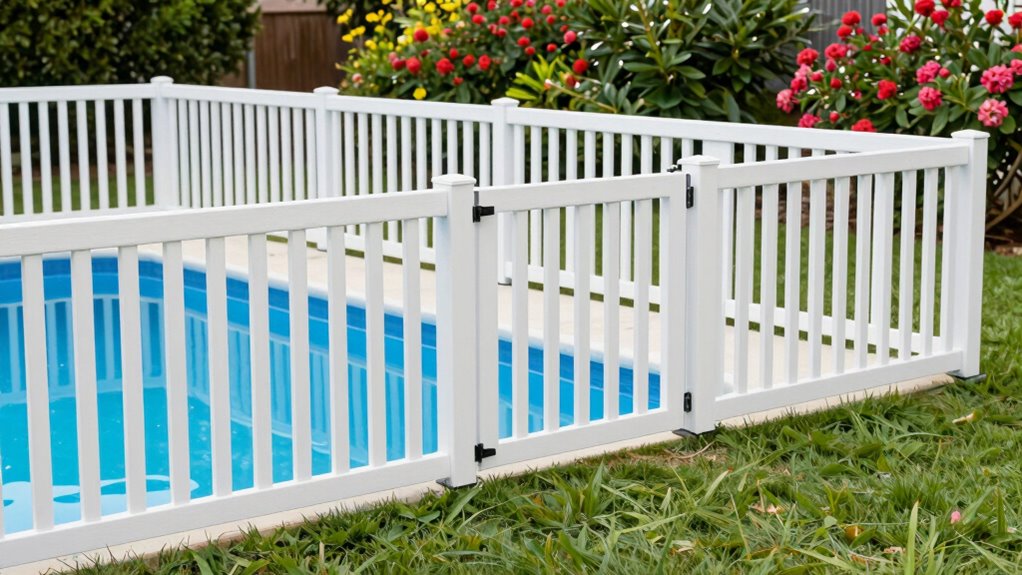
To guarantee maximum safety, place your removable pool fence around the entire perimeter of the pool, focusing on areas where children or pets are most likely to access. Make sure the fence encloses all entry points, including gates, to prevent accidental falls. Consider how garden landscaping can influence fence placement; for instance, low hedges or decorative plants shouldn’t create gaps that kids can slip through. Additionally, evaluate your pool cover options, as a reliable cover adds an extra layer of safety when the fence isn’t in use. Place the fence so that it doesn’t obstruct views or access to essential safety features. Proper placement ensures the fence acts as an effective barrier, reducing the risk of unsupervised access and keeping everyone safer.
How to Install Your Fence at the Right Height and Clearance

Installing your removable pool fence at the correct height and clearance is essential for safety and effectiveness. Verify your fence height meets local safety standards, typically around 4 feet, to prevent children from climbing over. Proper clearance spacing between the bottom of the fence and the pool deck is equally important; it should be tight enough to prevent a child from slipping underneath but allow enough room for easy installation and removal. Measure carefully to maintain consistent fence height around the entire pool. Use a level to confirm the fence remains straight and at the correct height throughout installation. Adequate clearance spacing ensures the fence functions properly, reducing gaps that could allow access and keeping your pool area safe.
Common Placement Mistakes That Can Compromise Safety
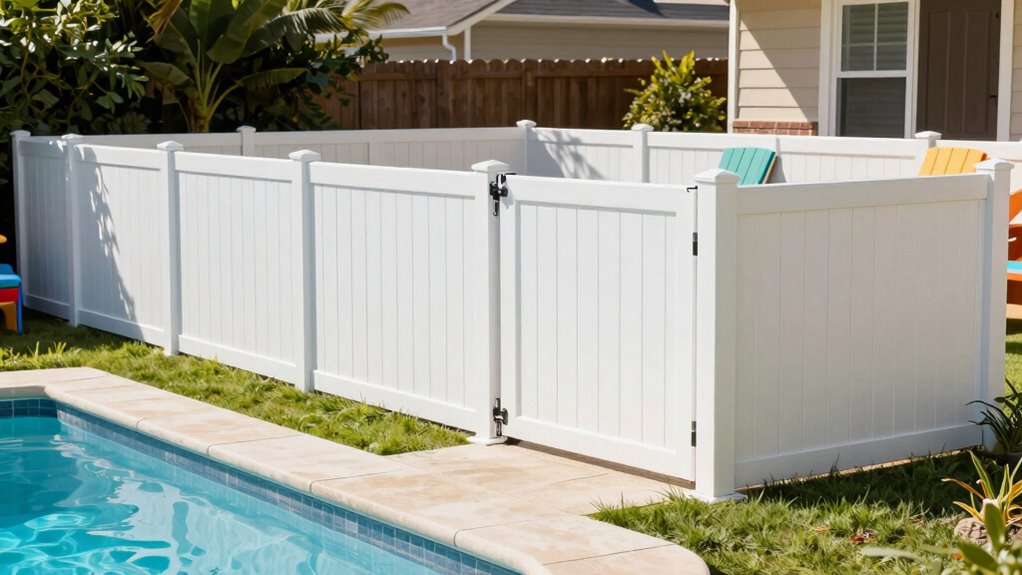
One common mistake that can compromise your pool fence’s safety is placing it too close to the pool edge or unevenly around the perimeter. This can create gaps or unstable sections, making it easier for children to bypass or climb over. Proper placement guarantees child supervision remains effective and fencing materials stay secure. Avoid misaligned sections or inconsistent heights that weaken the barrier. Here’s a quick overview:
| Mistake | Impact | Solution |
|---|---|---|
| Placing fence too close | Easy for kids to bypass or climb | Maintain minimum clearance from pool edge |
| Uneven fencing | Creates gaps or stability issues | Ensure even, level installation |
| Using inappropriate fencing materials | Reduced durability or safety | Choose sturdy, weather-resistant materials |
| Overlooking gate safety | Gate can be a weak point | Install self-closing, self-latching gates |
| Ignoring child supervision | Overreliance on fence alone | Always supervise children around the pool |
Tips to Position Your Fence to Prevent Climbing and Bypassing

Positioning your fence correctly is essential to prevent children from climbing over or bypassing it. To enhance climbing prevention, ensure the fence height is at least four feet and that there are no footholds or objects nearby to aid climbing. Use bypass deterrents, such as extending the fence downward into the ground or attaching a self-closing, self-latching gate with a lock out of children’s reach. Place the fence away from trees, furniture, or other structures that could serve as stepping stones. Regularly inspect the fence for loose panels or gaps and adjust its position as needed. Proper placement not only reduces the risk of climbing but also makes bypassing more difficult, creating a safer environment around your pool.
How to Secure Fence Anchors and Detachable Parts Safely
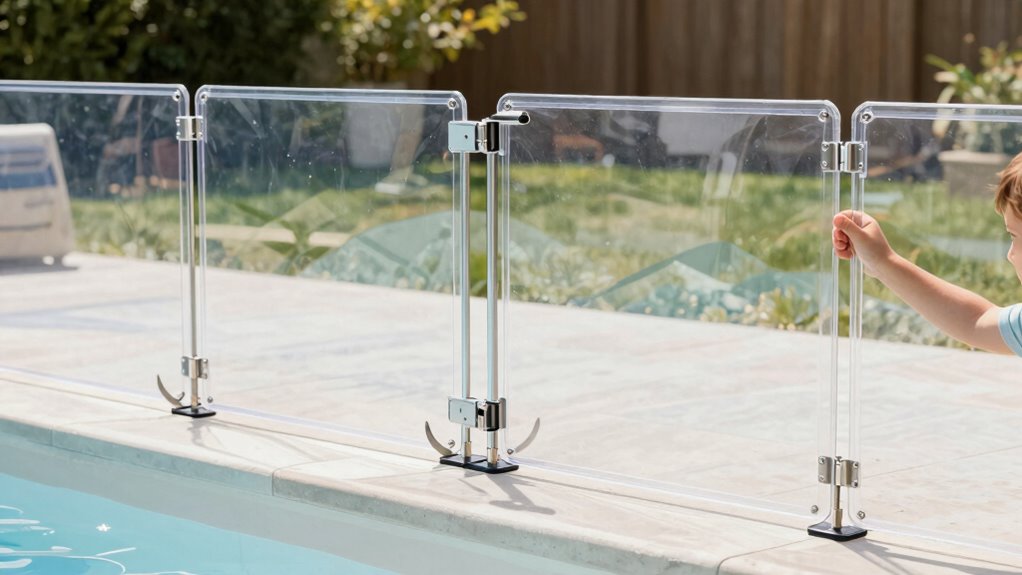
To guarantee your pool fence remains secure and safe, it’s essential to properly secure the anchors and detachable parts. Ensure anchor security by regularly checking that all anchors are firmly embedded and free of corrosion or damage. Tighten any loose bolts and replace worn or compromised components immediately. When handling detachable components, always follow manufacturer instructions for installation and removal. Make sure these parts latch securely and can’t be easily dislodged by children or weather. Store removable sections out of reach when not in use, and double-check that all connections are tight before leaving the area. Properly securing fence anchors and detachable parts minimizes risks and maintains the integrity of your safety barrier, giving you peace of mind that your pool area stays child-proof.
Using Visual Cues and Barriers to Enhance Pool Safety
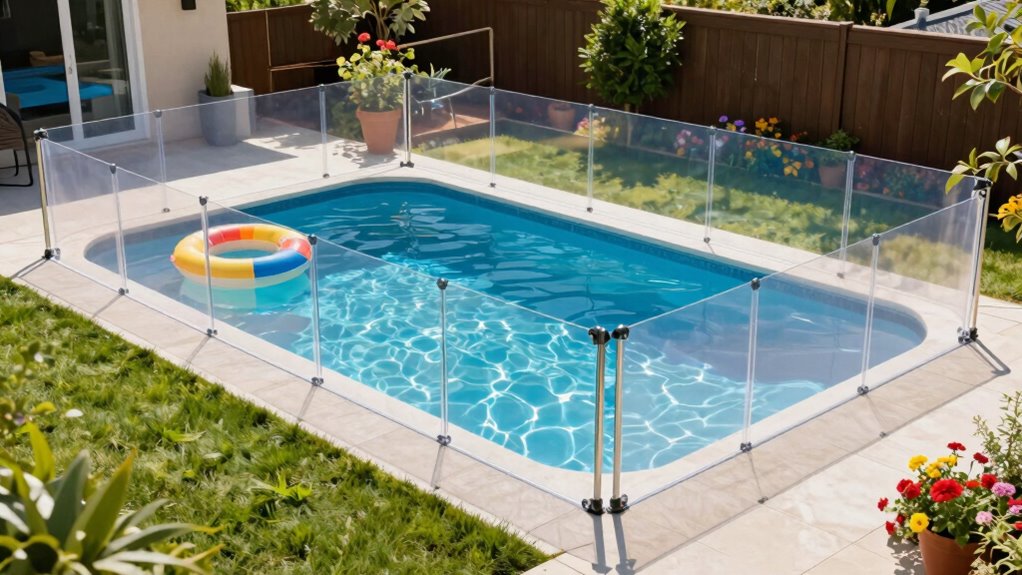
Securing fence anchors and removable parts is essential, but adding visual cues and barriers can considerably boost pool safety. Clear visual cues alert children and adults to pool boundaries, reducing accidental entries. Effective barrier design incorporates bright colors, contrasting patterns, or tactile elements that catch attention. Using visual cues such as warning signs, colorful tape, or reflective markers enhances awareness. To optimize safety, consider this barrier design table:
| Visual Cue | Placement | Purpose |
|---|---|---|
| Bright-colored tape | Along fence top or bottom | Increased visibility |
| Reflective markers | Fence posts or gates | Nighttime awareness |
| Warning signs | Entry points | Clearly indicate pool boundary |
These cues, combined with thoughtful barrier design, create a layered safety approach that helps prevent accidents.
Regularly Inspect and Adjust Your Fence for Ongoing Protection

Regular inspections are essential to maintaining your pool fence’s effectiveness over time. By conducting regular inspections, you can identify any damage, loose parts, or areas where the fence may no longer provide a secure barrier. Maintenance checks should be thorough, focusing on hinges, latches, and removable sections to ensure they function properly. If you notice any wear or malfunction, adjust or repair the fence immediately to prevent gaps or vulnerabilities. Staying vigilant helps keep your pool area safe for children. Remember, even minor issues can compromise safety, so routine maintenance checks are key to ongoing protection. Making regular inspections a habit ensures your fence continues to serve as a reliable safeguard for your loved ones.
Combining Removable Fences With Other Pool Safety Measures

While a removable fence provides a flexible barrier for your pool area, combining it with other safety measures creates a more all-encompassing protection system. Using pool cover options can prevent unsupervised access when the fence is removed, adding an extra layer of security. Safety net considerations, such as installing a safety net over the pool, can catch a child if they fall in, reducing injury risks.
| Safety Measure | Benefit |
|---|---|
| Pool Cover Options | Prevents access when fence is removed |
| Safety Nets | Catches falling children or debris |
| Proper Supervision | Ensures constant vigilance around the pool |
Together, these strategies create a thorough safety approach, giving you peace of mind when your fence isn’t in place.
Frequently Asked Questions
How Often Should I Inspect My Removable Pool Fence for Safety?
You should inspect your removable pool fence weekly to guarantee it remains secure and in good condition. Regular fence maintenance and safety inspections help identify loose or damaged parts that could compromise safety. Check for any gaps, rust, or wear that might allow a child to bypass the barrier. Staying vigilant with these routine inspections keeps your pool area safe and prevents accidents, giving you peace of mind during swimming season.
Can Removable Fences Be Used With Automatic Pool Covers?
Think of your pool setup like a finely-tuned orchestra; your removable fence and automatic cover need to harmonize. Yes, removable fences can be used with automatic pool covers, but fencing compatibility is key. Confirm your fencing design allows for proper installation without obstructing the cover’s function, and always check manufacturer guidelines. Combining these safety features creates a seamless barrier, protecting kids while maintaining ease of use.
Are There Specific Colors or Designs That Improve Fence Visibility?
You should choose removable pool fences with bright, high-contrast colors like yellow or orange to improve color visibility, making it easier to spot the fence quickly. Opt for simple, clear designs focused on safety, avoiding busy patterns that can cause confusion. A well-visible, thoughtfully designed fence enhances safety by alerting adults and children alike, reducing the risk of accidental falls or entry, and ensuring everyone stays aware of the pool’s boundaries.
What Are the Best Ways to Train Children to Respect Pool Boundaries?
You should prioritize child supervision and safety education to teach kids to respect pool boundaries. Consistently watch children when they’re near the pool, and set clear rules about not entering without permission. Use age-appropriate safety talks and reminders, reinforcing boundaries with positive reinforcement. Practice safety drills regularly, and make sure children understand the risks. These strategies create a strong foundation for respecting pool boundaries and staying safe around water.
How Do Weather Conditions Affect the Durability of Removable Pool Fences?
Imagine your fence as a shield against nature’s elements. Weather conditions can cause material degradation, weakening the fence over time. Harsh sun, heavy rain, or strong winds challenge its durability. To protect it, you should use weatherproofing techniques like applying sealants or choosing UV-resistant materials. Regular inspections guarantee your removable pool fence stays sturdy, providing safety and peace of mind despite changing weather patterns.
Conclusion
By following proper placement rules, you can turn your removable pool fence into a powerful safety tool. Think of it as your child’s invisible shield—when installed correctly, it truly keeps them safe. Some say fences are only part of the solution, but evidence shows that well-placed fences considerably reduce drowning risks. Trust your instincts, stay vigilant, and remember: a secure fence is your best chance to protect your little ones around the water.
Fall Picks
fall essentials
As an affiliate, we earn on qualifying purchases.