To quickly size your pool pump, use the shortcut formula: divide your pool’s volume by the desired turnover time (usually 8-12 hours). This gives you the necessary flow rate in gallons per minute (GPM). For example, if you have a 20,000-gallon pool and want an 8-hour turnover, your pump should handle about 42 GPM. If you want to learn how to fine-tune this for different pool types, continue exploring the key factors involved.
Key Takeaways
- Calculate pool volume and divide it by the desired turnover time (typically 8-12 hours) to find the required flow rate.
- Use the formula: Flow Rate = Pool Volume / Turnover Time (convert hours to minutes).
- Ensure the pump’s flow rate matches the calculated flow to optimize filtration and energy efficiency.
- Adjust for pool specifics like usage, lighting, or weather conditions to fine-tune pump size.
- Avoid oversizing or undersizing by focusing on matching the pump capacity closely to the calculated flow needs.
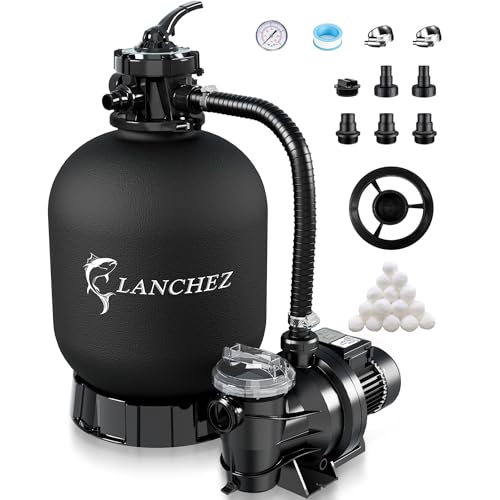
LANCHEZ Sand Filter with Pool Pump, Above Ground Pool Pump, 7-Way Valve Sand Filter Pump System, 18"
Customized Filtration: The 24-hour programmable timer schedules filtration cycles in advance, keeping your pool crystal-clean effortlessly, saving energy,…
As an affiliate, we earn on qualifying purchases.
As an affiliate, we earn on qualifying purchases.
Why Correct Pool Pump Sizing Is Key to Your Pool’s Health
Choosing the right pool pump size is essential because an undersized pump won’t circulate water efficiently, leading to poor water quality. Proper sizing improves pool maintenance by ensuring that contaminants and debris are filtered out effectively. When your pump is correctly sized, it runs smoothly and consistently, reducing wear and tear on equipment. This also enhances energy efficiency, as a properly sized pump uses less electricity by operating at ideal capacity. Overworking an oversized pump wastes energy, while an undersized one struggles to keep water clean. A well-chosen pump supports healthier water, minimizes chemical use, and extends equipment lifespan. In short, selecting the right size is a smart investment that saves you time, money, and headaches in maintaining a pristine, safe pool.

Aquastrong Variable Speed Pool Pump In/Above Pool Pump Energy Efficient High Flow Powerful Self Primming Swimming Pool Pumps with Filter Basket,Black
Powerful Performance: Our smart variable speed pool pump allows you to customize speeds from 1200 RPM(3566GPH) to 4000…
As an affiliate, we earn on qualifying purchases.
As an affiliate, we earn on qualifying purchases.
How to Calculate Your Pool’s Flow Rate and Turnover Needs
Understanding how to calculate your pool’s flow rate and turnover needs is essential for selecting the right pump size. Your flow rate determines how much water circulates per minute, impacting both filter maintenance and energy efficiency. To find this, consider your pool volume and desired turnover time. For example:
| Pool Volume (gallons) | Turnover Time (hours) |
|---|---|
| 20,000 | 8 |
| 30,000 | 6 |
| 50,000 | 8 |
Calculate flow rate:
Flow Rate = Pool Volume / Turnover Time (minutes)
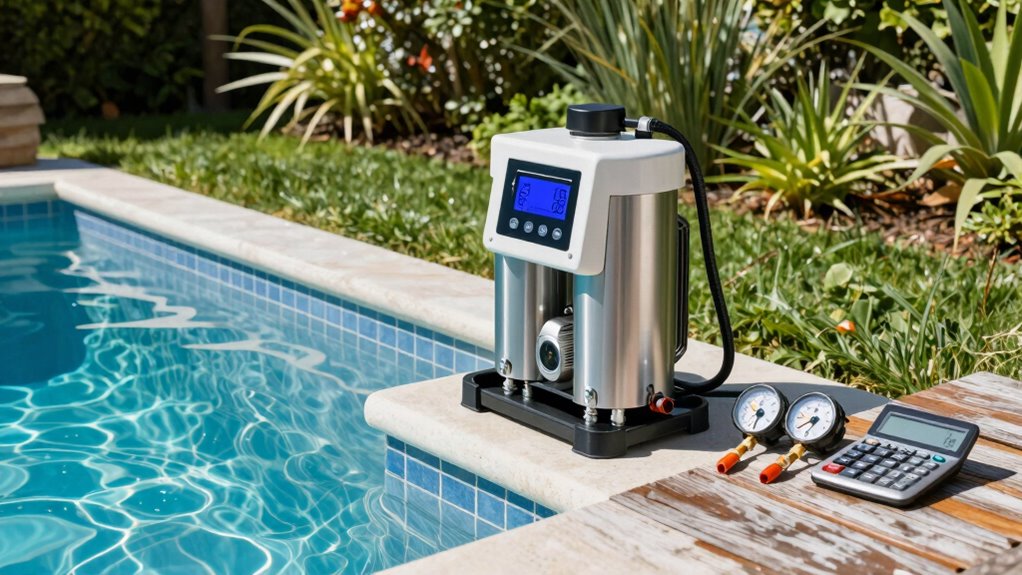
pool pump flow rate calculator
As an affiliate, we earn on qualifying purchases.
As an affiliate, we earn on qualifying purchases.
The Simple Formula Pool Pros Use to Size Your Pool Pump
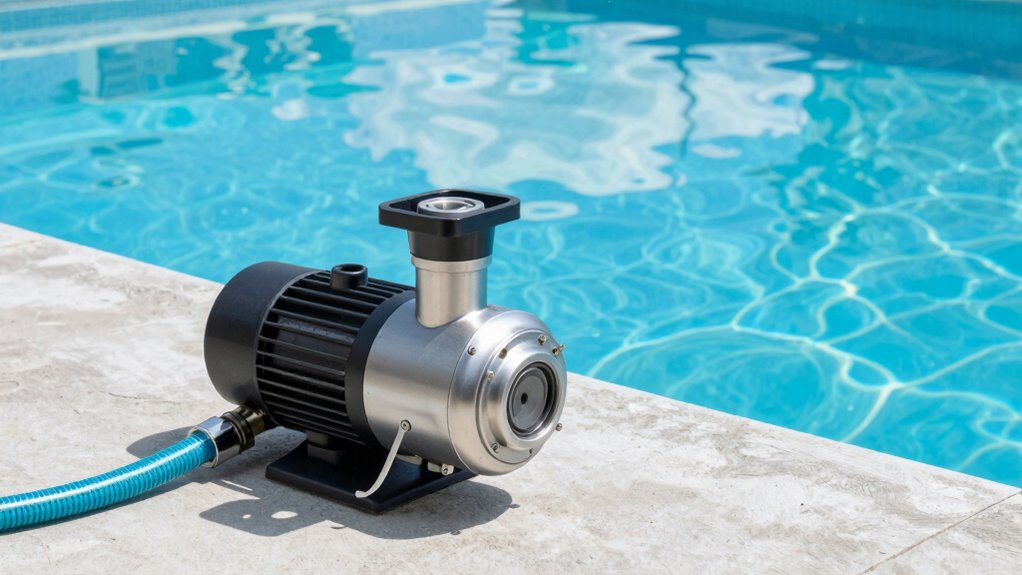
To size your pool pump correctly, understanding flow rate essentials is crucial. You need to calculate how much water your system moves in a given time to guarantee proper circulation. By applying a simple formula, you can determine the right pump size to meet your turnover time effectively.
Flow Rate Essentials
Getting the right flow rate is essential for efficient pool operation, and pool pros have a simple formula to determine it. Your pump’s efficiency depends on maintaining proper flow, ensuring it doesn’t work harder than necessary. To achieve this, consider your inlet filters—they must allow enough water to pass through without restricting flow. If filters are clogged or too small, your pump struggles, reducing efficiency and risking damage. The ideal flow rate balances turnover needs with pump capacity, preventing strain and optimizing energy use. Using this basic formula, you can quickly estimate the correct flow rate for your pool size and equipment, keeping your system running smoothly. Proper flow rate ensures clean water, pump longevity, and overall pool performance.
Calculating Turnover Time
Ever wonder how long it takes to circulate all the water in your pool? Calculating turnover time is key. It tells you how many hours it takes for your pump to filter the entire volume of water once. To determine this, divide your pool’s volume by the flow rate of your pump. Keep in mind, proper skimmer design helps maintain consistent circulation, which influences turnover time. If your chlorine levels are low, longer turnover times might be necessary to ensure effective sanitation. Conversely, if your skimmer efficiently pulls water, your pump can operate at ideal flow, reducing turnover time. Knowing this time helps you balance filtration, sanitation, and energy use, ensuring your pool stays clean, safe, and inviting.
LANCHEZ Sand Filter with Pool Pump, Above Ground Pool Pump, 7-Way Valve Sand Filter Pump System, 18"
Customized Filtration: The 24-hour programmable timer schedules filtration cycles in advance, keeping your pool crystal-clean effortlessly, saving energy,…
As an affiliate, we earn on qualifying purchases.
As an affiliate, we earn on qualifying purchases.
Converting Pool Volume and Turnover Into Pump Size Recommendations

To choose the right pump size, you need to know your pool’s volume and the desired turnover rate. Calculating your pool’s volume helps determine how much water needs to be circulated, while the turnover rate shows how quickly it should be filtered. Once you have these figures, you can match them to a pump that will keep your pool clean and efficient.
Calculating Pool Volume
How do you determine the right pump size for your pool? First, you need to accurately calculate your pool’s volume. Imagine filling a container, where each size corresponds to your pool’s shape and dimensions. Here’s a simplified view:
| Shape | Example Volume (gallons) |
|---|---|
| Rectangular | Length x Width x Depth |
| Circular | π × Radius² × Depth |
| Kidney | Approximate with shape |
| Oval | Average dimensions |
Knowing your pool’s volume helps set the proper turnover rate, supporting skimmer maintenance and maintaining good pool chemical balance. Accurate volume calculation guarantees your pump is neither too weak nor too powerful, optimizing circulation and clarity.
Determining Turnover Rate
Once you’ve calculated your pool’s volume, the next step is to determine the appropriate turnover rate. Turnover rate indicates how many times the entire pool volume is circulated through the filter each day. For ideal filtration efficiency, most pools aim for a turnover every 8 to 12 hours. This helps keep water clean and clear while preventing pump noise from becoming disruptive. To find the right pump size, divide your pool volume by the desired turnover hours, adjusting for your filter’s efficiency. Keep in mind that a pump with too high a flow rate may cause excessive noise and reduce filtration effectiveness, while too low a rate may lead to poor water quality. Balancing turnover rate with filtration efficiency ensures your pool stays clean and operates quietly.
Common Mistakes to Avoid When Sizing Your Pool Pump
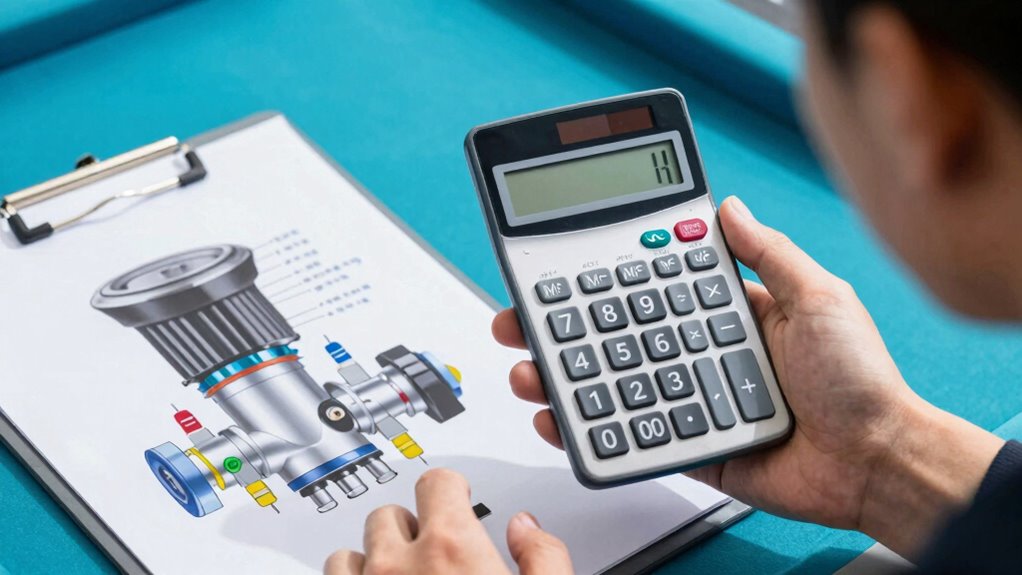
Choosing the right pool pump size is vital for efficient operation and cost savings, but many overlook common mistakes that can lead to problems down the line. One major mistake is selecting a pump that’s too large, which reduces pump efficiency and wastes energy. Conversely, choosing a pump that’s too small won’t properly circulate water, affecting water quality and increasing strain on the system. Failing to consider your pool’s actual size, turnover rate, or plumbing restrictions can also cause issues. Additionally, neglecting to compare energy consumption and efficiency ratings can lead to higher operating costs. Avoid these pitfalls by carefully evaluating your pool’s needs and sticking to proven sizing methods. Properly sized pumps optimize efficiency, save energy, and extend the lifespan of your equipment.
Practical Tips for Choosing the Right Pool Pump
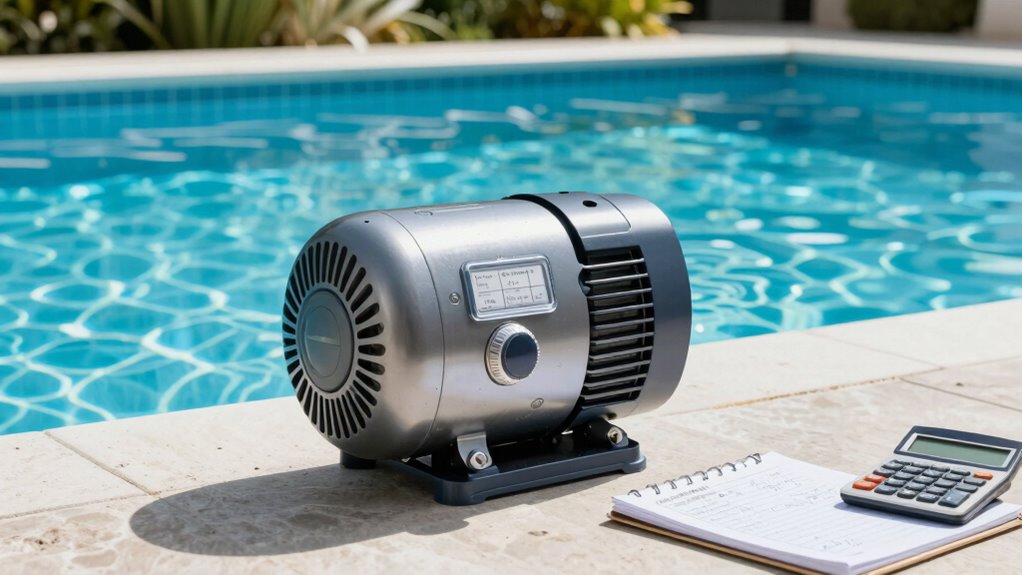
Selecting the right pool pump requires careful consideration of your pool’s size, usage, and plumbing setup. Focus on energy efficiency to save on long-term costs and reduce your environmental impact. Look for pumps with high-efficiency motors and variable-speed options—they use less power and adapt to your needs. Noise reduction is also essential for comfort, especially if your pool is near your home or living space. Choose a pump designed with sound-dampening features or quieter operation modes. Proper sizing ensures ideal circulation without excessive noise or energy waste. Don’t overlook the importance of matching the pump’s flow rate to your pool’s requirements. By prioritizing energy efficiency and noise control, you’ll enjoy a more sustainable, quiet, and cost-effective swimming experience.
How to Adjust Pump Sizing for Different Pool Types and Conditions

Adjusting pump sizing for different pool types and conditions is essential to guarantee ideal circulation and efficiency. For example, if your pool uses solar heating, you’ll need a pump that maintains steady flow without overworking the system. Similarly, pool lighting setups require proper flow rates to prevent issues like algae build-up or poor filtration. Consider this table for guidance:
| Pool Type | Conditions | Pump Adjustment |
|---|---|---|
| Solar-heated pools | Cold weather, low sun | Slightly larger pump needed |
| Night swimming | Limited daylight | Maintain steady flow |
| Lighted pools | High lighting demand | Ensure sufficient flow |
| Standard pools | Normal conditions | Use shortcut formula for sizing |
| Large commercial | Heavy usage | Increase capacity accordingly |
Proper adjustment guarantees your pool runs smoothly, saving energy and extending equipment life.
Frequently Asked Questions
Can I Upgrade My Pool Pump Later if Needed?
Yes, you can upgrade your pool pump later if needed. When doing so, make certain the new pump fits your pool’s size and filtration needs, which helps maintain proper pool maintenance and filtration. Upgrading might improve energy efficiency or circulation, but double-check compatibility with your existing system. Consult a professional to select the right pump, ensuring your pool stays clean, clear, and well-maintained.
How Often Should I Re-Evaluate My Pool Pump Size?
Think of re-evaluating your pool pump size like tuning a musical instrument—you need to do it regularly to keep everything sounding perfect. You should check your pump every season or if you notice changes in water flow or energy bills. During pump maintenance, make sure your pool’s chemical balance stays steady, so your pump isn’t overworking or underperforming. Regular assessments keep your pool running smoothly and your water crystal clear.
Does Pool Shape Affect Pump Sizing Requirements?
Yes, your pool shape affects pump sizing requirements. An irregular or complex shape can increase the volume and make circulation more challenging, meaning you’ll need a stronger or more efficient pump. Round pools typically need less power, while freeform or kidney-shaped pools may require adjustments to guarantee proper filtration and flow. Always consider your pool’s shape when selecting a pump to ensure ideal performance and water quality.
Are Energy-Efficient Pumps Suitable for All Pool Sizes?
Think of energy-efficient pumps as versatile tools in your pool arsenal—they’re generally suitable for all pool sizes. These pumps harness energy-efficient technology, making them cost-effective and eco-friendly. However, consider your pool size carefully; larger pools may require higher flow rates, so you might need a more powerful model. For smaller pools, energy-efficient pumps provide plenty of power without wasting energy, ensuring your backyard oasis stays vibrant without draining your wallet.
What Signs Indicate My Pump Is Undersized or Oversized?
If your pump is noisy or needs frequent maintenance, it might be undersized or oversized. An undersized pump strains, making loud noises and requiring more repairs, while an oversized one may cause excessive flow, leading to noise and unnecessary wear. You’ll notice inconsistent water circulation or increased energy bills. To fix this, check the flow rate and pressure, and consider consulting a professional for proper sizing.
Conclusion
Think of your pool as a delicate dance, where the pump is the steady rhythm guiding every move. Choosing the right size keeps this dance flowing smoothly, preventing chaos or stagnation. With the simple formula in your toolkit, you’re the choreographer, ensuring each beat is just right. When you match your pump size to your pool’s needs, you create a harmonious oasis—where clarity, health, and enjoyment swirl together like a well-orchestrated symphony.