Many new cordless pool owners believe myths like batteries never need replacement or last forever, but batteries typically last 300 to 500 charge cycles and degrade over time. Shorter runtimes or longer charging times don’t always mean a problem—they can be normal wear or environmental factors. Proper maintenance and understanding your robot’s battery needs help maximize performance. Stick with us to explore common battery truths and tips to keep your pool cleaner running smoothly.

Get pool and patio gear delivered free with Prime
- Fast, free delivery on millions of items
- Prime Video, Amazon Music and more included
- Member-only deals all year
Key Takeaways
- Many believe batteries last forever, but they typically need replacement after 300-500 charging cycles.
- Some assume longer charging times mean a faulty battery, but they may simply reflect battery capacity or model design.
- New owners often think battery degradation is sudden, when it actually occurs gradually over repeated cycles.
- There’s a myth that fully discharging batteries improves lifespan; in reality, it can damage the battery.
- Some believe batteries can be recycled at any local facility, but proper disposal requires following manufacturer and environmental guidelines.
cordless pool robot replacement batteries
As an affiliate, we earn on qualifying purchases.
As an affiliate, we earn on qualifying purchases.
What Are Cordless Pool Robots and How Do They Work?
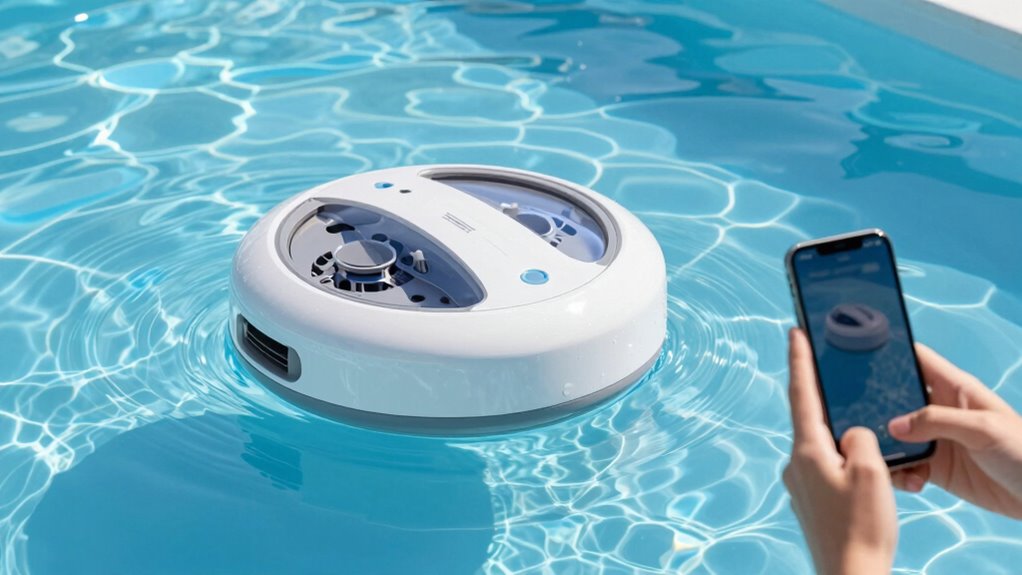
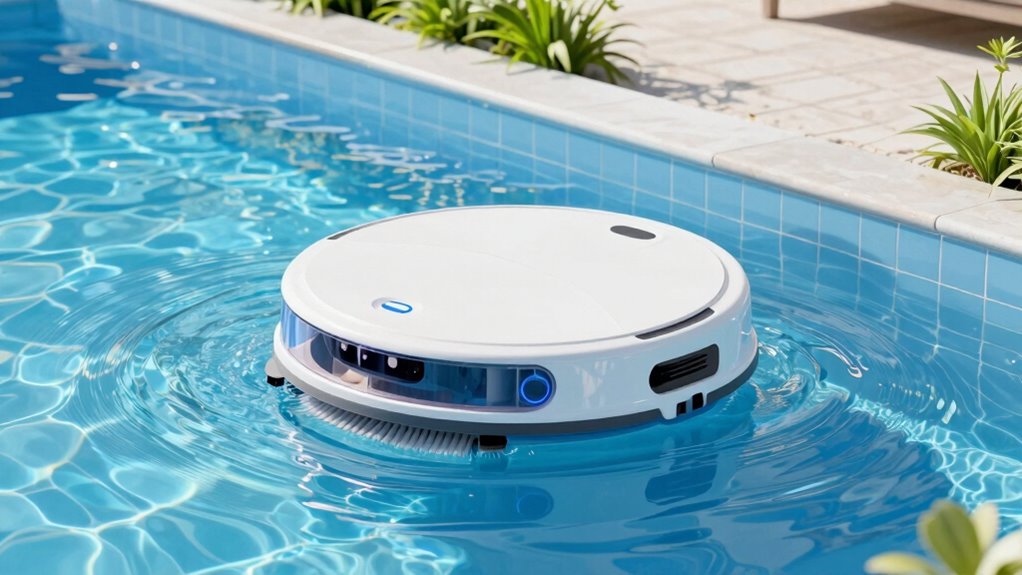
Ever wondered how modern pool cleaning becomes so effortless? Cordless pool robots are revolutionizing the way you maintain your pool. These devices operate without cords, relying on rechargeable batteries to power their cleaning cycles. Thanks to advancements in battery safety, you don’t need to worry about overheating or short circuits—these robots are built with safety in mind. Their waterproof design ensures they’re fully protected against water exposure, allowing you to submerge them without concern. Once activated, they navigate your pool independently, scrubbing surfaces and vacuuming debris efficiently. All you need to do is start the robot, and it takes care of the rest. With user-friendly features and reliable technology, cordless pool robots make pool maintenance more convenient than ever.
How Long Do Battery Lifespans Usually Last?
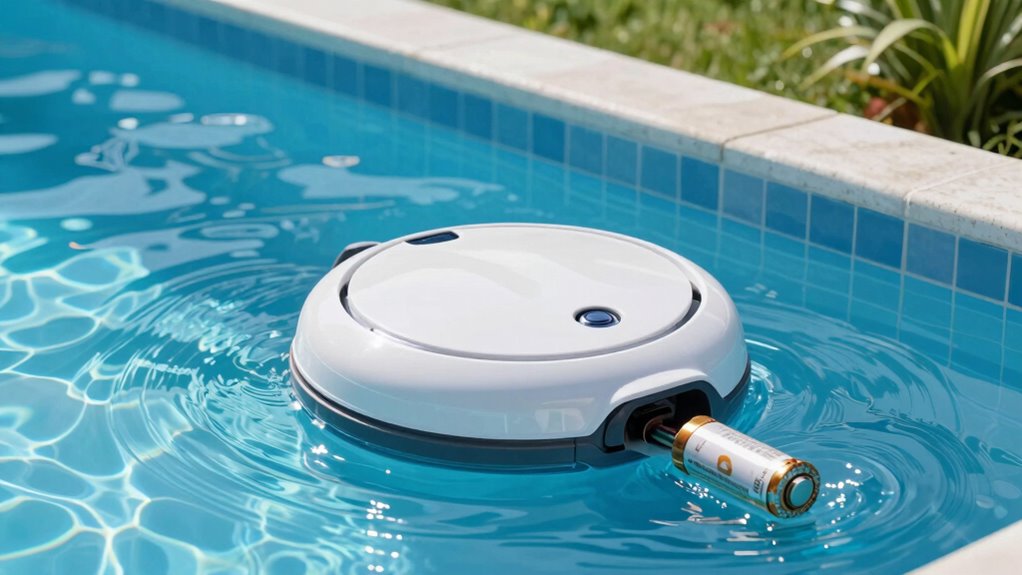
Battery lifespans for cordless pool robots typically range from 60 to 120 minutes per charge, depending on the model and usage conditions. Over time, battery degradation reduces capacity, meaning your robot won’t run as long as it did initially. This decline results from repeated charging cycles, which gradually wear down the battery’s ability to hold a full charge. Most batteries can handle around 300 to 500 charging cycles before noticeable performance drops occur. To maximize lifespan, avoid letting the battery fully discharge regularly and use manufacturer-recommended chargers. Proper maintenance can slow battery degradation, helping your robot stay effective longer. Remember, a shorter runtime doesn’t necessarily mean the battery is dead; it’s often a sign of normal wear from charging cycles.
What Are Typical Charging Times, and Do They Meet Your Needs?
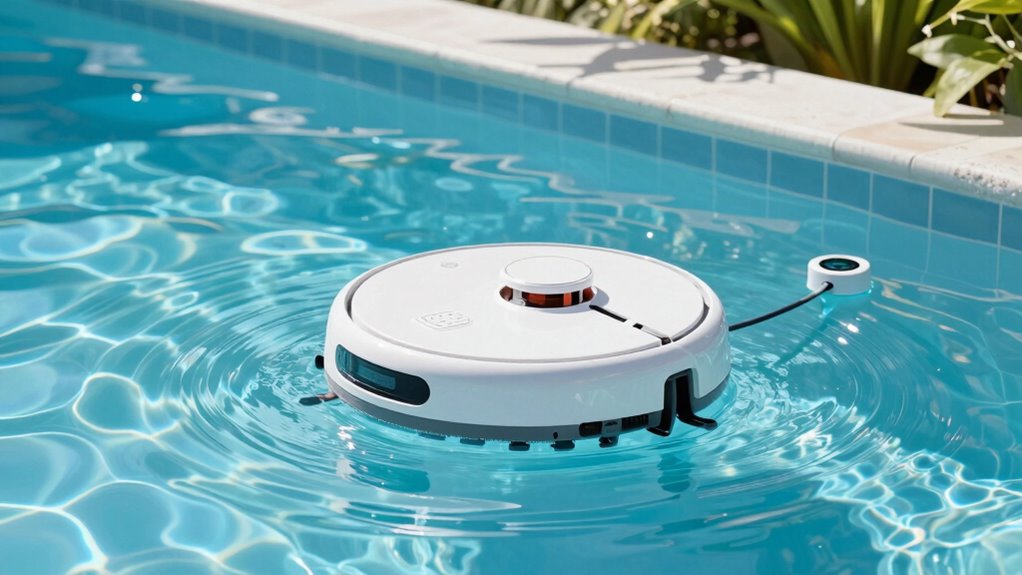
Charging times for cordless pool robots vary depending on the model, typically taking anywhere from a couple of hours to over eight hours. You should consider whether these durations fit your schedule and cleaning needs. Are the charging times sufficient to keep your pool spotless without causing delays?
Typical Charging Duration
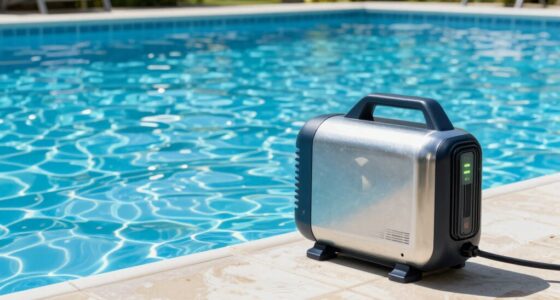
Typically, cordless pool robots take between two to four hours to fully recharge, depending on the model and battery capacity. Larger batteries with higher capacity may require closer to four hours, while smaller ones can recharge faster. Most charging stations are designed to efficiently replenish the battery, ensuring minimal downtime. If you need quick turnaround times between cleaning sessions, look for models with shorter recharge durations. Keep in mind that some robots have rapid-charging features, enabling them to be ready sooner. Your choice should match your pool size and cleaning schedule to avoid disruptions. Overall, these charging durations are generally suitable for most pool owners, providing a balance between quick recharge times and effective cleaning power.
Variability by Model
Since charging times can vary considerably between different models, it’s important to take into account whether a robot’s recharge duration fits your cleaning routine. Robots with larger battery capacity generally take longer to charge but can clean more thoroughly or for extended periods. Check the charging indicators—some models use lights or digital displays to show charging progress, helping you plan your pool cleaning schedule better. Shorter charging times are convenient if you need quick turnarounds, but they might come with smaller batteries and less runtime. Conversely, longer charges often mean more powerful batteries and longer cleaning sessions. Understanding these differences helps you choose a model that aligns with your pool size and personal cleaning expectations.
Is It Sufficient?
Are the charging times of cordless pool robots enough to fit your cleaning schedule? Typically, charging takes between 1 to 4 hours, which may or may not align with your pool’s needs. If your pool gets dirty often, longer charging times could delay cleaning. Consider how battery recycling practices impact overall sustainability and whether the manufacturer’s warranty coverage includes battery replacements if they degrade prematurely. Some models offer quick-charging features, reducing downtime, but check if these meet your routine. Also, verify if the warranty covers battery issues, saving costs on replacements. To ensure your robot fits your schedule, select a model with appropriate charging times and reliable warranty coverage, and stay mindful of environmentally responsible battery recycling options.
Is Battery Replacement or Upgrading Possible? Maintenance Tips

You might wonder if you can replace or upgrade your cordless pool robot’s battery to extend its life. It’s important to know your options for battery replacements and how to maintain your device properly. Keeping these strategies in mind helps ensure your robot stays efficient and reliable.
Battery Replacement Options
Replacing the battery in your cordless pool robot can be straightforward, but options vary depending on the model. You might be able to swap out the original battery for a compatible replacement, or consider upgrading to a higher-capacity one for longer use. When replacing, it’s important to prioritize eco-friendly practices like battery recycling to reduce environmental impact. Some models support alternative power options, such as solar chargers or external power sources, which can extend your robot’s lifespan without frequent battery changes.
- Check if your robot supports rechargeable or replaceable batteries compatible with recycling programs
- Explore options for upgrading to a higher-capacity or more efficient battery
- Consider using alternative power sources to minimize dependence on traditional batteries
Proper Maintenance Strategies
Maintaining your cordless pool robot properly can extend its lifespan and guarantee ideal performance. To maximize battery longevity, always follow the manufacturer’s guidelines for charging, avoiding overcharging or letting the battery drain completely. Charging efficiency improves when you use the recommended charger and charge in a cool, dry environment. Regularly clean the charging contacts to ensure a good connection, which helps prevent voltage drops that can harm the battery over time. Store your robot in a shaded area when not in use, especially during off-season periods. Avoid exposing the battery to extreme temperatures, as this can degrade its capacity. Proper maintenance not only preserves the battery but also ensures your pool robot operates smoothly, saving you time and money in the long run.
Does Water or the Environment Affect How Well the Battery Performs?
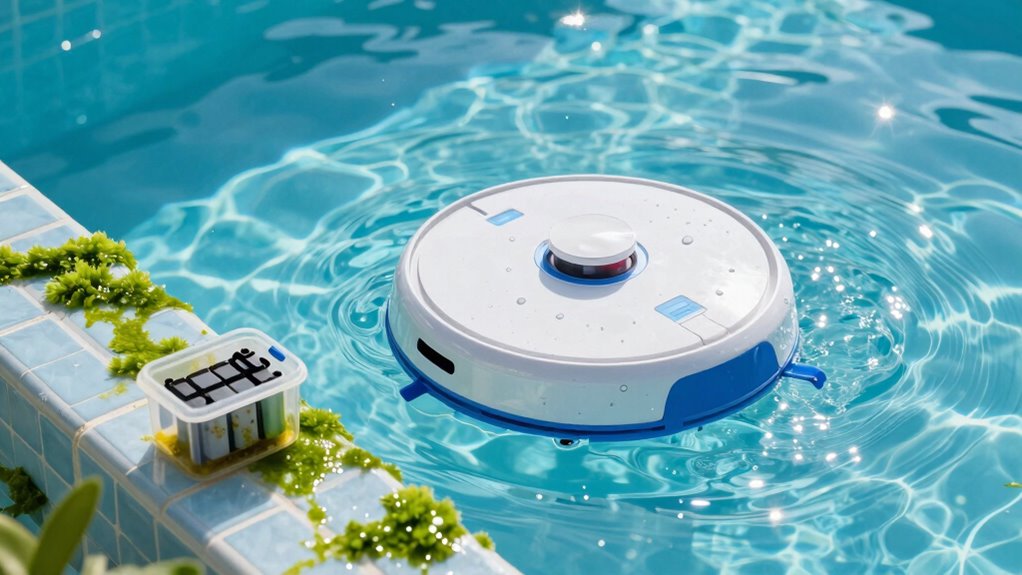
Water and environmental conditions can substantially impact how well a cordless pool robot’s battery performs. High humidity can accelerate corrosion and reduce battery life, especially if the device isn’t properly sealed. Solar interference may disrupt the robot’s operation or cause overheating, which can strain the battery. Additionally, exposure to extreme temperatures—hot or cold—can diminish battery capacity and reduce runtime. It’s vital to store your robot in a shaded, dry area when not in use. Regularly check for signs of moisture ingress and avoid leaving the robot in direct sunlight for extended periods. Understanding these environmental factors helps you maintain ideal battery performance and extends your pool robot’s lifespan. Proper care ensures your battery stays efficient despite water and environmental challenges.
How Can You Maximize Battery Life and Keep Your Pool Robot Running Smoothly?
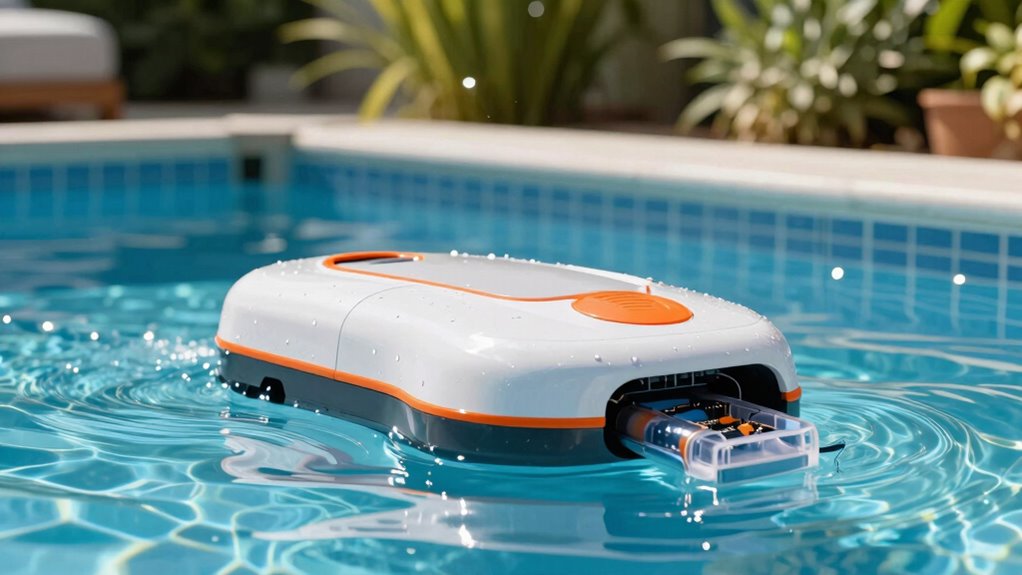
To maximize your pool robot’s battery life and guarantee it runs smoothly, you should follow a few simple yet effective practices. First, charge the battery fully before use and avoid letting it drain completely. Store your robot in a cool, dry place, especially if you won’t use it for a while. Regularly clean the charging contacts to ensure ideal connection. When disposing of old batteries, choose eco-friendly disposal methods and participate in battery recycling programs. Proper disposal prevents environmental harm and conserves resources. Use the table below to understand key maintenance tips:
| Tip | Benefit |
|---|---|
| Avoid overcharging | Extends battery lifespan |
| Store in cool environment | Preserves battery health |
| Clean contacts regularly | Ensures efficient charging |
| Recycle batteries responsibly | Protects the environment and recovers materials |
Frequently Asked Questions
Are Cordless Pool Robots Suitable for All Pool Sizes?
Cordless pool robots aren’t suitable for all pool sizes. Your pool’s size impacts the robot’s capacity and efficiency. Smaller pools are generally compatible, but larger ones may require a more powerful or specialized robot. Always check the pool size compatibility and robot capacity before buying. If your pool is large, consider a robot with a higher capacity to make certain of thorough cleaning without running out of battery too quickly.
Can I Use a Different Brand Battery for My Robot?
You can’t use a different brand battery for your robot because battery compatibility is vital. Over 60% of owners experience charging issues when using incompatible batteries, which can damage the robot or reduce its lifespan. Always stick to the original or manufacturer-recommended batteries to guarantee proper fit with charging stations. Using the right battery ensures your robot charges efficiently and performs at its best, saving you headaches and repairs down the line.
What Are Signs That My Battery Needs Replacing?
You’ll know your battery needs replacing when it shows shorter run times or fails to hold a charge. Watch for replacement indicators like consistent performance drops or overheating. Batteries have a limited lifespan, and if yours isn’t lasting as long as it used to, it’s time for a new one. Keep an eye on these signs to make certain your cordless pool robot operates efficiently and avoids unexpected breakdowns.
How Do Temperature Changes Affect Battery Performance?
Think of your battery like a delicate plant, thriving in stable conditions. Temperature fluctuations can considerably impact battery efficiency, making it harder for your cordless pool robot to perform well. Cold weather slows chemical reactions, reducing power, while heat can cause overheating and damage. You notice your robot struggles more during temperature swings—keeping it in a consistent environment helps maintain ideal battery performance and prolongs its lifespan.
Is There a Risk of Battery Leakage or Damage?
You might worry about battery leakage or damage, but proper care helps prevent this. To avoid issues like battery corrosion and leak prevention problems, always follow the manufacturer’s instructions, especially regarding storage and charging. Keep the battery dry and avoid exposing it to extreme temperatures. Regularly inspect for any signs of damage or corrosion, and replace the battery if you notice leaks or other abnormalities to guarantee safe, reliable operation.
Conclusion
By understanding the truths behind battery myths, you can keep your cordless pool robot running like new. Think of the battery as the heart of your device—treat it well, and it’ll serve you faithfully. Don’t let misconceptions drain your confidence or your robot’s performance. With proper care, you’ll enjoy sparkling clean pools and worry-free summer days. Remember, a well-maintained battery isn’t just a myth—it’s your secret weapon for endless poolside bliss.
Columbus Day / Indigenous Peoples' Day Picks
long weekend sales
As an affiliate, we earn on qualifying purchases.