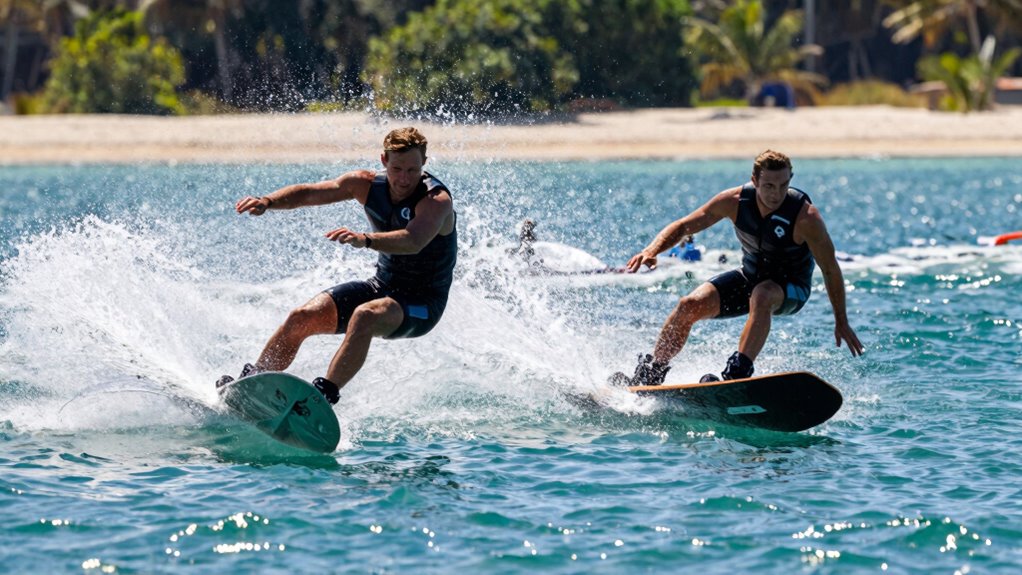

If you want to learn quickly as an adult, wakeboarding is generally easier and faster to pick up than water skiing. Its wider, shorter board offers more stability, and the skills develop faster, giving you quick visible progress. Water skiing requires more balance and coordination on narrow skis, taking longer to master. Factors like calm water, good instruction, and your fitness level also affect how fast you learn. Keep exploring to discover tips that can boost your progress even further.
Key Takeaways
- Wakeboarding generally offers a gentler learning curve, allowing adults to achieve basic skills faster than water skiing.
- Wakeboarding requires less specialized stance and equipment, making initial progress simpler for beginners.
- Water skiing demands more precise balance and technique, often extending the learning period for adults.
- Faster progress in wakeboarding is aided by quicker visible results and easier mastery of fundamental moves.
- Equipment and water conditions significantly influence learning speed, but wakeboarding typically provides quicker overall progress for adults.

Full Throttle Aqua Extreme Wakeboard Kit (Black/Blue, 55.1 x 21.6-Inch/ 140cm x 42cm)
- Enhanced stability with multiple channels: Designed for better control and balance
- Includes universal fit boots: Fits men's shoe sizes 7-13
- Removable fins and quick-lace system: Easy customization and secure fit
As an affiliate, we earn on qualifying purchases.
As an affiliate, we earn on qualifying purchases.
Water Skiing vs. Wakeboarding: What’s the Difference in Technique?
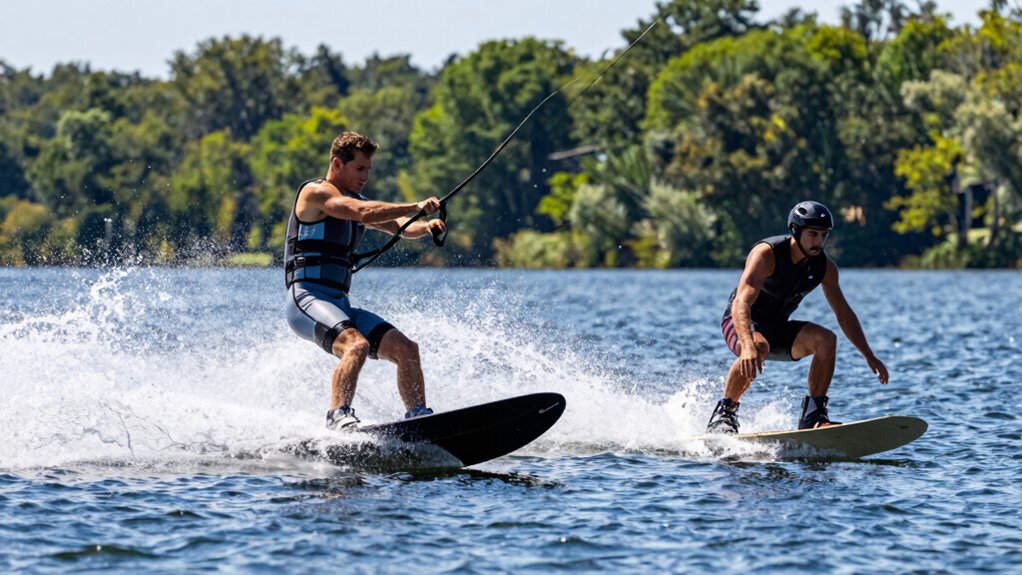
Although water skiing and wakeboarding share the thrill of gliding across the water, their techniques differ considerably. With water skiing, you rely on precise boat maneuvering to create a steady wake, and your equipment typically includes two skis, which require you to maintain a specific stance for balance. Wakeboarding involves a single board, similar to a snowboard, and allows for more versatile boat movements, like turns and quick adjustments. Equipment differences are significant; skis are narrow and long, while wakeboards are wider and shorter, offering more stability. In wakeboarding, you often ride with your feet strapped in, giving you better control during turns. These distinctions shape how you approach each sport and influence your overall technique.
What Skills Do You Need to Balance and Coordinate as a Beginner?
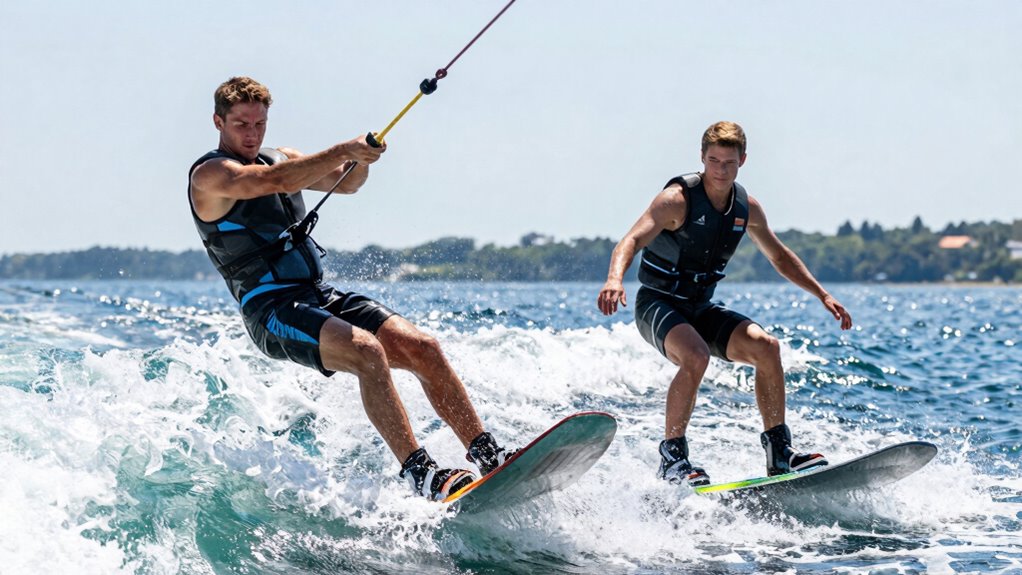
As a beginner, mastering water skiing or wakeboarding requires developing strong balance and coordination skills. Core stability is essential; it keeps you upright and in control while moving across the water. Hand-eye coordination helps you respond quickly to the boat’s movements and adjust your stance accordingly. To build these skills, focus on:
Develop core stability and hand-eye coordination to improve your water skiing and wakeboarding skills.
- Maintaining a steady core to stay balanced on the water
- Keeping your eyes on the boat and your hands firmly gripping the tow rope
- Practicing small adjustments to your posture and weight distribution
These skills improve gradually with practice, making it easier to stay upright and comfortable. Strengthening your core and sharpening your hand-eye coordination are key to progressing beyond the beginner stage swiftly and confidently.
How Easy Is It for Adults to Learn Water Skiing or Wakeboarding?
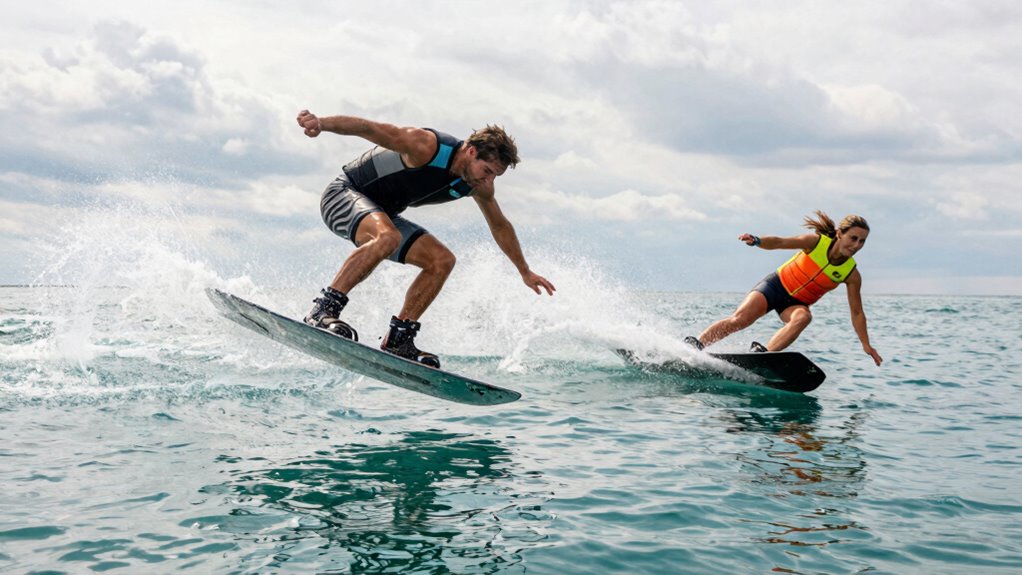
Learning water skiing or wakeboarding as an adult can be surprisingly accessible, especially with proper instruction and practice. Many beginners find that with a focus on water safety, they gain confidence quickly. Starting with beginner tips, like maintaining a relaxed stance and keeping your knees slightly bent, can make learning smoother. It’s normal to fall often at first, but staying aware of water safety helps prevent injuries. Choosing a good instructor or lesson can boost your progress and ensure you learn proper techniques from the start. Remember, patience is key—everyone learns at their own pace. With consistent effort and attention to safety, you’ll find that both water skiing and wakeboarding become more manageable and enjoyable sooner than you might expect.
Which Water Sport Gets You Gliding Faster? Speed of Learning and Progress
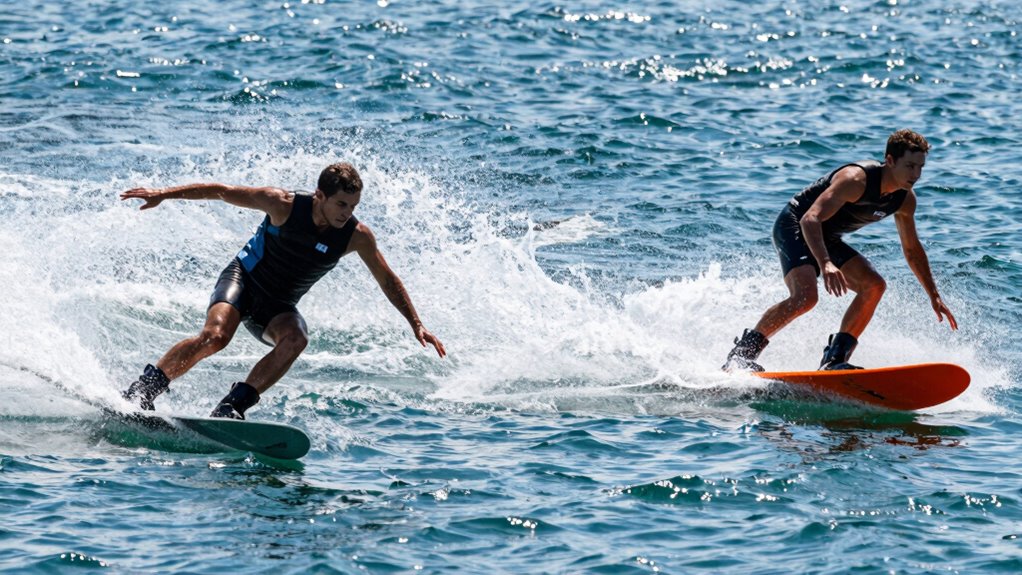
When it comes to getting up and gliding across the water, some water sports allow you to see progress more quickly than others. Wakeboarding generally has a gentler learning curve, making skill acquisition faster for adults who are new to water sports. You often find yourself improving in shorter sessions, feeling confident sooner. Water skiing, while easier to pick up initially, can take longer to master advanced techniques and smooth gliding. Progress depends on your focus, but wakeboarding tends to offer quicker visible results.
- Faster initial glide with wakeboarding
- Quicker mastery of basic balance and stance
- Steeper skill development curve for water skiing
What Factors Make Learning Water Skiing and Wakeboarding Easier or Harder? Equipment, Environment, and Fitness
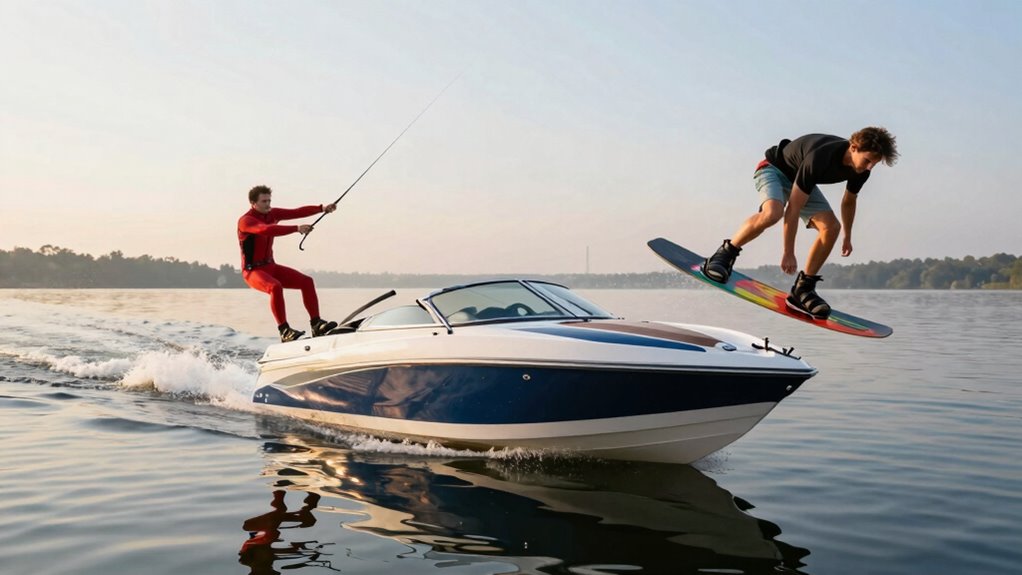
The ease of learning water skiing and wakeboarding depends heavily on factors like equipment, environment, and your fitness level. Equipment considerations, such as the type of skis or board and bindings, can substantially impact your balance and control, making the learning process smoother or more challenging. Environmental factors, including water conditions and weather, also play a vital role; calm, flat water reduces difficulty, while choppy or busy waterways increase it. Additionally, your fitness level affects your ability to stay upright and handle falls. Strong core muscles and good endurance make learning easier, especially for wakeboarding. By choosing appropriate equipment and practicing in favorable conditions, you’ll find it easier to pick up these sports and enjoy faster progress.
Frequently Asked Questions
Can Adults Learn Both Water Skiing and Wakeboarding at the Same Time?
Yes, you can learn both water skiing and wakeboarding simultaneously. It’s an example of dual sport learning, where you develop skills for both sports at the same time. While it may be challenging, it’s doable if you dedicate time for each activity, alternating sessions, and staying consistent. This approach helps you build overall water-sports proficiency, making you more versatile and confident on the water.
What Safety Gear Is Recommended for Adult Beginners in Both Sports?
You should prioritize safety gear like a well-fitting helmet protection and a snug life jacket to stay safe while water skiing or wakeboarding. Wearing a helmet protection minimizes head injuries, while a life jacket ensures buoyancy and safety in case of falls. Always check that your gear meets safety standards, fits properly, and is comfortable, so you can focus on learning and enjoying the sport without unnecessary risks.
How Do Weather Conditions Affect Learning Speed for Each Sport?
Weather conditions considerably influence how quickly you learn water skiing or wakeboarding. Wind influence can create choppy water, making balance and control harder, therefore slowing your progress. Cooler water temperatures might cause discomfort, reducing your practice time and focus. Warmer water and calm winds offer smoother conditions, helping you stay balanced and learn faster. Always check weather forecasts before hitting the water to optimize your learning experience.
Are There Age Limits or Physical Restrictions for Adult Learners?
Think of learning to water ski or wakeboard as opening a new adventure; age restrictions and physical limitations might be hurdles, but they’re more like gentle fences than walls. Most adult learners face no strict age limits, yet if you have significant physical limitations or health concerns, you should check with your instructor. With proper guidance, you can immerse yourself in these sports, regardless of your age, and enjoy the thrill of the water.
Which Sport Offers More Opportunities for Advanced Tricks and Jumps?
Wakeboarding offers more opportunities for advanced tricks and jumps, making it ideal if you’re enthusiastic to progress in trick progression and perform jumps. Its design allows for easier spins, flips, and aerial maneuvers compared to water skiing. As you build confidence, you can push your limits with complex tricks and bigger jumps. So, if you’re aiming to master advanced tricks, wakeboarding provides a more suitable platform for your progress.
Conclusion
If you’re wondering which sport is easier to learn, it really depends on your natural balance and fitness. For example, imagine Sarah, a beginner who tried wakeboarding first—she struggled with the initial balance but quickly improved once she got the hang of it. Meanwhile, John found water skiing smoother because of its straightforward stance. Overall, wakeboarding can be faster to pick up for some, but both sports offer quick progress with practice and the right equipment.