
Choosing the right wakeboard size isn’t just about your height; it also depends on your weight, skill level, riding style, and water conditions. Using a wakeboard size chart helps you match these factors for better performance and safety. For example, beginners need a softer, more forgiving board, while experienced riders prefer stiffer, responsive options. Keep these tips in mind, and you’ll find the perfect size—if you continue, you’ll discover how to optimize your choice even further.
Key Takeaways
- Use your height and weight to identify the recommended wakeboard length and size from a reliable size chart.
- Match your skill level and riding style to the appropriate board flex and stability features for optimal performance.
- Measure your foot size accurately to ensure bindings fit snugly and comfortably with the selected wakeboard.
- Consider water conditions and riding goals—smaller boards for tricks, larger for stability and jumps.
- Test different sizes if possible, focusing on comfort, control, and confidence to find the best wakeboard size for you.

Hyperlite Wakeboard Vapor with Destroyer Wakeboard Bindings Fits Most Shoe Sizes (143 cm)
- Shoe Size Compatibility: Fits sizes 8-14
- V-Shaped Hull: V-Shaped Hull Design
- Removable Fins: Includes 4 Removable Fins
As an affiliate, we earn on qualifying purchases.
As an affiliate, we earn on qualifying purchases.
Why Wakeboard Size Matters for Performance and Safety
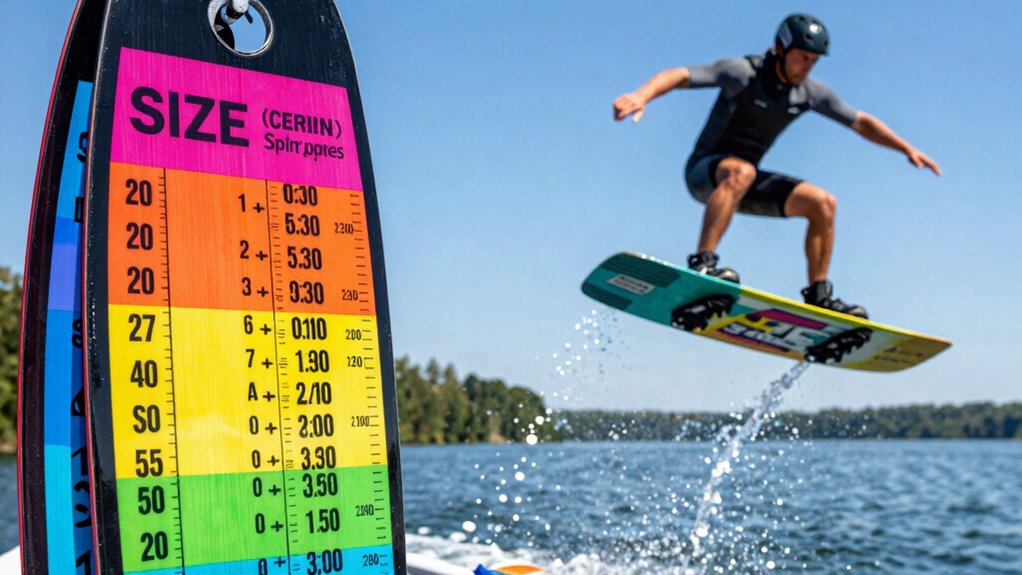
Choosing the right wakeboard size is essential because it directly impacts your performance and safety on the water. The board materials, such as foam, fiberglass, or composite, affect durability and how well you control the board. A properly sized wakeboard ensures better balance and maneuverability, helping you stay safe during tricks or rough water conditions. Using a board that’s too big or small can compromise your ability to react quickly, increasing the risk of falls or injuries. It’s important to follow safety precautions, like wearing a life jacket and checking your gear regularly. Selecting the correct size based on your weight and skill level helps prevent accidents and boosts your confidence, making your experience on the water more enjoyable and secure.
Understanding Wakeboard Length, Width, and Dimensions
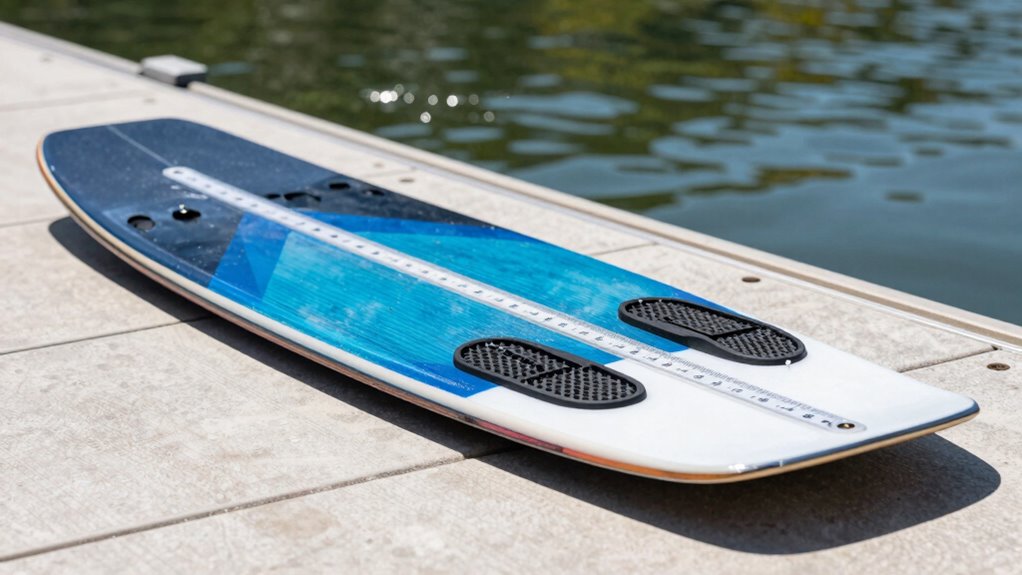
Understanding wakeboard dimensions is key to finding the right board for your riding style and skill level. When evaluating length, width, and overall dimensions, consider how these factors influence control, stability, and maneuverability. Imagine a wakeboard with:
- Length that matches your height and riding style, providing ideal control.
- Width that offers enough stability without sacrificing agility.
- Thickness and shape influencing how the board rides over the water.
- Material choices affecting durability and weight, impacting performance.
Keep in mind that wakeboard materials play a role in flexibility and responsiveness, while binding compatibility ensures secure fit and ease of use. Knowing these dimensions helps you select a board that matches your needs, making your ride smoother and more enjoyable.
How Your Weight and Skill Level Affect Wakeboard Choice

Your weight and skill level play a crucial role in selecting the right wakeboard, as both factors directly impact how the board performs and feels under your feet. Heavier riders need a stiffer board for support, while beginners benefit from softer, more forgiving options. Skill level influences board flex and responsiveness; advanced riders often prefer boards with better control and durability, considering board material. Water conditions also matter—rougher water demands sturdy, more durable boards, while calmer water allows for lighter, more flexible ones. Use this quick guide to match your weight, skill, and water conditions:
| Weight Range | Skill Level | Recommended Board Material |
|---|---|---|
| Light (<150 lbs) | Beginner | Soft, lightweight foam |
| Medium (150-200 lbs) | Intermediate | Composite or wood core |
| Heavy (>200 lbs) | Advanced | Reinforced fiberglass |
| All | Any water conditions | Durable, water-resistant |
| Varies | Skill & water dependent | Customizable options |
How to Measure Yourself and Your Gear for the Best Fit

To get the perfect fit, you need to measure yourself accurately and choose gear that matches those measurements. Focus on proper techniques to measure your height, weight, and foot size, as these are key to selecting the right board. Keep these tips in mind to guarantee your gear feels comfortable and performs well on the water.
Proper Measurement Techniques
Getting the right wakeboard size starts with accurate measurements of both your body and your gear. To do this effectively, follow these steps:
- Stand upright on a flat surface, measuring from your chin to your feet to determine ideal board length.
- Check the board material; some materials are more flexible, affecting your control and comfort.
- Measure your foot size precisely to ensure proper binding fit, avoiding too tight or loose straps.
- When trying bindings, ensure they snugly hold your feet without pinching, supporting your board material’s flexibility.
Accurate measurements help you select a board that matches your weight and riding style, while proper binding fit enhances control. With these techniques, you ensure your gear complements your body, making your wakeboarding experience safer and more enjoyable.
Gear Selection Tips
Measuring yourself and your gear accurately guarantees you select the right wakeboard size and bindings for peak performance. Start by checking your height, weight, and skill level, then match these with your board’s specifications. When choosing bindings, consider the board material—lightweight foam cores offer flexibility for beginners, while carbon composites provide responsiveness for advanced riders. Water conditions also influence your gear choices: softer, more flexible boards perform better in choppy water, while stiffer boards excel on flat water. Always try bindings for a snug fit without discomfort, ensuring your boots don’t slip during jumps or tricks. Proper measurement and understanding of your gear’s materials and water conditions help you optimize control, stability, and enjoyment on the water.
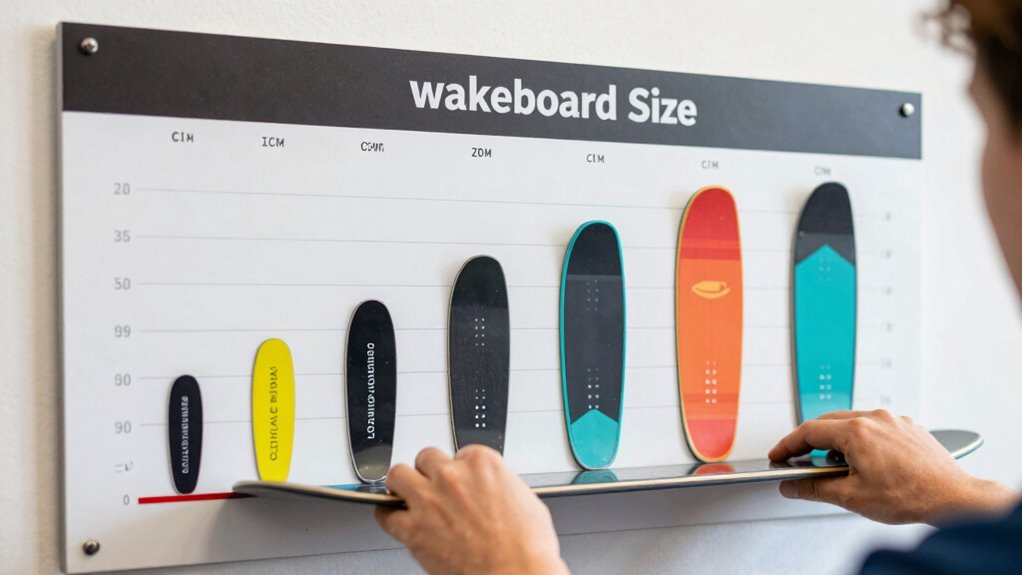
Using a Wakeboard Size Chart to Find Your Perfect Size
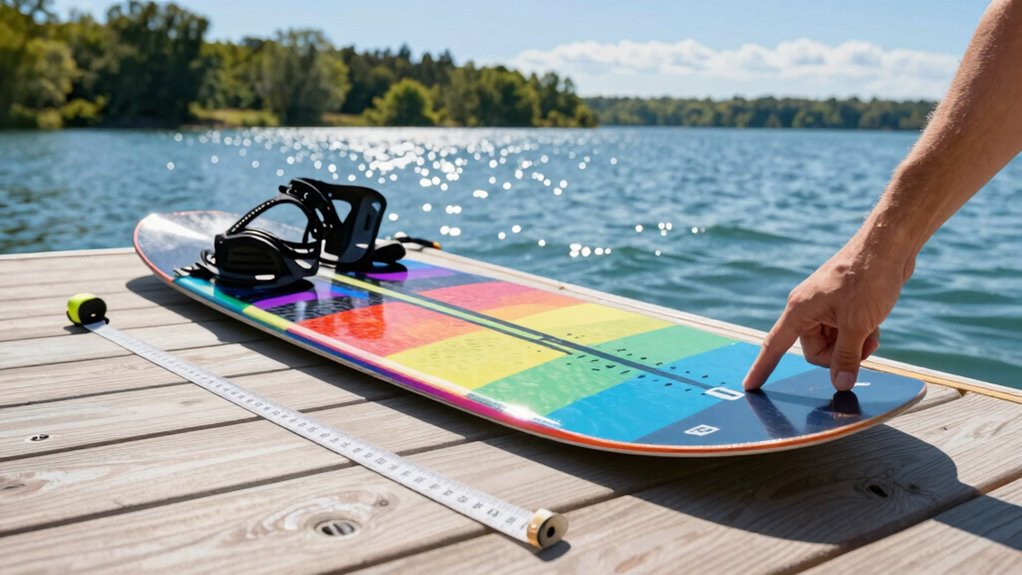
Using a wakeboard size chart makes finding the right board straightforward and efficient. First, measure your height and weight to narrow down options. Next, consider your rider stance—are you regular or goofy? This affects the board’s flex and responsiveness. Then, match your skill level: beginners need more stability, while advanced riders prefer more flex for tricks. Finally, visualize yourself on the water:
- Standing tall with a relaxed stance, feeling balanced on a flexible board.
- Leaning slightly forward or back, testing how the board responds to your weight shifts.
- Imagining the size of the board under your feet, ensuring it’s neither too long nor too short.
- Considering your preferred riding style—more flex for tricks, stiffer for cruising.
Using these steps helps you choose a board that matches your stance, flex needs, and riding style.
Common Mistakes When Choosing a Wakeboard and How to Avoid Them
Many beginners make the mistake of ignoring their skill level when choosing a wakeboard, which can lead to frustration or injury. You also might overlook important equipment specs, like weight capacity or board flexibility, that affect performance. To avoid these issues, always match your choice to your experience and carefully review the manufacturer’s recommendations.
Ignoring Skill Level
Ignoring your skill level is a common mistake when choosing a wakeboard because it can lead to selecting a board that’s either too advanced or too beginner-friendly, making progress difficult or unsafe. When you overlook this, you might pick a board based solely on board aesthetics or brand reputation, rather than your actual ability. Visualize your ideal ride:
- A sleek, simple design for easy learning
- A lightweight feel for quick control
- A forgiving flex that helps you land tricks
- A trusted brand known for safety and quality
Skipping this step can hinder your growth and safety on the water. Focus on matching your skill level to ensure you select a wakeboard that encourages progress and confidence, rather than frustration or injury.
Overlooking Equipment Specs
One of the biggest mistakes when choosing a wakeboard is neglecting to pay attention to key equipment specifications. Ignoring factors like board materials and riding surfaces can lead to poor performance or damage. Different materials, such as foam, fiberglass, or carbon, affect durability and flexibility. Likewise, the riding surface impacts grip and control. To avoid this mistake, compare options carefully:
| Board Material | Best for |
|---|---|
| Foam | Beginners, soft landings |
| Fiberglass | Intermediate, durability |
| Carbon | Advanced, lightweight performance |
| Riding Surface | Suitable for |
| Textured | All-around, grip-focused |
| Smooth | Speed, smooth rides |
| Traction pads | Tricks, precise control |
Pay attention to these specs to match your riding style and skill level effectively.
How to Adjust Wakeboard Size for Different Riding Styles
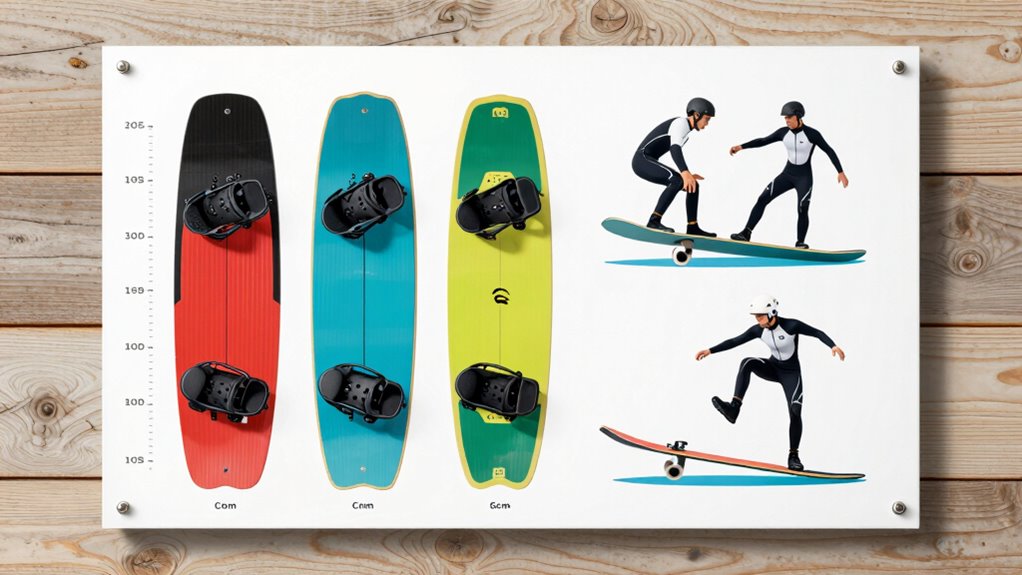
Choosing the right wakeboard size depends heavily on your riding style, as different styles demand different board characteristics. Your riding style influences the ideal wakeboard length, which affects your control and performance. Consider these options to modify your wakeboard size:
Selecting the right wakeboard size tailored to your riding style enhances control and performance.
- For freestyle tricks, opt for a shorter wakeboard for increased maneuverability.
- For wake jumps and big air, choose a longer wakeboard for stability and lift.
- For beginners, select a moderate length that balances control and learning curve.
- For aggressive riding, go for a slightly longer wakeboard to enhance edge hold and responsiveness.
Matching your wakeboard length to your riding style ensures better control, smoother landings, and more enjoyable sessions on the water. Adjust accordingly to maximize your performance.
What to Do If You’re Between Sizes or Unsure?
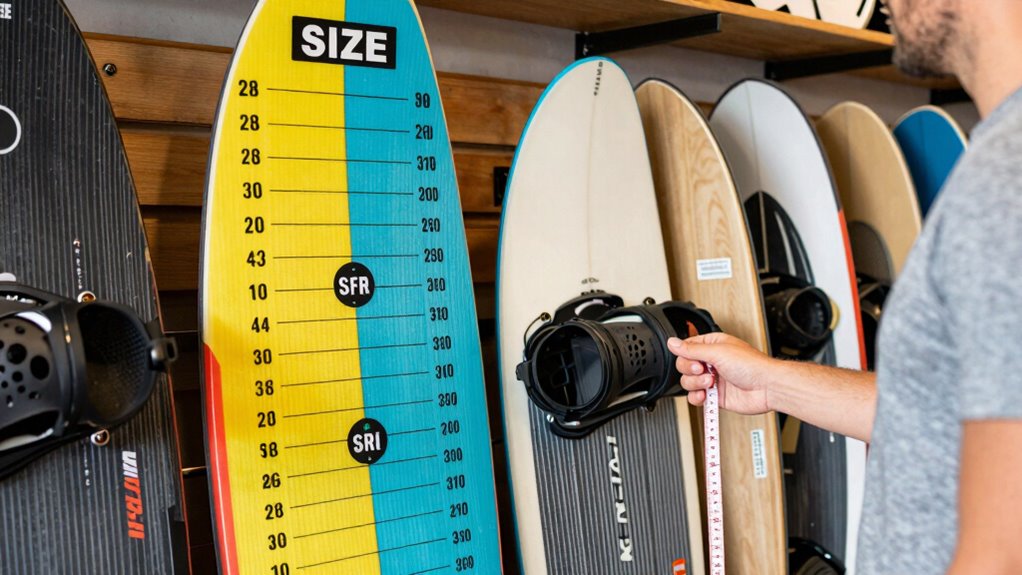
If you’re caught between two sizes or feeling unsure about the best fit, don’t worry—there are simple ways to make an informed decision. First, consider your rider preferences: do you prefer more control or easier maneuverability? Smaller boards are more responsive, while larger boards offer stability. Also, think about board maintenance; a slightly bigger board may require more regular upkeep but can provide better floatation and balance. If you’re new or still developing skills, leaning toward the larger size might be best. Conversely, advanced riders might prefer a smaller, more agile board. Ultimately, balance your riding style, comfort, and maintenance needs to choose the size that feels right. When in doubt, consulting with a pro or trying different sizes can help clarify your choice.
Final Tips for Confidently Choosing the Right Wakeboard Size

To confidently select the right wakeboard size, focus on key factors that align with your riding style and skill level. First, consider the board material—lighter foam cores suit beginners, while fiberglass offers durability for advanced riders. Second, check the binding fit; snug yet comfortable bindings improve control and confidence. Third, visualize your preferred riding style—smaller boards for tricks, larger for stability. Fourth, test different sizes if possible, paying attention to how each feels underfoot. Remember, a well-chosen size complements your skill, enhances your control, and boosts your confidence on the water. Keep these tips in mind, and you’ll avoid guesswork, making wakeboarding more enjoyable and safe.
Frequently Asked Questions
Can I Use a Wakeboard Size Chart for Kids and Adults?
Yes, you can use a wakeboard size chart for both kids and adults. The chart helps you choose the right wakeboard length based on skill level, weight, and riding style, making it versatile. Just remember, size chart accuracy may differ, so consider your experience and preferences too. Following the chart ensures a better fit, giving you confidence to progress and enjoy your time on the water.
How Does Boat Type Influence Wakeboard Size Selection?
You should consider boat type because it affects wake size and shape, which influences your wakeboard choice. For example, a boat with a wider hull creates a bigger wake, ideal for bigger boards. Notably, boat speed and water conditions can change wake size by up to 20%, so select a board that matches your boat’s wake. Faster speeds and rough water demand smaller, more maneuverable boards for better control.
Are There Specific Wakeboard Sizes for Beginners Versus Advanced Riders?
Yes, there are specific wakeboard sizes for beginners and advanced riders. Beginners usually need smaller, more manageable boards for easier control, while advanced riders prefer larger, more stable boards for complex tricks. When choosing your size, consider gear customization to match your skill level, and prioritize safety considerations. Proper sizing boosts your confidence and reduces injury risk, making your wakeboarding experience more enjoyable and safer.
How Often Should I Reassess My Wakeboard Size as I Progress?
Think of your wakeboard journey as climbing a mountain; your gear needs to match your ascent. You should reassess your sizing every few months or after significant progression assessment, especially if you notice handling becoming easier or harder. Sizing adjustments guarantee ideal control and comfort as you advance. Regularly checking your board size keeps you aligned with your skills, helping you enjoy smoother rides and safer progression.
Does Gender Affect the Ideal Wakeboard Size Choice?
Gender differences can influence your ideal wakeboard size, as men and women often have different size preferences and body types. While these differences matter, focus on your weight, skill level, and riding style first. Gender shouldn’t be the sole factor. Instead, choose a size that fits your body and riding goals, and remember that personal comfort and performance matter more than stereotypes or generalizations.
Conclusion
Choosing the right wakeboard size isn’t rocket science, but it does take some attention to detail. By considering your weight, skill level, and riding style, you can avoid flying by the seat of your pants. Use a size chart as your trusty map and don’t be afraid to ask for advice. Remember, picking the right board sets you up for smooth sailing and big wins—so don’t leave it to chance!