Choosing between pedal drive and paddle kayaks depends on whether you want speed or simplicity. Pedal kayaks usually offer higher speeds with less effort, thanks to their mechanical drive systems, making longer trips easier. Paddle kayaks are lighter, easier to control, and simpler to operate, ideal for quick outings and beginners. Both have pros and cons, but understanding the tradeoff helps you match your kayaking style—exploring each detail reveals which suits your goals best.
Key Takeaways
- Pedal kayaks generally achieve higher sustained speeds with less effort, making them faster over long distances.
- Paddle kayaks rely on paddler skill and technique, often resulting in variable speed and requiring more physical effort.
- Pedal systems provide continuous power, improving efficiency and speed, especially in calm or open water conditions.
- Paddle kayaks offer quick maneuverability and are more suitable for short, agile trips where simplicity is prioritized.
- Overall, pedal kayaks trade off some simplicity for increased speed and efficiency, while paddle kayaks favor ease of use and portability.

Reel Yaks 10.8ft Rapido Propeller Drive Fishing Kayak, Modular Sit-On-Top Kayak with Hands-Free Pedal Drive, Compact, Lightweight, Easy Assembly, Customizable – 400 lbs Capacity, Blue Black Camo
POWERFUL & RESPONSIVE PROPELLER DRIVE: Command the water with our smooth kayak pedal drive system, giving anglers hands-free…
As an affiliate, we earn on qualifying purchases.
As an affiliate, we earn on qualifying purchases.
What Are the Main Differences Between Pedal Drive and Paddle Kayaks
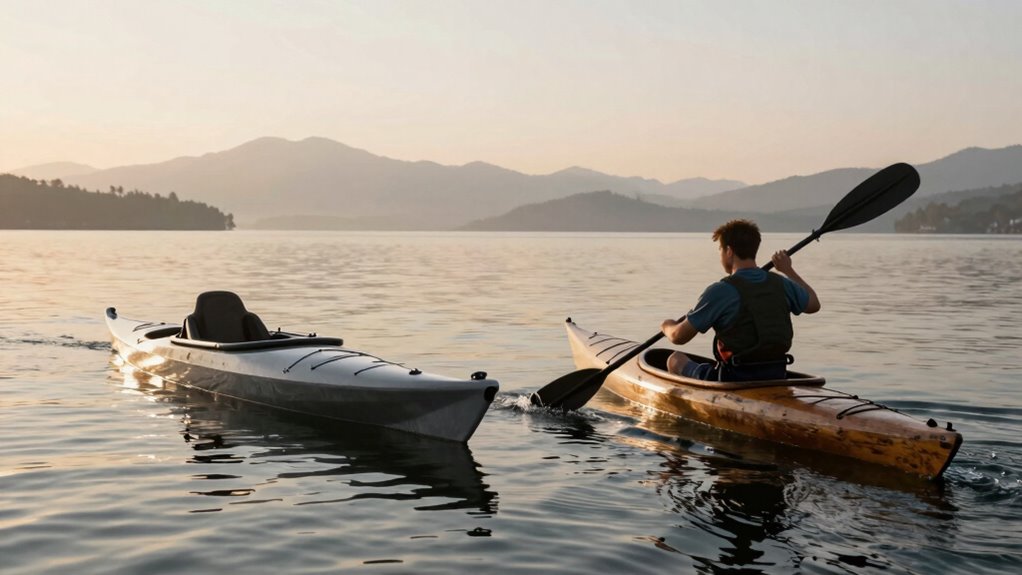
While both pedal drive and paddle kayaks are popular choices for paddlers, they differ considerably in how you power and maneuver them. Pedal kayaks offer greater kayak stability since you sit higher and use your legs to power the boat, reducing fatigue and conserving paddling endurance. This setup allows for a more relaxed experience, especially during long trips, and makes handling easier in various water conditions. Paddle kayaks, on the other hand, require you to use your arms for propulsion, which can be more physically demanding and may decrease paddling endurance over time. However, they are typically lighter and more straightforward, offering simplicity and versatility. Your choice depends on whether you prioritize stability and comfort or lightweight maneuverability and active paddling.
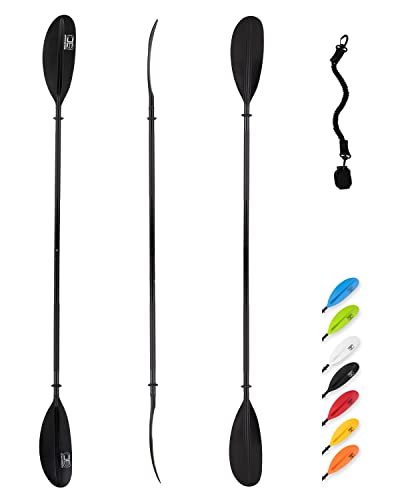
OCEANBROAD Kayak Paddle 90.5in/230cm Alloy Shaft Kayaking Boating Canoeing Oar with Paddle Leash 1 Paddle, Black
MADE TO LAST: This kayak paddle is with high-quality aluminum alloy shaft (1.1mm shell thickness) and fiberglass reinforced…
As an affiliate, we earn on qualifying purchases.
As an affiliate, we earn on qualifying purchases.
Which Kayak Is Faster: Pedal or Paddle?
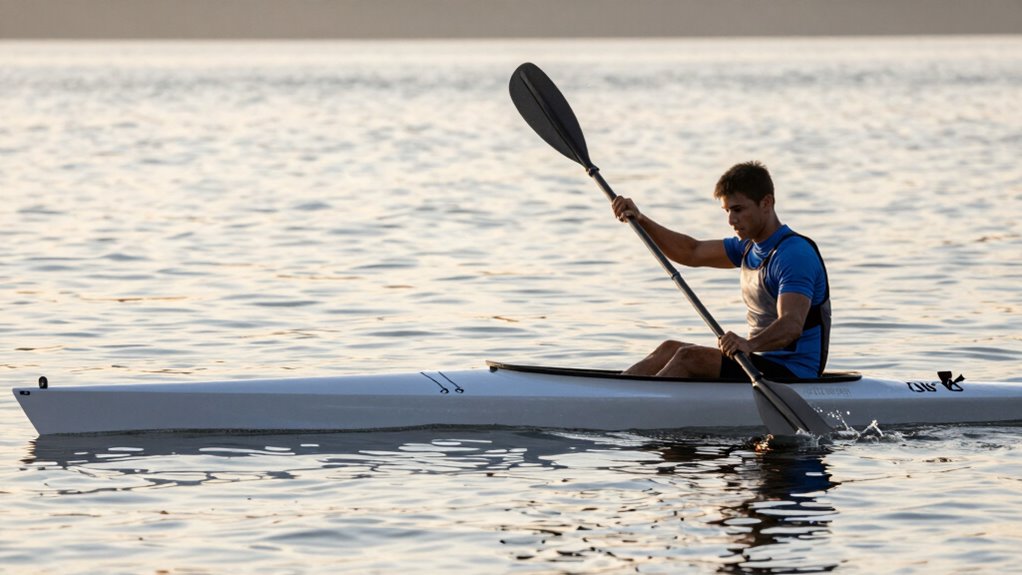
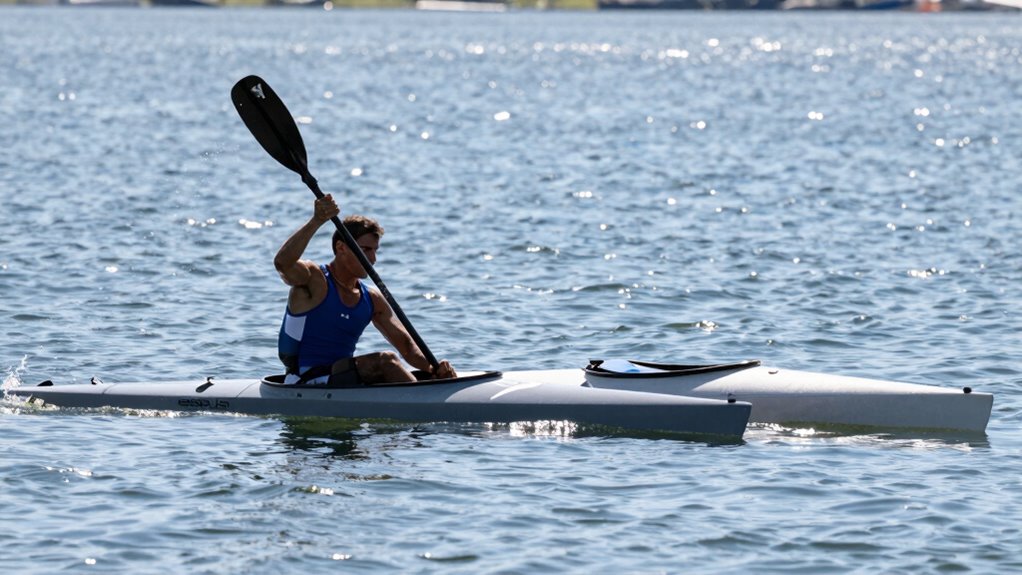
When comparing speed between pedal and paddle kayaks, several factors come into play. Your speed comparison depends on paddling efficiency and the kayak’s design. Pedal kayaks often allow for continuous movement with less fatigue, which can translate into higher sustained speeds over time, especially on flat water. Paddle kayaks, on the other hand, require more effort and technique, which may reduce paddling efficiency, particularly for less experienced paddlers. While pedal systems can boost your speed by providing consistent power, they might be limited by mechanical efficiency and terrain. Ultimately, if you’re seeking maximum speed with minimal effort, pedal kayaks have an edge. However, your actual speed will depend on conditions, your skill, and the kayak’s design.

Vibe Yellowfin 120 Sit On Top Kayak – Speed & Stability for Recreational/Fishing, 12ft Superior Tracking, 10 Gear Tracks, Summit Perch Compatible, Ultimate Hero Seat (Galaxy)
𝐅𝐀𝐒𝐓𝐄𝐒𝐓 𝐈𝐍 𝐓𝐇𝐄 𝐅𝐋𝐄𝐄𝐓: The Yellowfin 120 is our fastest kayak, built with a performance hull design that…
As an affiliate, we earn on qualifying purchases.
As an affiliate, we earn on qualifying purchases.
Is Paddling Easier for Beginners Than Using a Pedal System?
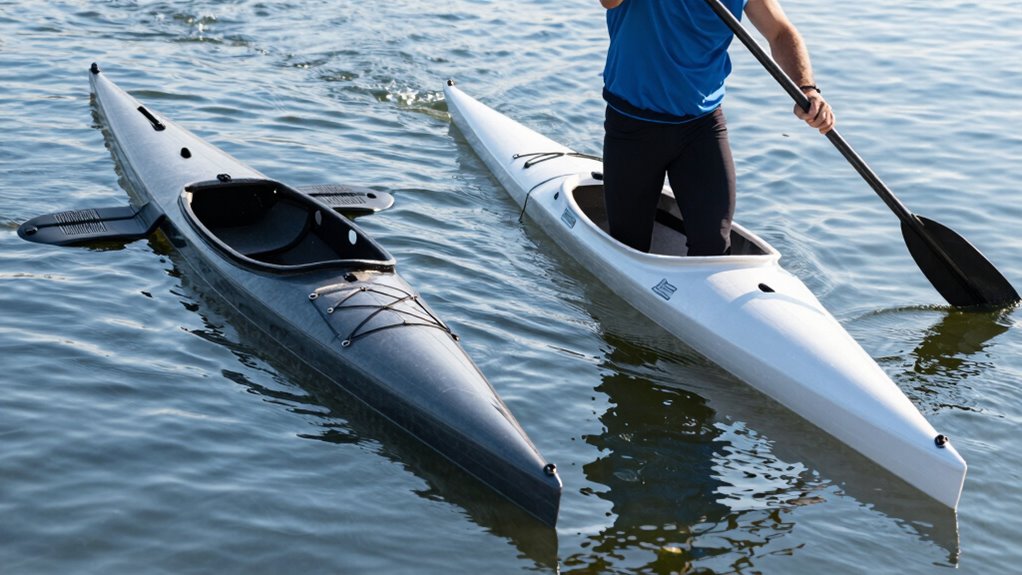
For beginners, paddling often feels more straightforward because it has a gentler learning curve and requires less coordination. Using a pedal system can take time to master and demands more physical effort and technique. So, you might find paddling easier to pick up initially, especially if you prefer a simple, low-maintenance approach.
Learning Curve Differences
Paddling a traditional kayak often feels more intuitive for beginners because it relies on straightforward arm movements and familiar techniques. This simplicity helps you quickly develop basic skills and build confidence on the water. With paddling, you can focus on ergonomics comfort, ensuring your body stays relaxed and efficient. Plus, paddling efficiency improves as you learn to coordinate your strokes smoothly.
Consider these points:
- Paddling’s straightforward motion makes it easier for beginners to grasp quickly.
- You can adjust your technique to improve ergonomics comfort and avoid fatigue.
- Developing paddling efficiency becomes more intuitive as you practice proper stroke techniques.
Physical Effort Level
Although pedal kayaks may seem more advanced, they often require more initial effort from beginners because engaging the pedal system involves continuous leg power and coordination. This can lead to increased physical fatigue, especially if you’re not accustomed to sustained leg activity. Pedal drives also demand ergonomic comfort, as improper positioning can cause discomfort or strain over time. In contrast, paddling typically requires less overall effort, relying mainly on your upper body, which many beginners find easier to manage. While paddling may feel less physically demanding initially, it can become tiring during longer trips. Ultimately, the physical effort level depends on your fitness and comfort preferences, but pedal systems generally demand more sustained effort and ergonomic awareness from the start.
Technique Simplicity
Using a paddle generally proves simpler for beginners because it involves straightforward, intuitive motions that don’t require mastering complex mechanisms. Paddling allows you to focus on your technique without worrying about ergonomics comfort or adapting to intricate systems. This simplicity makes it easier to get started quickly. With paddling, you can:
- Learn basic strokes without adjusting to mechanical parts
- Focus on maintaining balance and rhythm easily
- Adapt your technique naturally as you gain experience
In contrast, pedal systems often require technique adaptation and can involve more complex ergonomics comfort considerations. While they offer efficiency once mastered, beginners might find paddling less intimidating and easier to learn initially.
OCEANBROAD Kayak Paddle 90.5in/230cm Alloy Shaft Kayaking Boating Canoeing Oar with Paddle Leash 1 Paddle, Black
MADE TO LAST: This kayak paddle is with high-quality aluminum alloy shaft (1.1mm shell thickness) and fiberglass reinforced…
As an affiliate, we earn on qualifying purchases.
As an affiliate, we earn on qualifying purchases.
How Much Maintenance Do Pedal Drive Systems Require?
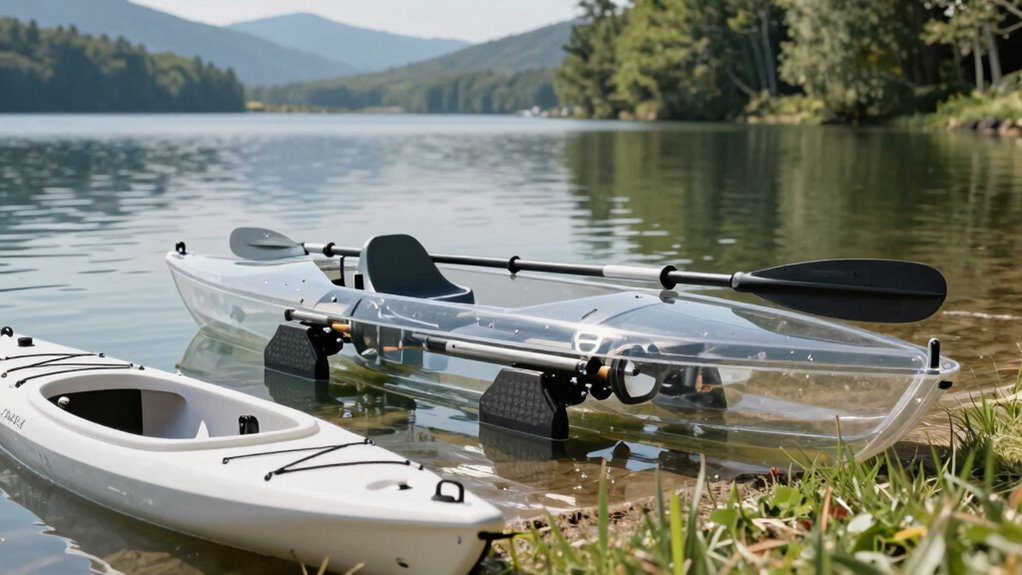
Pedal drive systems generally require more maintenance than traditional paddle setups, but the effort involved is manageable with regular care. You should expect a moderate maintenance frequency, including cleaning, lubrication, and inspecting moving parts after each outing. Keeping the system free of debris and salt buildup helps prevent issues. While minor repairs, like replacing worn belts or lubricating chains, are straightforward, more complex repairs—such as fixing or replacing the drive mechanism—can be challenging if you’re unfamiliar with the parts. Regular maintenance minimizes repair complexity and extends the lifespan of your pedal drive system. By dedicating a little time to upkeep, you ensure smooth performance and avoid costly repairs, making pedal systems a reliable choice despite their additional maintenance needs.
Which Kayak Is Better in Rough Water or Calm Conditions?
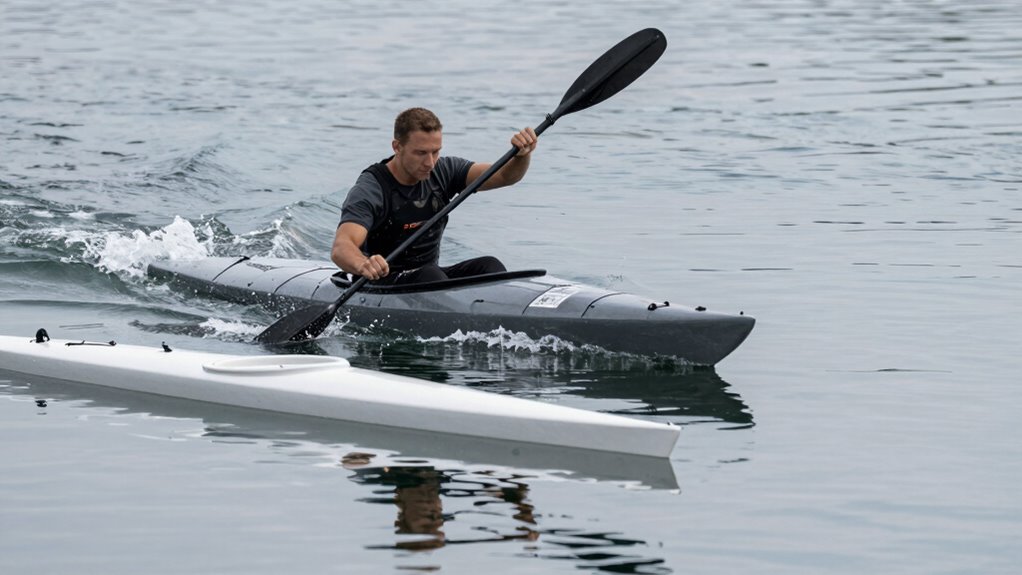
When choosing a kayak for different water conditions, understanding how each performs in rough versus calm waters is key. Pedal kayaks generally excel in rough conditions due to their stability in currents and better tracking, making them easier to control. Paddle kayaks, however, shine in calm waters, offering quick maneuverability and simplicity. Consider these factors:
- Stability in currents: Pedal kayaks tend to stay steadier, especially in choppy water.
- Visibility considerations: Paddle kayaks often have lower profiles, making them easier to spot in calm conditions.
- Ease of handling: Paddle kayaks are more nimble, ideal for calm lakes, while pedal kayaks handle rougher waters better.
Your choice depends on water conditions and your comfort with stability and visibility needs.
How Do Costs Compare Between Pedal and Paddle Kayaks?
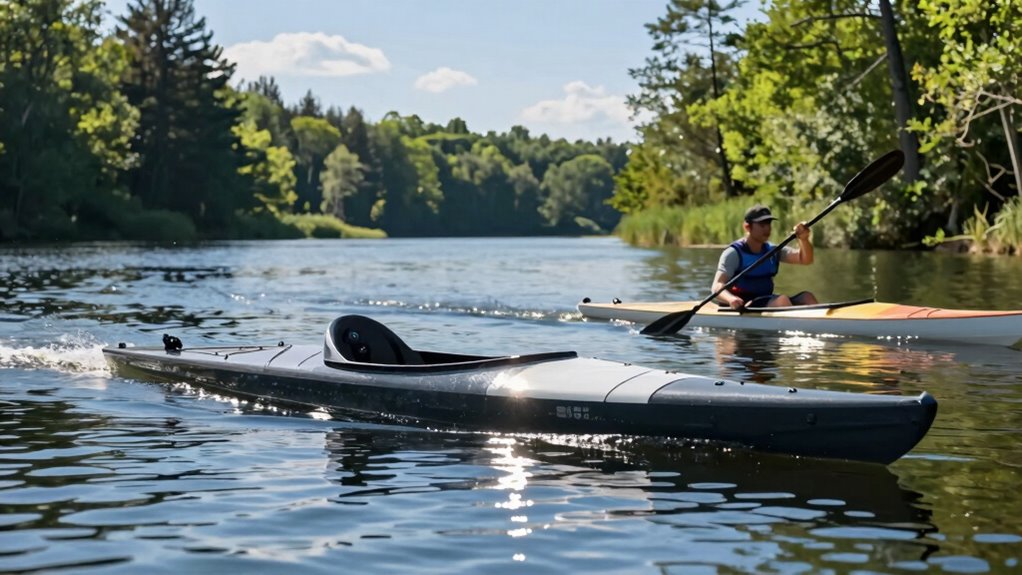
When comparing pedal and paddle kayaks, you’ll want to take into account the initial purchase price, as pedal models often cost more upfront. Maintenance and repair costs can also vary, affecting your long-term expenses. Additionally, think about the overall value and how each kayak type holds up over time to make the best investment.
Initial Purchase Price
The initial purchase price of a kayak can vary considerably depending on whether you choose a pedal-driven or paddle-powered model. Generally, pedal kayaks tend to have a higher upfront cost due to their complex mechanics and added features. When considering the cost comparison, keep in mind:
- Pedal kayaks often start around $2,000, with high-end models reaching $4,000 or more.
- Paddle kayaks are typically more affordable, usually ranging from $500 to $1,500.
- The initial investment for a pedal kayak is higher but may offer benefits in speed and convenience.
Your decision should weigh the initial investment against your budget and intended use. While pedal models cost more initially, they might save you time and effort in the long run.
Maintenance and Repairs
Maintenance and repair costs tend to be higher for pedal kayaks because their complex mechanical systems require regular upkeep. The gear durability of pedal drives can vary, but over time, components like pedals, chains, and gears may need replacement due to wear and tear. You’ll also need to follow consistent cleaning routines to prevent corrosion, especially if you paddle in saltwater. Paddle kayaks, on the other hand, usually have fewer moving parts and less mechanical complexity, making their maintenance simpler and less costly. Regular cleaning of the hull and paddle ensures longevity, but repairs are generally limited to minor issues like scratches or damage to the paddle itself. Overall, pedal kayaks demand more attention and often incur higher repair costs compared to paddle kayaks.
Long-Term Investment Value
Over the long term, pedal kayaks often require a higher upfront investment and incur more ongoing costs compared to paddle kayaks. While the initial price is steeper, pedal kayaks tend to offer better long-term durability due to their robust build quality and advanced components. This durability can positively influence resale value, especially if you maintain the kayak well. However, paddle kayaks usually have lower purchase prices and fewer mechanical parts, reducing maintenance costs over time. Consider these factors:
- Pedal kayaks typically retain higher resale value due to durability
- Lower initial cost of paddle kayaks makes them more accessible upfront
- Ongoing maintenance expenses are generally higher for pedal models
Understanding these long-term investment factors helps you choose the kayak that fits your budget and future plans.
Are Pedal Kayaks Easier to Transport and Store?
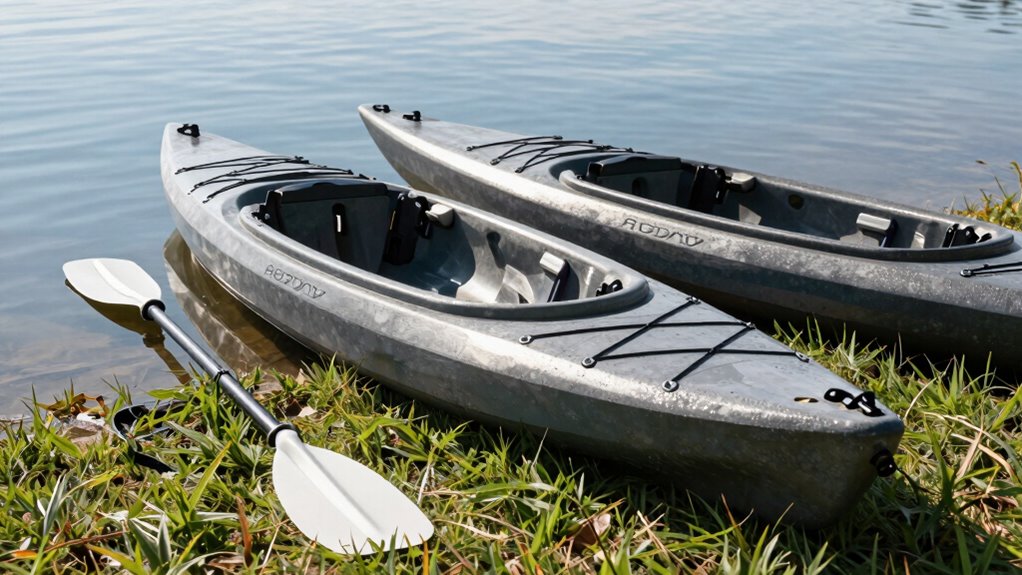
Since pedal kayaks are often designed with portability in mind, they tend to be easier to transport and store compared to paddle kayaks. Their streamlined shape and integrated components often make handling more convenient, reducing the effort needed for transportation. Many pedal kayaks are lightweight or come with features like removable pedals or foldable parts, enhancing transportation convenience. When it comes to storage solutions, pedal kayaks usually fit better in compact spaces, such as garages or closets, thanks to their manageable size and design. This makes them easier to store without requiring extensive equipment or specialized racks. Overall, if you prioritize simple transportation and efficient storage, pedal kayaks offer a clear advantage over traditional paddle models.
Which Kayak Fits Your Paddling Style and Adventure Goals?
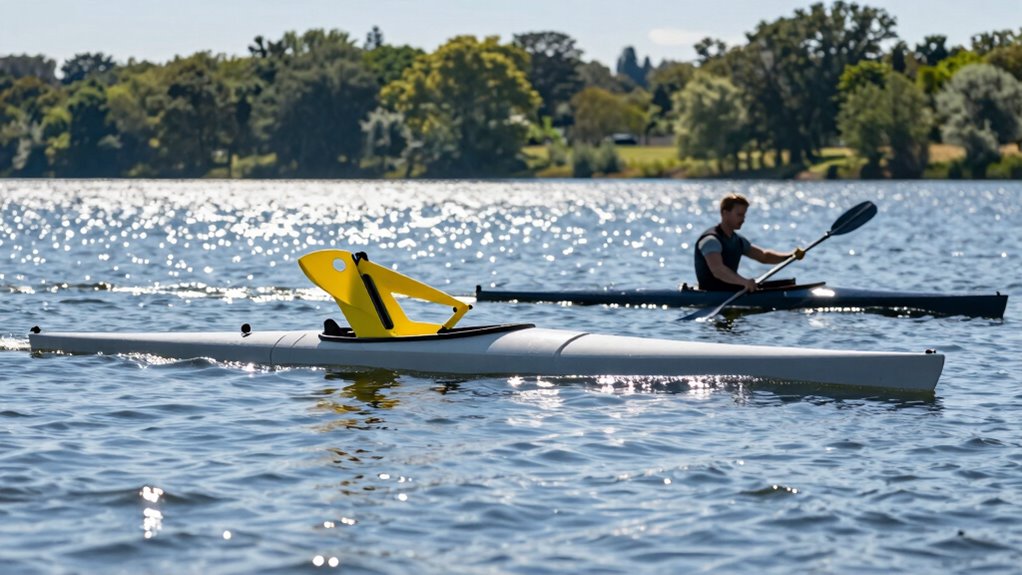
Choosing the right kayak depends on your paddling style and adventure goals. If comfort and ergonomic design matter, a paddle kayak often offers better control and ease of use, especially for longer trips. For those focused on environmental impact, pedal kayaks tend to be more energy-efficient, reducing your footprint on delicate ecosystems. Consider these factors:
- Ergonomics and comfort during extended paddling sessions
- Your adventure goals, like fishing, touring, or casual exploration
- How much effort you’re willing to invest in transportation and setup
Your choice should align with your preferred paddling experience. Paddle kayaks are straightforward, lightweight, and simple to transport, perfect for quick outings. Pedal kayaks provide added convenience and comfort but may be bulkier and more impactful environmentally.
What Common Problems Might You Encounter With Pedal or Paddle Kayaks?
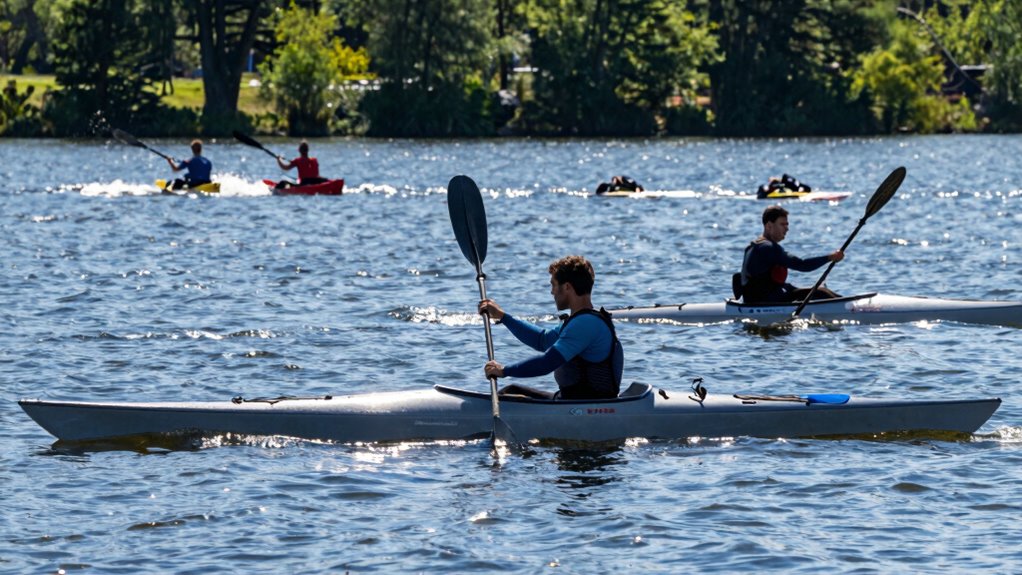
Both pedal and paddle kayaks can face mechanical issues that disrupt your trip, like broken parts or gear failures. You might also struggle with limited maneuverability in tight spaces, making it harder to control your kayak. Additionally, regular maintenance and repairs are needed to keep your kayak functioning smoothly over time.
Mechanical Malfunctions Often Occur
Mechanical issues can crop up unexpectedly with both pedal and paddle kayaks, often disrupting your trip. Common problems include broken pedals, loose fittings, or damaged propellers, which can hinder your progress. To handle these issues, stay calm and use troubleshooting tips like tightening loose parts, inspecting for cracks, or replacing worn components. Regular maintenance helps prevent mechanical failures before hitting the water. Keep a small toolkit on hand with essentials such as screwdrivers, spare pins, or lubricants. Recognizing early signs of trouble can save you time and frustration later. Being prepared ensures you can quickly address issues like jammed pedals or broken blades, keeping your trip smooth and enjoyable. Staying proactive with maintenance minimizes surprises and maximizes your time on the water.
Limited Maneuverability Challenges
Limited maneuverability can pose significant challenges when kayaking, especially in tight or crowded waters. Pedal kayaks often have limited maneuverability due to their design, making turning more difficult than paddle kayaks. You might find yourself struggling with turning difficulty, especially at slow speeds or in confined spaces. Paddle kayaks generally offer better control because you can quickly adjust your paddle strokes to navigate tight spots. However, pedal drives can be sluggish to pivot, which becomes frustrating in situations that require quick directional changes. Additionally, the bulkiness of some pedal systems can restrict your ability to maneuver precisely. Overall, if precise turning and agility are essential for your trips, both pedal and paddle kayaks present specific challenges you need to take into account.
Maintenance and Repair Needs
Maintaining pedal and paddle kayaks involves addressing common issues that can arise over time. With pedal kayaks, you might face problems like worn drive systems or loose components due to frequent use. Paddle kayaks can develop issues such as paddle blade damage or loosened fittings. Both require regular checks for gear customization options to guarantee peak performance. Additionally, ergonomic design features may loosen or wear with extensive use, affecting comfort and efficiency. To keep your kayak in top shape, watch for:
- Wear and tear on drive mechanisms or paddles
- Loose or damaged fittings affecting stability
- Damage to seating or ergonomic components that impact comfort
Routine maintenance helps prevent costly repairs and keeps your kayak ready for adventure, whether pedal or paddle.
How Do You Decide Which Kayak Is Best for You?
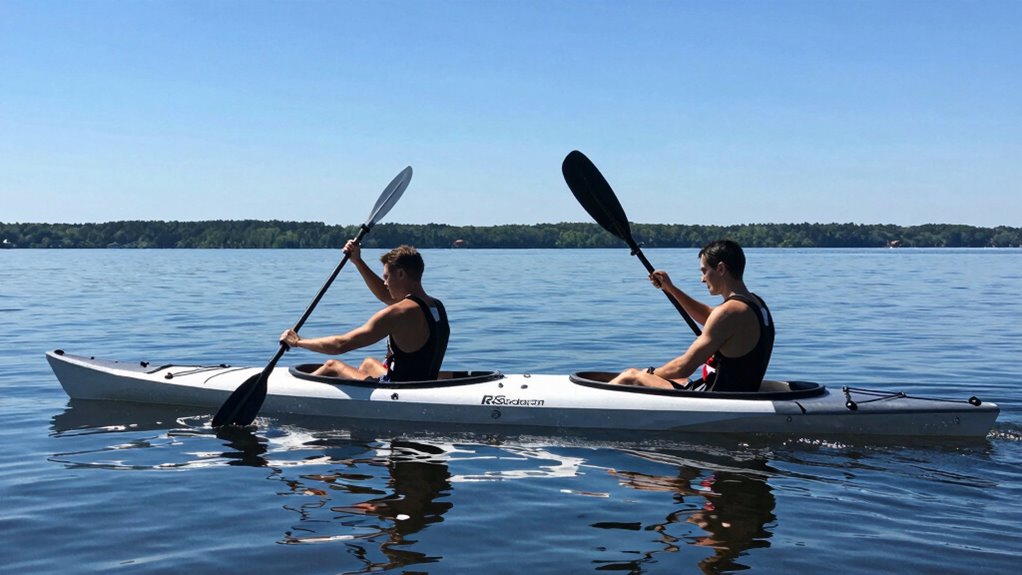
Choosing the right kayak depends on understanding how you plan to use it and what features matter most to you. Consider ergonomics and comfort—if you’ll be paddling or pedaling for hours, look for models with adjustable seats and ergonomic designs. Think about the environmental impact; some kayaks are made from eco-friendly materials or are more energy-efficient to operate. Your skill level also plays a role: beginners might prefer simple, lightweight kayaks, while experienced paddlers may opt for advanced features. Budget is important too—paddle kayaks often cost less upfront, but pedal models can offer more convenience and speed. Ultimately, matching your activity style, comfort needs, and values will guide you toward the best kayak for your adventures.
Frequently Asked Questions
How Do Pedal Kayaks Affect Overall Paddling Endurance?
Pedal kayaks can improve your overall paddling endurance by reducing muscle fatigue in your arms and shoulders, allowing you to maintain longer trips. They also have a positive cardiovascular impact, as your legs engage more actively, boosting your stamina. This means you can paddle farther and for longer periods without tiring quickly. The active leg motion helps balance muscle use, making your paddling sessions more sustainable and less exhausting over time.
Are Pedal Kayaks More Suitable for Fishing Than Paddle Kayaks?
If you’re fishing, pedal kayaks often suit you better because they offer more fishing comfort and allow you to stay steady and hands-free, making it easier to cast and reel. Plus, their portability advantages mean you can carry them to remote spots without hassle. You’ll appreciate the convenience of pedal-powered stability, especially over long days, giving you more time to focus on your catch rather than paddling.
What Safety Features Are Unique to Pedal Drive Systems?
Pedal drive systems often come with unique safety features like emergency features, such as quick-release pedals that detach easily if needed, and manual backups, like hand cranks or secondary steering mechanisms, in case the pedal system fails. These features help you stay safe on the water, providing reliable options to continue your trip or make an emergency exit. Always check your kayak’s safety features before heading out.
Can Pedal Kayaks Be Used Effectively in Shallow Waters?
You can absolutely use a pedal kayak in shallow waters, but it’s a bit of a tightrope walk. Pedal drive systems are designed for durability and can handle shallow water navigation, but you need to be cautious. Avoid hitting sharp rocks or submerged debris that might damage the drive. With proper care and awareness, pedal kayaks can be effective in shallow conditions, giving you hands-free control without sacrificing stability.
How Does Weather Impact the Performance of Each Kayak Type?
Weather conditions substantially impact your kayak’s performance. Strong winds increase wind resistance, making it harder to paddle or pedal effectively and stabilizing the kayak. Paddle kayaks are more affected by gusts, as you directly face the wind, while pedal kayaks offer better control and stability in rough weather. Always check weather forecasts before heading out, and adjust your effort accordingly to stay safe and comfortable on the water.
Conclusion
Ultimately, choosing between a pedal drive and paddle kayak is like picking your adventure’s heartbeat. If you crave speed and effortless cruising, the pedal kayak is your steady steed, gliding smoothly through the water. But if simplicity and connection to nature call to you, paddling keeps you grounded in the moment. Whichever path you choose, let your passion steer the way—and remember, the water’s your endless canvas waiting to be explored.