
If you’re looking for the top premium marine GPS units for 2026, I’ve found some excellent options that boaters rely on. From Garmin’s advanced chartplotters and fishfinders like the UHD2 54CV and 94sv to rugged handhelds like the GPSMAP 79sc and 86Sci, these devices offer reliable navigation, bright displays, and safety features. If you want the full rundown on each, just continue exploring—there’s plenty more to discover.
Key Takeaways
- The list features top-rated marine GPS units with advanced sonar, mapping, and display technologies for 2026.
- Emphasizes durability, waterproofing, and rugged design suitable for demanding marine environments.
- Highlights integrated safety features like AIS, DSC alerts, satellite communication, and hazard detection.
- Includes both fixed chartplotters and portable handheld devices for versatile boating needs.
- Focuses on user-friendly interfaces, high-resolution displays, and seamless connectivity options.
Garmin ECHOMAP UHD2 54CV Chartplotter/Fishfinder
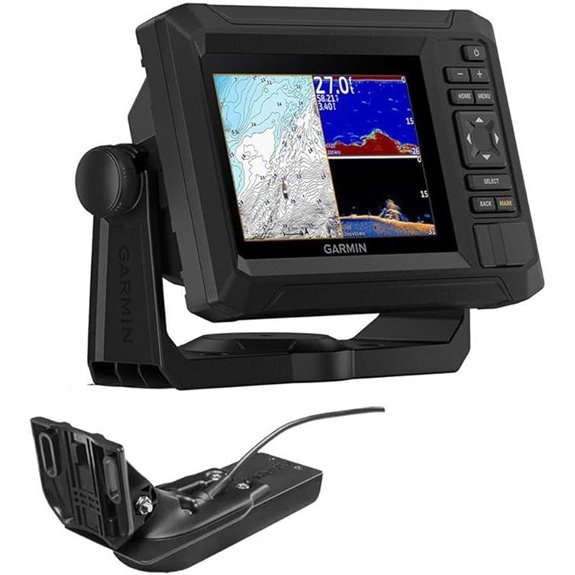
If you’re looking for a reliable and easy-to-use marine GPS that doubles as a fishfinder, the Garmin ECHOMAP UHD2 54CV is an excellent choice. Its bright 5-inch WVGA IPS display offers clear, high-contrast visuals, making navigation and underwater imaging straightforward. With dual sonar views—Garmin CHIRP traditional and ClearVü scanning—you get vivid images and target separation. Preloaded with inland and coastal maps, plus support for advanced Garmin cartography, it’s perfect for versatile navigation. Wireless data sharing via Wi-Fi, along with the ActiveCaptain app, keeps you connected and updated. Compact and lightweight, it’s an all-in-one device that enhances fishing and boating experiences.
Garmin GPSMAP 79sc Marine Handheld GPS with Charts
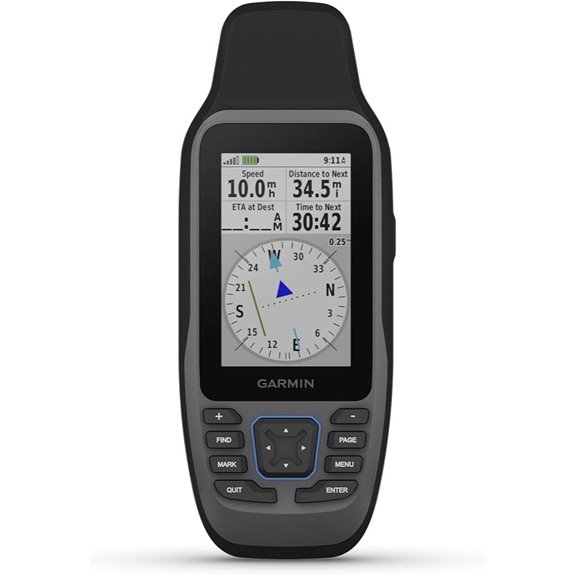
The Garmin GPSMAP 79sc Marine Handheld GPS with Charts stands out as an excellent choice for serious boaters and outdoor adventurers who need a rugged, reliable navigation device. It features a durable, floating design with water resistance (IPX6) and a high-resolution, scratch-resistant color display. Supporting multiple satellite systems ensures accurate tracking worldwide, while built-in BlueChart g3 coastal charts simplify marine navigation. With extensive storage for waypoints and routes, a barometric altimeter, electronic compass, and up to 20 hours of battery life, this device combines toughness and functionality in a compact, lightweight package perfect for demanding conditions.
Garmin ECHOMAP UHD2 94sv Chartplotter with Transducer
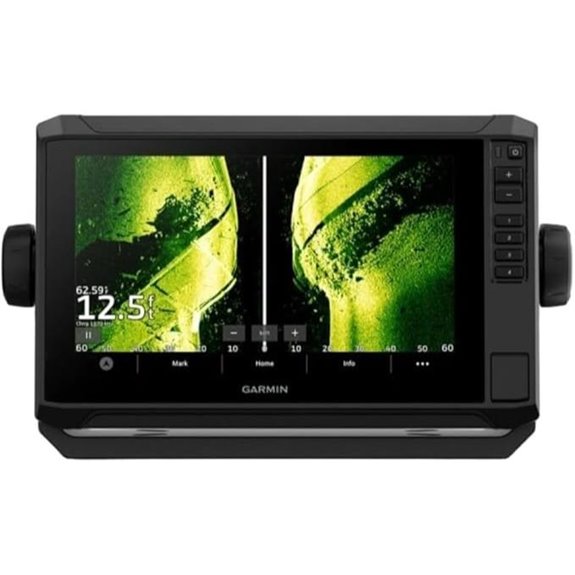
The Garmin ECHOMAP UHD2 94sv Chartplotter with Transducer stands out as a top choice for anglers and boaters seeking precise navigation and advanced sonar capabilities. Its 9-inch sunlight-readable touchscreen offers clear detail and wide viewing angles, making navigation effortless. The included GT56-TM transducer provides traditional Garmin sonar, ClearVü, and SideVü scanning, giving me all-encompassing underwater images. It features built-in Garmin Navionics+ U.S. Coastal charts and seamless Wi-Fi for wireless sharing of waypoints, routes, and sonar data. Plus, its wireless connection to Force trolling motors enhances control, making this unit versatile and user-friendly for any boating adventure.
Garmin GPSMAP 943xsv Combo GPS/Fishfinder
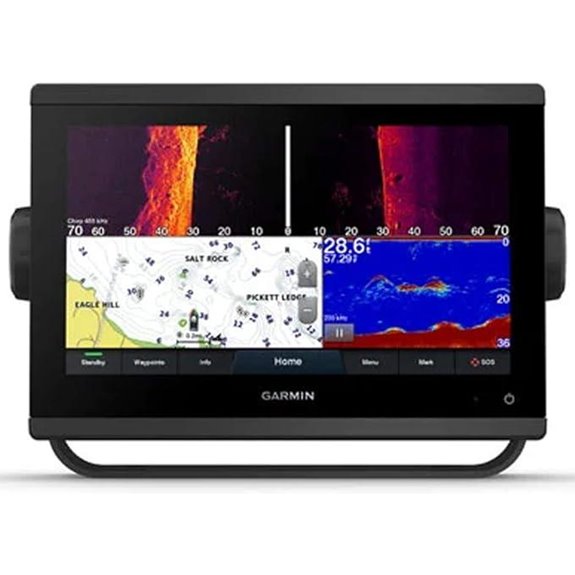
For boaters who need a versatile navigation and fishing solution, the Garmin GPSMAP 943xsv Combo GPS/Fishfinder stands out with its preloaded BlueChart g3 and LakeV g3 charts, providing detailed mapping for the US, Canada, and the Bahamas. It includes a chartplotter with a microSD card for easy updates, ensuring you have current maps at your fingertips. The system comes with essential cables, a transducer compatible with high-quality sonar imaging, and multiple mounting options for a secure fit. With all-encompassing documentation and a radome GMR 18 HD+ radar, this combo delivers reliable navigation, fishing insights, and situational awareness in one powerful package.
Garmin 010-01740-00 GPSMAP 1022 with Worldwide Basemap

If you’re a cruiser, sailor, or racing enthusiast seeking a reliable navigation solution, the Garmin GPSMAP 1022 with Worldwide Basemap stands out as an excellent choice. It features a bright 10-inch WSVGA display with a user-friendly keypad and multifunction control knob. The high-sensitivity 10 Hz GPS/GLONASS receiver guarantees precise positioning, while the support for Blue Chart g3 Vision charts enhances mapping capabilities. With built-in Wi-Fi, NMEA support, and network connectivity, you can easily share data and control your system remotely through the Active Captain app. Its robust design and extensive features make it a top premium marine GPS for demanding boaters.
Humminbird 411660-1 Helix 5 Chirp GPS G3 Fish Finder
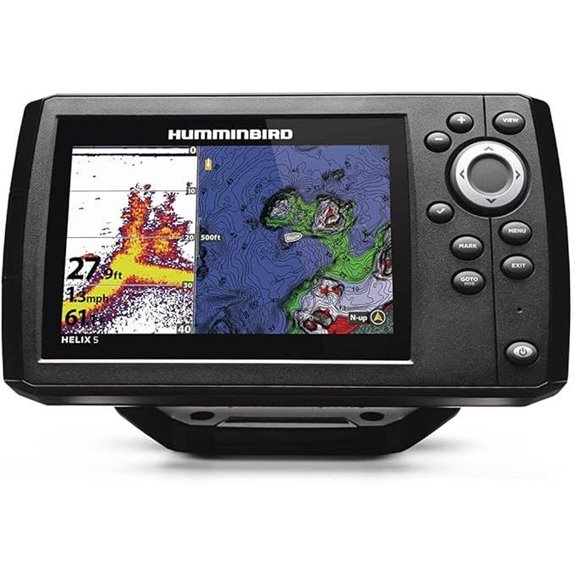
When searching for a reliable fish finder that combines advanced sonar technology with precise mapping, the Humminbird 411660-1 Helix 5 Chirp GPS G3 stands out. It features dual Spectrum CHIRP sonar with Wide and Narrow modes, offering detailed fish detection and scanning. The 5-inch color TFT display provides clear visuals, while the built-in Humminbird Basemap covers over 10,000 lakes and coastlines, compatible with popular charts. With AutoChart Live, I can map depth contours and bottom features in real-time. Its user-friendly keypad controls make it easy to operate in any weather, making it a top choice for serious anglers.
Garmin GPS 73, 2.6 inches, Model:010-01504-00
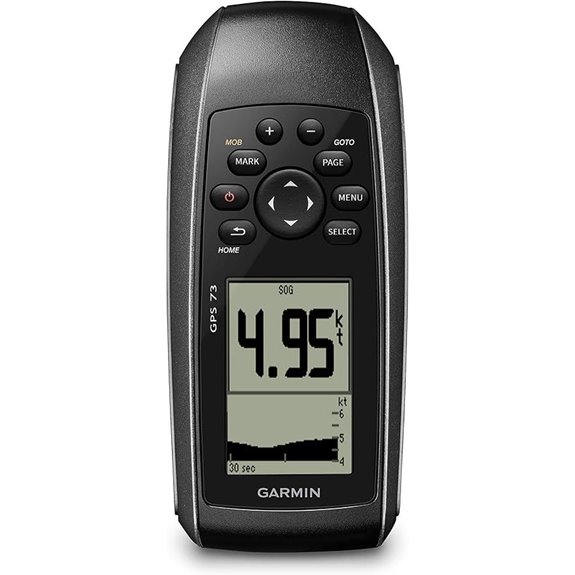
Looking for a compact yet reliable marine GPS that fits easily into your boat’s navigation system? The Garmin GPS 73 is perfect. Its 2.6-inch display provides clear, detailed maps and essential sailing tools like virtual starting lines, countdown timers, tack assist, and speed history. It also offers crucial marine functions such as MOB, alarms for off course or anchor drag, and route planning. Operating over 18 hours on just two AA batteries, it’s built for long trips. The device features an intuitive, backlit interface and stores up to 1,000 waypoints and 100 tracks. Included are a lanyard and quick start manual, making it easy to use on the water.
Garmin GPSMAP 86Sci Handheld GPS with Satellite Capabilities
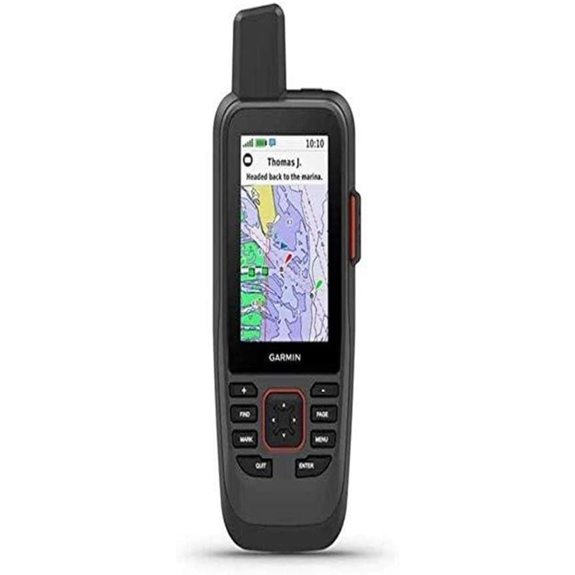
The Garmin GPSMAP 86Sci Handheld GPS with Satellite Capabilities stands out as an essential tool for serious marine adventurers who need reliable navigation and communication in remote waters. Its water-resistant, floating design features a sunlight-visible 3” display, with button controls for easy operation on deck. Preloaded with BlueChart G3 coastal charts, it streams boat data from compatible instruments, consolidating marine information. The inreach satellite communication offers two-way texts via the global Iridium network, with optional weather updates and SOS alerts for safety. It can also control Garmin autopilots and share your location via satellite, making it a versatile, rugged device for any serious boater.
Garmin GPSMAP 79s Marine Handheld GPS
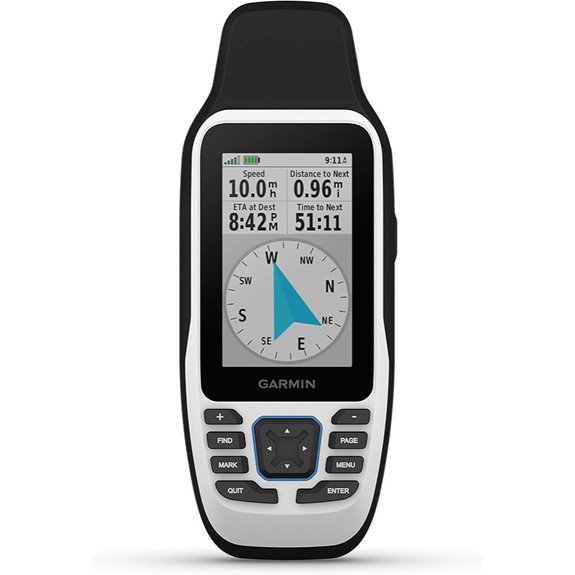
If you need a rugged, water-resistant handheld GPS that can handle tough marine conditions, the Garmin GPSMAP 79s is an excellent choice. It’s built to withstand harsh environments, with IPX6 water resistance, a scratch-resistant, fogproof glass, and the ability to float if dropped in water. Its high-resolution color display makes navigation clear, while increased memory supports up to 10,000 waypoints and 250 routes. Supporting multiple satellite systems like GPS, GLONASS, Beidou, and Galileo, it ensures reliable positioning worldwide. With a built-in electronic compass, barometric altimeter, and up to 20 hours of battery life, it’s perfect for serious boaters.
Nautilus LifeLine Marine Rescue GPS nexGen
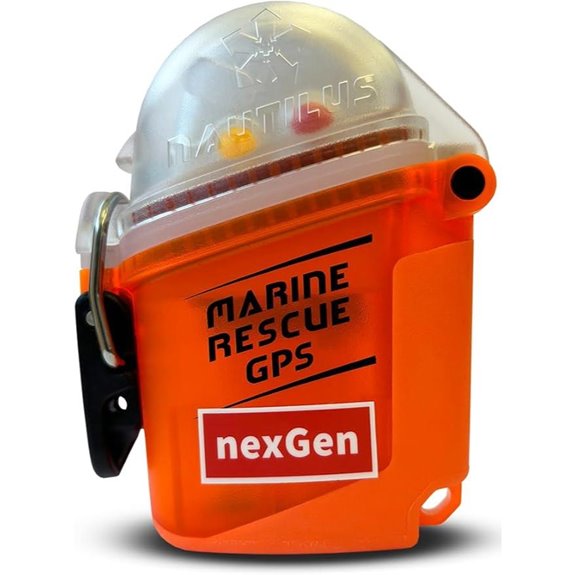
When safety at sea matters most, the Nautilus LifeLine Marine Rescue GPS nexGen stands out as an essential tool for boaters and sailors. Weighing only 4.6 ounces, it’s portable and durable, designed for tough marine conditions. It offers both distress alerts for emergencies and position sharing for non-urgent situations, with regional variations. Using GPS, it provides location accuracy within one meter and communicates via VHF radio waves, alerting nearby vessels and AIS-equipped ships. Waterproof up to 425 feet and IP68 rated, it’s built to withstand harsh environments. This device combines reliability and all-encompassing safety features, making it a must-have for any serious mariner.
Garmin GPSMAP 79sc Marine Handheld GPS (Renewed)

For boaters who need a durable, reliable handheld GPS, the Garmin GPSMAP 79sc Marine Handheld GPS (Renewed) stands out with its rugged design and water resistance. It’s built to handle marine environments, floating safely if dropped in water and featuring an IPX6 water resistance rating. The scratch-resistant, fogproof display ensures clear visibility in harsh conditions. With a high-resolution color screen and expanded memory for thousands of waypoints and routes, it offers precise navigation supported by multiple satellite systems. Its preloaded BlueChart g3 charts, electronic compass, and barometric altimeter make it a versatile tool, backed by up to 20 hours of battery life for extended outings.
Garmin GPSMAP 65 Handheld GPS with Multi-Band Tech
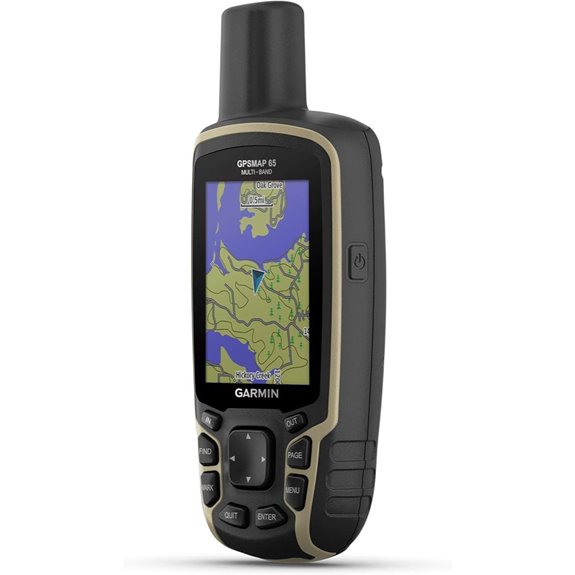
The Garmin GPSMAP 65 Handheld GPS with Multi-Band Tech stands out for outdoor enthusiasts who need reliable guidance in challenging environments. Its 2.6-inch sunlight-readable color display makes it easy to see in bright conditions. The device features expanded GNSS support with multi-band technology, ensuring accurate positioning in steep terrain, urban canyons, or dense forests. It includes routable TopoActive maps and a federal land map for the U.S. Users can manage tracks, routes, and waypoints via Garmin Explore’s app and website. Designed for durability and precision, this handheld GPS keeps you confidently guiding even in the most demanding outdoor conditions.
Factors to Consider When Choosing Premium Marine GPS Units
When selecting a premium marine GPS, I focus on display clarity and size to guarantee easy reading in all conditions. I also consider charting capabilities, sonar options, and connectivity features that match my boating needs. Finally, durability and weatherproofing are essential to keep my device reliable in harsh marine environments.
Display Clarity and Size
Choosing the right display size and clarity is vital because it directly impacts how easily I can interpret navigation data and sonar imagery while on the water. A larger display, like a 9-inch screen, offers more detailed visuals and better situational awareness, which is key during navigation. High-resolution, sunlight-readable screens ensure visibility in bright outdoor conditions, reducing eye strain. WVGA IPS displays provide vivid colors and wide viewing angles, making underwater images and charts easier to see from various angles. Touchscreen interfaces on sizable displays make it simple to interact with maps, menus, and sonar controls, even in rough conditions. Smaller or lower-resolution screens limit data visibility, often requiring more scrolling and zooming, which can distract me from safe navigation.
Charting Capabilities and Maps
Clear and detailed charts are vital for safe and accurate navigation on the water. Premium marine GPS units support a variety of digital charts, including Navionics, BlueChart g3, and LakeV g3, providing extensive coverage. Many come preloaded with inland, coastal, and worldwide basemaps, making them versatile for different environments. Advanced models often allow the use of extra chart layers, such as satellite imagery, for better situational awareness. Features like route planning, waypoint marking, and real-time map updates help me navigate precisely and improve fishing efficiency. Compatibility with external chart sources and wireless map sharing are common, giving me the flexibility to customize and update my navigation data effortlessly. These charting capabilities are essential for confident, safe boating in any conditions.
Sonar and Transducer Options
The sonar and transducer options I select substantially impact the clarity, depth reach, and target separation of my marine GPS unit. High-frequency transducers excel in shallow waters, providing detailed images, while dual-frequency or wide-spectrum transducers are better suited for deeper areas. Some units support advanced scanning sonar technologies like SideVü and ClearVü, offering thorough underwater views that help me identify fish, structures, and hazards. Compatibility with specific transducers is vital, as it allows me to upgrade or customize sonar features based on my fishing or navigation needs. The quality of sonar imaging directly affects my ability to detect targets, interpret underwater structures, and improve overall effectiveness. Choosing the right sonar and transducer options ensures I get accurate, reliable underwater insights when I need them most.
Connectivity and Data Sharing
Connectivity and data sharing features are essential when selecting a premium marine GPS unit because they enable seamless exchange of navigation, sonar, and sensor information across multiple devices. Built-in Wi-Fi or Bluetooth allows wireless transfer of waypoints, routes, and sonar data, making setup faster and reducing clutter. Compatibility with apps like ActiveCaptain or Garmin Explore offers remote management and real-time updates, enhancing trip planning and monitoring. Many units support industry-standard protocols like NMEA 2000 and NMEA 0183, enabling integration with radar, autopilots, and other sensors for a thorough navigation system. Wireless sharing also facilitates quick chart updates and sharing of user waypoints, improving coordination among onboard devices. Some models even connect wirelessly to trolling motors or radar systems, allowing remote control and synchronized data for better navigation and fishing.
Durability and Weatherproofing
When selecting a premium marine GPS unit, durability and weatherproofing stand out as essential factors to guarantee reliable performance in challenging marine conditions. These units are built with high IP ratings, like IPX6 or IP68, ensuring they resist water, dust, and salt spray. Their rugged, impact-resistant casings made from reinforced plastic or metal can withstand collisions and rough handling. Weatherproofing features, such as sealed displays, fogproof lenses, and scratch resistance, keep visibility clear even in extreme weather. Many models operate reliably across a wide temperature range, from freezing cold to scorching heat, making them suitable for diverse environments. Protective covers, gaskets, and sealed ports further prevent water ingress and corrosion, ensuring longevity and consistent performance in the demanding conditions of the open water.
Battery Life and Power
Choosing a marine GPS unit with long-lasting battery life is essential for reliable navigation on extended trips or in emergencies. Some devices can last over 20 hours on a single charge, ensuring you stay connected when it matters most. The type of power source also matters—rechargeable batteries offer convenience, while replaceable AA batteries can be a lifesaver in remote areas. Power management features like automatic shutoff or low-power modes help conserve energy during critical moments. Higher energy efficiency means less frequent recharging or battery replacements, boosting dependability on long outings. Additionally, compatibility with external power sources such as boat systems or portable chargers allows for extended use beyond standard battery life. Prioritizing these factors ensures your GPS remains operational, no matter how long your adventure lasts.
User Interface Ease
Have you ever struggled with steering a complex marine GPS interface during a tense situation? I know I have. That’s why I prioritize intuitive design. A user-friendly interface with clearly labeled buttons and menus makes a huge difference, reducing the learning curve and allowing quick access to essential functions. Touchscreens with high contrast and responsive sensitivity improve navigation, even under bright sunlight. Dedicated physical controls, like rotary knobs and shortcut buttons, let me make quick adjustments without digging through menus. Customizable layouts help me prioritize indispensable features, streamlining my workflow onboard. Clear, legible fonts and icons are a lifesaver, helping me read data and settings effortlessly and avoid errors during critical maneuvers. Ease of use is crucial for safety and efficiency out on the water.
Additional Safety Features
Enhanced safety features are indispensable considerations that can considerably boost your confidence and security on the water. Modern marine GPS units often include AIS integration and DSC alerts, which help prevent collisions and enable quick rescue responses. Waterproof and water-resistant ratings, like IPX6 or IP68, ensure your device withstands harsh marine conditions. Emergency communication options, such as satellite connectivity and distress alert systems, provide critical location info during emergencies. Built-in sensors like barometric altimeters and electronic compasses improve situational awareness and navigation accuracy. Additionally, automatic alerts for off-course navigation, anchor drag, or deviations help you stay safe by notifying you of potential hazards before they become serious problems. These features are crucial for a safer, more confident boating experience.
Frequently Asked Questions
How Do Marine GPS Units Perform in Heavy Weather Conditions?
Marine GPS units perform quite well in heavy weather conditions, especially newer, premium models. I’ve found they’re designed with rugged waterproofing and advanced signal processing to maintain accuracy even when the seas are rough. The key is choosing a unit with strong antenna reception and reliable charts. While no device is totally immune to weather, high-quality GPS units give me confidence and safety, helping me navigate through challenging storms with ease.
What Is the Average Battery Life of Handheld Marine GPS Devices?
The average battery life of handheld marine GPS devices typically ranges from 8 to 20 hours, depending on the model and usage. I’ve found that more advanced units with larger screens or GPS tracking features tend to drain batteries faster. To stay safe, I always carry a spare power bank or extra batteries. It’s essential to choose a device with battery life suited for your trips, especially long voyages or remote excursions.
Are Marine GPS Units Compatible With Other Onboard Navigation Systems?
Back in the day, marine GPS units were pretty much standalone, but now they’re like the Swiss Army knives of navigation. Most modern marine GPS units are compatible with other onboard systems, including radar, autopilot, and sonar. They often connect via NMEA 2000 or NMEA 0183 protocols, making integration seamless. So, yes, today’s GPS units can work harmoniously with your boat’s other navigation and communication systems.
How Resistant Are These Devices to Saltwater and Corrosion?
These marine GPS units are built to withstand saltwater and corrosion quite well. I’ve found that most premium models feature sealed enclosures and corrosion-resistant materials, which protect the electronics from harsh marine environments. Regular maintenance, like rinsing with fresh water after use, really helps extend their lifespan. Overall, I trust these devices to handle tough conditions, making them reliable companions on my boat in saltwater settings.
What Is the Typical Upgrade Cycle for Premium Marine GPS Technology?
I’d say the upgrade cycle for premium marine GPS units tends to be around 3 to 5 years. Technology advances quickly, and manufacturers often release newer, more feature-rich models within that timeframe. So, staying current means keeping an eye out for updates and considering an upgrade every few years. It’s like revitalizing your gear just enough to stay ahead without feeling rushed—balancing innovation with reliability.
Conclusion
Choosing the right premium marine GPS is like finding your lighthouse in a storm—guiding you safely through uncharted waters. With top-tier options like Garmin’s advanced units, you’ll have confidence no matter the seas ahead. Remember, it’s not just about the technology but how it becomes your reliable compass in moments when every second counts. Equip yourself wisely, and let these devices be your steadfast navigators on every voyage.