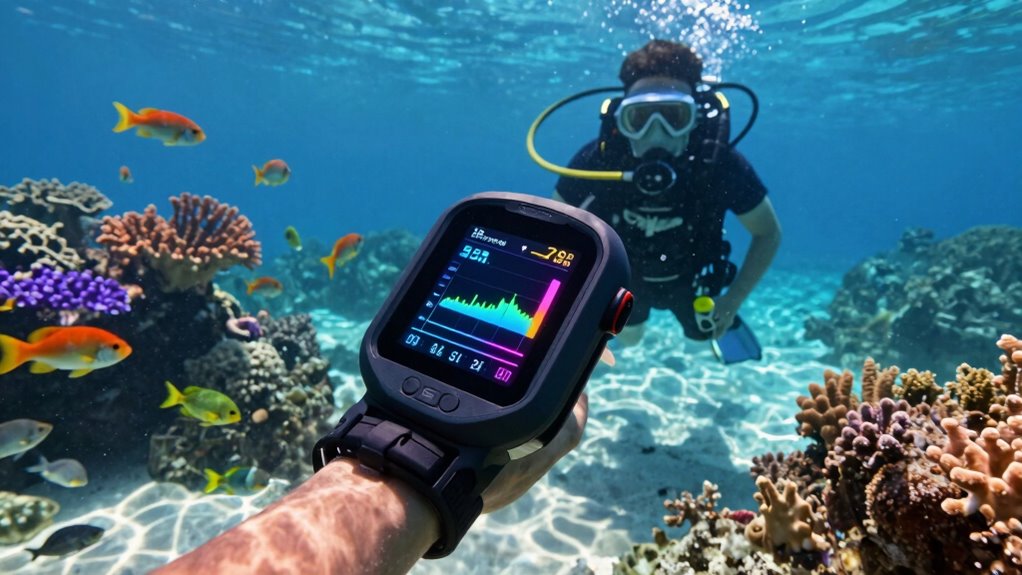

Choosing the right dive computer can significantly impact your diving experience, safety, and convenience. The market offers options ranging from simple wrist models to advanced, multi-function devices with air integration and GPS. The Garmin Descent™ Mk3i stands out as the best overall for its versatility and smart features, while the Shearwater Perdix 3 appeals to tech-savvy divers seeking robust performance. Many models balance features with ease of use, but tradeoffs often include size, complexity, or cost. Keep reading for a detailed breakdown to find the perfect fit for your diving style and needs.

Get pool and patio gear delivered free with Prime
- Fast, free delivery on millions of items
- Prime Video, Amazon Music and more included
- Member-only deals all year
Complete the kit



Key Takeaways
- The top-ranked Garmin Descent™ Mk3i combines smartwatch features with advanced dive capabilities, making it ideal for divers who want multi-purpose functionality.
- Shearwater models stand out for their durability and professional-grade accuracy, especially suited for serious technical divers.
- Wrist-style computers like the Mares Puck Lite and Puck Pro EZ prioritize simplicity but may lack some advanced features preferred by experienced divers.
- Air integration and GPS are significant upgrades that add convenience but also increase the device’s size, complexity, and price.
- Choosing the right dive computer depends heavily on your skill level, diving frequency, and whether you prefer a simple or feature-rich device.
| Garmin Descent™ Mk3i Watch-Style Dive Computer, 51mm, Black |  | Best All-in-One Smartwatch Dive Computer | Display: 1.4-inch AMOLED | Size: 51 x 51 x 16.4 mm | Bezel: Titanium | VIEW ON AMAZON | See Our Full Breakdown |
| Shearwater Perdix 3 Dive Computer |  | Best for Customization and Technical Diving | Display: 2.4-inch AMOLED | Color options: 14 customizable | Connectivity: Bluetooth 6x faster | VIEW ON AMAZON | See Our Full Breakdown |
| Garmin Descent™ G2 Watch-Style Dive Computer, 46mm, Black |  | Best for Versatile Surface and Dive Use | Display: 1.2-inch AMOLED | Size: 46mm | Water Resistance: 10 ATM | VIEW ON AMAZON | See Our Full Breakdown |
| Garmin Descent X50i Premium Dive Computer with Air Integration |  | Best for Deep and Technical Dives with Air Integration | Display: 3-inch color touchscreen | Water Resistance: 20 ATM | Lens Material: Sapphire | VIEW ON AMAZON | See Our Full Breakdown |
| Garmin Descent™ X30 Rugged Dive Computer with Surface GPS |  | Best for Deep Dives and Surface Navigation | Display: 2.4-inch color | Dive Rating: 10 ATM | Gas Profiles: Single- and multi-gas including trimix | VIEW ON AMAZON | See Our Full Breakdown |
| Mares Puck Lite Scuba Diving Computer Watch-Style with One Button Control |  | Best Overall | Algorithm: Bühlmann ZH-L16C | Nitrox Compatibility: 21% to 50% | Display Technology: Segment display with 800 segments, chip-on-glass | VIEW ON AMAZON | See Our Full Breakdown |
| Mares Puck Pro EZ Wrist Underwater Dive Computer |  | Best for Intermediate Divers | Display: High-contrast screen | Gas Compatibility: Nitrox 21%-50% | Algorithm: Buhlmann ZH-L16C with dual gradient factors | VIEW ON AMAZON | See Our Full Breakdown |
| Descent G1 Rugged Dive Computer, Slate Gray |  | Best Rugged Multi-Function Computer | Battery Life: Up to 25 hours in dive mode, 21 days in smartwatch mode | Display: Monochrome | Lens: Sapphire | VIEW ON AMAZON | See Our Full Breakdown |
| SUUNTO D5 Dive Computer, Color Display 100m Waterproof, All Black |  | Best User-Friendly Interface | Water Resistance: 100m | Wireless Tank Pressure: Supported | Alarms: Vibration | VIEW ON AMAZON | See Our Full Breakdown |
| Shearwater Research Peregrine Adventures Edition Dive Computer |  | Best for Versatile Diving | Display: 2.2-inch LED LCD with enhanced color | Diving Modes: Air, Nitrox, 3 Gas Nitrox, Gauge | Water Resistance: 120 meters | VIEW ON AMAZON | See Our Full Breakdown |
| Shearwater Research Peregrine Adventures Edition Dive Computer |  | Best Compact for Adventure Seekers | Package dimensions: 6.69 inch L x 4.45 inch W x 4.33 inch H | Interface: Two-button | Battery life: Up to 30 hours | VIEW ON AMAZON | See Our Full Breakdown |
| dive computer | Display |
|---|---|
| Garmin Descent™ Mk3i Watch-Sty | 1.4-inch AMOLED |
| Shearwater Perdix 3 Dive Compu | 2.4-inch AMOLED |
| Garmin Descent™ G2 Watch-Style | 1.2-inch AMOLED |
| Garmin Descent X50i Premium Di | 3-inch color touchscreen |
| Garmin Descent™ X30 Rugged Div | 2.4-inch color |
| Mares Puck Lite Scuba Diving C | — |
| Mares Puck Pro EZ Wrist Underw | High-contrast screen |
| Descent G1 Rugged Dive Compute | Monochrome |
| SUUNTO D5 Dive Computer | Color |
| Shearwater Research Peregrine | 2.2-inch LED LCD with enhanced color |
| Shearwater Research Peregrine | — |
More Details on Our Top Picks
Garmin Descent™ Mk3i Watch-Style Dive Computer, 51mm, Black
The Garmin Descent™ Mk3i stands out for integrating advanced smartwatch features with comprehensive dive capabilities, making it ideal for divers who want a device that doubles as a fitness tracker and navigation tool. Compared to the Shearwater Perdix 3, it offers a more versatile experience with its AMOLED display and health monitoring, though it’s significantly pricier and less specialized for technical dives. The high-resolution AMOLED screen and sonar communication enhance underwater navigation and group coordination, but GPS does not work submerged, and some features require additional accessories or updates. This pick makes the most sense for recreational divers who value connectivity and fitness tracking in a single device, accepting its higher cost for multi-functionality.Pros:- High-resolution AMOLED display with sapphire lens for durability and clarity
- Supports multiple dive modes including recreational and technical
- Integrated Sonar and group communication capabilities
Cons:- Very expensive compared to basic or dedicated dive computers
- GPS does not function underwater, limiting surface navigation
Best for: Divers who want a sophisticated, smartwatch-style device with navigation, health monitoring, and group communication features.
Not ideal for: Technical divers or those seeking a dedicated, ultra-rugged dive computer with extensive customization for complex dives, as this model prioritizes smart features over specialized technical tools.
- Display:1.4-inch AMOLED
- Size:51 x 51 x 16.4 mm
- Bezel:Titanium
- Water Resistance:200 meters
- Dive Modes:Multiple, including recreational and technical
- Connectivity:Multi-band GPS, Bluetooth
Our verdict“Best suited for recreational divers who want a multi-purpose smartwatch with advanced diving features.”
Shearwater Perdix 3 Dive Computer
The Shearwater Perdix 3 is designed for serious technical divers who prioritize clarity and customization, delivering a larger, bright AMOLED display and faster Bluetooth for quick data transfer. Compared with the Garmin Descent Mk3i, it lacks smartwatch features and health monitoring but excels in dive-specific performance with a customizable interface and large layout that enhances readability in challenging conditions. Its high cost and need for familiarity with dive computer interfaces may challenge casual users, but it’s unmatched for experienced divers seeking detailed control and visuals. This model is best for tech-savvy divers who need a highly configurable device for complex dives, willing to trade convenience for precision.Pros:- Bright, high-resolution AMOLED display for excellent visibility
- Multiple customizable color options for personalized interface
- Bluetooth 6x faster for rapid data transfer
Cons:- High price point limiting accessibility for casual divers
- Requires familiarity with dive computer functions and interfaces
Best for: Experienced technical divers who want a highly customizable, high-resolution display with fast data transfer capabilities.
Not ideal for: Beginners or recreational divers who prefer simple interfaces and integrated health features, as this model prioritizes advanced control and display customization.
- Display:2.4-inch AMOLED
- Color options:14 customizable
- Connectivity:Bluetooth 6x faster
- Layout:Large with adjustable font sizes
Our verdict“Ideal for experienced technical divers who need a customizable, high-performance display and fast connectivity.”
Garmin Descent™ G2 Watch-Style Dive Computer, 46mm, Black
The Garmin Descent™ G2 balances the needs of recreational and advanced divers with its bright AMOLED display, GPS, and health features, making it a flexible choice for those who want a reliable everyday watch that can also handle diving. Compared to the Mk3i, it offers a more rugged design and GPS support for surface navigation, but it doesn’t include Sonar or group communication. Its support for multiple dive types—including freediving and pool apnea—broadens its appeal, though it’s not a medical-grade device and health data remains an estimate. This makes sense for divers who need a durable, feature-rich smartwatch with decent dive capabilities, but not for those requiring technical dive-specific tools.Pros:- Bright AMOLED display with durable sapphire lens
- Supports multiple dive types including freediving and apnea
- Includes GPS and health monitoring features
Cons:- Not a medical device; health data is only an estimate
- Pulse Ox feature not available in all regions
Best for: Recreational and multi-discipline divers seeking a durable, GPS-enabled smartwatch with basic dive functions.
Not ideal for: Technical divers or those requiring detailed dive logs and advanced gas management, as this model focuses more on general fitness and surface navigation.
- Display:1.2-inch AMOLED
- Size:46mm
- Water Resistance:10 ATM
- Battery Life:up to 27 hours in dive mode, up to 10 days in smartwatch mode
- Supported Dive Types:Recreational, advanced, technical, freediving, pool apnea
- Material:Recycled ocean plastics
Our verdict“A versatile smartwatch ideal for recreational divers who want surface navigation and health tracking in one device.”
Garmin Descent X50i Premium Dive Computer with Air Integration
The Garmin Descent X50i sets itself apart as a premium choice for serious divers needing extensive dive data, thanks to its 3-inch color touchscreen, sapphire lens, and air integration features. Compared to the Descent G2, it offers a larger display and advanced features like dive mapping and sonar messaging, making it ideal for complex dives. However, it requires pairing with the Descent T2 transceiver for full sonar functions, and its higher price reflects its advanced capabilities. This device targets divers who want detailed dive logs, multi-gas options, and depth communication, accepting some complexity and cost for top-tier performance.Pros:- Vivid 3-inch color touchscreen for easy data access
- High water resistance up to 20 ATM suitable for deep dives
- Includes dive mapping, sonar messaging, and 200-dive log capacity
Cons:- Requires pairing with Descent T2 transceiver for full sonar features
- Cost may be prohibitive for casual divers
Best for: Technical and deep divers who require extensive dive data, air integration, and advanced sonar messaging.
Not ideal for: Casual or recreational divers who prefer a simple, low-cost device with fewer features, as this model’s complexity and price are geared toward advanced users.
- Display:3-inch color touchscreen
- Water Resistance:20 ATM
- Lens Material:Sapphire
- Messaging Range:up to 30 meters
- Dive Log Capacity:200 dives
Our verdict“A top-tier dive computer designed for deep and technical divers who want comprehensive data and connectivity options.”
Garmin Descent™ X30 Rugged Dive Computer with Surface GPS
The Garmin Descent™ X30 offers a robust, rugged design with a 2.4-inch color display, making it well-suited for divers who combine deep diving with surface exploration. Its surface GPS and advanced navigation capabilities, including a 3-axis digital compass, differentiate it from models like the G2, especially for those who need reliable surface tracking. The device supports multi-gas profiles and includes water temperature sensing, but its complex interface might challenge beginners, and its weight adds to its bulk. This model is best for divers who need a tough, navigation-focused computer for both deep dives and surface activities, accepting some learning curve and weight.Pros:- Vibrant 2.4-inch color display with customizable screens
- Supports multiple gas profiles including trimix
- Includes surface GPS, 3-axis compass, and water temperature sensor
Cons:- Interface complexity may require user familiarization
- Heavier weight may be less comfortable for casual divers
Best for: Technical and serious recreational divers needing a durable, multi-gas capable computer with surface GPS and navigation.
Not ideal for: Casual or beginner divers seeking a lightweight, straightforward device, as the X30’s complexity and weight could be disadvantages.
- Display:2.4-inch color
- Dive Rating:10 ATM
- Gas Profiles:Single- and multi-gas including trimix
- Water Temperature Sensor:Yes
- Navigation:Surface GPS, 3-axis digital compass
- Buttons:4 large, metal leakproof
Our verdict“Perfect for tech-savvy divers who need a rugged, navigation-capable dive computer capable of handling complex profiles and deep dives.”
Mares Puck Lite Scuba Diving Computer Watch-Style with One Button Control
The Mares Puck Lite stands out for its simplicity combined with solid technical features, making it ideal for divers who want reliable data without complexity. Its single-button control simplifies operation underwater, while the clear segment display ensures visibility in various conditions. Compared to the Shearwater Peregrine, it offers a more approachable interface, though it sacrifices some advanced customization options. With support for Nitrox from 21% to 50% and a dive log capacity of 100 dives, it balances functionality and ease of use. The Bluetooth connectivity allows for straightforward data management, but the limited dive count before power replacement and the absence of a color display could be drawbacks for tech-savvy users seeking longer-term or more vibrant visuals. This pick makes the most sense for recreational divers seeking dependable simplicity.
Pros:- Easy-to-use single-button navigation
- Clear, underwater-visible display
- Supports Nitrox from 21% to 50%
- Comprehensive dive logging for up to 100 dives
Cons:- Limited to 100 dives before needing power replacement
- No color display, which some prefer for better visuals
Best for: Divers new to digital computers or those who prioritize straightforward operation and clear display.
Not ideal for: Technical divers or users requiring extensive dive logs beyond 100 entries or advanced customization features.
- Algorithm:Bühlmann ZH-L16C
- Nitrox Compatibility:21% to 50%
- Display Technology:Segment display with 800 segments, chip-on-glass
- Dive Log Capacity:Up to 100 dives
- Power:User-replaceable, lasts through 100 dives
- Connectivity:Bluetooth
Our verdict“Ideal for entry-level or recreational divers who prefer simplicity and durability over advanced features.”
Mares Puck Pro EZ Wrist Underwater Dive Computer
The Mares Puck Pro EZ is tailored for divers who want a clear, intuitive interface combined with advanced decompression support. Its high-contrast display ensures readability of critical data like depth, temperature, and decompression status, making it more user-friendly than models with monochrome screens, such as the Descent G1. Unlike the Shearwater Peregrine, which offers more modes and longer battery life, this device emphasizes straightforward controls with its single-button operation and Bluetooth for quick dive log transfers. Supporting Nitrox mixes from 21% to 50%, it balances simplicity with versatility, though the approximate 100 dives per battery and the need for some familiarity with decompression algorithms can be limiting for some users. This model suits divers who want reliable, easy-to-read data without the complexity of more feature-rich computers.
Pros:- High-contrast, easy-to-read display
- Supports Nitrox mixes 21%-50%
- Intuitive single-button operation
- Bluetooth connectivity for quick dive log sharing
Cons:- Limited to around 100 dives per battery
- Requires some understanding of advanced decompression algorithms
Best for: Intermediate divers who prioritize clear visuals and straightforward controls over extensive features.
Not ideal for: Highly technical divers or those seeking very long battery life or multiple diving modes.
- Display:High-contrast screen
- Gas Compatibility:Nitrox 21%-50%
- Algorithm:Buhlmann ZH-L16C with dual gradient factors
- Power:Replaceable, supports up to 100 dives
- Connectivity:Bluetooth
Our verdict“Best suited for divers who value clarity and ease of use with reliable decompression support.”
Descent G1 Rugged Dive Computer, Slate Gray
The Descent G1 offers a rugged, versatile option for divers who need more than just a dive computer; it combines durability with health tracking and smartwatch features. Its sapphire lens and silicone bands ensure resilience in tough conditions, while the monochrome display keeps things simple but less vibrant than color models like the Shearwater Peregrine. The device supports multiple dive types—recreational, technical, free diving—and stores up to 200 dives, making it suitable for more adventurous users. Its extensive activity tracking, GPS, and smartwatch capabilities expand its utility beyond diving. However, the monochrome display may feel less engaging, and the battery life varies significantly depending on mode, which could be a concern for longer trips. This pick appeals to divers who want a durable, multifunctional device that can handle rough environments and varied activities.
Pros:- Rugged, durable design suitable for tough conditions
- Supports multiple dive modes and up to 200 dives storage
- Includes extensive health and activity tracking
- Smartwatch features like notifications and payments
Cons:- Monochrome display less vibrant than color options
- Battery life varies by mode, not as long as some dedicated dive computers
Best for: Technical or adventure divers needing a durable, all-in-one device with health and activity tracking.
Not ideal for: Divers seeking a lightweight, purely diving-focused computer with vibrant display visuals.
- Battery Life:Up to 25 hours in dive mode, 21 days in smartwatch mode
- Display:Monochrome
- Lens:Sapphire
- Dive Storage:Up to 200 dives
- Supported Dive Types:Recreational, advanced, technical, free diving
- Sensors:GPS, GLONASS, Galileo, wrist HR, Pulse Ox
Our verdict“Designed for divers who need a tough, multi-purpose device that handles both diving and daily activity tracking.”
SUUNTO D5 Dive Computer, Color Display 100m Waterproof, All Black
The Suunto D5 is distinguished by its vibrant color display and sleek design, making it appealing to divers who want a visually engaging device. Its wireless tank pressure support and vibration alarms enhance safety and convenience, while the customizable straps add a touch of style. Compared to the Shearwater Perdix, the D5 offers easier touch-based interaction and a more approachable interface, though it comes with a higher price and limited battery life of around 12 hours per charge. The wireless connectivity to the Suunto app simplifies dive log sharing, but the digital compass can feel complex for new users. This model fits best for recreational divers who value a combination of style, ease of use, and modern features. It might be less ideal for tech divers or those needing longer battery endurance.
Pros:- Vibrant, easy-to-read color display
- Wireless tank pressure and vibration alarms
- Customizable straps for style
- Supports wireless dive log sharing
Cons:- Limited to around 12 hours of diving per charge
- Higher price point compared to basic models
Best for: Recreational divers seeking an easy-to-use, stylish computer with wireless connectivity.
Not ideal for: Technical divers or users needing extended battery life or advanced navigation tools.
- Water Resistance:100m
- Wireless Tank Pressure:Supported
- Alarms:Vibration
- Display:Color
- Digital Compass:Yes
- Battery Life:Up to 12 hours diving
Our verdict“Best suited for recreational divers who want an intuitive, stylish computer with smart features and decent dive support.”
Shearwater Research Peregrine Adventures Edition Dive Computer
The Shearwater Peregrine Adventures Edition caters to divers who want a compact yet highly capable device. Its 2.2-inch LED LCD with an enhanced color range improves readability across various lighting conditions, especially when compared to monochrome models like the Descent G1. Supporting multiple diving modes—air, Nitrox, trimix, gauge—it offers flexibility for different dive styles. Wireless charging adds a modern convenience, while the impressive 30-hour battery life suits long trips. Unlike the Suunto D5, which emphasizes style and user-friendliness, the Peregrine leans toward more technical capabilities, though its heavier or bulkier design might deter those seeking a lightweight experience. Overall, this computer is ideal for divers who want versatility, long-lasting power, and vivid visuals. It may not be suitable for beginners or those who prefer simple interfaces.
Pros:- Multiple diving modes including trimix and gauge
- Enhanced color display improves readability
- Wireless charging convenience
- Long battery life of up to 30 hours
Cons:- Complex features may require learning curve
- Heavier or bulkier than simpler models
Best for: Technical or experienced divers who need multiple modes and long battery life in a compact form.
Not ideal for: Entry-level divers or those seeking a lightweight, straightforward device with basic features.
- Display:2.2-inch LED LCD with enhanced color
- Diving Modes:Air, Nitrox, 3 Gas Nitrox, Gauge
- Water Resistance:120 meters
- Battery Capacity:30,000 mAh
- Battery Life:Up to 30 hours
- Wireless Charging:Yes, includes station
Our verdict“Designed for experienced divers who prioritize versatility, vivid visuals, and extended battery endurance.”
Shearwater Research Peregrine Adventures Edition Dive Computer
The Shearwater Research Peregrine Adventures Edition stands out for its sleek, minimalist design combined with long-lasting battery life, making it ideal for divers who prioritize simplicity without sacrificing endurance. Compared to the Shearwater Perdix 3, which offers more advanced features and detailed dive data, the Peregrine emphasizes ease of use and portability, though it offers fewer display details. Its two-button interface simplifies navigation, especially for divers who dislike complex menus, while the up to 30 hours of battery life supports extended trips. The inclusion of a wireless charging station reduces fuss during setup. However, the compact dimensions might feel bulky for divers with larger hands, and the lack of detailed display specs could be a downside for tech-savvy users seeking in-depth info. This pick makes the most sense for travel-focused divers or those new to advanced dive computers who want straightforward operation without sacrificing reliability.
Pros:- Simple two-button interface for intuitive navigation
- Long battery life of up to 30 hours supports extended diving days
- Includes a convenient wireless charging station to simplify power management
Cons:- Limited information on display features may frustrate detail-oriented users
- Dimensions could feel bulky for divers with smaller hands or those preferring lighter gear
- Lacks detailed dive range and depth specifications, which some advanced divers may require
Best for: Travelers and casual divers who want a reliable, easy-to-use computer that handles day-long or multi-day trips without hassle.
Not ideal for: Technical divers or experienced users who need detailed dive metrics and customizable data screens.
- Package dimensions:6.69 inch L x 4.45 inch W x 4.33 inch H
- Interface:Two-button
- Battery life:Up to 30 hours
- Charging:USB wireless charging station included
- Material:316 stainless steel
Our verdict“This computer suits divers seeking a straightforward, portable option with impressive battery life, but it’s less ideal for those needing detailed dive data or advanced features.”

How We Picked
Our evaluation focused on performance, usability, build quality, and value. We prioritized devices that offer accurate depth, decompression algorithms, and reliable alarms. Ease of operation was key, especially for divers who may operate the device underwater with gloves. Durability and water resistance, including depth ratings, also influenced the rankings. Price was considered relative to features, ensuring options for different budgets. This process ensures that each model selected has a clear role, whether for casual, recreational, or technical diving, and that the top picks provide a balanced mix of features and reliability.Factors to Consider When Choosing Dive Computers
When selecting a dive computer, it’s important to consider several factors that impact your diving experience and safety. The right device should match your skill level, diving style, and future plans. Understanding these factors helps avoid common pitfalls, such as choosing a device with unnecessary features or one that’s too complex for your needs. Carefully weighing these considerations ensures you get a device that enhances your diving without becoming a distraction or liability.Ease of Use and Interface
For many divers, especially beginners, a simple, intuitive interface reduces stress and prevents mistakes underwater. Look for large buttons, clear displays, and straightforward menus. More advanced divers might prefer customizable screens that display multiple data points at once. Beware of overly complicated interfaces that require extensive training or can be confusing during a dive, as this can detract from your focus on safety and enjoyment.
Features and Technology
Decide which features are essential for your diving style. Basic models cover depth, time, and decompression, but technical divers may want air integration, multiple gas mixes, or GPS. Consider how much detail you need—overloading with features can make the device harder to operate, while too few might limit your capabilities. Think about future needs, as a device with expandable features can be more cost-effective long-term.
Build Quality and Durability
Durability is a must, especially if you dive frequently or in challenging conditions. Look for water resistance ratings of at least 100 meters, and consider models with rugged construction and scratch-resistant screens. Devices with a high-quality strap and corrosion-resistant materials will last longer and withstand repeated exposure to saltwater. Avoid overly fragile models if you often dive in rough environments.
Size, Fit, and Display
The physical size and weight of a dive computer influence comfort, especially on longer dives. Wrist models should fit snugly without causing discomfort. Bright, high-contrast displays improve visibility in low-light conditions underwater. Compact models are easier to carry but may sacrifice some readability or features. Weigh these factors against your personal preferences and diving habits.
Price and Value
Balance your budget with the features you need. While premium models with air integration and GPS cost more, they offer added convenience and versatility. More affordable options might lack some advanced features but still meet basic safety requirements. Consider long-term value—investing in a reliable, feature-rich device can be beneficial if you dive regularly, but occasional divers may prefer simpler, less expensive options.
Frequently Asked Questions
Can I use a basic dive computer for technical dives?
Basic dive computers are designed primarily for recreational diving and typically lack the advanced features needed for technical dives, such as multiple gas mixes or decompression algorithms. If you’re planning technical dives, investing in a model with these capabilities is essential for safety and accurate dive planning. Using a simple device in complex dives can increase risks and may not provide sufficient information for safe decompression.
How often should I replace my dive computer’s battery?
Most dive computers have rechargeable batteries that should be checked regularly, especially before long trips or frequent diving sessions. Manufacturers generally recommend replacing or recharging batteries every 1-2 years, but this varies based on usage. Some models feature battery indicators, which can help you monitor remaining power. Always follow the manufacturer’s instructions to avoid unexpected power loss during a dive.
Are GPS features worth paying extra for in a dive computer?
GPS can be highly useful for surface navigation and tracking your dives, especially in large or unfamiliar locations. It provides peace of mind and can help in logging your routes. However, GPS-enabled models tend to be larger and more expensive, and some divers may not prioritize this feature if they mostly dive in familiar or controlled environments. Consider whether surface navigation features are valuable for your typical diving scenarios.
Do I need a dive computer with air integration?
Air integration simplifies monitoring your remaining gas and can streamline dive planning, especially for multi-gas or technical dives. However, it adds to the cost, size, and complexity of the device. For casual recreational divers, a non-integrated computer might suffice, but frequent or technical divers will likely benefit from air integration for added convenience and safety.
How important is a color display on a dive computer?
A color display enhances visibility and makes it easier to distinguish different data points underwater, especially in low-light conditions. It can also improve overall readability and user experience. However, color screens often consume more power and can be more fragile. If you prioritize long battery life or ruggedness, a monochrome or simpler display might serve you better, but for most divers, the benefits of color outweigh the downsides.
Conclusion
For casual divers or those new to the sport, a simple, easy-to-use model like the Mares Puck Lite offers reliable core features without complexity. Experienced technical divers will appreciate the durability and advanced algorithms of models like the Shearwater Perdix 3. If you want a versatile, all-in-one device that doubles as a smartwatch, the Garmin Descent™ Mk3i stands out as the best overall choice, blending functionality with convenience. Budget-conscious buyers should consider models that provide essential features at a lower price point, while those seeking premium performance and extra features should look toward high-end options with air integration and GPS. Ultimately, selecting the right dive computer depends on your diving frequency, skill level, and personal preferences, but all these options aim to keep you safe and informed underwater.