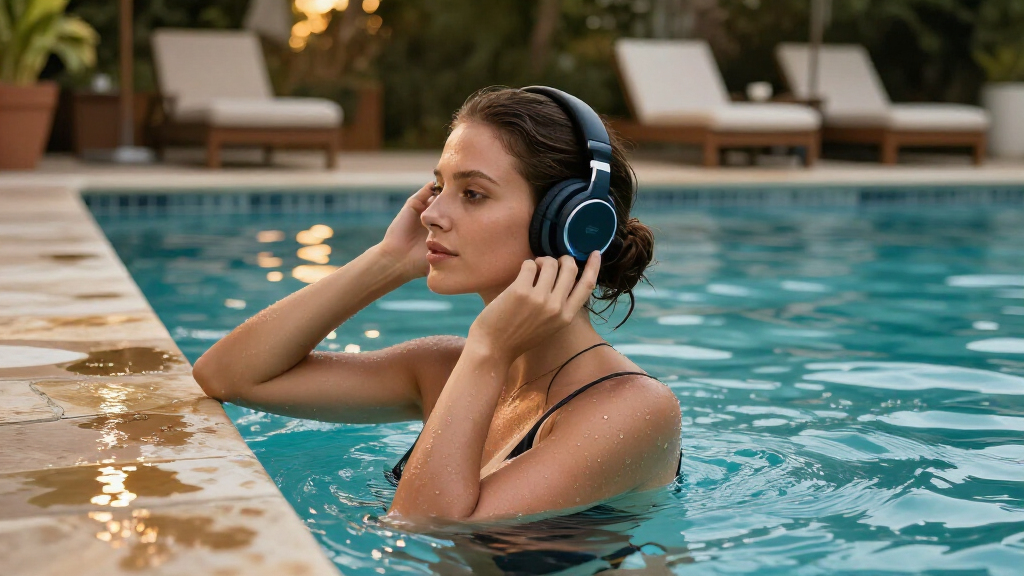

The best waterproof bone-conduction headphones pair a swim-ready rating with a reliable way to play audio when Bluetooth cannot reach your phone underwater. My best overall pick is the SHOKZ OpenSwim Pro, which combines 32GB of built-in MP3 storage with Bluetooth for use on land. The TECKNET X7 stands out for its IP68 rating and 32GB storage, while the SHOKZ OpenRun Pro 2 is a stronger fit for workouts where premium sport-focused listening matters more than swimming. The main tradeoff is between dependable offline playback for pool use and convenient Bluetooth streaming on dry land; waterproof ratings and fit also deserve close attention. Read on for the full breakdown and a guide to choosing the right pair for your routine.

Get pool and patio gear delivered free with Prime
- Fast, free delivery on millions of items
- Prime Video, Amazon Music and more included
- Member-only deals all year
Complete the kit


Key Takeaways
- Swimming calls for onboard playback: Bluetooth signals generally do not travel reliably through water, so the OpenSwim Pro, TECKNET X7, and other models with built-in MP3 storage suit pool sessions better than Bluetooth-only headphones.
- IP ratings are not interchangeable: Several picks list IPX8, while others specify IP68; check the maker’s stated swimming guidance rather than assuming the label alone describes depth, duration, or water type.
- The OpenSwim Pro has the clearest all-round role: Its 32GB MP3 storage and Bluetooth make it a flexible choice for both pool sessions and land workouts, unlike swim-focused MP3 models without a stated Bluetooth mode.
- Some options target dry-land sport, not swimming: The OpenRun Pro 2 and Raycon Everyday model are better considered for open-ear exercise and daily use than as dedicated underwater listening picks.
- Hybrid designs add a sound-style tradeoff: Models such as the Otium X20 and PSIER X70 combine bone and air conduction, which may appeal to buyers seeking a different listening presentation, but their stated waterproof details still need to match the intended swim use.
| SHOKZ OpenSwim Pro Open-Ear MP3 Headphones, 32GB, Grey |  | Best Overall for Swimming | Model: OpenSwim Pro (S710) | Type: Open-ear bone conduction headphones | Water protection: IP68; up to 2 meters for up to 2 hours | VIEW LATEST PRICE | See Our Full Breakdown |
| Sanag B33S Bone Conduction Headphones, IPX8 Waterproof, 32GB MP3, Bluetooth 6.0 |  | Best for Long Swim Sessions | Model: B33S | Type: Open-ear bone conduction headphones | Water protection: IPX8; submersion up to 2 meters | VIEW LATEST PRICE | See Our Full Breakdown |
| Blrakx X27 Open-Ear Bone Conduction Headphones |  | Best for Sweat and Light Rain | Model: X27 | Audio and design: Bone conduction, open-ear | Frame: Flexible titanium | VIEW LATEST PRICE | See Our Full Breakdown |
| TECKNET X7 Bone Conduction Headphones with IP68 Waterproofing and 32GB MP3 Storage |  | Best for Phone-Free Swim Playback | Model: X7 | Type: Open-ear bone conduction headphones | Water protection: IP68; immersion up to 2 meters for 2 hours | VIEW LATEST PRICE | See Our Full Breakdown |
| XIAOWTEK L6 Open-Ear Bluetooth Headphones with LED Battery Display |  | Best for Everyday Workouts | Model: L6 | Design: Open-ear, wraparound frame | Bluetooth: Version 6.0 | VIEW LATEST PRICE | See Our Full Breakdown |
| Fustaar X13 Open-Ear Bone Conduction Headphones |  | Best for Long, Wet Workouts | Design: Open-ear bone conduction | Bluetooth: 6.0 | Water resistance: IPX8 | VIEW LATEST PRICE | See Our Full Breakdown |
| Raycon Everyday Bone Conduction Headphones (2nd Gen), Black |  | Best for a More Adjustable Fit | Generation: 2nd Gen | Fit sizes: Regular and Small | Water and dust resistance: IP67 | VIEW LATEST PRICE | See Our Full Breakdown |
| CXK GFS-G5 Bone Conduction Swimming Headphones, IPX8 Waterproof, Bluetooth 6.0, MP3 Player, 12-Hour Battery |  | Best for Phone-Free Underwater Listening | Design: Open-ear bone conduction | Bluetooth: 6.0 | Specified immersion: Up to 2 meters for 2 hours | VIEW LATEST PRICE | See Our Full Breakdown |
| SHOKZ OpenRun Pro 2 Open-Ear Bluetooth Sport Headphones, Black |  | Best for Workout Sound and Calls | Design: Open-ear | Driver technology: Bone conduction and air conduction | Connectivity: Bluetooth | VIEW LATEST PRICE | See Our Full Breakdown |
| Otium X20 Hybrid Bone and Air Conduction Open-Ear Headphones |  | Best for Quick-Charging Rainy-Day Training | Audio drivers: Hybrid bone and air conduction | Bluetooth: 6.0 | Water resistance: IPX6 | VIEW LATEST PRICE | See Our Full Breakdown |
| Hostena X26 IP68 Waterproof Bone Conduction Swimming Headphones with 32GB MP3 Storage |  | Best for Long Swim Sessions | Water resistance: IP68 | Audio design: Open-ear bone conduction | Built-in storage: 32GB | VIEW LATEST PRICE | See Our Full Breakdown |
| PSIER S18 Bone Conduction Swimming Headphones, IPX8 Waterproof, 32GB MP3 Storage |  | Best for Format Flexibility | Water resistance: IPX8; submersion up to 2 meters for one hour | Audio design: Open-ear bone conduction | Bluetooth: Version 6.0 | VIEW LATEST PRICE | See Our Full Breakdown |
| PSIER X70 IP68 Bone and Air Conduction Swimming Headphones |  | Best Hybrid Sound Option | Water resistance: IP68 | Driver system: 18 × 11 mm hybrid bone and air conduction | Bluetooth: Version 6.0 | VIEW LATEST PRICE | See Our Full Breakdown |
| Raycon Bone Conduction Open-Ear Headphones, Gray |  | Best for Land-Based Active Use | Design: Open ear | Audio driver type: Bone conduction | Water resistance: IP68; sweat and water resistance | VIEW LATEST PRICE | See Our Full Breakdown |
| PSIER S18 Waterproof Bone Conduction Headphones with 32GB MP3 Storage |  | Best for Simple Offline Listening | Water resistance: IPX8 | Type: Open-ear bone conduction headphones | Bluetooth: Version 6.0 | VIEW LATEST PRICE | See Our Full Breakdown |
| waterproof bone-conduction headphone | Battery life | Bluetooth | Water resistance | Weight |
|---|---|---|---|---|
| SHOKZ OpenSwim Pro Open-Ear MP | Up to 9 hours | — | — | — |
| Sanag B33S Bone Conduction Hea | — | Version 6.0 | — | — |
| Blrakx X27 Open-Ear Bone Condu | Up to 10 hours | Version 5.4 in description; version 6.0 in title and specifications | IP55 in description; IPX5 in title | 29 g |
| TECKNET X7 Bone Conduction Hea | Up to 10 hours | Version 6.0 | — | 33 grams |
| XIAOWTEK L6 Open-Ear Bluetooth | Up to 12 hours | Version 6.0 | IPX5 | 33 g |
| Fustaar X13 Open-Ear Bone Cond | Up to 13 hours | 6.0 | IPX8 | 24 g |
| Raycon Everyday Bone Conductio | Up to 16 hours | — | — | Lightweight; exact weight not specified |
| CXK GFS-G5 Bone Conduction Swi | — | 6.0 | — | — |
| SHOKZ OpenRun Pro 2 Open-Ear B | Up to 12 hours | — | IP55 | 30.3 g |
| Otium X20 Hybrid Bone and Air | Up to 12 hours | 6.0 | IPX6 | — |
| Hostena X26 IP68 Waterproof Bo | Up to 24 hours | Version 6.0; land use only | IP68 | — |
| PSIER S18 Bone Conduction Swim | — | Version 6.0 | IPX8; submersion up to 2 meters for one hour | — |
| PSIER X70 IP68 Bone and Air Co | Up to 12 hours at 50% phone volume | Version 6.0 | IP68 | 25g |
| Raycon Bone Conduction Open-Ea | — | — | IP68; sweat and water resistance | 5.6 ounces |
| PSIER S18 Waterproof Bone Cond | Up to 8 hours | Version 6.0 | IPX8 | — |
More Details on Our Top Picks
SHOKZ OpenSwim Pro Open-Ear MP3 Headphones, 32GB, Grey
The OpenSwim Pro is the most balanced choice here for swimmers who want a clearly specified waterproof design and a way to listen without carrying a phone. Its IP68 rating supports submersion up to 2 meters for up to 2 hours, while 32GB of storage holds MP3 audio for pool sessions. Bluetooth works on land, but not underwater, so swimming means switching to MP3 mode. Compared with the TECKNET X7, it offers a similar immersion rating and storage capacity, but adds a stated quick-charge benefit and includes swimming accessories such as earplugs and a nose clip. The tradeoff is a shorter stated maximum battery life than the Sanag B33S, and the fit may need adjustment around goggles, caps, or helmets. I’d choose it for the strongest all-around swim-focused feature set, not for Bluetooth listening underwater.
Pros:- 32GB of onboard storage supports phone-free listening while swimming.
- IP68 rating specifies submersion up to 2 meters for up to 2 hours.
- Up to 9 hours of battery life, with a 10-minute charge providing up to 3 hours of listening.
- Includes swimming earplugs, a nose clip, and a silicone carrying case.
Cons:- Bluetooth streaming does not work underwater; swimming requires MP3 mode.
- The fit may need coordination with goggles, swim caps, or helmets.
Best for: Swimmers who want a phone-free MP3 library, a defined submersion rating, and included pool accessories.
Not ideal for: Buyers who expect Bluetooth streaming underwater or need a headset that sits comfortably with every combination of goggles, swim caps, and helmets.
- Model:OpenSwim Pro (S710)
- Type:Open-ear bone conduction headphones
- Water protection:IP68; up to 2 meters for up to 2 hours
- Storage and playback:32GB MP3 storage; Bluetooth on land
- Battery life:Up to 9 hours
- Quick charge:10 minutes for up to 3 hours of listening
- Controls:Physical buttons and app
- Included accessories:Magnetic charging cable, silicone carrying case, swimming earplugs, and nose clip
Our verdict“Choose the OpenSwim Pro if you want a well-equipped swim headset with phone-free playback and clearly stated immersion limits.”
Sanag B33S Bone Conduction Headphones, IPX8 Waterproof, 32GB MP3, Bluetooth 6.0
The Sanag B33S stands out for its stated 12-hour playback time, giving it an edge over the SHOKZ OpenSwim Pro and TECKNET X7 on listed battery life. Its 32GB memory allows phone-free MP3 playback in the water, while Bluetooth 6.0 and an ENC microphone suit calls and workouts on land. The IPX8 rating is listed for submersion up to 2 meters, though the supplied details do not give a time limit comparable to the SHOKZ’s stated two-hour rating. That makes it appealing to swimmers prioritizing runtime, but less reassuring for buyers who want a more specific immersion specification. A full charge takes about 2 hours, so it lacks the OpenSwim Pro’s stated quick-charge option. I’d pick the B33S for long sessions and mixed land-and-water use, provided its general waterproof specification meets your needs.
Pros:- Up to 12 hours of playback, longer than the stated runtime of the SHOKZ OpenSwim Pro and TECKNET X7.
- 32GB of built-in memory enables phone-free MP3 listening underwater.
- IPX8 protection is listed for submersion up to 2 meters.
- Bluetooth 6.0 and an ENC microphone support calls and listening on land.
Cons:- Bluetooth cannot transmit underwater, so swimming requires MP3 mode.
- The supplied water-resistance details do not state a submersion time limit.
- A full charge takes about 2 hours, with no quick-charge time specified.
Best for: Swimmers and workout users who prioritize long stated playback time and want onboard music plus a microphone for land use.
Not ideal for: Buyers who want an explicitly stated submersion duration or a quick top-up before a workout.
- Model:B33S
- Type:Open-ear bone conduction headphones
- Water protection:IPX8; submersion up to 2 meters
- Built-in memory:32GB
- Bluetooth:Version 6.0
- Playback time:Up to 12 hours
- Charging time:About 2 hours
- Microphone:Built-in with ENC
Our verdict“Pick the B33S if extended playback matters more than having a stated immersion duration or quick-charge feature.”
Blrakx X27 Open-Ear Bone Conduction Headphones
The Blrakx X27 is a workout-oriented open-ear option, not a swimming headphone. Its listed IP55/IPX5 water resistance supports a more limited use case than the IP68 SHOKZ OpenSwim Pro or TECKNET X7, both of which are specified for submersion. For runs and everyday exercise where sweat or rain is the concern, the 29-gram titanium-frame design and up-to-10-hour battery life are more relevant than underwater storage—which this model does not list. There are also conflicting details: the description says Bluetooth 5.4 and IP55, while the title and specifications say Bluetooth 6.0 and IPX5. That uncertainty makes it harder to recommend for buyers choosing around exact connectivity or water protection. I’d consider it only for land-based workouts, and skip it if swimming is part of the plan.
Pros:- Light 29-gram frame is suited to workouts where headset weight matters.
- Titanium frame is described as flexible and resistant to bending.
- Up to 10 hours of battery life for extended land-based use.
- USB-C charging uses a common charging connection.
Cons:- Listed IP55 and IPX5 ratings do not establish suitability for submersion, unlike the SHOKZ OpenSwim Pro.
- Bluetooth version is inconsistent across the supplied product details.
- No built-in MP3 storage is listed for phone-free underwater playback.
Best for: Runners and gym users seeking a lightweight open-ear headset for workouts where sweat or light rain—not immersion—is the main water concern.
Not ideal for: Swimmers or buyers who require a consistent, clearly stated waterproof rating and Bluetooth version.
- Model:X27
- Audio and design:Bone conduction, open-ear
- Frame:Flexible titanium
- Weight:29 g
- Battery life:Up to 10 hours
- Charging interface:USB Type-C
- Water resistance:IP55 in description; IPX5 in title
- Bluetooth:Version 5.4 in description; version 6.0 in title and specifications
Our verdict“Choose the X27 for lightweight land workouts, but not for swimming or buyers who need unambiguous water-resistance specifications.”
TECKNET X7 Bone Conduction Headphones with IP68 Waterproofing and 32GB MP3 Storage
The TECKNET X7 puts the essential swim features together: IP68 protection specified for up to 2 meters and 2 hours, plus 32GB of storage for MP3 listening without a phone. That makes it a close alternative to the SHOKZ OpenSwim Pro for pool use. The X7 lists up to 10 hours of playback, one hour more than SHOKZ, while SHOKZ supplies more swim accessories and a stated quick-charge boost. Bluetooth 6.0 handles land listening, but—as with the Sanag B33S—Bluetooth does not work underwater. Its magnetic cable also transfers files, which helps when loading a swim playlist, though the headset still depends on MP3 mode in the pool. The 36-month warranty requires registration. I’d choose the X7 for its combination of immersion rating, storage, and longer stated runtime.
Pros:- IP68 rating specifies immersion up to 2 meters for 2 hours.
- 32GB storage supports phone-free MP3 playback while swimming.
- Up to 10 hours of playback, compared with up to 9 hours for the SHOKZ OpenSwim Pro.
- Magnetic cable supports both charging and file transfer.
Cons:- Bluetooth does not work underwater; swimming requires MP3 mode.
- The 36-month warranty requires registration.
- No quick-charge listening time is specified.
Best for: Swimmers who want phone-free MP3 playback, a stated two-hour immersion limit, and more listed battery life than the SHOKZ OpenSwim Pro.
Not ideal for: Listeners who want Bluetooth streaming in the pool, or buyers who prefer a warranty that does not require registration.
- Model:X7
- Type:Open-ear bone conduction headphones
- Water protection:IP68; immersion up to 2 meters for 2 hours
- Built-in storage:32GB
- Bluetooth:Version 6.0
- Battery life:Up to 10 hours
- Weight:33 grams
- Charging and file transfer:Magnetic cable supports both
- Warranty:36 months; registration required
Our verdict“Choose the X7 if you want a swim-ready IP68 headset with onboard music and a longer stated runtime than the SHOKZ OpenSwim Pro.”
XIAOWTEK L6 Open-Ear Bluetooth Headphones with LED Battery Display
The XIAOWTEK L6 is the most suitable pick here for sweat-prone workouts and daily outdoor listening, not for swimming. Its IPX5 rating is a step below the immersion-rated SHOKZ OpenSwim Pro and TECKNET X7, and there is no onboard MP3 storage listed for underwater playback. What it does offer is a practical set of land-use features: up to 12 hours of battery life, Bluetooth 6.0, a built-in microphone, and an LED battery display that makes remaining charge easier to check. Its listed runtime matches the Sanag B33S, but unlike that model, the L6 is not presented as a swim headset. The two-hour charge time also means it is less convenient for quick top-ups than the SHOKZ. I’d choose it for workouts where water resistance means sweat and splashes rather than submersion.
Pros:- IPX5 water resistance suits workouts involving sweat and splashes.
- Up to 12 hours of playback, matching the stated runtime of the Sanag B33S.
- LED display shows remaining battery level.
- Light 33-gram wraparound design and built-in microphone suit everyday exercise and calls.
Cons:- IPX5 protection is not a substitute for the submersion ratings listed for the SHOKZ OpenSwim Pro and TECKNET X7.
- No built-in MP3 storage is listed for phone-free listening underwater.
- Charging takes about 2 hours, with no quick-charge feature specified.
Best for: Fitness users who want an open-ear Bluetooth headset for sweaty workouts and appreciate a visible battery-level display.
Not ideal for: Swimmers or anyone needing phone-free underwater playback, since no MP3 storage is listed and IPX5 is not a submersion rating.
- Model:L6
- Design:Open-ear, wraparound frame
- Bluetooth:Version 6.0
- Water resistance:IPX5
- Battery life:Up to 12 hours
- Charging time:2 hours
- Weight:33 g
- Microphone and display:Built-in microphone and LED battery display
Our verdict“Pick the L6 for sweat-friendly Bluetooth workouts and a clear battery display, but choose an IP68 or IPX8 model for swimming.”
Fustaar X13 Open-Ear Bone Conduction Headphones
The Fustaar X13 is a practical pick for workouts where sweat or heavy water exposure matters more than underwater music playback. Its IPX8 rating and flexible 24 g wraparound frame suit wet training, while up to 13 hours of battery life can cover multiple sessions between charges. Compared with the CXK GFS-G5, the X13 keeps the setup simpler: it has no listed built-in MP3 storage, so it is better for listening over Bluetooth on land than for phone-free swimming. The open-ear fit leaves surroundings audible, a benefit outdoors but a drawback in loud places or when privacy matters. The listing does not specify charging method or time, which makes upkeep less predictable, though the two-year warranty is longer than the CXK’s one-year coverage.
Pros:- IPX8 water resistance is suited to wet, high-sweat activities
- Lightweight 24 g frame with a flexible wraparound fit
- Up to 13 hours of playback
- Two-year warranty and built-in microphone
Cons:- No built-in MP3 storage is specified for underwater listening
- Open-ear design offers little isolation in noisy environments
- Charging method and charging time are not specified
Best for: Runners and fitness swimmers seeking a lightweight, high-water-resistance headset for Bluetooth listening outside the water
Not ideal for: Swimmers who want phone-free underwater playback, or buyers who need a stated charging method and time
- Design:Open-ear bone conduction
- Bluetooth:6.0
- Water resistance:IPX8
- Weight:24 g
- Battery life:Up to 13 hours
- Microphone:Built-in
- Warranty:2 years
- Color:Raven
Our verdict“Choose the Fustaar X13 for lightweight, water-resistant workouts and long Bluetooth sessions, but pick the CXK GFS-G5 if underwater MP3 playback is a priority.”
Raycon Everyday Bone Conduction Headphones (2nd Gen), Black
The Raycon Everyday Bone Conduction Headphones stand out for a fit choice many open-ear alternatives do not offer: Regular and Small sizes. That can help buyers who find a single-size wraparound frame unstable or uncomfortable. The IP67 rating covers water and dust exposure, and up to 16 hours of battery life is the longest stated runtime among these five options, beating the Fustaar X13’s 13 hours. Raycon is better suited to outdoor workouts and everyday wear than swimming: its description does not list underwater MP3 playback, unlike the CXK GFS-G5. The tradeoff is the same open-ear limitation found across the lineup—ambient awareness comes at the cost of isolation. Its one-year limited warranty is also shorter than the Fustaar’s two-year coverage.
Pros:- Regular and Small sizes offer more fit choice than a one-size frame
- IP67 water and dust resistance
- Up to 16 hours of battery life
- Dual microphones and an open-ear design for calls while staying aware
Cons:- No underwater MP3 playback or built-in storage is specified
- Open-ear construction does not block surrounding sound
- One-year limited warranty excludes damage from misuse, normal wear, and unauthorized repairs
Best for: Adults who want an open-ear headset for daily walks or workouts and need a choice of Regular or Small fit
Not ideal for: Swimmers seeking dedicated underwater playback or listeners who need noise isolation in busy settings
- Generation:2nd Gen
- Fit sizes:Regular and Small
- Water and dust resistance:IP67
- Battery life:Up to 16 hours
- Microphones:Dual
- Weight:Lightweight; exact weight not specified
- Warranty:1-year limited warranty
- Color:Black
Our verdict“Pick Raycon for a size-selectable open-ear fit and extended battery life, but choose the CXK GFS-G5 for stated underwater listening.”
CXK GFS-G5 Bone Conduction Swimming Headphones, IPX8 Waterproof, Bluetooth 6.0, MP3 Player, 12-Hour Battery
For swimming, the CXK GFS-G5 has the clearest purpose in this group: its built-in MP3 storage supports phone-free playback, with a specified immersion rating of up to 2 meters for 2 hours. Bluetooth cannot connect underwater, so swimmers need to load audio and switch to MP3 mode before getting in. That extra step is the key tradeoff, but it gives the CXK an advantage over the Fustaar X13, whose description does not list onboard storage. Up to 12 hours of playback, an adjustable headband, and soft silicone pads make it adaptable for pool sessions as well as land use. Its battery life is shorter than Raycon’s 16 hours, and the one-year warranty is less generous than Fustaar’s two years.
Pros:- Built-in MP3 storage enables phone-free underwater listening
- Specified immersion of up to 2 meters for 2 hours
- Adjustable headband and silicone pads support a more secure fit
- Supports WMA, FLAC, WAV, and MP3 audio formats
Cons:- Bluetooth cannot connect underwater; MP3 mode is required
- Must switch to MP3 mode before entering the water
- One-year warranty is shorter than the Fustaar X13’s two-year coverage
Best for: Lap swimmers who want to listen without carrying a phone and are comfortable managing music in MP3 mode
Not ideal for: Buyers who want seamless Bluetooth streaming underwater or do not want to prepare a separate music library
- Design:Open-ear bone conduction
- Bluetooth:6.0
- Specified immersion:Up to 2 meters for 2 hours
- Playback time:Up to 12 hours
- Built-in storage:Up to 8,000 songs
- Supported audio formats:WMA, FLAC, WAV, MP3
- Charging:Magnetic
- Warranty:1 year
Our verdict“Choose the CXK GFS-G5 for planned, phone-free pool listening, while Raycon or Fustaar is a simpler fit for Bluetooth workouts on land.”
SHOKZ OpenRun Pro 2 Open-Ear Bluetooth Sport Headphones, Black
The SHOKZ OpenRun Pro 2 is the most workout-focused option here, pairing bone and air conduction drivers with customizable EQ rather than prioritizing swimming features. That hybrid approach is intended to add fuller sound, while dual wind-resistant microphones and noise reduction target clearer calls outdoors. Its memory wire and ergonomic ear hooks are designed to stay put during movement, and the included hard-shell case adds useful protection in a gym bag. Compared with the IPX8-rated Fustaar X13 and swim-ready CXK GFS-G5, the OpenRun Pro 2 has a lower IP55 rating and is not the choice for immersion. It also offers 12 hours of battery life, less than Raycon’s 16. Choose it for fit, audio controls, and calls—not maximum waterproofing.
Pros:- Hybrid bone and air conduction drivers with customizable EQ modes
- Memory wire frame and ergonomic ear hooks are designed for a stable workout fit
- Dual wind-resistant microphones with noise reduction support calls
- Hard-shell carrying case is included
Cons:- IP55 protection is below the IPX8 ratings of the Fustaar X13 and CXK GFS-G5
- Not specified for underwater use
- Up to 12 hours of battery life is shorter than Raycon’s stated 16 hours
Best for: Runners and gym users who value a secure workout fit, adjustable sound, and outdoor call support over swimming capability
Not ideal for: Swimmers or buyers who need immersion-rated protection or the longest stated battery life
- Design:Open-ear
- Driver technology:Bone conduction and air conduction
- Connectivity:Bluetooth
- Water resistance:IP55
- Battery life:Up to 12 hours
- Weight:30.3 g
- Microphones:Dual wind-resistant microphones
- Warranty:2 years
Our verdict“Choose the OpenRun Pro 2 for workouts, adjustable sound, and calls; choose the CXK GFS-G5 or Fustaar X13 when stronger water protection is the priority.”
Otium X20 Hybrid Bone and Air Conduction Open-Ear Headphones
The Otium X20 is a better match for workouts in rain and sweat than for swimming. Its IPX6 protection covers splashes and heavy exposure to sweat, while a 15-minute quick charge is specified to add up to 2 hours of playback—a useful fallback when a training session is close and the battery is low. The hybrid bone and directional air conduction design, app-based EQ, and flexible titanium memory frame give it more fit and sound customization than the simpler Fustaar X13. But that flexibility does not make it more waterproof: the X20 is explicitly unsuitable for underwater use, whereas the Fustaar and CXK carry IPX8 ratings. Its 12-hour maximum runtime also trails Raycon’s 16 hours, and open-ear audio can remain audible to people nearby.
Pros:- IPX6 protection suits sweat, rain, and splashes
- 15-minute quick charge provides up to 2 hours of playback
- Hybrid bone and directional air conduction with app-based EQ
- Flexible titanium memory frame and adjustable strap support fit adjustment
Cons:- Not suitable for swimming or underwater use
- Up to 12 hours of playback is shorter than Raycon’s 16 hours
- Open-ear audio may be less private despite the sound-leak reduction feature
Best for: Runners and outdoor fitness users who need splash protection, a customizable fit, and a quick charge between sessions
Not ideal for: Swimmers or buyers who need immersion protection, private listening, or the longest battery runtime
- Audio drivers:Hybrid bone and air conduction
- Bluetooth:6.0
- Water resistance:IPX6
- Battery life:Up to 12 hours
- Quick charge:15 minutes for up to 2 hours of playback
- Frame:Flexible titanium memory frame
- Controls:Push-button
- Warranty:1 year
Our verdict“Pick the Otium X20 for rain-ready training and quick top-ups, but choose the IPX8 Fustaar X13 or CXK GFS-G5 for greater water exposure.”
Hostena X26 IP68 Waterproof Bone Conduction Swimming Headphones with 32GB MP3 Storage
The Hostena X26 stands out here for its stated up to 24-hour battery life, giving frequent swimmers more room between charges than the PSIER S18 models, which are rated for up to 8 hours. Its 32GB onboard storage also allows phone-free listening in the pool; Bluetooth 6.0 is for land use, since underwater listening requires MP3 mode. The open-ear design keeps ear canals unblocked, while the soft silicone neckband is intended to stay put alongside swim goggles. That neckband may be less convenient to pack than separate earbuds, and the 24-hour figure is a manufacturer specification rather than a guarantee for every use pattern. I’d choose it over the PSIER X70 when stated battery capacity matters more than a lighter, 25g build.
Pros:- 32GB storage supports offline listening while swimming.
- Up to 24 hours of stated battery life exceeds the listed endurance of the PSIER S18 and X70.
- Open-ear design leaves the ear canals unblocked.
- Soft silicone neckband is designed to stay secure and fit alongside swim goggles.
Cons:- Bluetooth does not work underwater; swimmers must use MP3 mode.
- The neckband is less compact to store than separate earbuds.
- The listed 24-hour battery life may vary with listening conditions.
Best for: Swimmers who want long stretches of phone-free listening and prefer a neckband designed to sit securely with goggles.
Not ideal for: Travelers who prioritize a compact, pocketable set or listeners who expect Bluetooth streaming while submerged.
- Water resistance:IP68
- Audio design:Open-ear bone conduction
- Built-in storage:32GB
- Bluetooth:Version 6.0; land use only
- Battery life:Up to 24 hours
- Charging time:1 hour
- Charging method:Magnetic
- Frame material:Soft silicone
Our verdict“Choose the Hostena X26 if extended battery life and a swim-ready neckband matter more than compact storage or underwater Bluetooth.”
PSIER S18 Bone Conduction Swimming Headphones, IPX8 Waterproof, 32GB MP3 Storage
The PSIER S18 is a practical match for swimmers with audio files in several formats: its 32GB storage supports MP3, WMA, FLAC, APE, and WAV. Like the Hostena X26, it provides local playback because Bluetooth cannot connect underwater, but its stated up to 8 hours of playback is a much shorter run time than the Hostena’s listed 24 hours. The adjustable strap and soft silicone cushions are intended to help maintain a secure fit, while the open-ear design leaves the ear canals clear. One detail is less settled: charging time is listed as both one and two hours in the supplied information. I’d favor this over the similar PSIER S18 listing with touch controls if broad format support and push-button simplicity are the priorities.
Pros:- 32GB storage supports five listed audio formats.
- IPX8 rating is specified for submersion up to 2 meters for one hour.
- Adjustable strap and soft silicone cushions support a secure fit.
- Open-ear design keeps the ear canals unblocked.
Cons:- Bluetooth does not connect underwater, so swimming requires MP3 mode.
- Up to 8 hours of playback is shorter than the Hostena X26’s stated battery life.
- Supplied information gives conflicting charging times of one and two hours.
Best for: Swimmers who keep music or spoken audio in multiple file formats and want an adjustable fit for pool sessions.
Not ideal for: People who need long stretches between charges or want a clearly specified charging time before buying.
- Water resistance:IPX8; submersion up to 2 meters for one hour
- Audio design:Open-ear bone conduction
- Bluetooth:Version 6.0
- Storage:32GB
- Supported formats:MP3, WMA, FLAC, APE, WAV
- Playback time:Up to 8 hours
- Driver size:14 mm
- Charging method:Magnetic
Our verdict“Pick this S18 for broad file-format support and an adjustable swim fit, but skip it if long battery life or precise charging details are priorities.”
PSIER X70 IP68 Bone and Air Conduction Swimming Headphones
The PSIER X70 takes a different approach from the bone-conduction-only Hostena X26, combining bone and air conduction drivers in a 25g frame. That hybrid system is designed to balance bass and treble, while the 32GB storage provides phone-free playback in water. As with the other swim picks here, Bluetooth 6.0 is for land listening; swimmers need to switch to MP3 mode before getting in. Its stated battery life of up to 12 hours at 50% phone volume lands between the X26’s 24-hour claim and the PSIER S18’s 8 hours, though the specified volume condition matters when comparing endurance. I’d choose the X70 over the S18 if lighter weight and the hybrid driver setup matter more than the S18’s wider listed format support.
Pros:- Hybrid bone and air conduction drivers are designed for balanced sound with deeper bass and clearer highs.
- At 25g, it is lighter than the listed Raycon bone-conduction model.
- 32GB storage enables phone-free MP3 playback in water.
- IP68 rating and up to 12 hours of stated battery life suit swimming and other exercise.
Cons:- Bluetooth is unavailable underwater, so swimming requires MP3 mode.
- The up-to-12-hour battery claim is specified at 50% phone volume.
- Its stated battery life is shorter than the Hostena X26’s up-to-24-hour figure.
Best for: Swimmers and active users who want a lightweight hybrid-driver headset for offline water listening and Bluetooth use on land.
Not ideal for: Buyers who need Bluetooth streaming underwater or who want the longest stated battery life in this group.
- Water resistance:IP68
- Driver system:18 × 11 mm hybrid bone and air conduction
- Bluetooth:Version 6.0
- Built-in storage:32GB
- Supported formats:WMA, FLAC, WAV, APE, MP3
- Weight:25g
- Battery life:Up to 12 hours at 50% phone volume
- Charging:Magnetic; about 2 hours for a full charge
Our verdict“Choose the PSIER X70 for a lightweight hybrid-driver design and a middle-ground battery claim, not for underwater Bluetooth or maximum listed runtime.”
Raycon Bone Conduction Open-Ear Headphones, Gray
The Raycon Bone Conduction Open-Ear Headphones are the odd one out in a swim-focused group: the listing specifies IP68 sweat and water resistance, but does not describe built-in storage or an underwater playback mode. By comparison, the Hostena X26 and PSIER X70 both list 32GB storage for listening without a phone in the water. Raycon’s open-ear fit, adjustable positioning, and built-in microphone make it better suited to everyday active use and calls where awareness of nearby sounds matters. It has no noise control, so the open design offers little separation from busy surroundings. The supplied weight is 5.6 ounces, heavier than the PSIER X70’s listed 25g, and the available data does not specify Bluetooth version or battery life. I’d pick it for land use, not as my first choice for swimming laps.
Pros:- IP68 sweat and water resistance is specified.
- Open-ear bone conduction design helps keep surroundings audible.
- Adjustable positioning supports a more adaptable fit.
- Built-in microphone supports calls and everyday activities.
Cons:- No built-in storage or underwater MP3 playback is specified, unlike the Hostena X26 and PSIER X70.
- No noise control means nearby sound can compete with audio.
- At 5.6 ounces, it is heavier than the PSIER X70’s listed 25g.
Best for: People who want open-ear headphones for everyday workouts, calls, and active routines where awareness of surroundings matters.
Not ideal for: Swimmers who need confirmed underwater playback or onboard music storage, since neither is specified in the supplied product data.
- Design:Open ear
- Audio driver type:Bone conduction
- Water resistance:IP68; sweat and water resistance
- Weight:5.6 ounces
- Charging time:2 hours
- Charging:Magnetic cable
- Microphone:Built in
- Warranty:1 year
Our verdict“Choose the Raycon for open-ear land workouts and calls, but choose a model with specified onboard storage for swimming.”
PSIER S18 Waterproof Bone Conduction Headphones with 32GB MP3 Storage
This PSIER S18 listing keeps the core swim setup straightforward: IPX8 protection, 32GB of local storage, magnetic charging, and up to 8 hours of playback. As with the other swimming models here, Bluetooth 6.0 cannot connect underwater, so music needs to be loaded and played in MP3 mode. Compared with the other PSIER S18 in this roundup, this version specifies touch controls and an adjustable strap, while the other listing gives a supported-format list and soft silicone cushions. Its listed battery life is well below the Hostena X26’s up-to-24-hour claim, making it a better fit for shorter sessions than frequent, extended swims. The supplied information also flags a mismatch between storage capacity and stated song counts, so I would not rely on the song-count claims.
Pros:- IPX8 rating supports underwater use in MP3 mode.
- 32GB built-in storage supports phone-free listening.
- Touch controls provide an alternative to the push-button setup of the other S18 listing.
- Open-ear design and adjustable strap support awareness and fit.
Cons:- Bluetooth does not connect underwater, so swimming requires MP3 mode.
- Up to 8 hours of battery life is shorter than the Hostena X26’s stated 24 hours.
- Supplied information notes a discrepancy between storage capacity and stated song counts.
Best for: Swimmers who want a basic offline-listening setup with touch controls and an adjustable strap for shorter sessions.
Not ideal for: Long-distance or frequent swimmers who want extended battery life, or buyers who need clear, consistent storage and song-count details.
- Water resistance:IPX8
- Type:Open-ear bone conduction headphones
- Bluetooth:Version 6.0
- Built-in storage:32GB
- Battery life:Up to 8 hours
- Driver size:14 mm
- Controls:Touch control
- Charging time:About 2 hours
Our verdict“Choose this S18 for touch controls and offline pool listening in shorter sessions, but favor the Hostena X26 if battery endurance is your priority.”
How We Picked
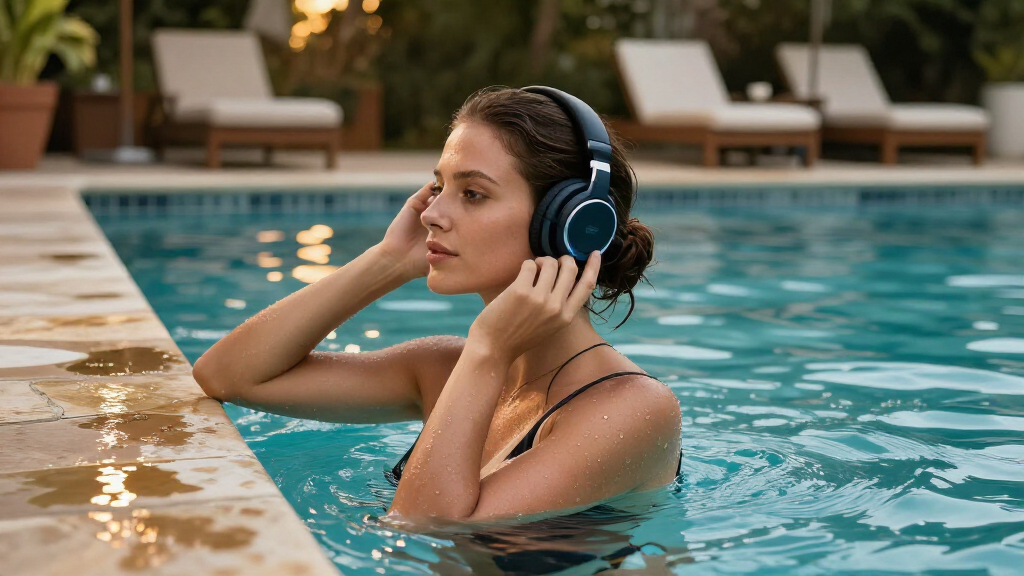
I ranked these headphones by how well their stated features match the central promise: usable audio in wet conditions. The most weight went to a clearly stated water-resistance rating, onboard MP3 storage for swimming, and practical flexibility for use outside the pool. I also considered the listed fit and design, battery claims where supplied, and whether a model’s description points to swimming or primarily to sport and everyday listening.
The ranking reflects the information available in each product’s name and listed specifications, not hands-on testing or independently verified waterproof performance. That gives swim-ready models with both storage and land-use flexibility an advantage, while Bluetooth-focused choices rank better for workouts away from water. Where the listing lacks a clear rating, playback detail, or swimming guidance, I treat that as uncertainty rather than filling in missing specifications. I also distinguish similar entries—such as the two PSIER S18 listings—so buyers can verify the exact version before ordering.
Factors to Consider When Choosing Best Waterproof Bone-conduction Headphones
For waterproof bone-conduction headphones, the right choice depends less on a long feature list than on where audio must work and how you plan to control it. These points help separate genuine swim use from headphones that are simply suited to sweaty workouts or rainy commutes.
Choose MP3 Storage for Underwater Listening
Do not assume that Bluetooth headphones will stream music while your head is underwater. Water disrupts the connection, so a phone left at the pool edge usually cannot send a steady signal to headphones in the water. For regular swimming, look for built-in storage and a standalone playback mode, then check supported file types and how tracks are loaded. Storage capacity matters most if you keep a large library or prefer not to manage playlists before each session. A Bluetooth-only model may still be the better choice for gym sessions, runs, and calls, but it is a poor substitute for offline playback in the pool.
Read the Water Rating as a Limit, Not a Promise
IPX8 and IP68 are common labels among the swim-oriented options here, but the letters alone do not tell you the exact depth or duration a manufacturer supports. Check the product’s own swimming instructions and warranty terms before using it underwater. An IPX rating does not state dust protection, while the first digit in IP68 refers to dust resistance; neither label replaces the maker’s specified water conditions. Salt water, chlorinated pools, hot tubs, and soaps can also affect materials differently. After swimming, rinse and dry the headphones as directed, and avoid charging them while wet.
Match the Design to Your Main Listening Setting
Bone-conduction designs leave the ear canal open, which can help you remain aware of nearby sounds during outdoor activity, but they do not provide the sealed isolation of in-ear headphones. That openness can be a drawback in a loud gym or beside busy traffic, where surroundings may mask quiet audio. Hybrid bone-and-air designs offer a different approach, so check the maker’s description and fit guidance rather than assuming every open-ear model sounds alike. If most of your listening is pool-based, prioritize secure placement and controls you can operate with wet hands. For mixed training, a model with both offline playback and Bluetooth can reduce the need to own separate pairs.
Check Fit and Controls Before Focusing on Extra Features
A waterproof rating will not help if the headphones shift during turns or feel uncomfortable under a swim cap or goggles. Review the frame style, contact points, and return policy, especially if you have a smaller head or need to wear other gear at the same time. Physical buttons are often easier to locate than touch controls when hands are wet, but button layout and operation vary by model. Also check whether playback controls work in MP3 mode, not only when connected to a phone. Buyers who plan long sessions should verify claimed battery life under the mode they will actually use, since listening settings can change runtime.
Pay for Features You Will Use
Spending more makes sense when it buys a feature that changes your routine: dependable offline listening, clearer guidance for swimming, or one pair that covers both pool and land workouts. A premium sport model may offer a more polished everyday experience, but it is not automatically the right swim pick if it lacks onboard storage or a stated swimming rating. Conversely, a basic MP3-focused model can be a better pool tool even if it has fewer smart features. Be wary of choosing by a newer Bluetooth version or a large capacity number alone; neither guarantees underwater streaming, comfort, or water durability. Compare the exact model name and listing carefully, particularly when two products share a model designation but use different wording or specifications.
Frequently Asked Questions
Can Bluetooth bone-conduction headphones play music while I swim?
Usually, you should not count on a Bluetooth connection working reliably underwater because water interferes with the signal. For pool listening, choose headphones with built-in MP3 storage and load audio onto them before swimming. Bluetooth remains useful on dry land, where you can stream from a phone without managing files. If a listing advertises both Bluetooth and MP3 playback, confirm that the MP3 mode works independently of a phone. That distinction is why swim-focused models with storage suit pool use better than Bluetooth-only sport headphones.
Is IPX8 enough to know that headphones are safe for swimming?
No rating should be treated as a complete swimming instruction. IPX8 indicates protection under conditions defined by the manufacturer, which can vary by product, including depth and exposure time. Read the product-specific guidance and check whether the maker permits pool use, rather than relying on the letters alone. IP68 adds a dust-resistance rating, but it does not automatically mean a device can handle every water environment. Follow care instructions after use, especially for chlorinated or salt water.
Should I choose 32GB storage or longer battery life?
Prioritize storage if you swim without a phone and want to keep a broad music or audiobook library on the headphones. Battery life matters more if your sessions are long, frequent, or spread across several days between charges. The listed products do not all provide directly comparable battery claims, so check the exact manufacturer’s runtime and the mode used to measure it. MP3 playback and Bluetooth playback may have different battery demands. If you use headphones for both swimming and land workouts, weigh storage alongside charging frequency rather than choosing by capacity alone.
Are waterproof bone-conduction headphones a good choice for running in traffic?
The open-ear design can leave the ear canals unobstructed, which may help you hear some surrounding sounds while exercising. It does not guarantee that you will hear every vehicle, cyclist, or warning, and loud audio can still mask important sounds. Keep volume moderate and follow local rules for headphones while running or cycling. A sport-focused Bluetooth model such as the OpenRun Pro 2 may suit land workouts better than a swim-first MP3 model. For pool use, the priority changes to offline playback and the manufacturer’s swimming guidance.
How do I choose between the OpenSwim Pro and a swim-only MP3 model?
Choose the OpenSwim Pro if you want both MP3 playback for the pool and Bluetooth use on land in one pair. A swim-only MP3 option can make more sense if your main need is offline audio in the water and you do not need phone streaming. Compare the exact water rating and swimming instructions rather than assuming one model is more waterproof because it has more features. Also check controls, fit with your swim gear, and how you prefer to load music. Those practical details can matter more than having extra connectivity you rarely use.
Conclusion
For the broadest mix of pool and land use, I recommend the SHOKZ OpenSwim Pro as best overall, thanks to its stated 32GB storage and Bluetooth support. The TECKNET X7 is my value-minded pick for buyers focused on an IP68 listing and onboard MP3 storage, while the SHOKZ OpenRun Pro 2 is the premium sport choice for workouts where Bluetooth listening matters more than underwater playback. Beginners who want a straightforward swim setup should start with a clearly specified MP3 model and confirm the maker’s pool-use instructions before buying. For specific needs, consider the CXK GFS-G5 if its listed 12-hour battery claim suits longer sessions, or a hybrid option such as the Otium X20 or PSIER X70 if that design appeals and its water guidance fits your plans. Whichever model you choose, match its playback mode and stated water limits to your actual routine rather than relying on the word “waterproof” alone.
Black Friday Picks

Vitamix 5200 Blender with 64 oz. Container, Black
As an affiliate, we earn on qualifying purchases.