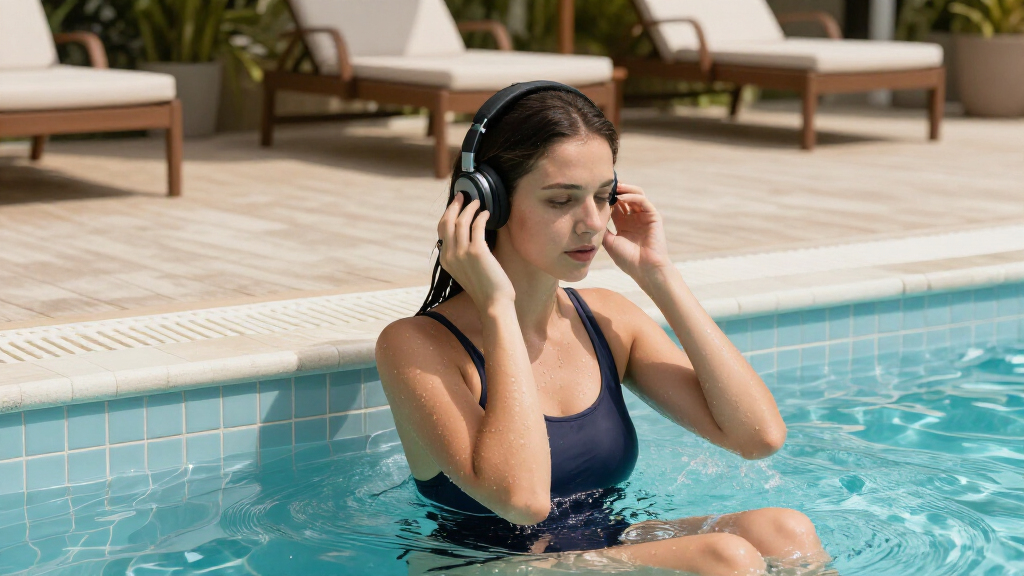

Finding the best underwater headphones for swimming requires balancing waterproof durability with audio clarity, as Bluetooth signals struggle to penetrate water effectively. My top overall pick is the SHOKZ OpenSwim Pro, which excels due to its reliable MP3 playback and secure open-ear design that prevents water from blocking the ear canal. For those seeking a more budget-friendly entry, the Tevese X9 offers impressive value with Bluetooth 6.0 and onboard storage, though it lacks the refined fit of premium competitors. The main tradeoff in this category is between convenience and reliability: wired options guarantee audio quality but limit movement, while wireless bone conduction models offer freedom but require local file storage to bypass connectivity issues. Continue reading for a detailed breakdown of how these models compare and which one suits your specific swimming routine.

Get pool and patio gear delivered free with Prime
- Fast, free delivery on millions of items
- Prime Video, Amazon Music and more included
- Member-only deals all year
Complete the kit


Key Takeaways
- Bluetooth connectivity is largely useless underwater; models with built-in MP3 storage (like the SHOKZ OpenSwim Pro and Tevese X9) are far more practical than those relying solely on streaming.
- Bone conduction technology has become the dominant standard for swimming audio, offering superior safety and comfort compared to traditional in-ear waterproof buds that trap water.
- IP68 and IPX8 ratings are not interchangeable; IP68 indicates dust and water resistance for specific depths and durations, while IPX8 focuses solely on submersion, making IP68 slightly more versatile for outdoor swimmers.
- Battery life varies drastically between wired and wireless models, with wireless bone conduction units typically offering 6-8 hours of playback, which is sufficient for most training sessions but limits ultra-endurance use.
- Fit stability is the most common failure point; models with secure ear hooks or neckbands (like H2O Audio) perform better during lap swimming than lightweight, hook-free designs that may slip during vigorous strokes.


| underwater headphones for swimming | Warranty | Battery life | Connectivity |
|---|---|---|---|
| Tevese X9 Bone Conduction Swim | 2 years | — | Bluetooth 6.0 |
| SHOKZ OpenSwim Pro Open-Ear MP | — | Up to 9 hours | Bluetooth for land use; unavailable underwater |
| H2O Audio TRI 2 Multi-Sport Wa | 1 year | 6–9 hours | Bluetooth 5.3 |
| PSIER S18A Waterproof Bone Con | — | — | — |
| MARLALL X26 Bone Conduction Sw | — | Up to 7 hours | Bluetooth 6.0 and built-in MP3 mode |
| H2O Audio Surge S+ Waterproof | 1 year | — | — |
| PSIER S18 Waterproof Bone Cond | 1 year | — | — |
| CXK GFS-G5 Bone Conduction Swi | — | Up to 12 hours | — |
| PSIER S18 Bone Conduction Head | 1 year | — | — |
| Sanag B33S IPX8 Bone Conductio | — | Up to 12 hours | Bluetooth 6.0 |
| H2O Audio TRI 2 PRO Multi-Spor | 1 year | 6–9 hours | Bluetooth 5.3 |
| PSIER X70 Bone Conduction Swim | 1 year manufacturer warranty | Up to 12 hours at 50% phone volume | Bluetooth 6.0 |
| RR SPORTS IP68 Waterproof Swim | 1 year | Up to 7 hours | — |
| H2O Audio Sonar 2 PRO Waterpro | 1 year | 9 hours Bluetooth; 6 hours MP3 | Bluetooth 5.3 |
| Opinta X7 Pro Waterproof Bone | 1 year | — | — |
More Details on Our Top Picks
Tevese X9 Bone Conduction Swimming Headphones with Bluetooth 6.0 and 32GB MP3 Player
The Tevese X9 is my strongest all-round pick for swimmers who want one set of headphones for pool sessions and land workouts. Its 32GB onboard MP3 storage gives you phone-free playback in the water, while Bluetooth 6.0 handles listening above the surface. As with the SHOKZ OpenSwim Pro, Bluetooth cannot stream underwater, so you’ll need to switch to MP3 mode before swimming. The open-ear bone conduction design avoids sealing the ear canal and leaves surrounding sounds more accessible, though it won’t match the fidelity of traditional in-ear headphones. Its IPX8 rating suits swimming, but the product details don’t specify a submersion depth or duration, making the SHOKZ’s stated limits clearer. I’d choose the Tevese for its broad feature set, not for buyers who need detailed underwater durability limits.
Pros:- 32GB of built-in storage supports phone-free listening while swimming.
- IPX8 waterproof rating is designed for prolonged submersion.
- Open-ear bone conduction design keeps the ear canals uncovered.
- Bluetooth 6.0 supports above-water listening.
Cons:- Bluetooth does not work underwater, so swimming requires MP3 mode.
- Bone conduction audio may sound less detailed than traditional in-ear headphones.
- No submersion depth or duration is provided in the product details.
Best for: Swimmers who want generous onboard storage for phone-free pool listening and Bluetooth for workouts above water.
Not ideal for: Buyers who need a stated submersion depth and duration, or who prioritize high-fidelity sound over an open-ear design.
- Brand:Tevese
- Model:X9
- Audio technology:Bone conduction
- Ear placement:Open ear
- Connectivity:Bluetooth 6.0
- Storage:32GB
- Controls:Button
- Warranty:2 years
Our verdict“Choose the Tevese X9 if you want a versatile 32GB swim-and-land option and can accept switching to MP3 mode in the pool.”
SHOKZ OpenSwim Pro Open-Ear MP3 Headphones, Gray, IP68 Waterproof, 32GB
The SHOKZ OpenSwim Pro stands out for swimmers who want a clearly stated water-use boundary: its IP68 rating covers submersion up to 2 meters for 2 hours. That makes its swimming guidance more specific than the Tevese X9’s IPX8 listing, which gives no depth or duration. Both offer 32GB of MP3 storage and open-ear bone conduction, so neither can stream Bluetooth audio underwater; load music and use MP3 mode in the pool. SHOKZ also includes swimming earplugs and a nose clip, useful extras for pool sessions, plus a quick-charge feature for a short-notice workout. The tradeoff is a maximum stated battery life of 9 hours, and its Bluetooth connection is for land use only. I’d pick it for documented submersion limits and swim-focused accessories rather than for longer battery life or underwater streaming.
Pros:- IP68 rating specifies submersion up to 2 meters for 2 hours.
- 32GB MP3 storage enables phone-free listening underwater.
- Includes swimming earplugs and a nose clip.
- A 10-minute quick charge provides up to 3 hours of listening.
Cons:- Bluetooth does not work underwater; swimming requires MP3 mode.
- Battery life is limited to up to 9 hours.
- Bluetooth streaming is intended for land use, not pool listening.
Best for: Pool swimmers who want a stated submersion limit, 32GB of offline music, and included swim accessories.
Not ideal for: Listeners who need Bluetooth streaming in the water or routinely want more than 9 hours between charges.
- Brand:SHOKZ
- Model:OpenSwim Pro (S710)
- Water resistance:IP68; up to 2 meters for 2 hours
- Headphone type:Open-ear bone conduction
- Storage:32GB MP3
- Connectivity:Bluetooth for land use; unavailable underwater
- Battery life:Up to 9 hours
- Quick charge:10 minutes for up to 3 hours of listening
- Included accessories:Magnetic charging cable, silicone carrying case, swimming earplugs, nose clip, user guide
Our verdict“Choose the OpenSwim Pro if clear submersion limits and swim accessories matter more to you than underwater Bluetooth or extended battery life.”
H2O Audio TRI 2 Multi-Sport Waterproof Bone Conduction Headphones with Charging Case (Black)
The H2O Audio TRI 2 is the most compelling choice here for swimmers who also train across several sports and value charging flexibility. Its 4GB MP3 player holds less music than the 32GB Tevese X9 and SHOKZ OpenSwim Pro, but it covers phone-free pool playback while keeping the headphones suited to running and cycling above water. Bluetooth 5.3 is for surface use; like those larger-storage rivals, it cannot stream underwater. The distinguishing extra is a portable charging case with two additional charges, which can reduce outlet dependence on trips or between workouts. Its stated battery life ranges from 6 to 9 hours, depending on use, and the warranty is one year rather than two for the Tevese and SHOKZ. Pick it for the case and multi-sport role, not for maximum music storage or a consistent battery estimate.
Pros:- Portable charging case provides two additional charges.
- IPX8 design is specified for submersion up to 12 feet.
- Built-in MP3 player supports phone-free underwater listening.
- Open-ear design leaves the ear canals uncovered for multi-sport use.
Cons:- 4GB storage is substantially smaller than the 32GB Tevese X9 and SHOKZ OpenSwim Pro.
- Bluetooth does not work underwater, so swimming requires MP3 mode.
- Battery life varies from 6 to 9 hours, and the warranty is one year.
Best for: Swimmers who also run or cycle and want a portable charging case for trips or back-to-back training days.
Not ideal for: Listeners who want a large onboard library, a longer warranty, or a fixed battery-life estimate.
- Brand:H2O Audio
- Model:TRI 2
- Audio technology:Bone conduction
- Storage:4GB built-in MP3 player
- Connectivity:Bluetooth 5.3
- Battery life:6–9 hours
- Charging time:Approximately 2 hours
- Warranty:1 year
Our verdict“Choose the TRI 2 if its charging case and multi-sport versatility matter more than large storage or a longer warranty.”
PSIER S18A Waterproof Bone Conduction Headphones with 32GB MP3 Storage
The PSIER S18A makes the most sense for swimmers who want a fit they can adjust rather than simply accept as supplied. Its adjustable strap is a practical distinction from the SHOKZ OpenSwim Pro, whose listed strength is its ergonomic fit and swim accessories. Both models pair open-ear bone conduction with 32GB of music storage, but the PSIER’s product details list up to 8 hours of playback compared with SHOKZ’s up to 9. The IPX8 rating supports underwater use in MP3 mode, though its specified limit—up to 2 meters for one hour—is shorter than SHOKZ’s stated two-hour limit. Bluetooth 6.0 handles above-water use only. The storage-capacity description is inconsistent about how many songs fit, so I’d rely on the stated 32GB rather than the song estimates.
Pros:- 32GB of built-in storage supports phone-free swimming playback.
- Adjustable strap allows the fit to be tailored.
- IPX8 rating specifies use up to 2 meters for one hour.
- Bluetooth 6.0 supports above-water listening.
Cons:- Bluetooth cannot connect underwater; swimming requires MP3 mode.
- Specified submersion time is one hour, shorter than the SHOKZ OpenSwim Pro’s two-hour limit.
- Song-capacity claims are inconsistent, and playback is listed at up to 8 hours.
Best for: Swimmers who want 32GB of offline playback and an adjustable strap to tailor the fit for pool sessions.
Not ideal for: Buyers who need longer stated submersion time, more than 8 hours of playback, or a consistent song-count estimate.
- Brand:PSIER
- Model:S18A
- Type:Open-ear bone conduction headphones
- Bluetooth:6.0
- Built-in storage:32GB
- Playback time:Up to 8 hours
- Charging time:About 2 hours
- Controls:Button control
Our verdict“Choose the PSIER S18A if an adjustable fit is your priority and its one-hour stated submersion limit suits your swim sessions.”
MARLALL X26 Bone Conduction Swimming Headphones
At 24 grams, the MARLALL X26 is the fit-focused pick for swimmers who want lightweight headphones with ear hooks rather than a model chosen for extra charging accessories. Its soft liquid-silicone overmold and ergonomic hooks are intended to hold the open-ear design in place during movement. The X26 matches the Tevese X9 and PSIER S18A with 32GB of storage, but its listed battery life is up to 7 hours—shorter than either the Tevese’s unspecified duration or the SHOKZ OpenSwim Pro’s 9 hours. Bluetooth 6.0 is useful above water, while swimming requires MP3 mode; phone-app tracks also cannot be copied directly to its memory. Supported formats include MP3, WAV, WMA, and FLAC, offering flexibility for locally stored audio without making it a streaming solution.
Pros:- 24-gram design with soft silicone overmold and ear hooks.
- 32GB built-in MP3 storage supports phone-free swimming.
- Supports MP3, WAV, WMA, and FLAC audio files.
- Bluetooth 6.0 supports above-water listening.
Cons:- Bluetooth is not supported underwater; swimming requires MP3 mode.
- Phone-app tracks cannot be copied directly to the headphones’ memory.
- Battery life is listed at up to 7 hours, less than the SHOKZ OpenSwim Pro’s 9 hours.
Best for: Swimmers who value a lightweight, hook-secured fit and already manage music files for offline playback.
Not ideal for: Listeners who rely on phone apps, want Bluetooth streaming underwater, or need more than 7 hours of listed playback.
- Brand:MARLALL
- Model:X26
- Design:Open-ear bone conduction with ergonomic ear hooks
- Weight:24g
- Storage:32GB
- Connectivity:Bluetooth 6.0 and built-in MP3 mode
- Supported audio formats:MP3, WAV, WMA, FLAC
- Battery life:Up to 7 hours
- Charging time:1.5 hours
Our verdict“Choose the MARLALL X26 if low weight and a secure ear-hook fit matter more than phone-app access or longer playback.”
H2O Audio Surge S+ Waterproof Sport Headphones (Short Cord)
The H2O Audio Surge S+ takes a different approach from the bone-conduction models in this roundup: its in-ear design uses replaceable earplugs to seal out water rather than leaving the ear open. That can suit swimmers who prefer a more enclosed fit, and the five earplug sizes make it easier to find a stable match than with a one-size-style headset such as the Sanag B33S. Its stated IPX8 rating and 12-foot submersion limit also give a clear swimming-use specification.
The tradeoff is its wired connection: it works with iPods and MP3 players, not wireless-only phones, and the short cord can limit placement if your player is not close by. Sound may also be less clear underwater than above it. Choose this over the PSIER S18 if you want in-ear plugs, but skip it if you want open-ear awareness or a wireless-style fit.
Pros:- IPX8 rating with a stated submersion limit of 12 feet / 3.6 meters.
- Five earplug sizes, from XS to XL, allow a more personalized seal and fit.
- Sheared ergonomic shape is designed to align comfortably in the ear.
- Short cord can reduce tangling during active swimming and other sports.
Cons:- Wired compatibility is limited to iPods and MP3 players, excluding wireless-only devices.
- The short cord may restrict placement when the player is not worn close to the body.
- Underwater sound may be less clear than above-water playback.
Best for: Swimmers who already use a compatible iPod or MP3 player and prefer a sealed in-ear fit with several earplug sizes to try.
Not ideal for: Swimmers with wireless-only devices, or anyone who wants open-ear awareness and a built-in player without managing a cable.
- Maximum submersion depth:12 ft / 3.6 m
- Ear placement:In-ear
- Weight:1.4 oz
- Compatibility:iPods and MP3 players
- Fit accessories:Five earplug sets, sizes XS–XL
- Warranty:1 year
Our verdict“Choose the Surge S+ if you want a customizable in-ear swimming fit and have a compatible wired player.”
PSIER S18 Waterproof Bone Conduction Headphones with 32GB MP3 Storage
The PSIER S18 is a sensible pick for swimmers who want to hear some surrounding sound while listening, rather than sealing the ears with plugs like the H2O Audio Surge S+. Its open-ear bone-conduction design and adjustable strap are aimed at a stable fit, while 32GB of storage gives you offline listening without a phone in the pool. The stated immersion limit—2 meters for up to 1 hour—sets a specific boundary for swim use.
Like the CXK GFS-G5 and other MP3-capable swimming headsets, this model needs to be in MP3 mode underwater; Bluetooth is for use out of the water. Its listed playback time is up to 8 hours, shorter than the CXK’s 12-hour claim. Storage-song estimates in the product information conflict, so I would rely on the stated 32GB rather than a song count. Pick it for an adjustable open-ear fit, not for Bluetooth streaming in the pool.
Pros:- 32GB of built-in storage supports offline playback while swimming.
- Open-ear bone-conduction design leaves the ears unsealed.
- Adjustable strap and silicone cushions support a more secure fit.
- Up to 8 hours of playback and magnetic charging are specified.
Cons:- Bluetooth cannot connect underwater; swimming requires MP3 mode.
- The stated playback time is shorter than the CXK GFS-G5’s up-to-12-hour claim.
- Song-count estimates conflict in the product information.
Best for: Swimmers who want an adjustable open-ear headset, offline music storage, and a stated 2-meter immersion limit.
Not ideal for: Listeners who expect Bluetooth streaming underwater or need a clearly consistent estimate of how many songs the storage holds.
- Design:Open-ear bone conduction
- Bluetooth:Version 6.0
- Built-in storage:32GB
- Playback time:Up to 8 hours
- Charging:Magnetic; about 2 hours
- Driver size:14 mm
- Warranty:1 year
Our verdict“Choose the PSIER S18 if open-ear awareness and adjustable fit matter more than longer claimed playback or underwater Bluetooth.”
CXK GFS-G5 Bone Conduction Swimming Headphones, IPX8 Waterproof, Bluetooth 6.0, MP3 Mode, 12-Hour Playtime
Among these five options, the CXK GFS-G5 has the longest stated playback time: up to 12 hours, compared with up to 8 hours for the PSIER S18. That makes it a stronger fit for swimmers who also want one headset for long land-based workouts between pool sessions. Its open-ear design, adjustable headband, and silicone pads aim to keep it in place without sealing the ears, while the stated IPX8 limit of 2 meters for 2 hours spells out its swimming-use boundary.
As with the Sanag B33S, Bluetooth does not work underwater, so you need to select MP3 mode before swimming. The GFS-G5 lists storage as up to 8,000 songs, but supported file formats are limited to WMA, FLAC, WAV, and MP3. Its extra playback claim and EQ options may appeal to frequent users, but swimmers seeking simpler in-ear audio may prefer the H2O Audio Surge S+.
Pros:- Up to 12 hours of stated playback exceeds the PSIER S18’s up-to-8-hour claim.
- IPX8 rating specifies immersion up to 2 meters for 2 hours.
- Open-ear design and adjustable headband with silicone pads support a stable, unsealed fit.
- Bluetooth for land use and MP3 playback for swimming offer two listening modes.
Cons:- Bluetooth cannot transmit underwater, so swimming requires MP3 mode.
- Supported audio formats are limited to WMA, FLAC, WAV, and MP3.
- MP3 mode must be selected before entering the water.
Best for: Swimmers and multi-sport users who want an open-ear fit, offline files, and the longest stated playback time among these five picks.
Not ideal for: People who want to stream from a phone underwater, or whose music library uses file formats outside the listed supported types.
- Design:Open-ear bone conduction
- Immersion limit:Up to 2 m for 2 hours
- Bluetooth:Version 6.0
- Playback modes:Bluetooth and MP3
- Built-in storage:Up to 8,000 songs
- Battery life:Up to 12 hours
- Charging:Magnetic
- Supported formats:WMA, FLAC, WAV, MP3
Our verdict“Choose the GFS-G5 if you want an open-ear swimming headset with a longer stated runtime and are comfortable loading and selecting MP3 files.”
PSIER S18 Bone Conduction Headphones, IPX8 Waterproof, 32GB MP3 Storage
This PSIER S18 variant is a good match for swimmers who keep music in several common file formats: its stated support includes MP3, WMA, FLAC, APE, and WAV, a wider listed range than the CXK GFS-G5. It pairs that flexibility with 32GB of offline storage and an open-ear bone-conduction fit, so you can listen in the pool without bringing a phone into the water. The adjustable strap and silicone cushions are intended to help stabilize the headset during activity.
The swimming limitation is the same as on the other Bluetooth-and-MP3 models here: Bluetooth cannot connect underwater, so you must use MP3 mode. The product information gives conflicting playback figures, including up to 8 hours in the specs and 12 hours elsewhere, so I would not choose it on runtime alone. Compared with the H2O Audio Surge S+, it offers phone-free storage and open ears, but not the Surge’s in-ear seal.
Pros:- 32GB storage supports phone-free playback in the pool.
- Listed support for MP3, WMA, FLAC, APE, and WAV covers several common formats.
- Open-ear design helps keep the ears unsealed.
- Adjustable strap and silicone cushions are designed to support a stable fit.
Cons:- Bluetooth does not work underwater; swimming requires MP3 mode.
- Playback-time information conflicts, listing up to 8 hours and 12 hours.
- The stated submersion limit is 2 meters for 1 hour.
Best for: Swimmers with a mixed local music library who want offline playback and an open-ear fit.
Not ideal for: Buyers who need a reliable, consistent battery-life figure or want to stream music from a phone while underwater.
- Design:Open-ear bone conduction
- Built-in storage:32GB
- Bluetooth:Version 6.0
- Supported formats:MP3, WMA, FLAC, APE, WAV
- Playback time:Up to 8 hours in specs; product information also states 12 hours
- Charging time:Up to 2 hours
- Driver size:14 mm
- Warranty:1 year
Our verdict“Choose this S18 variant if broad listed file-format support matters more than a consistent runtime claim or underwater Bluetooth.”
Sanag B33S IPX8 Bone Conduction Swimming Headphones
The Sanag B33S pairs a stated 12-hour playback time with 32GB of internal storage, putting it in the same long-runtime bracket as the CXK GFS-G5. Its seamless IPX8 design is intended for swimming and other water activities, while the open-ear bone-conduction style avoids the plugged-ear feel of the H2O Audio Surge S+. The built-in microphone with environmental noise cancellation also gives it a land-use role for calls, beyond pool listening.
For swimming, though, you need to load audio onto the headset and choose MP3 mode: Bluetooth cannot transmit underwater. That is a limitation shared with the PSIER S18 and CXK GFS-G5, not a Sanag-specific flaw, but it rules out phone streaming in the pool. Its listed weight is 5 ounces, so buyers comparing fit should check whether that suits their preference for a headset worn during extended sessions. Pick it for storage, runtime, and land calls rather than a lightweight or in-ear design.
Pros:- 32GB internal storage enables phone-free MP3 playback while swimming.
- Up to 12 hours of stated playback matches the CXK GFS-G5’s claim.
- IPX8 seamless design is intended for swimming and other water activities.
- Built-in microphone with environmental noise cancellation supports calls on land.
Cons:- Bluetooth cannot transmit underwater, so swimming requires MP3 mode.
- The listed weight is 5 ounces, which may not suit buyers seeking a lighter headset.
- A full charge takes about 2 hours.
Best for: Swimmers who want substantial offline storage and long stated playback, plus a microphone for calls during land-based use.
Not ideal for: People who expect underwater Bluetooth streaming or prioritize a lighter listed weight over storage and call features.
- Design:Open-ear bone conduction
- Water protection:IPX8
- Built-in storage:32GB
- Connectivity:Bluetooth 6.0
- Playback modes:Bluetooth and MP3
- Battery life:Up to 12 hours
- Charging time:About 2 hours
- Microphone:Built-in with ENC
- Weight:5 oz
Our verdict“Choose the Sanag B33S if you want long stated playback, offline swim music, and a microphone for use on land.”
H2O Audio TRI 2 PRO Multi-Sport Waterproof Bone Conduction Headphones with Charging Case
The TRI 2 PRO is the most flexible choice here for swimmers who also want one headset for land workouts. Its IPX8 rating supports submersion up to 12 feet, while Bluetooth 5.3 serves listening on land and 4GB storage handles underwater playback. Playlist+ adds a useful bridge: you can record streamed audio for listening later without a phone in the pool. Compared with the swim-focused H2O Audio Sonar 2 PRO, this model offers a charging case with two extra charges, but less built-in memory and a less streamlined swim-specific pitch. The open-ear fit preserves awareness, though it isolates less than in-ear designs, and Bluetooth cannot carry audio underwater. Battery life also varies by mode and volume, so this is better for adaptable training than predictable long sessions.
Pros:- IPX8-rated for submersion up to 12 feet
- Charging case provides two additional full charges
- Playlist+ can record streamed Bluetooth audio for underwater listening
- Included earplugs and secure neckband support a steadier swim fit
Cons:- Bluetooth audio does not work underwater, so swimming requires stored audio
- 4GB storage is less than the 8GB Sonar 2 PRO and 32GB options in this roundup
- Battery life varies with listening mode and volume
Best for: Swimmers who also run or cycle and want a charging case plus a way to save streamed audio for pool sessions.
Not ideal for: Swimmers who want a large onboard music library or a streamlined headset focused mainly on pool training; the Sonar 2 PRO has 8GB storage and a swim-oriented profile.
- Connectivity:Bluetooth 5.3
- Internal storage:4GB
- Battery life:6–9 hours
- Charging time:About 2 hours
- Ear placement:Open ear
- Controls:Push button
- Included items:Headphones, wireless charging case, earplugs
- Warranty:1 year
Our verdict“Choose the TRI 2 PRO if you want one waterproof headset for pool and land workouts, plus a case that extends time between charging.”
PSIER X70 Bone Conduction Swimming Headphones
The PSIER X70 makes the strongest case for swimmers who want ample phone-free storage and longer stated playback than several alternatives. Its 32GB memory supports a sizable offline library, and the hybrid bone- and air-conduction driver system distinguishes it from the bone-conduction-only descriptions of the RR SPORTS X26 and Opinta X7 Pro. At 25g, it is also a lightweight option for workouts that extend beyond the pool. The tradeoff is familiar but easy to overlook: Bluetooth is for land use, so you must switch to MP3 mode before swimming. Its up-to-12-hour battery claim is specified at 50% phone volume, making it a reference point rather than a guarantee at louder settings. Buyers should also confirm their preferred file formats are supported before loading a library.
Pros:- 32GB built-in storage for phone-free swimming
- Hybrid bone- and air-conduction driver system
- Lightweight 25g design
- Up to 12 hours of playback stated at 50% phone volume
Cons:- Bluetooth is unavailable underwater, so MP3 mode is required
- The stated battery life depends on a specified 50% volume level
- File support is limited to the listed formats
Best for: Swimmers planning long or frequent sessions who want a lightweight headset with 32GB of offline music storage.
Not ideal for: People who expect phone streaming to continue underwater or who want a simple Bluetooth-only setup; pool listening requires MP3 mode.
- Connectivity:Bluetooth 6.0
- Driver system:18 × 11 mm hybrid bone and air conduction
- Built-in storage:32GB
- Supported audio formats:WMA, FLAC, WAV, APE, MP3
- Battery life:Up to 12 hours at 50% phone volume
- Weight:25g
- Charging:Magnetic; about 2 hours
- Warranty:1 year manufacturer warranty
Our verdict“Pick the X70 if a lightweight fit and large offline library matter more than underwater Bluetooth streaming.”
RR SPORTS IP68 Waterproof Swimming Headphones, Bone Conduction Bluetooth 6.0 with Built-in 32GB MP3 Player
The RR SPORTS X26 is a practical pick for swimmers who keep music in several common file types and want a straightforward 32GB MP3 library. It supports MP3, WMA, WAV, and FLAC, matching the Opinta X7 Pro on storage capacity while listing more formats than the Opinta’s MP3 and APE support. Its IP68 rating is specified for submersion up to 2 meters, which gives buyers a depth figure to compare rather than just a general swimming claim. Bluetooth 6.0 is useful on land, but, like the PSIER X70, it cannot provide underwater listening; you need to switch to MP3 mode. The main compromise is endurance: up to 7 hours is shorter than the X70’s stated maximum, so this model suits regular workouts better than especially long sessions.
Pros:- 32GB built-in memory for offline playback
- Supports MP3, WMA, WAV, and FLAC
- IP68 rating with submersion specified up to 2 meters
- Open-ear bone-conduction design keeps ambient sound audible
Cons:- Bluetooth cannot be used underwater; swimming requires MP3 mode
- Up to 7 hours of battery life is shorter than the PSIER X70’s stated maximum
- The 10-meter Bluetooth range applies to land use, not underwater listening
Best for: Swimmers with music collections in multiple common formats who want 32GB of storage and a stated submersion depth.
Not ideal for: People who routinely train for long stretches between charges; the X26 lists up to 7 hours, less than the PSIER X70’s stated maximum.
- Model:X26
- Bluetooth:Version 6.0
- Memory capacity:32GB
- Supported audio formats:MP3, WMA, WAV, FLAC
- Battery life:Up to 7 hours
- Bluetooth range:10 meters
- Warranty:1 year
Our verdict“Choose the X26 if broad file-format support and a stated 2-meter submersion depth matter more than longer battery life.”
H2O Audio Sonar 2 PRO Waterproof Bone Conduction Headphones
The Sonar 2 PRO is the most swim-focused option in this group for buyers prioritizing a low-profile fit under a cap. H2O Audio describes it as 40% smaller than its predecessor, with a streamlined shape intended to reduce drag; that makes it a clearer pool-training choice than the more multi-sport TRI 2 PRO, which instead emphasizes its charging case and Playlist+. The Sonar 2 PRO supplies 8GB of built-in MP3 storage for phone-free listening and is rated IPX8 for submersion up to 12 feet. Land Bluetooth is available, but it is not a substitute for stored audio in the pool: the listed underwater Bluetooth range is only 4 inches. MP3 playback also has a shorter stated runtime than Bluetooth, and bone conduction may sound less immersive than in-ear headphones.
Pros:- IPX8 waterproofing for swimming up to 12 feet deep
- Built-in 8GB MP3 player supports phone-free pool listening
- Streamlined profile is designed to fit under swim caps
- Open-ear design maintains awareness of surroundings
Cons:- Bluetooth is limited to 4 inches underwater, so stored MP3 audio is the practical swim option
- MP3 battery life is listed at 6 hours, shorter than Bluetooth playback
- Bone conduction can sound less immersive than traditional in-ear headphones
Best for: Competitive swimmers and triathletes who want a compact headset to wear under a swim cap and can load audio before training.
Not ideal for: People who want a charging case, more storage, or long MP3 playback; the TRI 2 PRO includes a case, while this model lists 6 hours in MP3 mode.
- Connectivity:Bluetooth 5.3
- Storage:8GB built-in MP3 player
- Battery life:9 hours Bluetooth; 6 hours MP3
- Size:40% smaller than predecessor
- Included accessories:Carrying case, USB cable, earplugs, user guide
- Warranty:1 year
Our verdict“Choose the Sonar 2 PRO if a compact, cap-friendly fit for pool training matters more than a charging case or larger music library.”
Opinta X7 Pro Waterproof Bone Conduction Headphones with 32GB Memory
The Opinta X7 Pro suits swimmers who want to carry a large music collection without taking a phone poolside. Its 32GB internal memory is listed as sufficient for up to 8,000 tracks, putting it alongside the PSIER X70 and RR SPORTS X26 on capacity. It differs from the X26 by listing fewer supported formats, while the X70 provides a stated hybrid bone- and air-conduction driver system and a longer specified playback figure. The Opinta’s IPX8 waterproofing and open-ear design suit swimming and land workouts, but the supplied data does not state a battery-life figure or a submersion depth. Bluetooth 6.0 and its built-in microphone are useful on land; underwater, Bluetooth does not work, so you must switch to MP3 playback. Its format list is also limited to MP3 and APE.
Pros:- 32GB storage listed for up to 8,000 tracks
- IPX8-rated design for swimming and heavy sweating
- Open-ear bone conduction keeps surrounding sound audible
- Bluetooth 6.0 and a built-in microphone support land use and calls
Cons:- Bluetooth does not function underwater; swimming requires MP3 mode
- Only MP3 and APE formats are listed
- The supplied product data does not specify battery life or submersion depth
Best for: Swimmers who want to store a large offline collection and also use their headphones for Bluetooth listening and calls on land.
Not ideal for: Buyers who need a stated battery runtime, detailed submersion depth, or support for formats beyond MP3 and APE.
- Bluetooth:Version 6.0
- Storage capacity:32GB; listed for up to 8,000 tracks
- Supported formats:MP3, APE
- Connectivity range:10 meters
- Microphone:Built-in
- Warranty:1 year
Our verdict“Pick the X7 Pro if a large offline library and land-use calling matter, but skip it if you need clearly stated runtime or broader file support.”
How We Picked
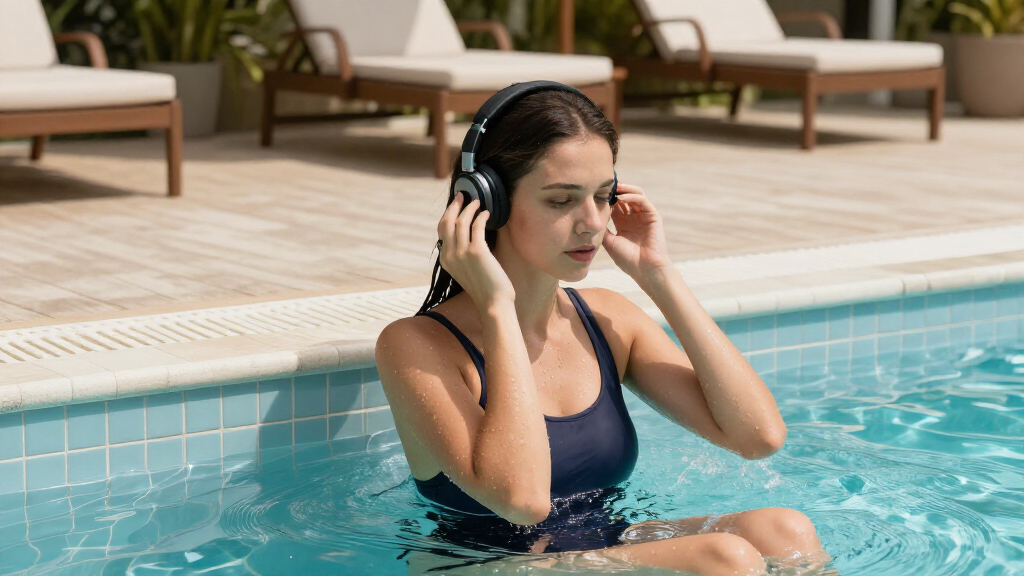
I evaluated these headphones based on waterproof integrity (prioritizing IP68 and IPX8 certifications), audio transmission method (bone conduction vs. in-ear), and connectivity reliability underwater. A major filter was the presence of onboard storage, as Bluetooth cannot transmit through water effectively, making local MP3 playback a necessity for serious swimmers. I also assessed ergonomic design, focusing on whether the headphones stay secure during flip turns and vigorous strokes, and compared battery life against typical training durations.
Rankings were determined by a balance of durability, audio quality, and ease of use. Premium models like SHOKZ earned top spots for their refined engineering and brand reputation for waterproofing, while budget options were judged on their ability to deliver core functionality without frequent failures. Products that required complex setup or lacked robust waterproofing were ranked lower, regardless of their feature lists.
| underwater headphones for swimming | Connectivity |
|---|---|
| Tevese X9 Bone Conduction Swim | Bluetooth 6.0 |
| SHOKZ OpenSwim Pro Open-Ear MP | Bluetooth for land use; unavailable underwater |
| H2O Audio TRI 2 Multi-Sport Wa | Bluetooth 5.3 |
| PSIER S18A Waterproof Bone Con | — |
| MARLALL X26 Bone Conduction Sw | Bluetooth 6.0 and built-in MP3 mode |
| H2O Audio Surge S+ Waterproof | — |
| PSIER S18 Waterproof Bone Cond | — |
| CXK GFS-G5 Bone Conduction Swi | — |
| PSIER S18 Bone Conduction Head | — |
| Sanag B33S IPX8 Bone Conductio | Bluetooth 6.0 |
| H2O Audio TRI 2 PRO Multi-Spor | Bluetooth 5.3 |
| PSIER X70 Bone Conduction Swim | Bluetooth 6.0 |
| RR SPORTS IP68 Waterproof Swim | — |
| H2O Audio Sonar 2 PRO Waterpro | Bluetooth 5.3 |
| Opinta X7 Pro Waterproof Bone | — |
Factors to Consider When Choosing Best Underwater Headphones For Swimming
Choosing the right underwater headphones involves more than just checking a waterproof rating. You need to consider how you listen, how you move, and how you maintain the device. Here are the critical factors that will determine your satisfaction.
Understanding Waterproof Ratings (IPX8 vs. IP68)
Many buyers assume all waterproof headphones are created equal, but the difference between IPX8 and IP68 matters significantly for swimmers. IPX8 means the device is protected against continuous immersion in water beyond 1 meter, but the specific depth and duration are left to the manufacturer. IP68 adds a dust protection rating (the ‘6’) and guarantees protection against immersion under conditions specified by the maker, often up to 1.5 meters for 30 minutes. For pool swimming, IPX8 is usually sufficient, but if you swim in open water where sand or debris is present, IP68 offers better long-term durability. Always check the manufacturer’s specific immersion limits, as some budget models may claim IPX8 but fail after a few weeks of submersion.
Why Bluetooth Fails Underwater
A common misconception is that Bluetooth headphones work perfectly underwater. In reality, 2.4 GHz radio waves (used by Bluetooth) are absorbed by water, meaning signal strength drops to near zero after just a few inches. This is why the best underwater headphones feature built-in MP3 storage (typically 4GB to 32GB). This allows you to load music directly onto the device before swimming, bypassing the need for a smartphone connection. Some newer models claim ‘underwater Bluetooth,’ but this is often marketing hype; they may work for notifications at the surface but cut out immediately upon submersion. Prioritize devices with ample onboard storage and simple file transfer methods.
Bone Conduction vs. In-Ear Designs
Bone conduction headphones transmit sound through your cheekbones, leaving your ear canals open. This is ideal for swimming because it prevents water from getting trapped in the ear, reducing the risk of swimmer’s ear and allowing you to hear ambient sounds for safety. Traditional in-ear waterproof buds use silicone tips to seal the ear, which can be uncomfortable for long sessions and may leak if the seal breaks. While in-ear designs often provide better bass response, bone conduction offers superior comfort and situational awareness. For lap swimming or pool environments, bone conduction is generally the safer and more comfortable choice, though audiophiles may prefer in-ear models for their richer sound profile.
Battery Life and Charging Mechanisms
Waterproofing complicates charging. Most underwater headphones use magnetic charging ports to avoid open USB ports that could let water in. This means you cannot use standard cables, and you must rely on the specific charger included with the device. If you lose the magnetic charger, replacement can be difficult. Battery life typically ranges from 4 to 10 hours. For casual swimmers, 4 hours is enough, but for triathletes or long-distance swimmers, look for models with at least 8 hours of playtime. Also, consider how long the device takes to charge; some premium models offer fast charging that gives you an hour of playback in just 10 minutes, which is a valuable feature for spontaneous pool sessions.
Fit Stability and Ergonomics
A loose fit is the most frustrating issue with swimming headphones. During flip turns or vigorous freestyle strokes, lightweight models can slip or fall off. Secure ear hooks or neckbands are critical for keeping the headphones in place. Look for adjustable straps or memory titanium bands that contour to your head shape. Some models, like the H2O Audio series, use a neckband design that rests on your shoulders, providing extreme stability but adding bulk. Others use a lightweight headband that is less obtrusive but may shift during intense activity. If you swim with goggles, ensure the headphone band does not interfere with the goggle strap, as this can cause discomfort and leaks.
Frequently Asked Questions
Can I use regular Bluetooth headphones in the pool if they are waterproof?
No, you should not attempt to use standard Bluetooth headphones underwater, even if they have a high waterproof rating. Bluetooth signals cannot penetrate water effectively, so the audio will cut out almost immediately upon submersion. Waterproofing protects the electronics from damage, but it does not enable wireless transmission. To listen to music while swimming, you must use headphones with built-in MP3 storage that allow you to play files directly from the device, or use wired headphones specifically designed for underwater use. Attempting to stream via Bluetooth will result in a silent swim.
How do I transfer music to underwater headphones with internal storage?
Most underwater headphones with internal storage connect to your computer via a magnetic USB charging cable that doubles as a data transfer link. You plug the magnetic ends into the headphones and the USB end into your computer, just like a standard flash drive. From there, you can drag and drop MP3 files into the device’s folder. Some newer models offer wireless transfer via an app, but this is often slower and less reliable. Ensure your music files are in a compatible format (usually MP3) before transferring, as these devices rarely support complex codecs like AAC or FLAC natively.
Do bone conduction headphones damage your hearing?
Bone conduction headphones are generally considered safer for hearing than traditional in-ear buds, especially in noisy environments. Because they do not block the ear canal, you don’t need to crank the volume to drown out background noise, which reduces the risk of noise-induced hearing loss. However, they are not immune to volume-related damage. Listening at extremely high volumes can still cause hearing issues. The key advantage is that they allow for lower volume listening while maintaining clarity, making them a better choice for long-term auditory health compared to sealed in-ear monitors that trap sound pressure in the ear canal.
Why do my headphones sound muffled underwater?
Sound travels differently in water than in air, and bone conduction technology relies on vibrations passing through your skull. When submerged, water can dampen these vibrations slightly, or the difference in acoustic impedance can make audio sound less crisp or ‘muffled’ compared to surface listening. This is a physical limitation of underwater audio, not a defect. Some models with higher bass response may feel more distorted underwater. To mitigate this, try adjusting the EQ settings if your device allows it, or accept that underwater audio will always have a duller, less dynamic profile than surface listening.
How long do waterproof swimming headphones typically last?
The lifespan of waterproof headphones depends heavily on maintenance and usage frequency. With proper care—rinsing with fresh water after every pool session to remove chlorine and salt, and drying them thoroughly—most high-quality models last 2 to 3 years. Cheaper models may fail sooner due to seal degradation or battery wear. Chlorine is particularly harsh on silicone and rubber components, so neglecting post-swim rinsing can cause the waterproof seals to crack within months. Regular inspection of the magnetic contacts and seals for corrosion or wear is essential to extending the device’s life.
Conclusion
Selecting the right underwater headphones depends on your budget and swimming intensity. The SHOKZ OpenSwim Pro remains the best overall choice for most swimmers due to its reliable MP3 playback, secure fit, and trusted waterproofing. If you are on a tight budget, the Tevese X9 provides the best value, offering essential features like Bluetooth 6.0 and storage without the premium price tag, though you may experience slightly less refined audio quality. For those who prioritize stability during intense triathlon training, the H2O Audio Sonar 2 PRO stands out as the best for durability and secure fit. Beginners should start with a mid-range bone conduction model like the PSIER S18A to experience the benefits of open-ear listening without a significant financial commitment. Ultimately, prioritize models with onboard storage and verified IP68/IPX8 ratings to ensure a frustration-free swimming experience.
Black Friday Picks

Vitamix 5200 Blender with 64 oz. Container, Black
As an affiliate, we earn on qualifying purchases.