When you float, your perception of sound changes considerably. Ambient noises become softer, more nuanced, and seem to shift in tone due to water and air interactions. Lower frequencies like underwater currents and distant thunder may sound amplified, while higher pitches are muffled. Water reverberations add a layered, immersive quality to your environment. This altered soundscape enhances feelings of calm and connection, making your floating experience uniquely soothing. Keep exploring to discover how these changes deepen your sensory awareness.
Key Takeaways
- Floating isolates ambient sounds, creating a layered, immersive auditory environment that differs from land-based perception.
- Water alters sound transmission, muffling high frequencies and amplifying low-frequency sounds like underwater currents and distant thunder.
- The surrounding environment (pool, lake, ocean) influences the volume, clarity, and nature of perceived sounds.
- Water reverberations and interactions enhance sound textures, making natural noises more nuanced and detailed.
- The overall soundscape becomes softer, more fluid, and meditative, deepening the sensory and environmental connection during flotation.
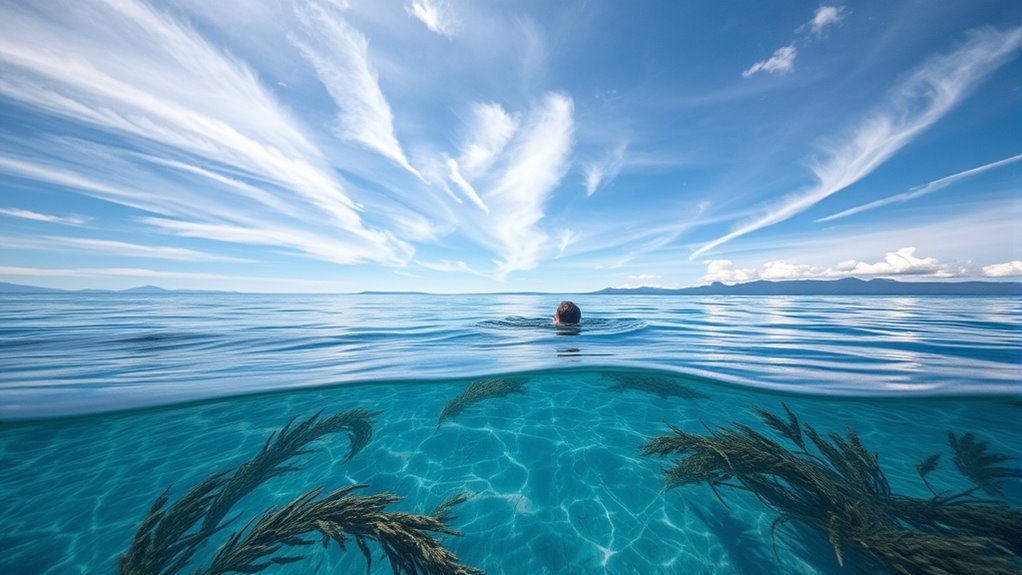
When you float in water, whether in a pool, lake, or the ocean, you’re immersed in a unique soundscape that often goes unnoticed. The gentle buoyancy isolates you from the usual hustle of daily life, allowing ambient noise around you to take center stage in your auditory perception. Instead of the sharp, intrusive sounds you’re used to, you become aware of a softer, more layered acoustic environment that shifts with your surroundings. The soundscape changes because floating alters how sounds travel through water and air, making it a dynamic experience for your ears.
Floating in water transforms your environment into a layered, immersive soundscape that shifts and deepens your sensory experience.
As you drift, you notice the ambient noise around you takes on a new quality. In the ocean, for example, distant waves crashing or the faint hum of marine life blend into a soothing backdrop. In a lake or pool, the sounds are quieter but still present—perhaps the hum of nearby insects or the ripple of water caused by your movements. These noises, typically drowned out by urban life or indoor environments, become more prominent through your heightened auditory perception while floating. Your ears pick up these subtle sounds with increased clarity, and the natural reverberations of water can make them seem even more immersive.
The change in ambient noise isn’t just about volume; it’s about texture and tone. Floating often muffles higher frequencies, making the sounds feel more muted and mellow. Meanwhile, low-frequency sounds, like distant thunder or the rumble of underwater currents, can seem amplified or more profound. This shift in sound quality influences how you interpret your surroundings, creating a calming or even meditative effect. Your brain filters and processes these noises differently because the water acts as a medium that modifies sound transmission. For example, the way sound travels through water and air is significantly affected by the environment, further enhancing the unique auditory experience of floating. This change in auditory perception makes you more receptive to subtle environmental cues—like the rustling of leaves or the distant call of a bird—adding depth to your floating experience.
Ultimately, floating transforms your usual soundscape into an intimate auditory journey. The ambient noise becomes a gentle, ever-changing soundtrack that emphasizes quiet, natural sounds you might never notice on land. As your awareness heightens, you realize how fluid and adaptable sound is—how it shifts and morphs based on your environment and position in the water. This altered auditory perception deepens your connection to your surroundings, making floating not just a physical escape but a sensory one as well.
Frequently Asked Questions
How Do Soundscapes Differ Between Indoor and Outdoor Floating Environments?
In indoor floating environments, ambient noise is often subdued due to controlled acoustic properties, creating a calm, insulated soundscape. Outdoors, you’ll notice more ambient noise from nature and surroundings, which can be louder and less predictable because of open acoustics. The contrast affects your experience, making indoor spaces feel more serene and focused, while outdoor environments offer richer, more dynamic soundscapes shaped by natural acoustics.
Can Soundscapes Influence the Emotional Experience During Floating Sessions?
Your soundscape can transform your floating experience more profoundly than a thunderstorm changes a calm sky. Sound therapy and sensory immersion work together to evoke powerful emotions, enhancing relaxation or focus. When the right sounds surround you, they amplify your mood, making your floating session feel like an emotional voyage. So, yes, soundscapes considerably influence your emotional state, deepening your connection to inner peace or heightened awareness during floating.
Are There Specific Sounds That Enhance Relaxation While Floating?
Yes, certain sounds can enhance your relaxation while floating. Nature sounds, like gentle rain or ocean waves, create a calming atmosphere that helps you unwind. Ambient music with soft melodies and slow tempos also promotes deep relaxation by soothing your mind. Combining these sounds with your floating experience can deepen your sense of tranquility, making it easier to let go of stress and fully immerse yourself in a peaceful state.
How Do Individual Differences Affect Perception of Soundscapes While Floating?
Your sensory sensitivity and personal preferences greatly influence how you perceive soundscapes while floating. If you’re highly sensitive, you might find certain sounds overwhelming or distracting, while others may find them soothing. Your individual taste determines which sounds enhance your relaxation. By understanding your unique sensory profile, you can choose or adjust sound environments to maximize your floating experience, making it more calming and tailored to your needs.
What Role Do Soundscapes Play in the Overall Health Benefits of Floating?
Sure, because nothing says perfect health like floating in silence while listening to sound therapy. Soundscapes enhance your floating experience by drowning out noise pollution, helping reduce stress and promote relaxation. They create a calming environment that supports mental clarity and emotional balance. So, by engaging with soothing sounds, you boost your overall health, proving that sometimes, the best medicine is a little ambient audio to float your worries away.
Conclusion
As you drift through the floating soundscape, you’ll notice it transforms like a chameleon, blending and shifting around you. The gentle hum of water and distant echoes wrap you in a soothing embrace, making you feel like you’re floating in a world of your own. These changing soundscapes become a symphony of serenity, reminding you that sometimes, the most beautiful moments happen when you allow yourself to simply float and listen.