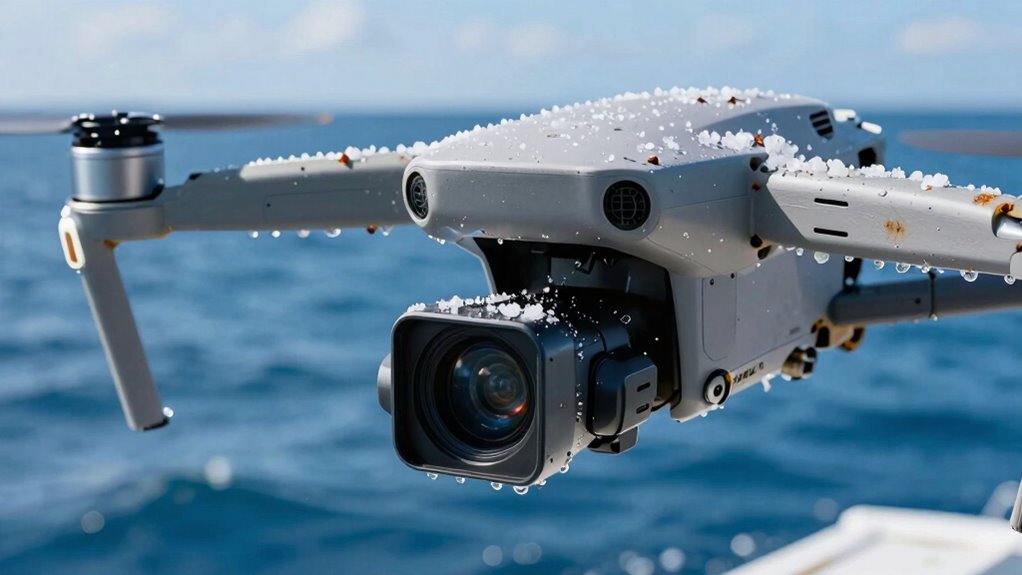
To prevent corrosion on your cameras and drones in saltwater, always use marine-grade casings and apply protective coatings to block moisture and salt. After exposure, rinse your gear with fresh water, gently clean salt deposits with isopropyl alcohol, and dry thoroughly using desiccants. Store equipment in waterproof cases and inspect regularly for signs of corrosion or damage. Maintaining proper care now helps extend your device’s lifespan—discover more tips to keep your gear in top condition.
Key Takeaways
- Rinse devices with fresh water immediately after saltwater exposure and gently clean with isopropyl alcohol to remove salt deposits.
- Use marine-grade enclosures, coatings, and sealed casings to prevent salt and moisture ingress.
- Store equipment in dry, cool environments with desiccants like silica gel to absorb residual moisture.
- Regularly inspect for corrosion signs such as white or green deposits, and address issues promptly with cleaning or part replacement.
- Seek professional maintenance for thorough cleaning, corrosion prevention treatments, and to ensure long-term device durability.
Understand Saltwater Risks to Your Electronics
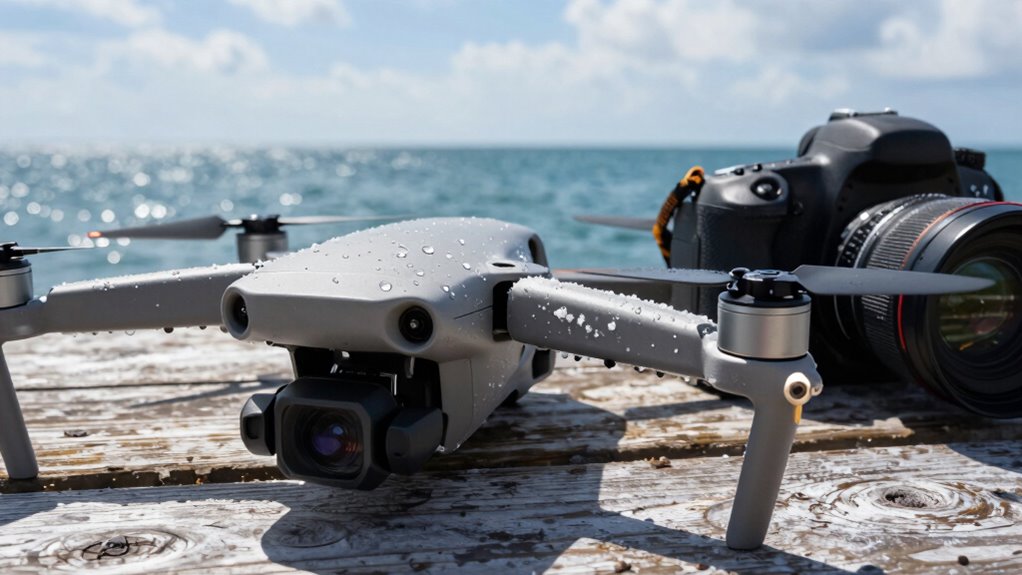
Saltwater poses a significant threat to your electronics because it’s highly corrosive and conductive. Marine corrosion occurs when salt residue from seawater reacts with metal components, leading to deterioration and failure. When salt residue remains on your gear, it accelerates corrosion, especially in exposed areas like connectors and circuit boards. This process weakens the metal, causing rust and compromising the device’s functionality. Even brief exposure can set off a chain reaction of damage, making it essential to understand these risks. Your electronics aren’t designed to withstand saltwater environments, so ignoring the dangers of marine corrosion and salt residue can result in costly repairs or replacements. Protecting your gear starts with awareness of these corrosive effects and acting quickly to minimize exposure.
Choose Saltwater-Resistant Casings for Your Gear
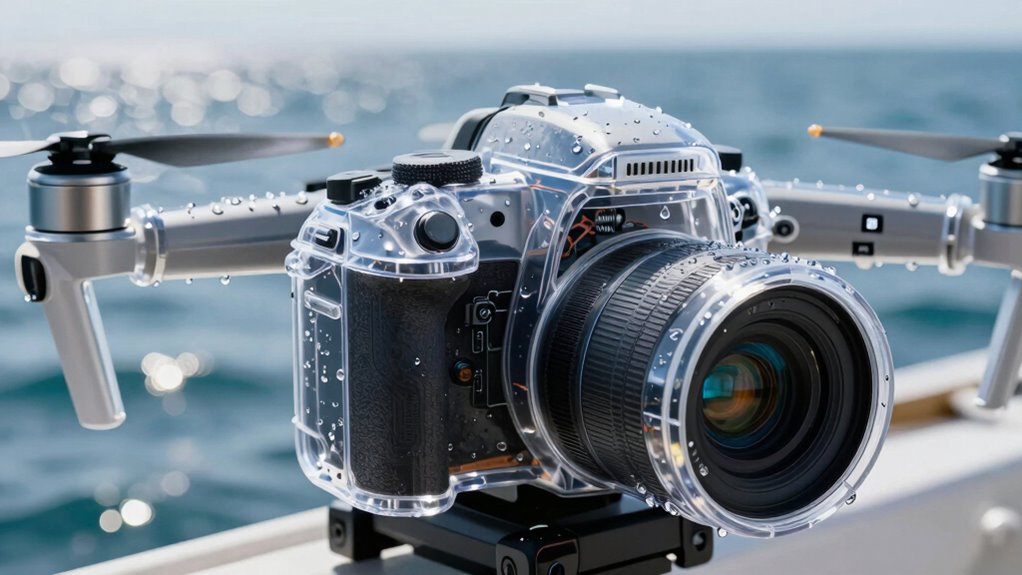
To protect your electronics from saltwater damage, choosing casings specifically designed to resist corrosion is essential. Look for enclosures made from corrosion resistant materials like marine-grade aluminum or high-quality plastics, which can withstand harsh salt environments. Marine grade coatings further enhance protection by providing a barrier against moisture and salt penetration. These coatings are specially formulated to resist corrosion and extend the lifespan of your gear. When selecting a casing, ensure it’s sealed tightly and designed for marine use to prevent water ingress. Investing in a saltwater-resistant casing not only safeguards your equipment but also reduces maintenance and repair costs over time. With the right choice, you can confidently take your cameras and drones into saltwater environments without worry.
Use Coatings and Sealants to Prevent Saltwater Corrosion

Applying specialized coatings and sealants is essential for preventing saltwater corrosion on your electronics. Coating protection creates a barrier that shields sensitive components from moisture and salt deposits, reducing corrosion risk. When you perform sealant application, make certain you cover all vulnerable areas, including joints, connectors, and exposed surfaces. Use high-quality, marine-grade coatings designed specifically for saltwater environments to maximize durability. Proper sealant application involves thorough cleaning of surfaces beforehand, then applying an even, thin layer to seal gaps and prevent water ingress. Regularly inspect the coatings and sealants for signs of wear or damage, and reapply as needed to maintain effective protection. This proactive approach considerably extends the lifespan of your cameras and drones in harsh saltwater conditions.
Rinse and Maintain Your Cameras and Drones Regularly
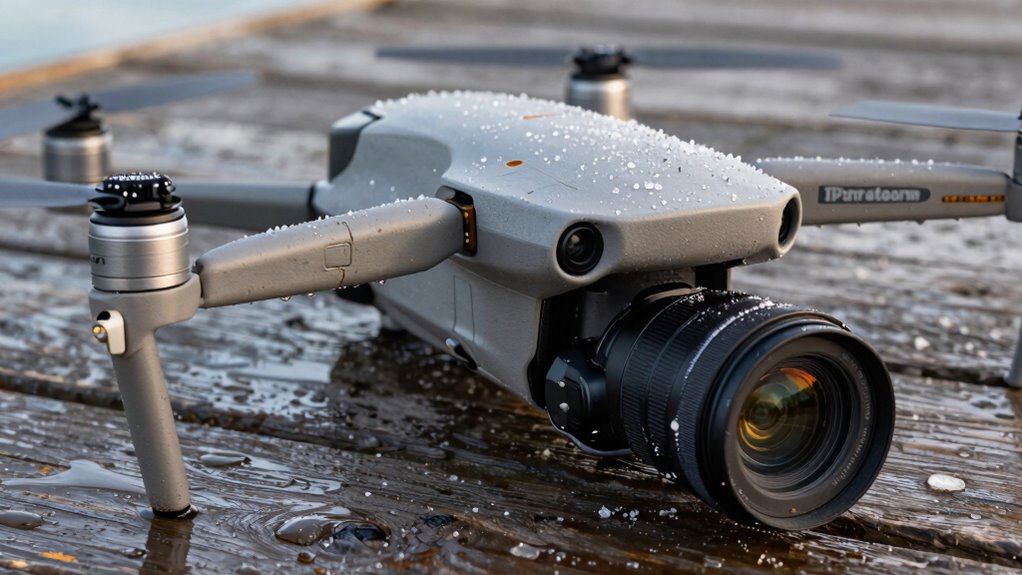
Regular rinsing and maintenance are essential to keep your cameras and drones in ideal condition after exposure to saltwater. Saltwater spray can cause corrosion if not cleaned promptly, so rinse your devices with fresh water immediately after use. Use gentle pressure to remove salt residue and prevent corrosion. Regular checks help identify early signs of damage, ensuring proper corrosion prevention.
| Step | Action | Tips |
|---|---|---|
| Rinse thoroughly | Use freshwater to wash saltwater spray | Avoid high pressure to prevent damage |
| Dry completely | Air dry or gently wipe with a soft cloth | Keep in a dry environment |
| Inspect for damage | Check for corrosion or corrosion signs | Address issues early |
| Reapply coatings | Use protective coatings if needed | Maintain corrosion prevention |
Consistent maintenance keeps your gear reliable and corrosion-free.
Use Desiccants and Sealants to Reduce Moisture and Salt Residue
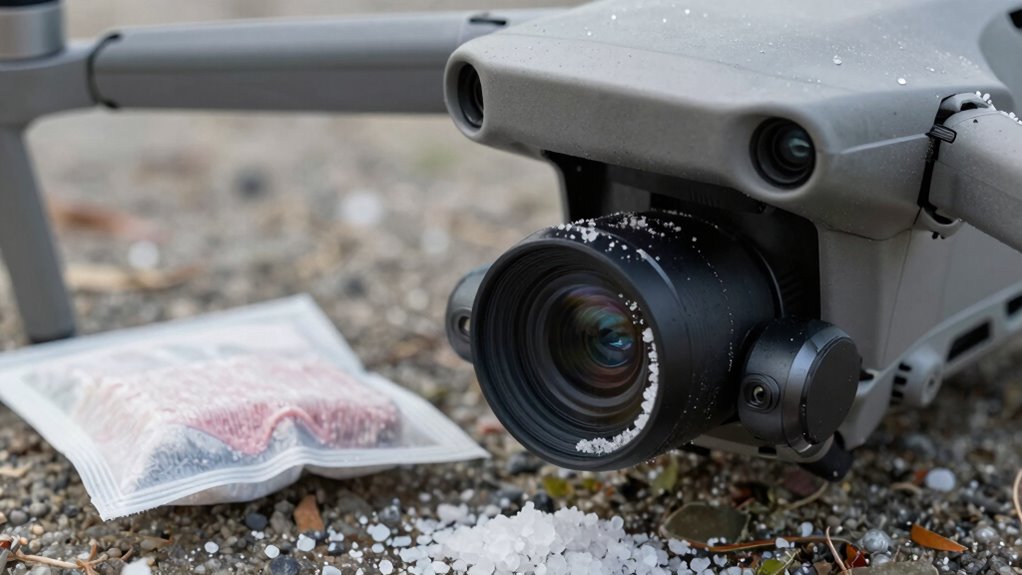
Using the right desiccants and sealants can considerably protect your electronics from moisture and salt buildup. You need to choose suitable products, apply sealants properly, and perform regular maintenance checks. These steps help ensure your equipment stays dry and corrosion-free in harsh saltwater environments.
Choosing Suitable Desiccants
Choosing the right desiccant is essential for protecting your saltwater electronics from moisture and salt residue. There are various desiccant types, each designed for specific moisture absorption needs. Silica gel is popular because it’s highly effective and reusable, making it ideal for electronics that require frequent exposure to moisture. Clay-based desiccants are affordable but absorb less moisture and are better for short-term use. If you need a more robust solution, consider molecular sieves, which provide excellent moisture absorption in high-humidity environments. When selecting a desiccant, think about the level of exposure and the duration it will need to protect your device. Properly chosen desiccants help prevent corrosion, ensuring your cameras and drones stay functional in salty conditions.
Applying Sealants Effectively
Proper application of sealants alongside desiccants can substantially reduce moisture and salt residue buildup on your saltwater electronics. To achieve effective sealant application, start with thorough surface preparation. Clean all surfaces carefully, removing salt deposits, dirt, and oils that can interfere with adhesion. Use a soft cloth and a suitable cleaning solution, ensuring the area is dry before applying the sealant. When applying the sealant, follow the manufacturer’s instructions precisely, applying an even layer to all vulnerable joints and seams. Proper surface preparation ensures the sealant bonds effectively, creating a watertight barrier. This combination of well-prepared surfaces and accurate sealant application helps prevent moisture ingress and salt residue accumulation, protecting your electronics from corrosion and extending their lifespan.
Regular Maintenance Checks
Regular maintenance checks are essential for keeping moisture and salt residue at bay on your saltwater electronics. During these checks, inspect seals and apply desiccants to absorb humidity inside enclosures. Guarantee your batteries are properly maintained by checking for corrosion and replacing them if needed, which helps prevent electrical issues caused by salt exposure. Keep firmware updated regularly to improve device resistance and functionality against harsh conditions. Look for signs of salt buildup or corrosion around connectors and vents, and clean these areas carefully. Sealing any gaps or cracks with high-quality sealants enhances protection against moisture ingress. Consistent maintenance minimizes long-term damage, extends device lifespan, and ensures your camera or drone performs reliably even in salty environments.
Store and Transport Your Equipment Properly When Not in Use

When you’re not using your saltwater electronics, make sure to store them in protective cases to prevent damage. Keep your equipment dry and away from moisture, which can cause corrosion. Proper storage and transport help extend the life of your gear and keep it functioning reliably.
Use Protective Cases
Protecting your saltwater electronics starts with using a sturdy protective case whenever you’re not actively using your equipment. Proper storage prevents exposure to moisture, salt, and physical damage that can lead to corrosion. Choose high-quality waterproof enclosures or protective cases designed for harsh environments.
Imagine your gear snug inside a durable, sealed container, shielded from waves and humidity. Keep in mind:
- Rigid, shock-absorbing shells
- Secure latches and seals
- Compact size for easy transport
- Foam padding for extra protection
- Weather-resistant materials
Using these protective cases ensures your cameras and drones stay dry and safe when not in use. Investing in waterproof enclosures minimizes corrosion risks, extending the lifespan of your equipment and maintaining excellent performance in saltwater conditions.
Keep Equipment Dry
To keep your saltwater electronics in top shape, it’s essential to store and transport them properly when not in use. Good equipment storage practices help prevent moisture buildup that can lead to corrosion. Always choose a dry, cool environment, and consider using moisture control desiccants or silica gel packets inside your cases or bags. Make sure your gear is completely dry before storing it, as residual moisture can cause corrosion over time. When transporting, use waterproof or sealed containers to protect against splashes and humidity. Avoid leaving your equipment in areas prone to dampness or rapid temperature changes. Proper equipment storage and moisture control are key to extending the lifespan of your cameras and drones in salty environments.
Spot Signs of Saltwater Damage and How to Fix Them
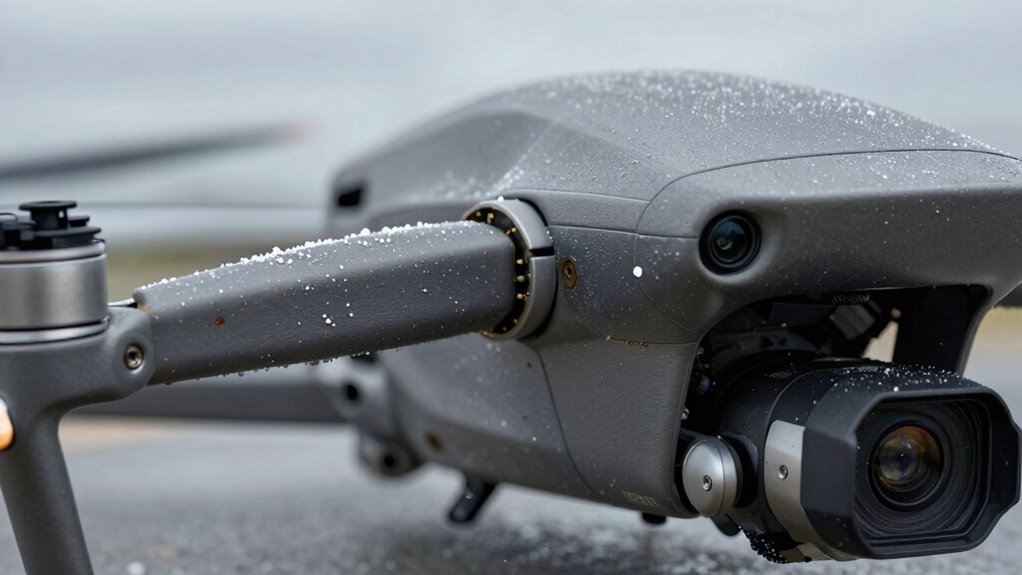
Saltwater damage often shows itself through visible corrosion, discoloration, or residue on your electronics. To spot signs, look for corrosion indicators like white or greenish deposits, rusted connectors, or tarnished metal surfaces. Discoloration may appear as dark stains or fogging on lenses and screens. Residue can be a crusty film or sticky film on ports and joints. Check for loose or corroded screws and corrosion around battery contacts. When you see these signs, use repair techniques such as gentle cleaning with isopropyl alcohol and soft brushes. If corrosion is extensive, consider replacing affected parts. Addressing corrosion early prevents further damage and maintains your gear’s performance. Regular inspections help you identify issues before they worsen, saving time and money.
Get Professional Maintenance to Extend Your Gear’s Lifespan

Professional maintenance plays a crucial role in extending your gear’s lifespan after saltwater exposure. Expert technicians can perform thorough cleaning, ensuring salt residues don’t cause ongoing corrosion. They also handle battery management, checking for corrosion or damage that could compromise power or safety. Proper maintenance helps prevent signal interference caused by corrosion on connectors or internal components, ensuring your camera or drone maintains ideal performance. Regular professional checkups can identify early issues before they escalate, saving you money and frustration later. Additionally, specialists can apply protective coatings or seals that your gear might need after saltwater exposure. Overall, investing in professional maintenance preserves your equipment’s functionality and durability, allowing you to enjoy your adventures without worrying about unexpected failures.
Frequently Asked Questions
What Are the Best Storage Practices for Saltwater Electronics?
To store saltwater electronics properly, make certain you use airtight storage containers to keep moisture out. Add desiccant packs inside to absorb any residual humidity, preventing corrosion. Keep your devices in a cool, dry place away from direct sunlight. Regularly check the containers and replace desiccants as needed. Proper storage helps maintain your electronics’ longevity and performance, especially after saltwater exposure.
How Do I Test for Hidden Corrosion Inside My Devices?
Imagine tiny rivers flowing inside your device, unseen but damaging. To test for hidden corrosion, use a multimeter to check electrical conductivity between contact points; increased readings suggest corrosion. Perform a visual inspection, looking for discoloration, pitting, or residue, especially in hidden corners. Regular testing helps catch corrosion early, preventing costly damage and ensuring your electronics stay reliable, even after exposure to saltwater.
Can DIY Repairs Effectively Address Saltwater Damage?
DIY repairs can sometimes address saltwater damage if you’re experienced with electronic component maintenance, but they often fall short for thorough corrosion prevention. You might clean and replace affected parts, but hidden corrosion can linger, causing future issues. For effective results, it’s best to follow proper corrosion prevention techniques and seek professional help when dealing with saltwater damage, ensuring long-term device health and performance.
What Are the Most Common Mistakes When Caring for Saltwater Gear?
Ever wonder why your gear fails prematurely? You’re likely making mistakes like improper cleaning or neglecting maintenance. These slip-ups allow saltwater to cause corrosion, damaging cameras and drones. Avoid this by rinsing your equipment thoroughly with fresh water after use and performing regular checks. Don’t overlook simple steps—they’re essential to extending your gear’s lifespan. Proper care keeps your electronics working smoothly, even in harsh saltwater environments.
How Often Should I Replace Parts Exposed to Saltwater?
You should replace components exposed to saltwater when corrosion inspection shows significant deterioration or damage. Regularly check parts like connectors, seals, and batteries, and do so more frequently if you notice corrosion or salt buildup. Don’t wait until a failure occurs; proactive component replacement helps prevent costly damage. Keep a maintenance schedule to ensure your gear stays protected, and replace any compromised parts promptly to maintain peak performance.
Conclusion
To keep your cameras and drones sailing smoothly through saltwater adventures, stay vigilant and care for your gear like a seasoned mariner. Regular rinsing, proper storage, and using resistant casings can save you from costly repairs. Remember, even the bravest explorers faced setbacks—think of it as your own quest for digital treasure. With consistent upkeep, your equipment will serve you well, whether in modern seas or chivalrous quests of yore.