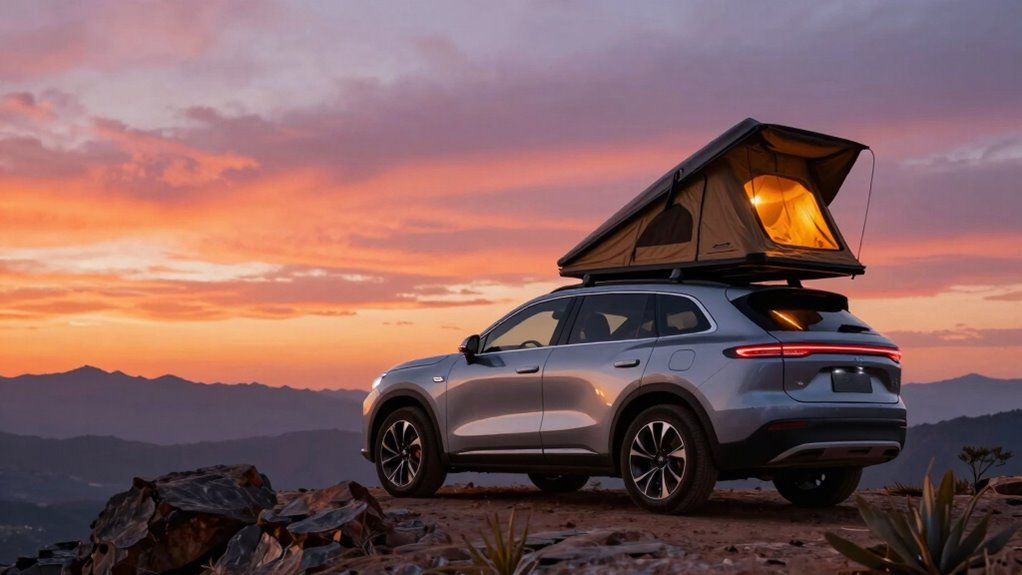

Your rooftop tent’s safety and legality depend on knowing your vehicle’s weight limits and managing the load properly. Check your owner’s manual for the roof weight capacity, including gear, tent, and passengers, and stay within that limit to avoid accidents or damage. Distribute weight evenly using suitable racks, secure everything tightly, and regularly monitor your vehicle’s handling. Keep height restrictions in mind for routes, and confirm your vehicle’s condition is up to the task. If you want to learn more, keep exploring these essential tips.

Get pool and patio gear delivered free with Prime
- Fast, free delivery on millions of items
- Prime Video, Amazon Music and more included
- Member-only deals all year
Key Takeaways
- Always check your vehicle’s maximum roof weight limit in the owner’s manual before installing a rooftop tent.
- Include the tent, gear, and passengers when calculating total weight to stay within vehicle limits.
- Use lightweight gear and optimize packing to minimize added weight on the roof.
- Ensure proper load distribution and secure mounting to maintain vehicle stability.
- Plan routes considering your vehicle’s new height and weight restrictions for safety.
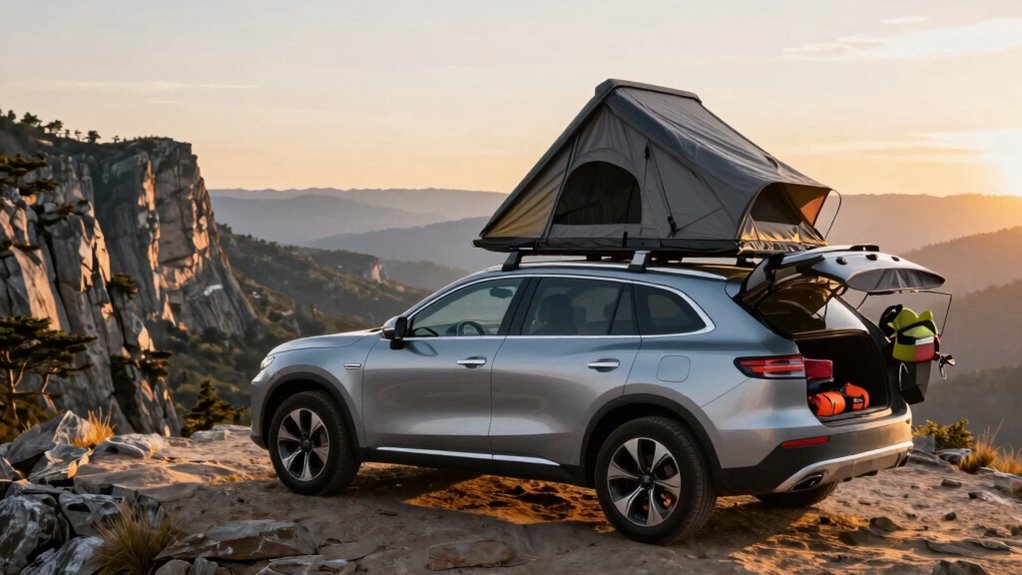
When it comes to installing a rooftop tent, understanding your vehicle’s limits is essential to guarantee safety and legality. Your vehicle’s roof has a maximum weight capacity, often listed in the owner’s manual. Exceeding this limit can lead to dangerous driving conditions, damage to your vehicle, or even accidents. Before you start packing your camping gear into the tent, check the manufacturer’s specified weight limit for your roof. This number includes the weight of the tent itself, plus the weight of all your gear and passengers. Staying within these limits isn’t just about avoiding fines; it’s about ensuring your safety on the road. Recognizing your vehicle’s roof weight capacity helps you plan what camping gear to bring. Lightweight, compact gear is your best friend here. Opt for camping gear that’s easy to pack and doesn’t add unnecessary weight. Remember, everything you put up there adds to the total load, so prioritize essentials. For example, choose a lightweight sleeping bag, a compact stove, and collapsible furniture. This way, you maximize your comfort without risking overload. Packing smart not only keeps you within your vehicle’s limits but also makes setup and packing easier at your campsite. Additionally, considering the overall weight distribution ensures even load sharing, which is vital for safe driving. Proper load management can prevent undue stress on your vehicle’s suspension and frame. Ensuring your vehicle is equipped with suitable roof racks can also help distribute weight more effectively and securely. Safety considerations go beyond just weight limits. When installing your rooftop tent, ensure it’s mounted securely, and all brackets and straps are tightened properly. A loose installation can cause the tent to shift or detach, especially when driving on rough roads. It’s also wise to double-check that your vehicle’s suspension and tires are in good condition; a heavy load can strain these components, affecting handling and braking. Before heading out, test drive your vehicle with the tent installed, paying attention to any unusual noises or handling issues. Staying alert to how your vehicle responds ensures you catch problems early. Additionally, consider the height of your vehicle once the tent is mounted. Many areas have height restrictions on roads or bridges, and you’ll want to avoid any surprises. If you’re unsure about your vehicle’s new height, measure it accurately and plan your route accordingly. Always keep safety considerations front and center—this includes not just the way you load your gear but also the conditions of the roads you’ll travel. Proper planning and awareness help you enjoy your trip without risking damage or danger, making your camping experience both safe and enjoyable.
lightweight camping gear for rooftop tents
As an affiliate, we earn on qualifying purchases.
As an affiliate, we earn on qualifying purchases.
Frequently Asked Questions
How Do Rooftop Tents Affect Vehicle Fuel Efficiency?
Rooftop tents can reduce your vehicle’s fuel efficiency because they increase aerodynamic drag, making your vehicle work harder to move. This added resistance leads to higher fuel consumption, especially at highway speeds. The extra weight of the tent also plays a role, but it’s primarily the increased aerodynamic drag that impacts efficiency. To minimize this effect, consider a sleek, aerodynamic tent design and avoid high speeds when possible.
Are Rooftop Tents Suitable for All Vehicle Types?
Rooftop tents aren’t suitable for all vehicle types. You need to take into account vehicle compatibility, especially roof weight limits and rack strength, before tent installation. SUVs and trucks usually handle rooftop tents well, while sedans and small cars might not support the added weight safely. Always check your vehicle’s roof capacity and installation instructions to ensure safe and secure tent setup. If in doubt, consult your vehicle’s manual or manufacturer.
What Is the Maximum Weight Capacity for Rooftop Tents?
You should know that rooftop tents typically support between 200 to 600 pounds, depending on the model. Proper weight distribution is essential for safety, making certain the load is evenly spread across the roof. Mounting stability directly impacts how well your vehicle handles, especially during turns or rough terrain. Always check the manufacturer’s specified maximum weight capacity, and confirm your vehicle’s roof can handle the load safely before setting up your tent.
Can Rooftop Tents Be Installed on Electric Vehicles?
Yes, you can install rooftop tents on electric vehicles, but you need to take into account electric compatibility and weight restrictions carefully. Check your EV’s roof weight limit to make sure it can support the tent’s weight plus gear. Keep in mind, electric vehicles often have lower weight capacities, so choose a lightweight rooftop tent designed for compatibility with your specific EV model. Proper installation is vital for safety and performance.
How Do Rooftop Tents Impact Vehicle Insurance Coverage?
Imagine your vehicle as a trusty steed, carrying more than just you—adding a rooftop tent can sometimes saddle it with insurance surprises. While some insurers offer discounts for safe, added gear, others might impose coverage exclusions, leaving you vulnerable. You could save money on premiums but risk losing coverage if an accident involves your tent. Always check your policy, so your adventure doesn’t turn into an unexpected financial toll.
Conclusion
Think of your vehicle and rooftop tent as a dance duo—each moves in harmony to create a smooth performance. Knowing your vehicle’s limits and choosing the right tent keeps your adventure flowing seamlessly, avoiding missteps or stumbles. When you respect these boundaries, you’re not just camping—you’re choreographing a safe, enjoyable journey where every step, like each beat in a song, fits perfectly. Embrace the rhythm, and let your adventures dance on effortlessly.
Halloween Picks
halloween
As an affiliate, we earn on qualifying purchases.