
To save your expensive inflatable gear, adopt a patch repair habit focused on proper material selection, surface prep, and application methods. Choose patches compatible with your gear’s material, thoroughly clean and dry the surface, and lightly sand if needed. Press firmly during application and follow curing instructions. Using high-quality materials and careful techniques extend your gear’s lifespan, prevent recurring issues, and save you money. Keep these steps in mind, and you’ll discover more tips on how to master this repair routine.

Get pool and patio gear delivered free with Prime
- Fast, free delivery on millions of items
- Prime Video, Amazon Music and more included
- Member-only deals all year
Key Takeaways
- Always select patches compatible with the gear’s material (PVC, nylon, vinyl) for stronger adhesion and durability.
- Properly clean, dry, and lightly sand the surface before applying the patch to ensure a secure bond.
- Firmly press the patch to eliminate air bubbles and follow curing instructions for long-lasting repairs.
- Use high-quality patches and adhere to correct application procedures to prevent peeling and recurring damage.
- Regularly inspect and promptly repair leaks to extend the lifespan of expensive inflatable gear.

Have you ever noticed how quickly we reach for a patch or quick fix whenever something breaks? It’s almost instinctive. When your inflatable gear gets a leak, your first thought might be to slap on a patch and get back to your activity. While patches seem like a simple solution, the secret to making your repairs last isn’t just about sticking something over the hole—it’s about understanding the importance of material selection and repair longevity.
Choosing the right patch material is vital. Not all patches are created equal, and selecting the appropriate one for your gear can make a huge difference. For inflatable gear, you want a patch that is compatible with the material of your item—whether it’s PVC, nylon, or vinyl. Using a patch made of incompatible material can lead to poor adhesion, quick peeling, or even further damage. When you opt for high-quality patches designed specifically for your gear’s material, you set yourself up for a more durable, effective repair. Additionally, understanding the concept of material compatibility can help prevent recurring issues and extend the life of your gear. Being aware of adhesion properties is also crucial for a lasting fix.
Choose high-quality patches compatible with your gear’s material for durable, effective repairs.
But material selection doesn’t stop at the patch itself. The surface where you apply the patch matters just as much. Preparing the surface properly—cleaning, drying, and sometimes lightly sanding—ensures better adhesion. If you rush this step, even the best patch won’t hold up over time. Proper surface preparation techniques are essential to achieve a secure bond. Remember, the goal isn’t just to cover the hole temporarily but to restore your gear’s integrity so it can perform reliably again. Being aware of surface preparation techniques is crucial for a successful repair.
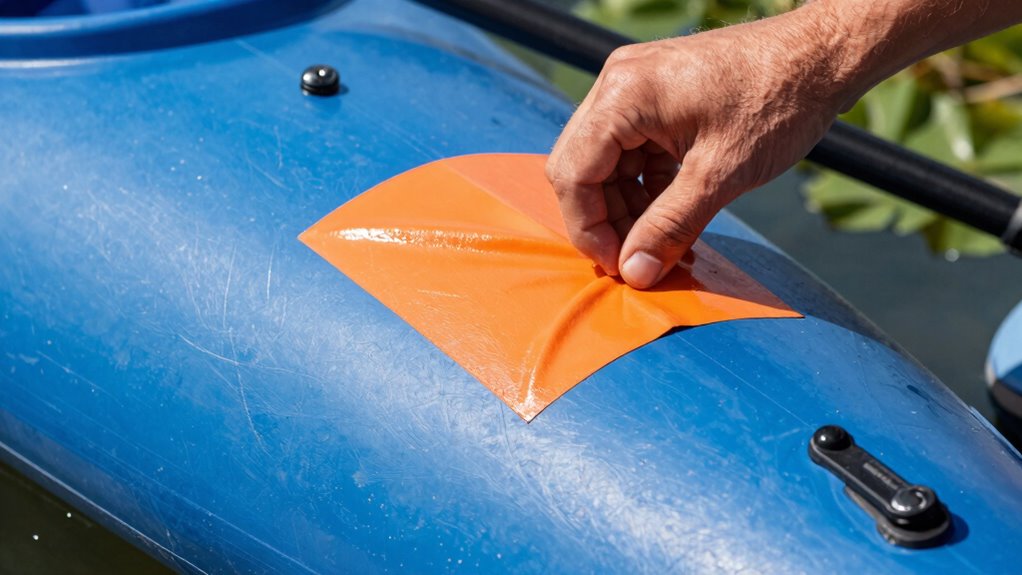
Proper application technique is essential. You need to press firmly, eliminate air bubbles, and follow the manufacturer’s instructions for curing time. A well-applied patch, with attention to detail, will last much longer, saving you money and hassle in the long run. It’s tempting to rush through repairs, especially when you’re enthusiastic to get back on the water or trail, but taking your time ensures a stronger, longer-lasting fix. Additionally, understanding the importance of repair material compatibility can help prevent recurring issues and extend the life of your gear.
Investing in quality materials and following proper repair procedures isn’t just about patching up your gear; it’s about extending its lifespan. When you understand the importance of material selection and commit to thorough application, you turn a quick fix into a reliable repair. That way, your expensive inflatable gear isn’t just patched temporarily—it’s restored to serve you well, season after season.
As an affiliate, we earn on qualifying purchases.
Frequently Asked Questions
How Long Does a Patch Repair Typically Last?
A patch repair can last several months to years, depending on inflatable durability and repair techniques used. If you thoroughly clean and dry the area before applying the patch, it’ll stick better and hold longer. For ideal results, guarantee the patch is well-adhered and avoid overuse or exposure to sharp objects. Proper maintenance and timely repairs considerably extend the lifespan of your inflatable gear.
Can Patches Be Used on All Types of Inflatable Gear?
You can use patches on most inflatable gear, but it’s not a one-size-fits-all solution. Think of it like fitting a key to a lock—material compatibility matters. Make certain the patch material matches your gear’s fabric for a secure repair. Proper patch application techniques, like cleaning the surface thoroughly and applying pressure, ensure the patch adheres well. With these steps, your inflatable gear stays in top shape longer.
What Tools Are Necessary for a Proper Patch Repair?
To guarantee a proper patch repair, you’ll need basic tools like a clean cloth, scissors, and a squeegee or flat-edged object. Focus on material compatibility by choosing a patch and adhesive that match your inflatable’s material. Select an adhesive specifically designed for inflatable gear, ensuring it bonds well and remains flexible. Proper preparation and precise application help your repair last longer, saving you money and extending the life of your inflatable.
Is It Safe to Use DIY Patches on Inflatables?
Yes, DIY repair on inflatables can be safe if you follow proper procedures. Use appropriate patches and adhesive designed for inflatable materials to guarantee a secure fix. Always clean and dry the area before applying the patch, and follow instructions carefully. This approach maintains inflatable safety and extends your gear’s lifespan. However, for large or critical leaks, consider professional repair to guarantee safety and durability.
How Do Weather Conditions Affect Patch Longevity?
Weather conditions can be a relentless tide, wearing down your patch’s durability. UV exposure acts like a magnifying glass, intensifying sunlight and breaking down adhesives over time. Temperature fluctuations cause expansion and contraction, making patches peel or crack. To prolong patch longevity, keep your inflatable gear out of direct sunlight and avoid drastic temperature shifts. Proper care ensures your patched gear stays afloat, ready for adventure rather than surrendering to the elements.
Conclusion
By adopting the patch repair habit, you’re fundamentally becoming a guardian of your gear’s lifespan. Think of each patch as a tiny shield, mending the fabric’s wounds before they deepen. It’s a simple act that transforms your inflatable gear from a disposable item into a trusty companion, ready to face the next adventure. When you patch early, you keep your gear’s spirit alive—like a phoenix rising from the ashes, resilient and ready to soar again.
Columbus Day / Indigenous Peoples' Day Picks
long weekend sales
As an affiliate, we earn on qualifying purchases.