To practice good generator etiquette, position it outdoors at least 20 feet from your home, away from windows, doors, and vents, and use barriers to reduce noise. Always run it in well-ventilated areas to prevent carbon monoxide buildup, and install detectors inside your home. Communicating with neighbors about your generator’s operation and maintenance helps maintain good relations. Understanding safe placement, noise control, and CO safety tips will keep everyone safe—keep going to discover more helpful advice.
Key Takeaways
- Operate the generator outdoors, at least 20 feet from the home, and direct exhaust away to ensure proper ventilation and CO safety.
- Use barriers or soundproof enclosures to minimize noise and respect neighbors during quiet hours.
- Communicate planned generator use and maintenance schedules clearly with neighbors to foster good relations.
- Follow safety protocols like grounding, regular maintenance, and inspecting exhaust systems to prevent CO buildup.
- Avoid unnecessary idling, and keep the generator well-maintained to reduce noise and ensure safe operation.
Why Is Generator Safety and Etiquette So Important?
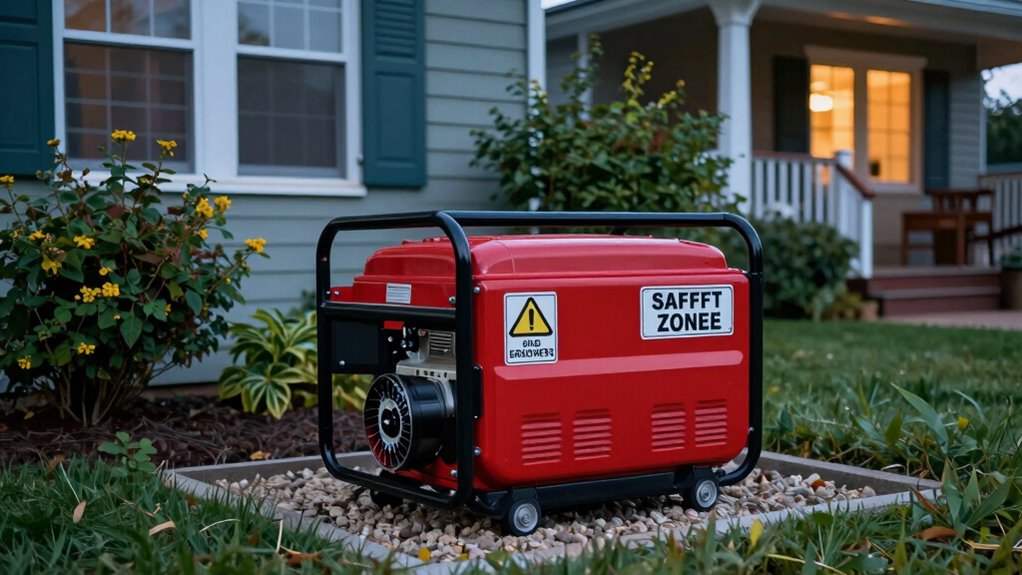
Generator safety and etiquette are crucial because improper use can lead to serious injuries, property damage, or even fires. One key aspect is managing generator noise, which can disturb neighbors and violate local ordinances. Being mindful of noise levels shows respect and helps maintain good relationships. Proper power management is equally important; overloading your generator can cause malfunctions or damage, risking safety and costly repairs. Following safety protocols, such as ensuring proper grounding and ventilation, reduces the risk of accidents. Adhering to etiquette also involves operating your generator responsibly, like avoiding unnecessary idling and respecting quiet hours. By prioritizing safety and etiquette, you protect yourself, others, and your property while ensuring your generator functions efficiently and quietly.
How Should You Position Your Generator for Safety and Quiet Operation?
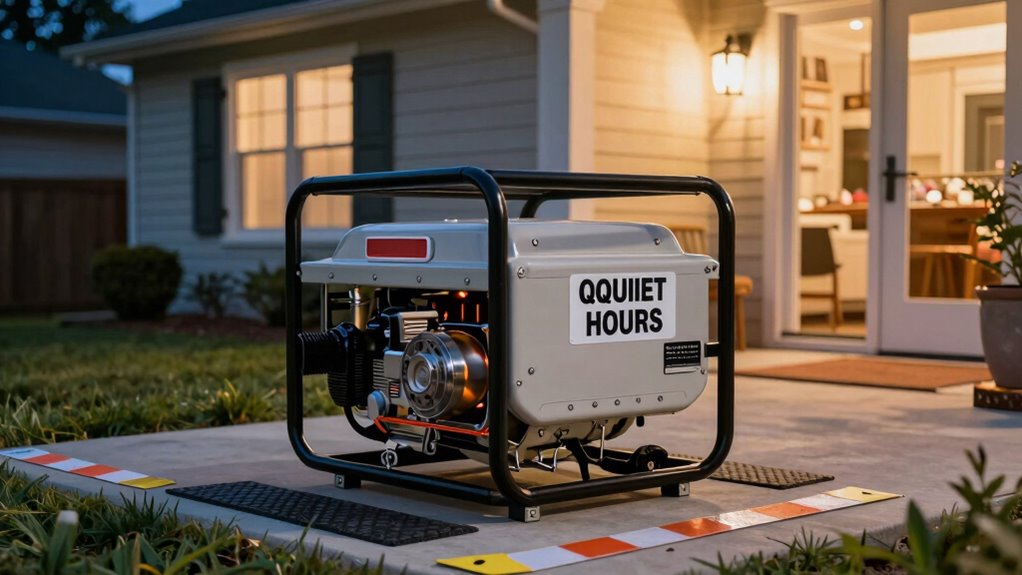
To guarantee safety and minimize noise, you should position your generator outdoors in a well-ventilated, open area away from windows, doors, and vents. Proper placement tips are essential for noise reduction and safety. First, choose a flat surface to prevent vibrations and movement. Second, position the generator at least 20 feet from your home, ensuring fumes don’t enter living spaces. Third, use barriers like fencing or soundproof enclosures to absorb noise and dampen vibrations. Keep the exhaust directed away from your home and neighbors. Avoid enclosed spaces or tight corners, which can increase noise levels and trap fumes. Proper placement not only enhances safety but also ensures quieter operation, respecting your neighbors’ peace and reducing hazards associated with improper positioning.
What Are the Key Carbon Monoxide Safety Tips When Using a Generator?
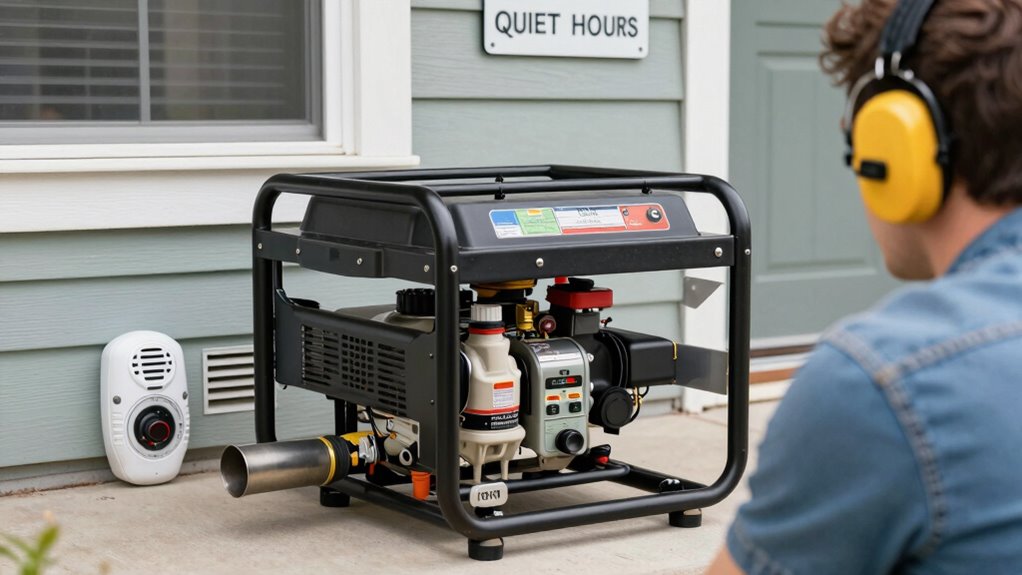
Since carbon monoxide is a colorless, odorless gas that can quickly cause poisoning, it’s essential to take safety precautions whenever you’re operating a generator. Always guarantee proper ventilation by placing your generator outdoors, away from windows, doors, and vents. Never run it inside a garage, basement, or enclosed space, even if the doors or windows are open. Keep a safe distance—at least 20 feet—from your home, and direct exhaust fumes away from occupied areas. Use carbon monoxide detectors near sleeping areas and throughout your home to alert you to dangerous levels. Regularly check that your generator’s exhaust system is in good condition. These safety tips help prevent dangerous carbon monoxide buildup and keep you and your loved ones safe.
How Can You Communicate Effectively With Neighbors About Generator Use?

Effective communication with neighbors about your generator use helps prevent misunderstandings and safety issues. To foster good neighbor communication, follow these etiquette tips:
Good neighbor communication about generator use promotes safety and prevents misunderstandings.
- Clearly inform neighbors of your generator’s operating hours and any planned maintenance or outages.
- Be proactive about discussing noise levels and placement to minimize disturbances.
- Address concerns promptly and respectfully, showing you’re considerate of their comfort and safety.
Using these communication strategies, you demonstrate respect and transparency, reducing potential conflicts. Additionally, share your plans in person or via a written note, ensuring neighbors feel included and informed. Remember, good neighbor communication builds trust and cooperation, making generator use smoother for everyone involved. Being attentive to these etiquette tips helps maintain positive relationships during emergencies or power outages.
How Do You Maintain Your Generator for Safe, Quiet Performance?
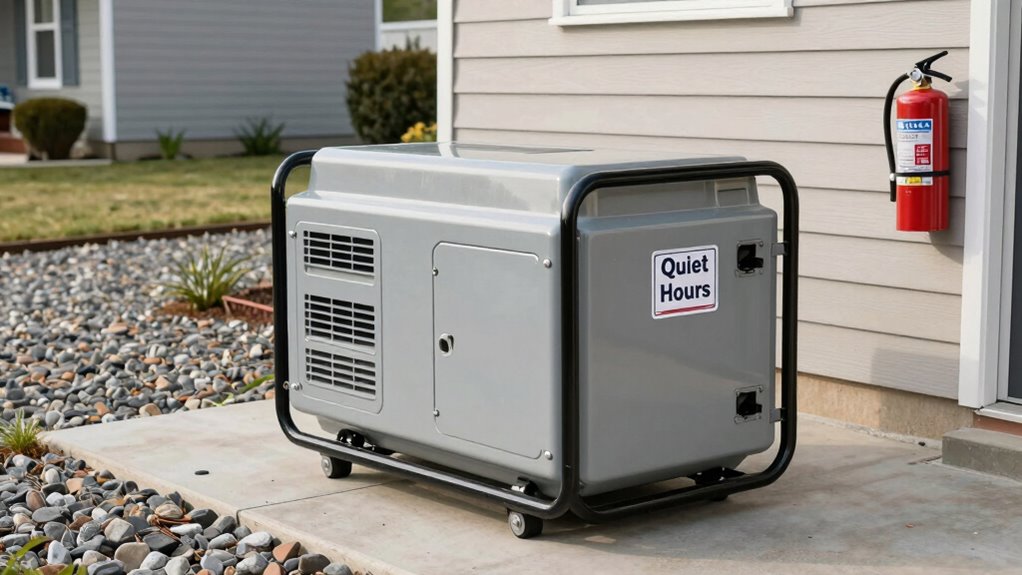
Regular maintenance is essential to keep your generator running safely and quietly. Follow maintenance tips like checking and changing the oil regularly, cleaning air filters, and inspecting spark plugs to guarantee maximum performance. Keeping your generator clean and well-maintained reduces unnecessary noise and prevents mechanical issues that can increase sound levels. To achieve noise reduction, consider installing a sound enclosure or placing the generator on a vibration-absorbing pad. Regularly inspecting and tightening bolts and connections also minimizes rattling and excess noise. Additionally, ensure proper ventilation and keep the area clear of debris. Routine checks and maintenance not only enhance safety but also help your generator operate smoothly and quietly, preserving good neighbor relations and extending its lifespan.
Frequently Asked Questions
What Are the Legal Regulations Regarding Generator Noise Levels?
You need to follow noise regulations and legal limits on generator noise levels to avoid penalties. Local ordinances often specify maximum decibel levels, usually ranging from 60 to 75 dB, especially during quiet hours. Check your city or neighborhood rules, as violations can lead to fines or citations. Staying within these limits guarantees you’re respectful of neighbors and compliant with the law.
How Can I Minimize Generator Vibrations and Noise Transmission?
To minimize generator vibrations and noise transmission, you should use vibration dampening materials like rubber pads or mounts under the generator. Additionally, placing it inside a soundproof enclosure substantially reduces noise escape. Make sure the enclosure is well-ventilated to prevent overheating, and check that all mounts are secure. Combining these strategies helps contain vibrations and sound, creating a quieter environment around your generator.
Are There Specific Permits Required for Large Generator Installations?
Did you know that over 60% of large generator installations require permits? Yes, you typically need specific permits for installation, especially for commercial or industrial-sized units. Proper generator maintenance guarantees safety and reliability during emergencies. Before installation, check local regulations, zoning laws, and building codes. Securing these permits is essential for emergency preparedness, helping you avoid fines and ensuring your generator operates safely and efficiently when you need it most.
How Do Weather Conditions Affect Generator Safety and Placement?
Weather impact critically influences generator safety and placement considerations. You should guarantee your generator is protected from extreme weather like rain, snow, or high winds, which can cause damage or unsafe conditions. Place it on a stable, elevated surface to prevent flooding and ensure proper ventilation. Avoid enclosed or tight spaces to prevent buildup of dangerous fumes, especially in windy conditions that might blow fumes back toward your home.
What Are the Best Practices for Storing Generator Fuel Safely?
Think of your fuel storage like a precious treasure chest—protect it carefully. Store fuel in approved, tightly sealed containers away from heat and ignition sources. Keep them in a well-ventilated, cool, dry area, ideally outside your home. Follow safety precautions like avoiding overfilling and regularly inspecting for leaks. This way, you safeguard yourself and prevent potential fire hazards, ensuring your generator stays ready without risk.
Conclusion
Following proper generator etiquette keeps your home safe and your neighbors happy, even during outages. Some might think it’s just about silence or placement, but it’s also about preventing hazards like carbon monoxide. If you think it’s too much effort, remember that a little extra care safeguards everyone’s wellbeing. By staying mindful of safety tips and communicating openly, you’ll ensure your generator use is responsible, respectful, and worry-free—making power outages less stressful for you and your community.