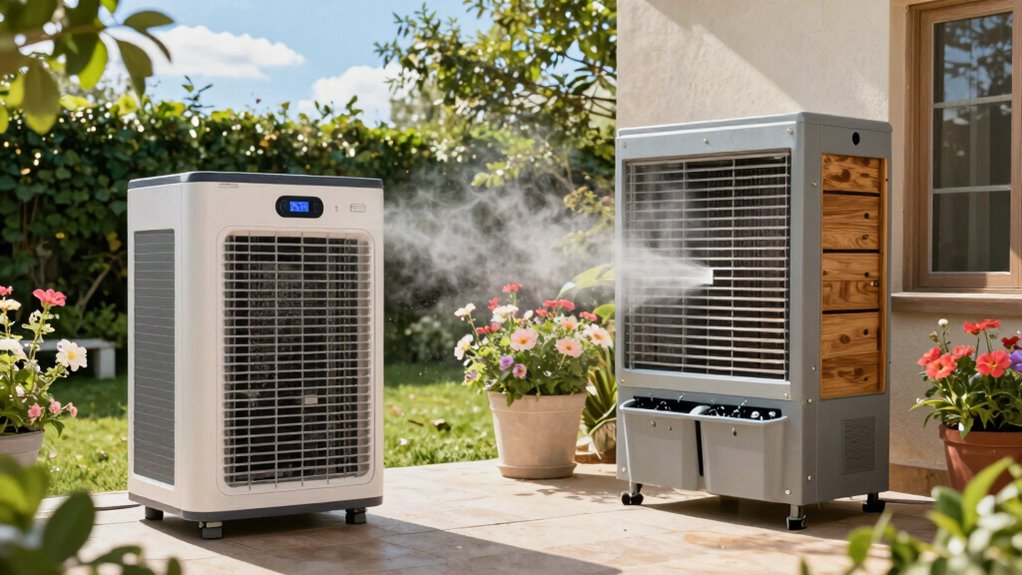
If you’re choosing between a portable AC and an evaporative cooler outdoors, your environment matters. Portable ACs work anywhere since they cool with refrigeration, but they need power and venting. Evaporative coolers are great in dry, low-humidity areas, adding moisture and cooling naturally. In humid environments, they’re less effective. To find the best fit for your outdoor space, consider your climate and setup—more details will help you make the right choice.

Get pool and patio gear delivered free with Prime
- Fast, free delivery on millions of items
- Prime Video, Amazon Music and more included
- Member-only deals all year
Key Takeaways
- Portable ACs are effective outdoors regardless of humidity, as they use refrigeration to cool air actively.
- Evaporative coolers work best in dry, low-humidity conditions, but lose efficiency in humid outdoor environments.
- Portable AC units require power outlets and venting, limiting placement and practicality outside.
- Evaporative coolers are portable, energy-efficient, and ideal for arid climates but ineffective in humid or rainy weather.
- For outdoor cooling, fans with misting systems or portable ACs are preferable based on climate and space conditions.
portable air conditioner for outdoor use
As an affiliate, we earn on qualifying purchases.
As an affiliate, we earn on qualifying purchases.
How Do Portable Air Conditioners and Evaporative Coolers Work Outdoors?
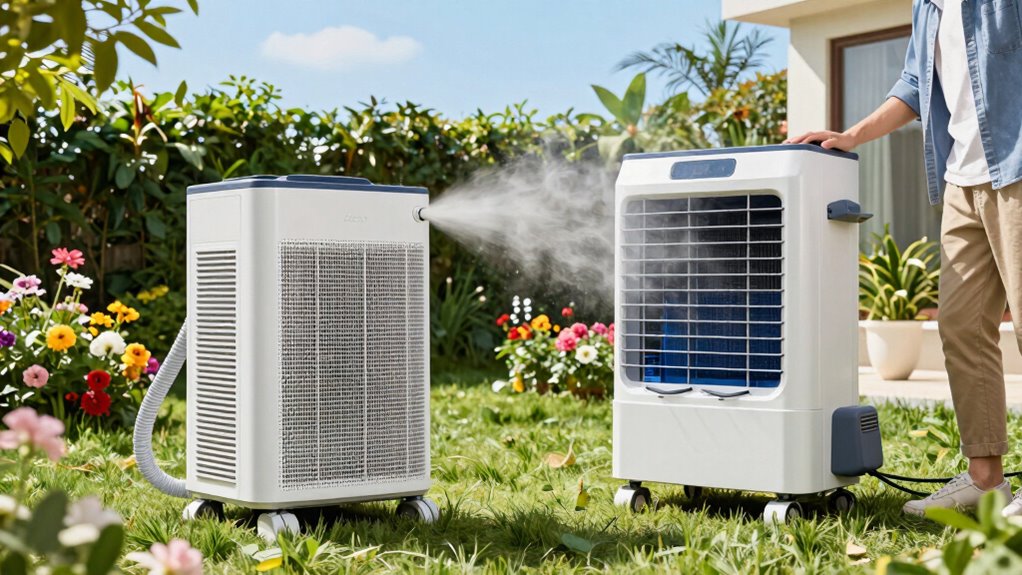
When used outdoors, portable air conditioners and evaporative coolers operate quite differently. Portable AC units typically require a portable installation, including a hose that vents hot air outside. They actively cool the air by removing heat through refrigeration, making them effective even in dry conditions. In contrast, evaporative coolers rely on the natural process of evaporation to lower temperatures. As air passes through moistened pads, it cools down, and this process is most efficient in dry, low-humidity environments. Both systems can be portable, offering flexible outdoor cooling options, but their energy efficiency varies. Portable ACs tend to consume more energy due to their refrigeration process, while evaporative coolers often use less power, making them a more eco-friendly choice where conditions permit.
Does Humidity Affect Outdoor Cooling Effectiveness?
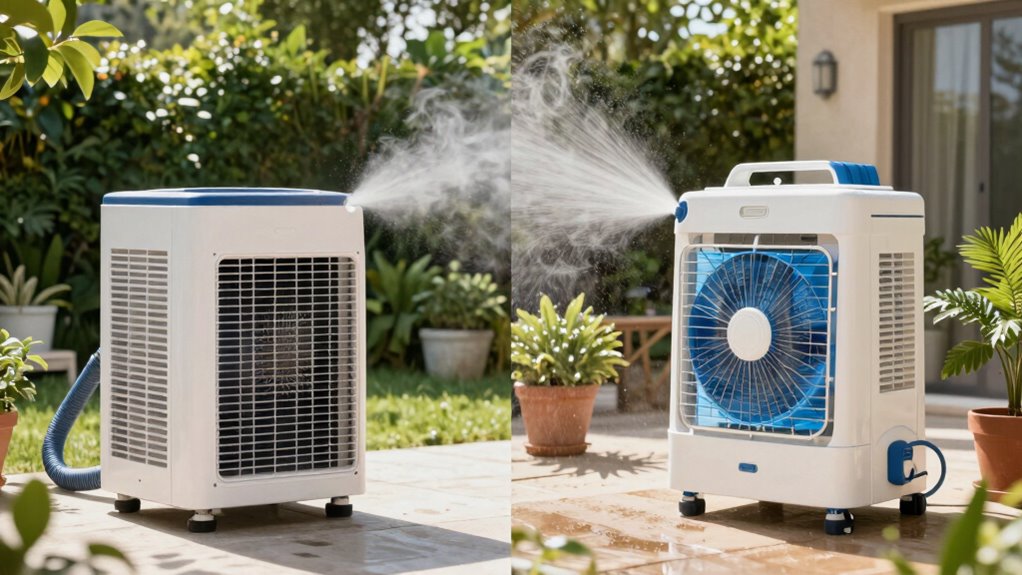
Humidity profoundly impacts how well outdoor cooling methods work, especially for evaporative coolers. High moisture levels reduce their effectiveness because these coolers rely on evaporation to lower temperatures. When the air is already humid, there’s less capacity for moisture to evaporate, decreasing the humidity impact and cooling performance. In contrast, portable air conditioners are less affected by humidity since they use refrigeration cycles. To help you compare, here’s a quick overview:
| Effect of Humidity on Cooling | Description |
|---|---|
| High humidity | Reduces evaporative cooler efficiency |
| Low humidity | Enhances evaporative cooling effectiveness |
| Portable ACs | Less affected by moisture levels |
| Ideal conditions | Dry, low humidity environments |
What Are the Pros and Cons of Portable Air Conditioners Outdoors?
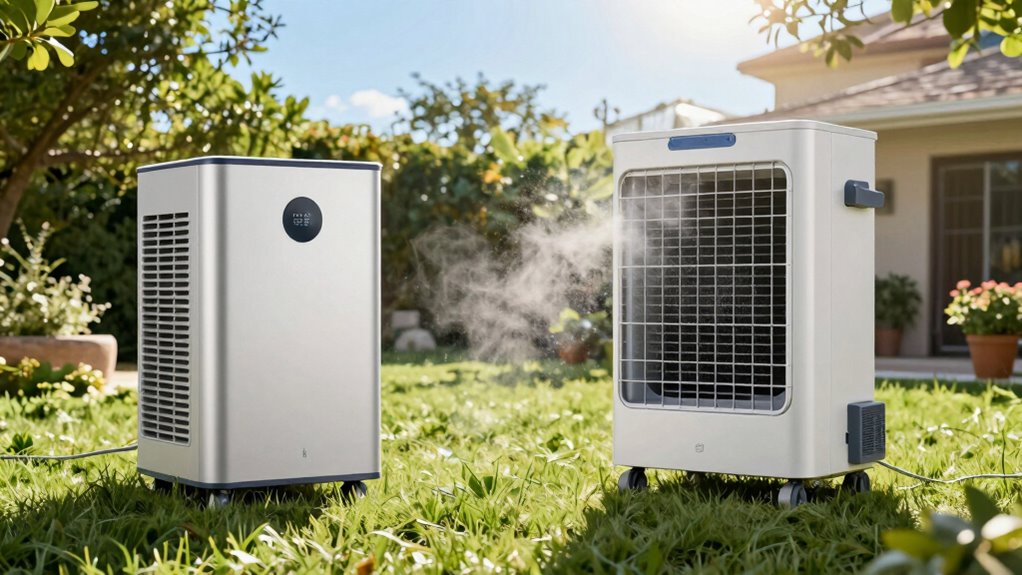
Portable air conditioners offer a convenient way to cool outdoor spaces, but they come with both advantages and disadvantages. One benefit is their portability—you can move them easily to different areas. However, they tend to produce noticeable portable noise, which might disrupt conversations or outdoor activities. Power consumption is another concern; these units can use a significant amount of electricity, leading to higher energy bills. Additionally, they require a power source nearby, limiting placement options. While they can cool small to medium outdoor areas effectively, their efficiency decreases in larger or more humid environments. You also need to think about the setup, including venting exhaust hoses, which can be cumbersome. Overall, portable ACs are convenient but may not be ideal if noise or energy use are major concerns.
What Are the Benefits and Limits of Evaporative Coolers Outside?
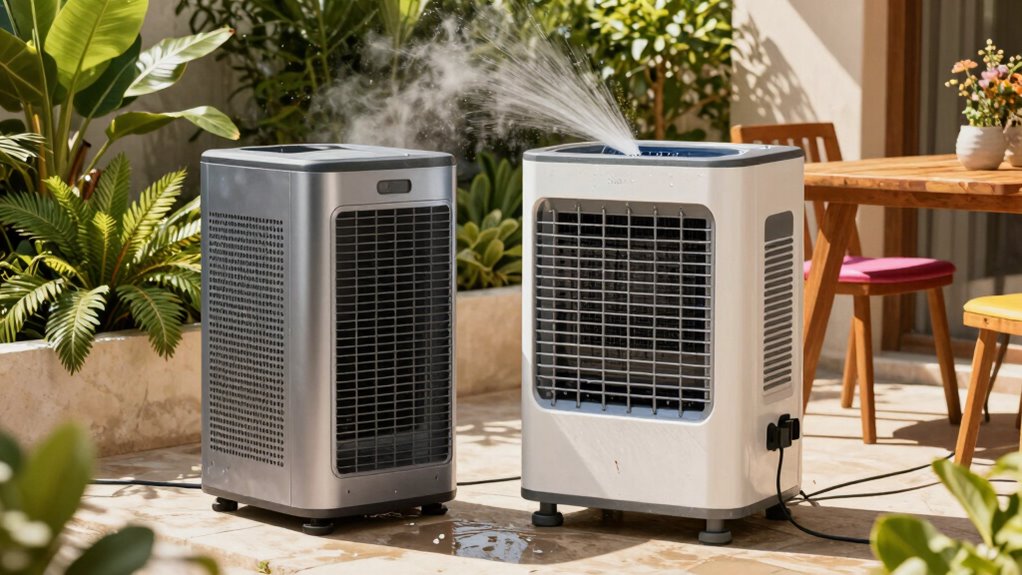
Evaporative coolers, also known as swamp coolers, are an effective way to lower temperatures outdoors, especially in dry climates. Their humidity impact makes them ideal where the air is low in moisture, as they add humidity while cooling. The portability benefits allow you to move them easily around your outdoor space, providing flexible cooling options. However, they have limits, such as reduced efficiency in high humidity, where the cooling effect diminishes markedly.
Consider these points:
- Best suited for dry, arid environments
- Increased humidity can reduce effectiveness
- Easy to transport and position
- Lower energy consumption compared to ACs
- Not suitable for humid or rainy conditions
Knowing these benefits and limits helps you decide if evaporative coolers fit your outdoor cooling needs.
Which Outdoor Cooling Solution Is Right for You?
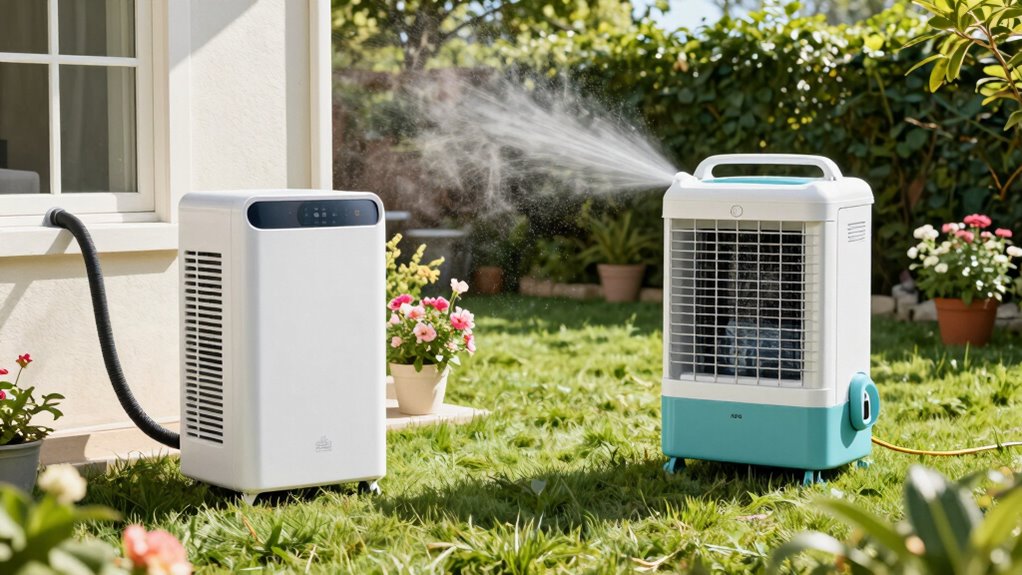
Choosing the right outdoor cooling solution depends on your climate, space, and specific needs. If you want a portable option, a portable fan combined with outdoor misting can effectively lower temperatures and provide relief on hot days. Portable fans are easy to move and work well in shaded or partially shaded areas, especially when paired with misting systems that add moisture to the air. If you’re in a dry, hot climate, evaporative coolers or misting fans are ideal, as they use water to cool the air naturally. For more humid environments, a portable AC might be better, though less practical outdoors. Consider your space and weather patterns to decide whether a simple portable fan with outdoor misting or a more powerful cooling device fits your outdoor comfort needs best.
Frequently Asked Questions
Can Portable ACS Operate Effectively in Open Outdoor Environments?
Portable ACs generally don’t operate effectively outdoors due to airflow challenges and power limitations. You’ll find that their cooling capacity diminishes when exposed to open air because they rely on proper airflow and continuous power, which can be hard to maintain outside. If you want reliable cooling outdoors, consider evaporative coolers or other solutions designed specifically for outdoor environments, as portable ACs are better suited for indoor use.
Are Evaporative Coolers Suitable for Shaded Outdoor Areas Only?
Think of evaporative coolers as delicate flowers—they thrive in shaded areas where humidity effects are gentle. You’ll find they work best in shaded outdoor spots, where less direct sunlight keeps the cooling process efficient. In full sun, high humidity can turn their cooling power into a whisper, making them less effective. So, if you want best performance, place your cooler in shaded areas away from direct sunlight.
How Much Maintenance Do Outdoor Portable AC Units Require?
You’ll need to do regular maintenance on your outdoor portable AC, mainly checking the maintenance frequency and replacing filters. Typically, you should clean or replace filters every 1 to 3 months, depending on usage and environment. Keep the unit free of debris and ensure proper drainage. Regular upkeep guarantees your portable AC runs efficiently and lasts longer, so don’t skip these essential maintenance tasks to keep your outdoor cooling effective.
Do Outdoor Conditions Impact the Lifespan of Evaporative Coolers?
While outdoor conditions can gently influence your evaporative cooler’s life, the effects are often subtle. High humidity levels make it less effective, causing the unit to work harder, which could slightly shorten its lifespan. Wind effects might introduce dust or debris, leading to more frequent maintenance. However, with proper care and placement, your cooler can still perform well and last, even amid changing outdoor conditions.
Can Portable ACS Be Powered by Solar Energy Outdoors?
Yes, you can power portable ACs with solar energy outdoors. You’ll need solar panels to generate electricity and battery storage to keep the unit running when the sun isn’t shining. Make sure your solar setup provides enough power for the AC’s wattage needs. With proper equipment, you can enjoy cool air sustainably, reducing your reliance on grid power and making outdoor cooling more eco-friendly and cost-effective.
Conclusion
Ultimately, choosing between a portable AC and an evaporative cooler outdoors depends on your unique environment and needs. While both can offer relief, each has its subtle nuances that might influence your comfort. By gently considering your climate’s whispers—like humidity levels—you’ll find the cooling companion that best suits your outdoor sanctuary. Sometimes, a thoughtful choice quietly transforms your space into a invigorating retreat, making every moment outside feel just a little more special.
Halloween Picks
halloween
As an affiliate, we earn on qualifying purchases.