
When you experience floating or sensory deprivation, your mind shifts away from external distractions to focus inward. External stimuli like sights and sounds fade, so you notice your thoughts, emotions, and bodily sensations more clearly. This calming environment slows brain activity, promoting deep relaxation and mental clarity. Over time, these sessions can boost emotional well-being and resilience. If you stay engaged, you’ll discover how your mind transforms during these peaceful experiences.
Key Takeaways
- The mind shifts from external stimuli to internal awareness, focusing on thoughts, sensations, and emotions.
- Brain activity slows, resembling meditation or early sleep, fostering deep relaxation and mental clarity.
- Visual experiences like vivid imagery or floating sensations often occur during sensory deprivation sessions.
- Regular floating enhances emotional resilience, reduces anxiety, and promotes mental and emotional balance.
- The mind enters a peaceful state, allowing for introspection, stress reduction, and a sense of calm detachment.
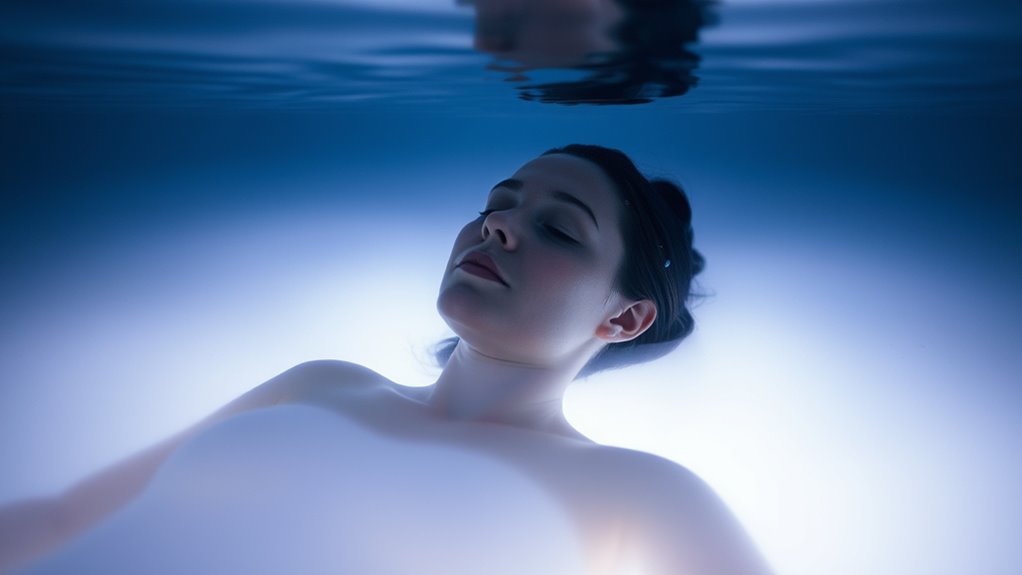
Floating and sensory deprivation are practices that allow you to escape everyday stimuli and achieve deep relaxation. When you lie back in a sensory deprivation tank or floatation pod, you’re cutting off external distractions—no sounds, sights, or tactile sensations. This solitude creates an environment where your mind can truly unwind, fostering a state of profound mind relaxation. Without constant sensory input, your brain shifts away from rushing thoughts or stress, giving you space to breathe mentally and physically. This process encourages a unique form of mental clarity, helping you disconnect from daily worries and fostering a calm, centered awareness.
As you settle into the experience, your sensory awareness begins to shift inward. Instead of focusing on external stimuli, your attention turns inward, allowing you to observe your thoughts, emotions, and bodily sensations more objectively. This heightened sensory awareness isn’t about heightened stimulation but about noticing what’s already present—your heartbeat, your breath, or subtle muscle tensions. Over time, this inward focus can lead to a deeper understanding of your mental patterns and emotional responses, providing clarity and a sense of detachment from the chaos of everyday life. It’s as if you’re observing your mind from a distance, which can diminish the power of stressful thoughts and foster a state of calm.
The absence of external distractions also enables your brain to enter a state similar to the early stages of meditation or even sleep. During this time, your neural activity slows down, and your mind can access a more relaxed, meditative state. This isn’t about forcing yourself into relaxation but allowing it to happen naturally through the quiet environment. Many users report experiencing vivid visualizations or even a sense of floating outside of their bodies, which can deepen the feeling of release and mental liberation. This state of mind relaxation isn’t just temporary; regular floating sessions can help you cultivate better mental resilience, reduce anxiety, and improve overall emotional well-being. Additionally, practicing active listening during sessions can enhance the benefits by fostering greater mindfulness and self-awareness.
In essence, floating and sensory deprivation provide a unique opportunity for your mind to reset. By removing external stimuli, you give yourself the chance to deepen sensory awareness and achieve a state of mind relaxation that’s difficult to access in everyday life. As you become more familiar with this experience, you may notice increased mental clarity, reduced stress, and a more profound sense of peace that lasts well beyond your float. It’s a powerful tool to reconnect with your inner self, fostering tranquility in a fast-paced world.
Frequently Asked Questions
Can Sensory Deprivation Help Treat Mental Health Disorders?
Sensory deprivation can help treat mental health disorders by promoting mind relaxation and improving emotional regulation. When you experience sensory deprivation, your mind is freed from external distractions, allowing you to focus inward. This can reduce anxiety, depression, and stress, helping you develop better coping skills. Regular sessions may enhance your emotional resilience, making it easier to manage your mental health challenges more effectively.
How Long Can a Person Safely Remain in Flotation Tanks?
You can usually safely stay in a float tank for up to 60 to 90 minutes, following standard safety guidelines. Longer sessions might be safe for experienced users, but it’s important to listen to your body. Always consult the float tank facility’s safety guidelines and your healthcare provider if you have concerns. Shorter sessions are generally safer and still provide benefits, so start with 60 minutes and adjust as needed.
Are There Any Risks or Side Effects of Sensory Deprivation?
They say, “better safe than sorry,” and that’s true for sensory deprivation. While it promotes mind relaxation, some risks include sensory overload when exiting, dizziness, or anxiety for sensitive individuals. Though generally safe, it’s wise to consult a professional if you have mental health concerns. Be mindful of your limits, and listen to your body, so you can enjoy the calming effects without unintended side effects.
Does Sensory Deprivation Improve Creativity or Problem-Solving Skills?
Sensory deprivation can boost your mind exploration and enhance creativity by allowing you to disconnect from external distractions. When you isolate your senses, your brain can focus inward, fostering new ideas and insights. Many find that it helps with problem-solving too, as it creates a calm space for deep thinking. So, if you’re looking to release your creative potential, sensory deprivation might be a useful tool for creative enhancement and mental clarity.
Can Sensory Deprivation Sessions Be Customized for Different Needs?
Yes, sensory deprivation sessions can be customized for different needs through personalized flotation and adjustable sensory deprivation settings. You can tailor the environment by adjusting the darkness, temperature, or pressure to suit your comfort or goals. This flexibility allows you to enhance relaxation, focus, or creativity. By working with providers, you guarantee each session aligns with your preferences and needs, maximizing its benefits and making your experience more effective and enjoyable.
Conclusion
Don’t let doubts hold you back from trying floating or sensory deprivation. You might think it’s uncomfortable or pointless, but many find it deeply relaxing and eye-opening. Giving yourself a chance to disconnect can reveal new insights and boost your mental clarity. So, embrace the experience with an open mind—you might be surprised at how refreshed and centered you feel afterward. Just relax, and let your mind explore the calm waiting inside.