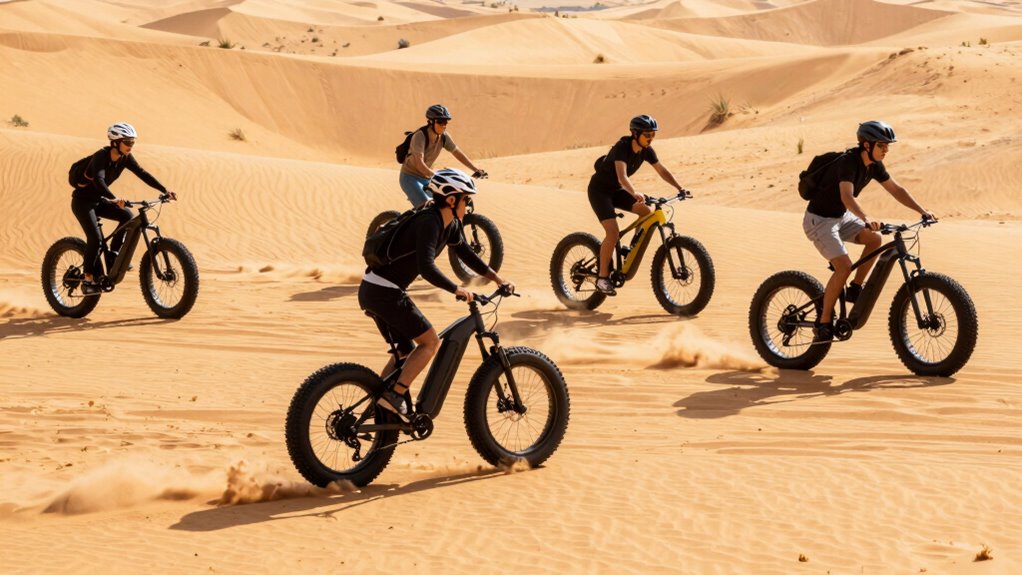
Riding fat-tire e-bikes on sand works best when you choose wide, flotation-friendly tires with low pressure, around 8-12 psi, and monitor your weight and sand softness. Use smooth, steady power and keep your weight centered for better grip. Avoid sudden moves or high throttle that can cause wheel spin. Proper tire pressure and riding techniques matter, and if you keep these tips in mind, you’ll discover how to enjoy smoother, more confident rides along the shoreline or dunes.

Get pool and patio gear delivered free with Prime
- Fast, free delivery on millions of items
- Prime Video, Amazon Music and more included
- Member-only deals all year
Key Takeaways
- Use wide tires with flotation-friendly treads and lower pressures (8-12 psi) for better traction and reduced sinking.
- Maintain steady, smooth pedal strokes and keep weight centered to prevent wheel spin.
- Lower gear settings help control power delivery and improve grip on soft sand surfaces.
- Avoid sudden accelerations and sharp turns to maintain momentum and stability.
- Proper bike maintenance and riding with a buddy enhance safety and help avoid getting stuck.
As an affiliate, we earn on qualifying purchases.
Why Is Riding on Sand So Challenging for Fat-Tire E-Bikes?
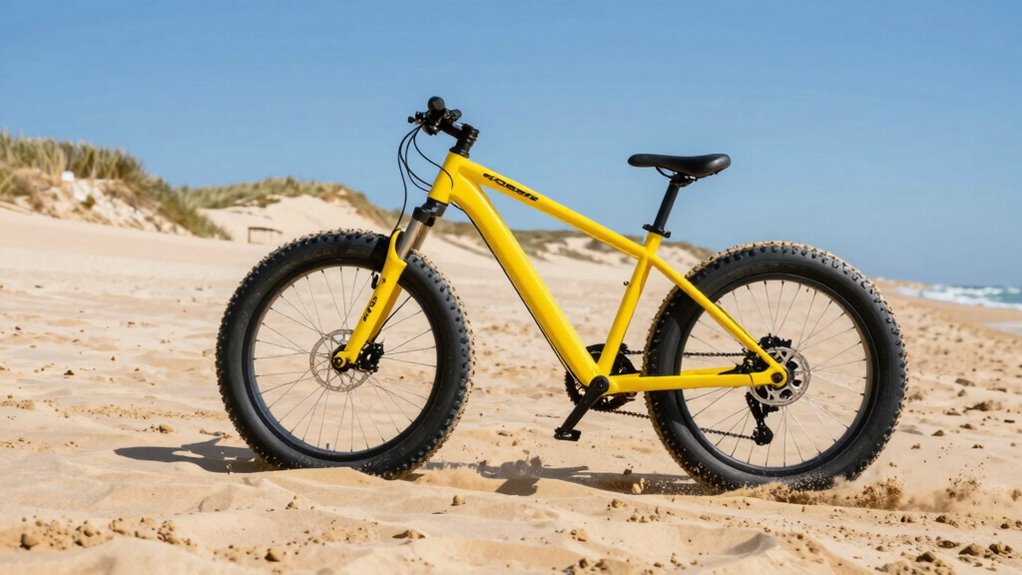
Riding fat-tire e-bikes on sand is challenging because the loose, shifting surface offers little traction, making it harder for the tires to grip and propel the bike forward. The primary issue is sand stability; unlike firm ground, sand constantly moves under your tires, reducing grip. To counteract this, your tires need good flotation—distributing your bike’s weight to prevent sinking. When tires aren’t sufficiently floated, they dig in, causing you to lose momentum and control. Even with fat tires, if they aren’t optimized for sand, you’ll struggle to maintain balance and speed. Proper tire design and pressure help improve flotation, but understanding how sand behaves remains essential for smooth riding. Without this knowledge, you’ll find yourself battling the terrain rather than enjoying it.
How to Choose the Best Tires and Set Tire Pressure for Sand
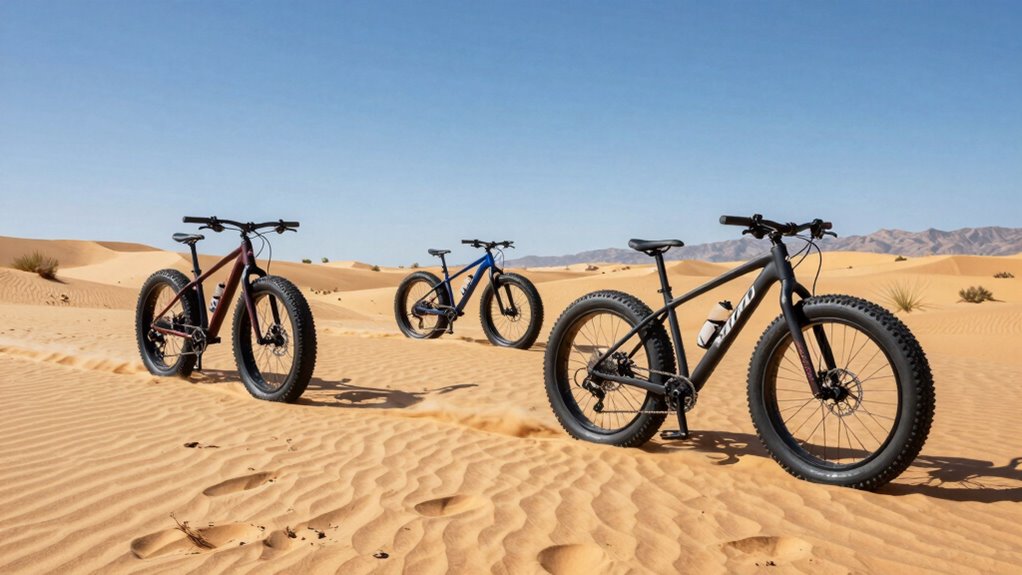
Choosing the right tires and setting the correct tire pressure can make all the difference when riding on sand. Start by selecting tires with a wide tire tread designed for flotation, which helps distribute your weight and reduce sinking. Look for tires with a knobby or semi-slick tread pattern that provides grip without excessive rolling resistance. Rim width also matters—you want a wider rim to support larger tires and maintain stability. For sandy conditions, lower your tire pressure to increase the contact patch, improving traction and comfort. Aim for around 8-12 psi, but adjust based on rider weight and sand softness. Properly chosen tires and ideal pressure will help you stay afloat and maintain control on challenging terrain.
Easy Riding Techniques to Keep Traction on Sand
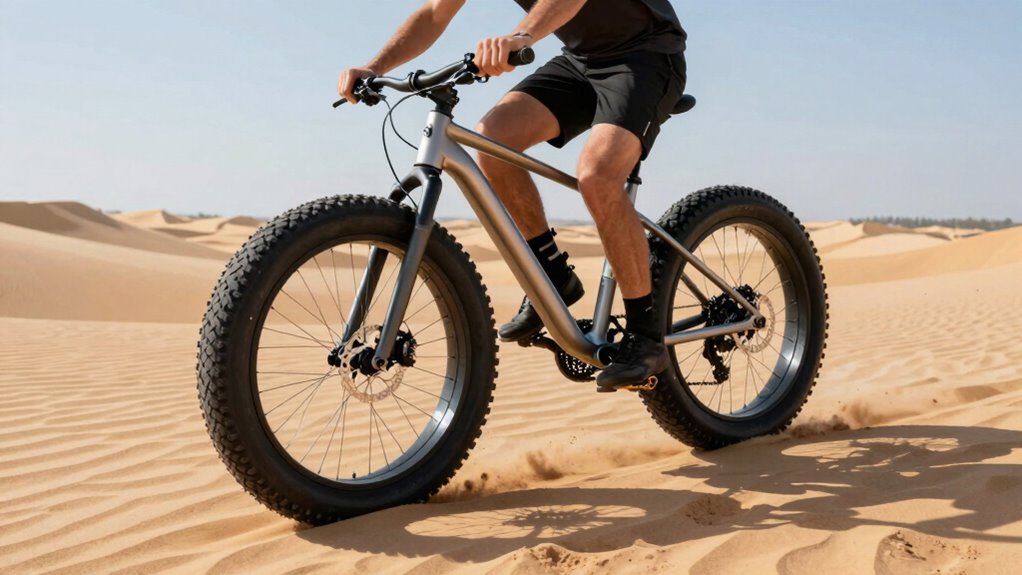
To maintain traction on sand, focus on smooth, steady pedal strokes and avoid sudden accelerations or sharp turns. When navigating sand dunes or beach terrain, keep your weight centered and stay relaxed. Maintain a consistent speed to prevent wheel spin, especially in loose sand. Use low gears to control power delivery and avoid abrupt movements that can cause you to get stuck.
| Technique | Benefit |
|---|---|
| Steady, smooth pedaling | Reduces wheel spin and maintains traction |
| Controlled steering | Prevents sudden shifts that cause wheel slip |
| Consistent speed | Keeps momentum and prevents digging in |
| Low gears | Provides better torque on loose sand |
Common Mistakes That Cause Spinning Wheels in Sand
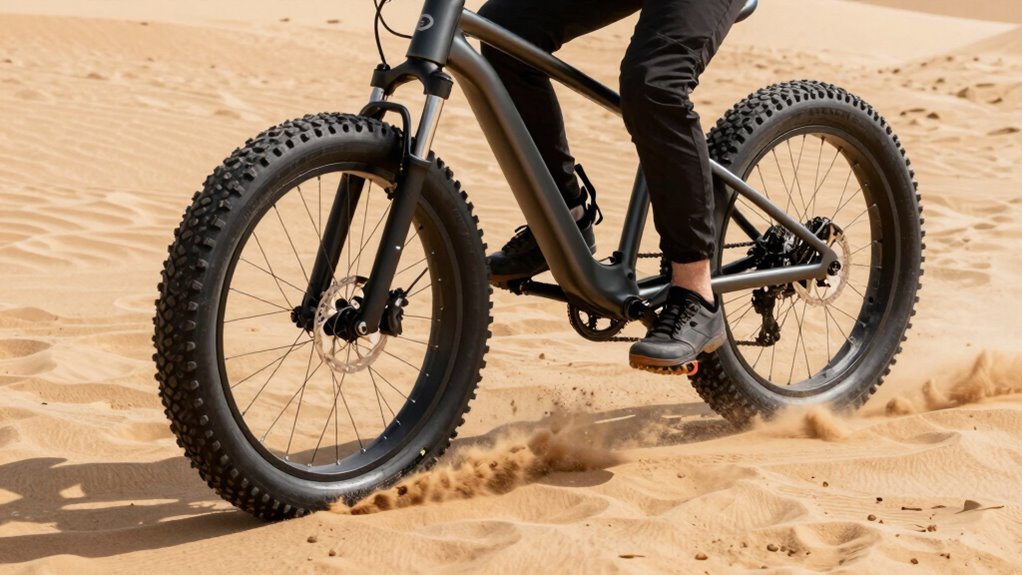
One common mistake that leads to wheel spin in sand is applying too much power too quickly. When you accelerate abruptly, your tire tread can’t grip the loose surface effectively, causing the wheels to spin. Additionally, bike weight plays a role; a heavier bike increases pressure on the sand, making it harder for the tire to gain traction. Using tires with insufficient tread depth or an aggressive pattern on soft sand also contributes to slipping. If you push too hard without adjusting your riding style, you risk digging into the sand and losing momentum. Instead, start with gentle throttle, maintain steady momentum, and choose tires with appropriate tread for sandy conditions. This approach helps keep your wheels from spinning and improves overall traction.
Gear and Tips for Safe, Enjoyable Sand Adventures
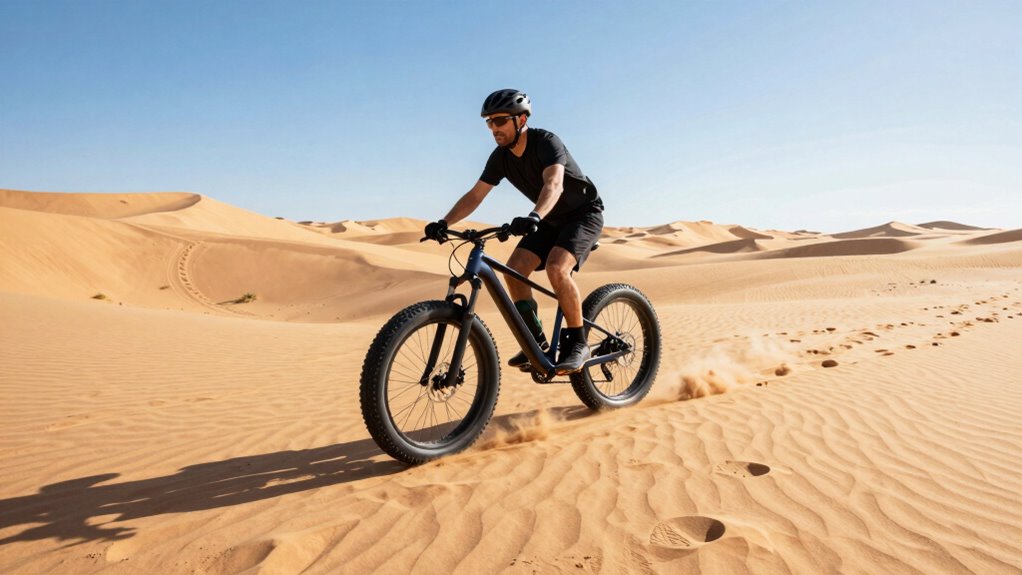
When heading out for sand riding, selecting the right gear and following safety tips can make your adventure both enjoyable and secure. Wear sturdy, breathable clothing and a helmet to protect against falls or unexpected surprises. Keep your bike well-maintained, with proper tire pressure for sand dunes, and carry essentials like water, a map, and a repair kit. Respect beach etiquette by staying on designated trails, avoiding sensitive dune areas, and giving way to pedestrians and wildlife. Lower your tire pressure to improve traction and prevent getting stuck. Always ride with a buddy if possible, and communicate your plans. By being prepared and considerate, you’ll enjoy smoother rides and help preserve the natural beauty of the dunes.
Frequently Asked Questions
What Types of Electric Bike Motors Perform Best on Soft Sand?
You’ll get the best performance on soft sand with mid-drive motors, as they provide better torque and motor efficiency, helping you maintain control. Hub motors can struggle, especially on uneven terrain, risking getting stuck. Choosing a motor with high torque output and efficient power delivery helps preserve battery longevity, so you can ride longer without draining your battery quickly. Always match your motor choice to your riding conditions for ideal results.
How Does Rider Weight Influence Traction and Bike Performance on Sand?
Rider weight really ramps up traction and performance on sand. Heavier riders push down more, boosting grip and stability, making traction control easier. Lighter riders might find themselves slipping or sinking, struggling to maintain momentum. So, your weight directly impacts how well your bike grips and glides across soft surfaces, ensuring you stay steady and secure as you surf sandy dunes or beaches.
Can Modifications Improve Fat-Tire E-Bike Performance Specifically for Sandy Terrains?
Modifications can definitely improve your fat-tire e-bike performance on sand. Lowering your tire pressure creates a larger contact patch, enhancing traction and preventing you from getting stuck. Additionally, reducing bike weight with lighter components makes it easier to navigate sandy terrain. Consider upgrading tires for better grip or installing a suspension system to absorb shocks. These tweaks help you ride more confidently and efficiently across challenging sandy surfaces.
What Maintenance Routines Are Recommended After Riding on Sand?
After riding on sand, you should clean your e-bike thoroughly, focusing on removing sand from the tires, drivetrain, and brake components using a gentle brush and water. Check and adjust tire pressure to maintain ideal grip and prevent flats—lower pressure can improve traction on sand. Regularly inspect for sand buildup and corrosion, and lubricate moving parts as needed. These routines keep your bike in top shape for sandy adventures.
Are There Specific Times of Day When Sand Riding Is Safer or Easier?
You’ll find the best riding conditions during early mornings or late afternoons when the sand is cooler and more compact. These ideal sand times reduce slipping and make pedaling easier. Avoid midday when the sun heats the sand, making it softer and more challenging to ride. Planning your rides around these times ensures safer, smoother experiences, especially on challenging terrains like sand where conditions can change quickly.
Conclusion
Now that you know the secrets to conquering sand with your fat-tire e-bike, it’s time to hit the dunes and see what you can truly achieve. Will your next ride be smooth sailing or get stuck in the unexpected? The choice is yours. With the right setup and techniques, you’re ready to *uncover* new adventures — but watch out, the sand might surprise you when you least expect it. Are you ready to find out?
Halloween Picks
halloween
As an affiliate, we earn on qualifying purchases.