
By following a simple routine of twice-weekly water testing, you can catch problems early before they escalate. Keep an eye on your pool’s water clarity and odor, and regularly inspect your filter and equipment. Adjust chemicals promptly and clean filters as needed to maintain water quality. Staying consistent with these habits helps you spot issues early, saving you time and money. Keep going, and you’ll discover even more tips to keep your pool in top shape.

Get pool and patio gear delivered free with Prime
- Fast, free delivery on millions of items
- Prime Video, Amazon Music and more included
- Member-only deals all year
Key Takeaways
- Test water chemistry twice weekly to catch imbalances early.
- Regularly inspect and clean filters to detect efficiency issues promptly.
- Monitor water clarity and odor for signs of filtration or chemical problems.
- Skim surface frequently to prevent debris buildup that can cause system clogs.
- Keep track of pump and system performance for early detection of mechanical issues.
Catching pool problems early can save you time, money, and headaches, but many pool owners overlook the simple routines that make that possible. The key to catching issues before they become big headaches is maintaining a consistent, easy routine focused on two main aspects: chemical balance and filtration efficiency. When you pay close attention to these areas, you can often spot signs of trouble long before they turn into costly repairs or unsightly water. Regularly monitoring your water quality and system performance helps build a preventive maintenance mindset that can save you from unexpected issues. Start by regularly testing your pool’s water. Using a reliable test kit or test strips, check the chemical levels at least twice a week. Pay special attention to pH, chlorine, alkalinity, and stabilizer levels. An imbalance in these chemicals can cause cloudy water, algae growth, or skin irritation. Keeping your chemical balance steady ensures your pool remains safe and inviting, and it also helps protect your filtration system. When chemicals are out of whack, your filter has to work harder to keep the water clean, which can lead to premature wear or failure. By catching chemical imbalances early, you prevent more severe water quality issues down the line.
Equally important is maintaining filtration efficiency. Check your filter regularly—at least once a week—to ensure it’s functioning properly. Clean or backwash your filter as needed, especially if you notice reduced water flow or cloudy water. A clogged or dirty filter can’t trap debris effectively, which leads to poor water quality and increased strain on the pump. When the filtration system isn’t working optimally, small particles and bacteria can accumulate, making it harder to notice problems until they become obvious. Routine inspections of your filter and pump ensure they’re operating smoothly and catch potential issues before they escalate.
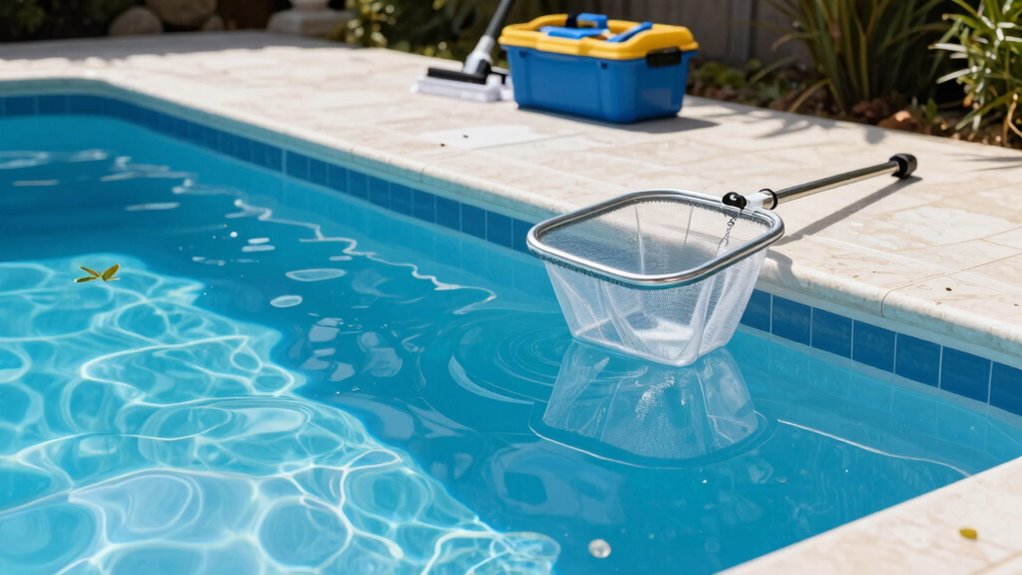
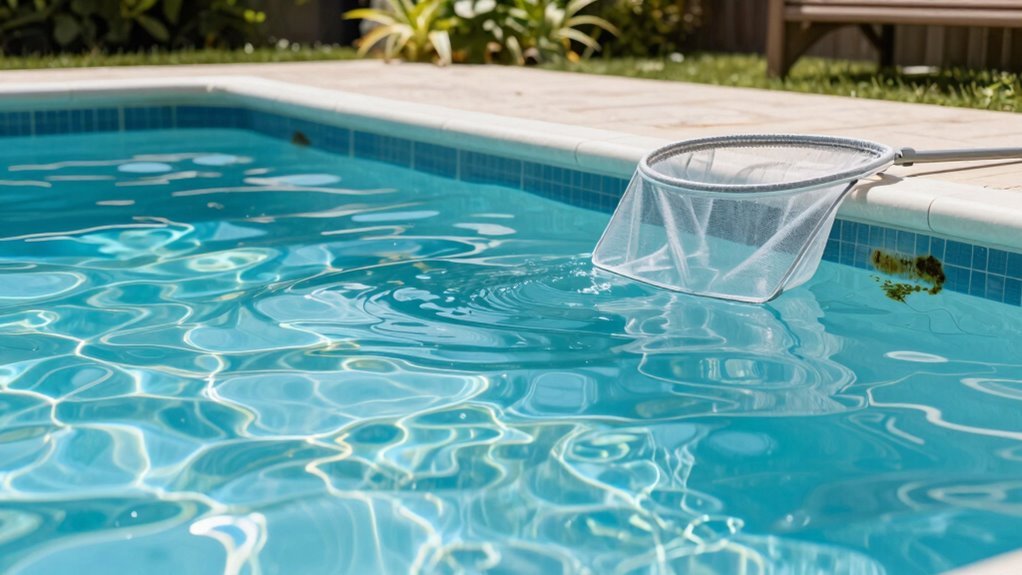
In addition to testing and filter maintenance, keep an eye on the water’s clarity and smell. If the water starts to look murky or develops an unusual odor, it’s a sign that something’s off—possibly a chemical imbalance or filtration problem. Address these signs immediately by adjusting chemicals or cleaning your filter. Also, don’t forget to skim the surface regularly and remove debris, which can clog the filter and reduce its efficiency.
As an affiliate, we earn on qualifying purchases.
Frequently Asked Questions
How Often Should I Perform This Routine?
You should perform this routine at least once a week to maintain an effective maintenance schedule. Regular inspections help you catch issues early before they worsen, so increasing inspection frequency during peak usage or rough weather is recommended. Consistent checks allow you to identify leaks, equipment malfunctions, or water quality problems promptly, saving you time and money while keeping your pool safe and enjoyable.
Can This Routine Prevent All Pool Issues?
You can’t prevent all pool issues, but regular pool maintenance considerably reduces the risk. Studies show that proper preventive measures catch 80% of common problems early, saving you time and money. This routine helps you spot issues like leaks or algae buildup before they escalate. While it doesn’t eliminate every problem, consistent checks empower you to address small concerns promptly, keeping your pool cleaner, safer, and more enjoyable.
Do I Need Special Tools for the Routine?
You don’t need special tools for this routine—just your pool chemicals and a regular maintenance schedule. Keep a basic test kit handy to monitor pH and chlorine levels, and use a skimmer or brush for basic cleaning. Sticking to your maintenance schedule guarantees you spot issues early, saving you time and money. Simple tools and consistency are all you need to keep your pool in great shape.
Is This Routine Suitable for All Pool Types?
This routine works for nearly all pool types, making it your secret weapon in pool maintenance. No matter if you have a vinyl, concrete, or fiberglass pool, it helps you catch issues early through simple checks. Focus on chemical balancing, water clarity, and equipment. With consistency, you’ll keep your pool sparkling and safe, feeling like you’ve got the power to conquer any problem before it even starts!
What Are the Signs of Urgent Pool Problems?
You’ll know you have urgent pool problems if the chemical balance is off, causing cloudy water or strong odors, or if you notice equipment malfunctions like leaks or strange noises. Regularly inspecting your equipment helps catch issues early. If you see persistent algae, unbalanced chemicals, or equipment failures, address them immediately to prevent costly damage and guarantee safe, clean swimming conditions. Always stay alert to these signs for prompt action.
Conclusion
By adopting this simple routine, you’ll catch pool problems early and save yourself costly repairs later. It’s easy to stay on top of things with just a few minutes each week—no expert skills needed. If you think it’s too much effort, consider how much you’ll save and enjoy a consistently clean, safe pool all season long. Small daily checks truly make a big difference, so give it a try—you’ll thank yourself later!
Fall Picks
fall essentials
As an affiliate, we earn on qualifying purchases.