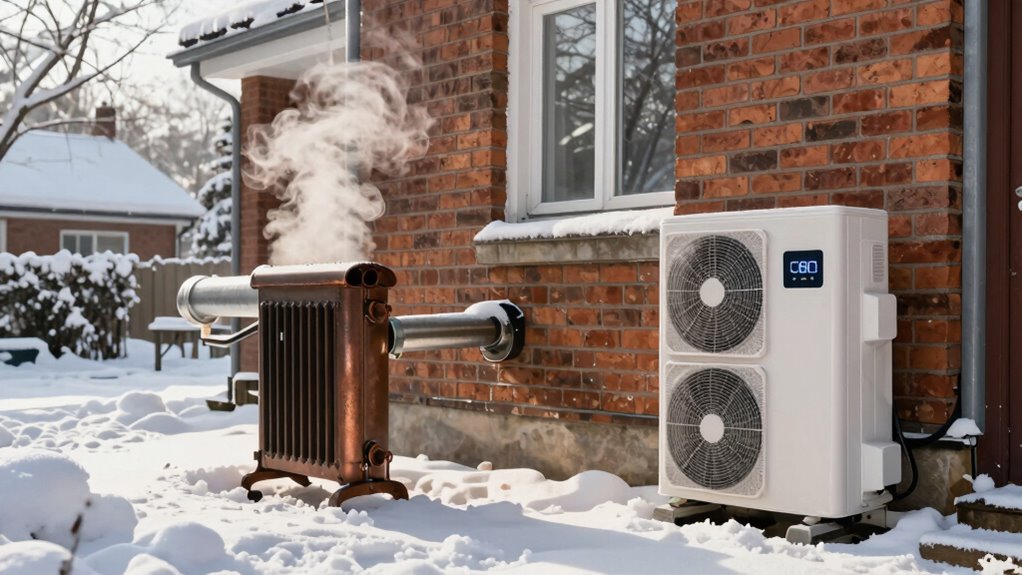

Your choice between a heater and a heat pump mainly depends on your climate. Heat pumps work best in moderate temperatures and can save money on energy bills, but they struggle in colder, harsh winters. Traditional heaters are more reliable in extreme cold. If you want to know how your climate influences the best option and what to think about for long-term savings, there’s more you should discover.

Get pool and patio gear delivered free with Prime
- Fast, free delivery on millions of items
- Prime Video, Amazon Music and more included
- Member-only deals all year
Key Takeaways
- Heat pumps are most effective in moderate climates with mild winters, while traditional heaters are more reliable in severe cold conditions.
- Initial installation costs are higher for heat pumps, but long-term savings depend on climate and energy efficiency.
- Cold climates may limit heat pump performance, making traditional heaters a more practical choice.
- Climate influences the operational efficiency and sustainability of each system more than upfront budget considerations.
- Adapting heating choices to local weather conditions ensures optimal performance and energy savings over time.
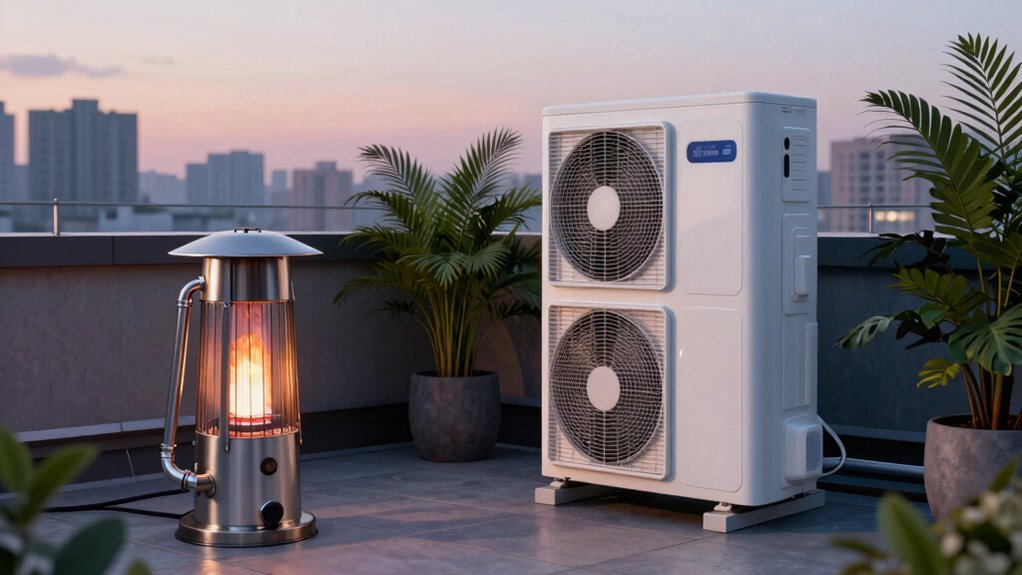
When choosing between a traditional heater and a heat pump, understanding how each system works can help you make an informed decision. A heater, typically fueled by natural gas, oil, or electricity, generates heat directly. It’s straightforward and often less expensive to install upfront, especially in areas where the existing infrastructure supports it. On the other hand, a heat pump works by transferring heat from outside air or ground sources into your home. This process makes heat pumps remarkably energy-efficient because they don’t generate heat directly but move it, which can lead to lower energy bills over time.
Your climate plays a vital role in determining which system is best for you. Heat pumps excel in moderate climates where temperatures rarely drop below freezing. In these conditions, they can provide consistent, efficient heating throughout the winter. In colder regions, however, traditional heaters often outperform heat pumps in regard to energy efficiency because heat pumps struggle to extract enough heat from frigid air. While modern cold-climate heat pumps are improving, they still may not be the most practical choice if your winters are severe. Conversely, in milder climates, heat pumps tend to be more cost-effective overall because their lower energy consumption translates into substantial savings and less environmental impact.
Installation costs also vary considerably between the two systems. Traditional heaters often have lower initial costs, especially if you’re replacing an existing system that’s compatible with natural gas or electric connections. Heat pumps, however, tend to have higher installation costs because of the need for specialized equipment and sometimes additional modifications to your home’s ductwork or electrical system. Despite the higher upfront investment, many homeowners find that the energy savings and reduced operational costs of heat pumps offset these initial expenses over time. Energy efficiency can significantly influence your ongoing utility costs and environmental footprint.
Understanding the long-term implications of each option is key. If you live in a climate where winter temperatures rarely fall below freezing, a heat pump can be a smart choice because it combines energy efficiency with lower operating costs. But if you’re in an area with harsh winters, a traditional heater might provide more reliable and cost-effective heating, especially considering the installation costs and energy efficiency limitations of heat pumps in extreme cold. Additionally, considering climate resilience can help ensure your heating system remains effective and sustainable over the years. Recognizing the importance of climate adaptability can further guide your decision-making process to select the most suitable heating solution. Moreover, understanding how the local environment impacts system performance is essential for making an informed and sustainable choice.
energy efficient heat pump for cold climates
As an affiliate, we earn on qualifying purchases.
As an affiliate, we earn on qualifying purchases.
Frequently Asked Questions
How Long Does Each System Typically Last Before Needing Replacement?
You can expect a typical heater to last around 15-20 years, while a heat pump often lasts 10-15 years. Energy efficiency plays a big role in their longevity, with higher efficiency models lasting longer. When doing a cost comparison, consider that heaters might require more frequent replacements, but heat pumps offer better energy efficiency over time, potentially saving you money despite a slightly shorter lifespan.
Are There Specific Maintenance Requirements for Heaters Versus Heat Pumps?
You’ll find that heaters generally require minimal maintenance, mainly annual inspections to guarantee fuel efficiency and safe operation. Heat pumps, on the other hand, need regular cleaning of filters and coils to maintain efficiency and lower noise levels. Both systems benefit from professional tune-ups, but heat pumps tend to need more frequent upkeep to keep noise levels down and fuel efficiency high, especially in extreme weather conditions.
Can a Heat Pump Be Used Effectively in Extremely Cold Climates?
In extremely cold climates, a heat pump can still be effective, but efficiency concerns arise. Modern cold-climate heat pumps are designed to operate efficiently even when temperatures drop below freezing, but their performance may decline in severe cold. You might need a backup heating system during the coldest days. Overall, selecting a heat pump suited for cold climates guarantees better efficiency and comfort, even in harsh winter conditions.
What Are the Environmental Impacts of Each Heating Option?
Imagine switching to a heat pump powered by renewable sources; you’ll markedly cut emissions and reduce your carbon footprint. Heat pumps generally have lower environmental impacts than traditional heaters because they use less energy and produce fewer emissions. Traditional heaters, especially those relying on fossil fuels, emit more greenhouse gases. Choosing a renewable-powered heat pump promotes emission reductions and supports sustainable energy use, making it an eco-friendlier choice overall.
Are There Rebates or Incentives Available for Upgrading to Heat Pumps?
Yes, there are rebate programs and incentives available for upgrading to heat pumps. You can check with local utility companies or government agencies, as they often offer incentive eligibility for energy-efficient upgrades. These rebates can substantially reduce the upfront costs, making the switch more affordable. Be sure to review the specific requirements and application deadlines for each program to maximize your savings and guarantee you qualify for the incentives.
Conclusion
Ultimately, choosing between a heater and heat pump hinges more on your climate than your budget. For instance, in colder regions, heat pumps can be up to 50% more efficient than traditional heaters, saving you money over time. If you live in a milder climate, a heat pump might be your best bet for comfort and efficiency. So, consider your local weather first—your wallet and comfort will thank you.
Halloween Picks
halloween
As an affiliate, we earn on qualifying purchases.