When selecting a robotic pool cleaner, focus on five key specs that forecast its performance. Consider the suction power and runtime to handle your pool size effectively. Look for advanced navigation and mapping features to guarantee thorough coverage. Check the filtration system’s capacity to keep water clear and debris-free, and evaluate battery life for uninterrupted cleaning sessions. Understanding these specs helps pick the right model for your needs—keep exploring to learn more.
Key Takeaways
- Match pool size with suction power and runtime to ensure thorough cleaning.
- Prioritize brushes, navigation, and filtration features for effective surface scrubbing and debris removal.
- Evaluate sensor accuracy and mapping capabilities for complete and efficient coverage.
- Consider filtration capacity and system design to maintain water clarity and reduce maintenance.
- Check battery life and charging times to ensure uninterrupted cleaning sessions.
Why Specs Matter When Choosing a Robotic Pool Cleaner

Understanding why specs matter is essential when selecting a robotic pool cleaner because these features directly impact its performance and efficiency. Your pool size determines the type of cleaner you need; a larger pool requires a model with more powerful suction and longer runtime. Ignoring this can lead to incomplete cleaning sessions. User reviews are also invaluable, providing real-world insights into how well a cleaner handles specific pool sizes and conditions. They reveal issues like navigation problems or inadequate coverage that specs alone might not show. By paying attention to these details, you ensure the cleaner you choose can effectively manage your pool’s dimensions. Ultimately, matching your pool size with the right specs and learning from user feedback helps you make a smarter purchase that keeps your pool sparkling.

When choosing a robotic pool cleaner, key features like brushes, navigation systems, and filtration are essential for maximum performance. The brushes determine how well it scrubs your pool’s surfaces, especially in pools with varying sizes and shapes. Look for models with multiple cleaning modes to adapt to different conditions and pool sizes, ensuring thorough coverage. Effective brushes handle algae, dirt, and debris, reducing manual effort. Navigation systems, while discussed later, also influence how well the cleaner moves, but solid brushes and filtration are your first line of defense. A good filtration system captures fine particles, keeping your pool water clear. Consider your pool size and cleaning needs to select a cleaner with the right combination of brushes, cleaning modes, and filtration capabilities.
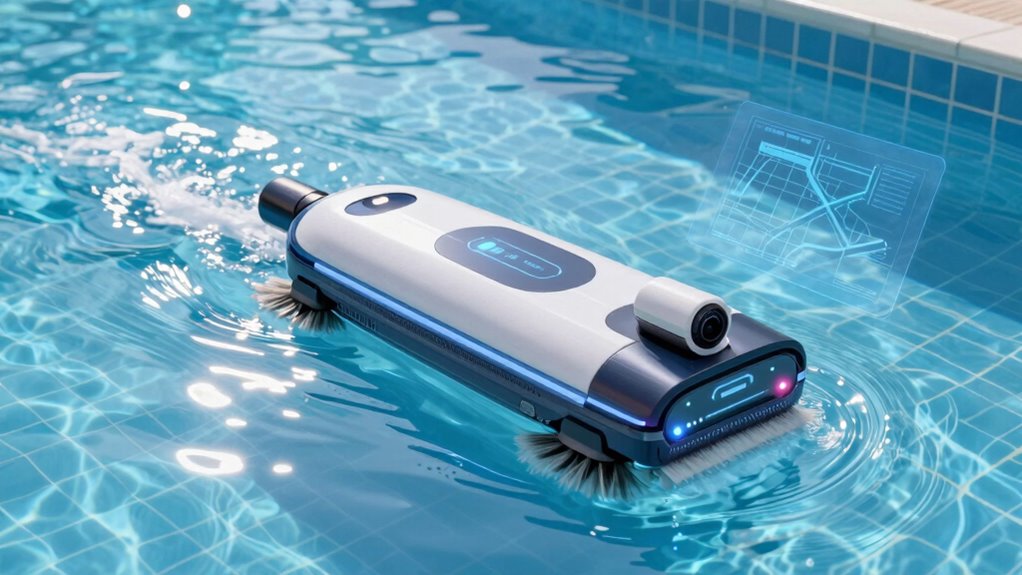
Effective navigation and mapping systems are what guarantee your robotic pool cleaner covers every inch of your pool. High sensor accuracy allows the device to detect walls, steps, and obstacles precisely, minimizing missed spots. Mapping algorithms process this sensor data to create an efficient blueprint of your pool’s layout, enabling systematic cleaning patterns. These algorithms help the cleaner remember previously covered areas, avoid unnecessary repetition, and adapt to changes in the pool’s shape or obstacles. The combination of accurate sensors and smart mapping ensures thorough coverage without wasting time or energy. With advanced navigation, you’re assured that every corner, ledge, and step gets cleaned, resulting in a spotless pool and less manual intervention on your part.
Filtration Power & Capacity for Water Quality

A robotic pool cleaner’s filtration power and capacity directly impact the clarity and safety of your pool water. Higher filtering efficiency ensures more debris, dirt, and microscopic contaminants are captured, resulting in cleaner water. Look for units with large capacity filters or multiple filter cartridges, which allow for more extensive cleaning sessions without frequent maintenance. Effective filtration reduces cloudiness and prevents algae growth, helping maintain ideal water clarity. Additionally, a powerful filtration system minimizes the load on the cleaner’s motor, promoting longevity and consistent performance. Keep in mind that a well-designed filtration system is essential for keeping your pool water sparkling, especially if your pool sees frequent use or heavy debris. Prioritizing filtration power and capacity ensures your pool stays inviting and safe.
Battery Life & Charging: How Long Will Your Robot Last?

Wondering how long your robotic pool cleaner can work before needing a recharge? It all depends on its battery capacity and the efficiency of its motor. Most models offer a runtime between 1.5 to 3 hours, giving you ample cleaning time in a single session. Keep in mind, larger battery capacity generally means longer operation but may also increase charging time. Speaking of charging, most robotic cleaners take around 3 to 4 hours to fully recharge, so plan your cleaning schedule accordingly. If you want your robot to run longer without interruptions, look for models with higher battery capacity and quicker charging times. Balancing these factors guarantees your pool gets cleaned efficiently without constant recharging.
Frequently Asked Questions
How Do Different Pool Sizes Affect Robotic Cleaner Performance?
Your pool size directly impacts robotic cleaner performance by influencing pool size considerations and cleaning cycle duration. Larger pools require a more powerful cleaner or multiple cycles to thoroughly clean, while smaller pools can be handled efficiently with shorter cycles. Always match your cleaner’s capacity to your pool size to guarantee effective cleaning without overworking the device, and consider cycle duration to optimize cleaning time and energy use.
Are Robotic Pool Cleaners Suitable for All Types of Pool Surfaces?
You’ll find robotic pool cleaners generally quite adaptable, but it’s wise to take into account pool surface compatibility and surface material considerations. They work well on many surfaces, including tiles, vinyl, and concrete, but some models may be gentler on delicate finishes like fibreglass. Check the product specifications to ensure the cleaner suits your pool’s surface type, so you enjoy a smooth, effective cleaning experience without worry.
Can Robotic Pool Cleaners Handle Debris of All Sizes Effectively?
Yes, robotic pool cleaners can handle debris of all sizes effectively, depending on their brushes and suction power. They’re designed to pick up leaves, dirt, and even small twigs efficiently. To maintain peak performance, you should adjust the cleaning frequency based on debris types and pool usage. Regular use ensures the cleaner keeps debris under control, preventing buildup and keeping your pool sparkling clean with minimal effort.
What Maintenance Is Required to Keep the Robot Functioning Optimally?
Keep your robotic pool cleaner happy, and it’ll keep your pool spotless. You’ll want to regularly replace the filter to prevent clogs—because nobody likes a stubborn robot—and perform battery maintenance to make sure it doesn’t die mid-scrub. Clear out debris from the filter, check for wear, and recharge as needed. Basically, treat it like a pet, and it’ll reward you with pristine water every time.
How Do Noise Levels Vary Among Different Robotic Pool Cleaner Models?
You’ll notice noise levels vary among robotic pool cleaner models, with some producing a quiet sound comparison and others being louder. To minimize disruption, look for models with sound mitigation features like quieter motors or noise-reducing design elements. This way, you can enjoy a cleaner pool without excessive noise, especially if you value peace and quiet during operation. Always check product specifications for noise level details before purchasing.
Conclusion
Choosing the right robotic pool cleaner is like planting a seed—when you prioritize the right specs, it grows into a pristine, effortless swim. Your investment becomes a steady stream of clear water, symbolizing peace of mind and leisure. Remember, the perfect robot isn’t just about features; it’s about trusting your choice to nurture a clean, inviting oasis. Let these specs guide you—your pool’s transformation begins with the right decision.