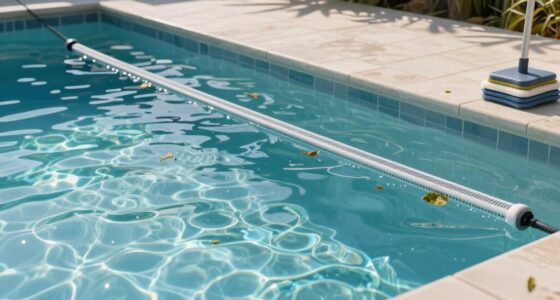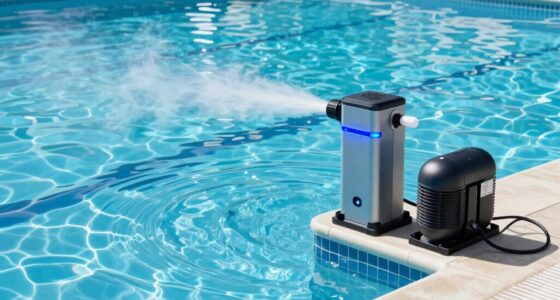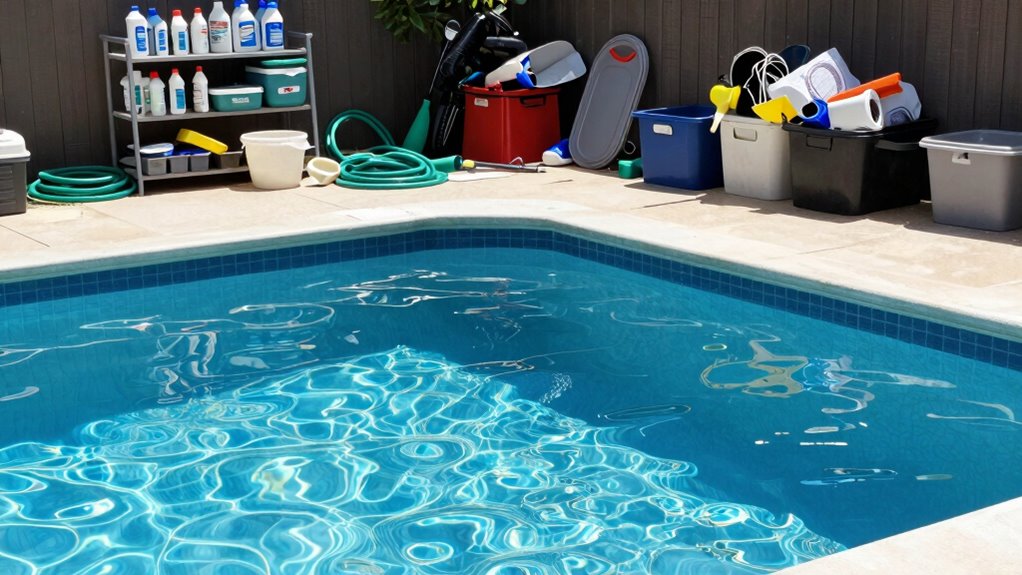
When your pool storage is in the wrong spot, it makes routine maintenance feel much harder. You’ll spend more time lugging chemicals, tools, and equipment back and forth, which discourages regular checks and adjustments. Inconvenient storage also leads to disorganization, increasing the chance of damage and making cleaning less efficient. If your supplies are hard to reach, it’s easy to skip essential tasks. Keep exploring to discover how proper storage can simplify your pool upkeep.

Get pool and patio gear delivered free with Prime
- Fast, free delivery on millions of items
- Prime Video, Amazon Music and more included
- Member-only deals all year
Key Takeaways
- Inconvenient storage forces extra steps, making routine tasks more time-consuming and discouraging regular maintenance.
- Difficult access to chemicals and tools leads to neglect of testing and chemical balancing.
- Disorganized storage increases the risk of equipment damage and loss, complicating repairs and replacements.
- Poorly placed storage reduces motivation to perform frequent cleaning and water quality checks.
- Environmental exposure to elements shortens equipment lifespan, resulting in higher costs and maintenance effort.

Proper pool maintenance isn’t just about cleaning the water; it also involves managing your equipment and supplies effectively. When your storage setup is poorly planned, it can make overall pool upkeep feel overwhelming. One of the key issues is how storage location impacts your ability to perform routine tasks smoothly. If your chemicals, tools, and equipment are scattered or stored far from the pool, it adds unnecessary steps to your maintenance routine, making everything seem more complicated and time-consuming.
Chemical balancing is a vital part of maintaining clear, safe water, but if your chemicals are stored in an inconvenient spot, you’re less likely to keep up with regular testing and adjustments. Imagine having to lug heavy containers across the yard just to add chemicals or check your test kits. This inconvenience discourages frequent checks, leading to imbalanced water chemistry and, ultimately, poorer water quality. Proper storage should bring your chemicals close enough so that you’re encouraged to stay on top of chemical balancing, preventing the buildup of algae or bacteria. Ensuring your supplies are stored in a dedicated, organized location can help promote consistent maintenance.
Equipment accessibility is another essential factor. When your pool tools—like skimmers, brushes, and test kits—are stored in a hard-to-reach area or buried under clutter, using them becomes a chore. You might find yourself avoiding routine maintenance because it’s easier to leave things as they are than to wrestle with finding the right tool. This neglect can cause small issues to snowball into bigger problems, such as clogged filters or uneven chemical levels. Keeping your equipment stored in a designated, organized space near the pool ensures you can quickly grab what you need without hassle. This simple step encourages you to perform regular maintenance tasks, which keeps your pool cleaner and safer. Additionally, organized storage can help prevent clutter from accumulating, making your maintenance area safer and more efficient.
Additionally, poor storage can lead to equipment damage. Exposure to the elements or accidental drops can ruin filters, pumps, or test kits, forcing you to buy replacements more often. When supplies are stored haphazardly, you risk losing important items or making it harder to locate them when needed most. An organized, dedicated storage space minimizes damage and loss, saving you money and reducing frustration. Proper storage can also protect your supplies from environmental damage, extending their lifespan and ensuring they work properly when needed. Incorporating storage organization into your routine can also help prevent the spread of contaminants that might otherwise occur with disorganized storage. Moreover, well-planned storage solutions can streamline your entire pool maintenance process, saving you time and effort in the long run.
Furthermore, effective storage can protect your supplies from environmental damage, extending their lifespan and ensuring they work properly when needed. In the end, the way you store your pool supplies and equipment directly affects your ability to maintain your pool efficiently. Proper storage makes chemical balancing easier and equipment more accessible, which in turn makes routine maintenance less of a chore. When everything is within reach and well-organized, pool care feels less like a hassle and more like a manageable part of your routine. This small change can markedly improve your pool’s health and your overall experience as a pool owner.
As an affiliate, we earn on qualifying purchases.
Frequently Asked Questions
How Does Storage Location Affect Chemical Effectiveness?
Your storage location directly impacts chemical effectiveness by affecting chemical stability and storage accessibility. If chemicals are stored in a damp or hot area, they can degrade or become unsafe to use. Conversely, if storage isn’t easily accessible, you might skip proper handling or mixing, reducing their effectiveness. Proper placement guarantees chemicals stay stable and are easy to access, making pool maintenance safer and more efficient.
Can Storage Placement Impact Pool Equipment Lifespan?
Yes, storage placement can impact your pool equipment’s lifespan. When equipment is stored in an inconvenient or poorly ventilated spot, it’s harder to access, leading to neglect or improper maintenance. This can cause wear and tear faster. Additionally, if storage compromises pool aesthetics or makes access difficult, you’re less likely to perform routine checks, risking damage. Keep storage in a convenient, well-ventilated area to protect your equipment and maintain a beautiful pool.
What Signs Indicate Improper Storage Is Harming My Pool?
If your pool cover shows mold or tears, or if water temperature fluctuates unexpectedly, improper storage might be harming your pool. Poor storage can cause equipment to corrode or malfunction, making maintenance harder. When storage isn’t in a good spot, you might notice debris buildup or inconsistent water quality. Addressing these signs early helps protect your pool, ensuring the cover remains intact and water temperature stays stable.
Are Certain Storage Spots Better for Chemical Safety?
Certain storage spots are better for chemical safety, especially areas that are cool, dry, and well-ventilated. Always keep chemical storage away from direct sunlight, heat sources, and water to prevent dangerous reactions. Make certain the storage area is secure, out of children’s reach, and organized to avoid spills or mixing. Proper chemical storage and safety considerations protect both you and your pool, making maintenance safer and more manageable.
How Can I Optimize Storage to Reduce Maintenance Time?
Imagine your pool cleaning routine turning into a wild treasure hunt—frantic and frustrating. To avoid this chaos, organize your equipment in a dedicated, accessible spot near your pool. Keep all cleaning tools, chemicals, and equipment together. Proper storage reduces search time, prevents clutter, and speeds up maintenance. By optimizing your storage, you make pool cleaning smoother, saving you time and effort while keeping everything in top shape.
Conclusion
When your storage is misplaced, maintaining your pool becomes like trying to keep a delicate balance on a shifting deck. Every tool scattered, every chemical misplaced, adds weight to your shoulders, turning a simple task into an uphill climb. The chaos beneath the surface mirrors the chaos above—an unsettling reminder that where you keep your supplies can make all the difference. Organize wisely, and you’ll find the process flowing as smoothly as the water you cherish.
Halloween Picks
halloween
As an affiliate, we earn on qualifying purchases.