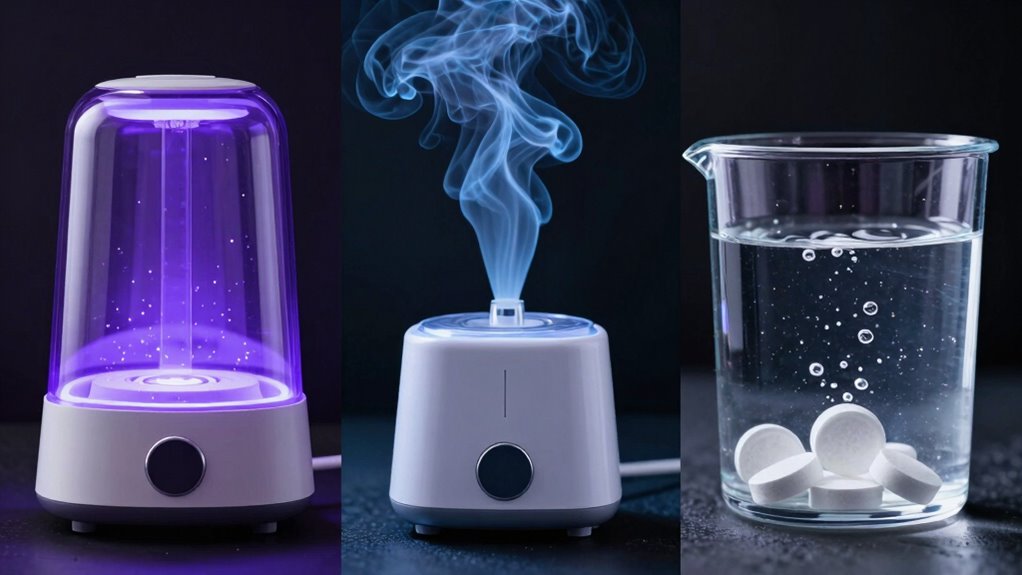
UV, ozone, and chlorine each play a crucial role in water disinfection. UV damages the DNA or RNA of microorganisms, preventing reproduction without adding chemicals. Ozone is a strong oxidizer that quickly destroys bacteria, viruses, and organics, but it needs on-site generation and safety precautions. Chlorine releases disinfectant molecules that attack pathogens and provides residual protection. Understanding how each works helps you choose the right solution for safe water, and more details await you.
Key Takeaways
- UV inactivates microorganisms by damaging their DNA/RNA, offering chemical-free, rapid disinfection suitable for clear water.
- Ozone is a powerful oxidant that destroys bacteria, viruses, and organics but requires on-site generation and safety measures.
- Chlorine releases chemical disinfectants that provide residual protection but may form harmful byproducts and need ongoing chemical input.
- Combining UV, ozone, and chlorine can enhance overall water safety, leveraging their complementary strengths.
- Choice depends on water quality, flow rate, safety considerations, and maintenance costs, with each method suited for specific treatment needs.
Which Water Sanitizer Is Best for Your Pool, Spa, or Drinking Water?
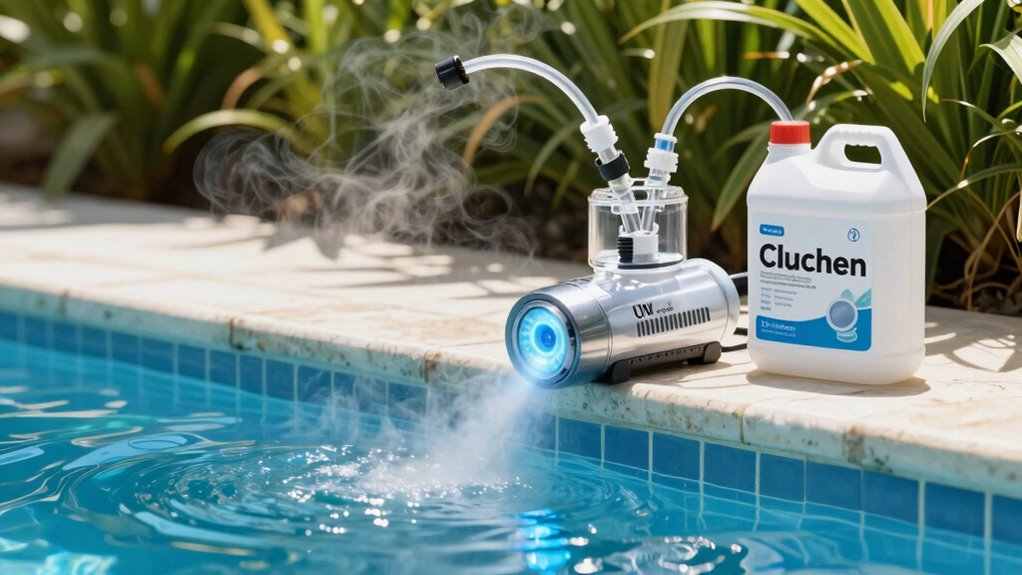
Are you unsure which water sanitizer is best for your pool, spa, or drinking water? Choosing the right pool chemical depends on your needs and water quality. For pools and spas, sanitizers like chlorine or bromine are common, but they can affect water filtration and pH levels. If you prefer a more natural approach, consider alternatives like UV or ozone systems, though they often require supplemental sanitizers. Drinking water sanitation usually involves filtration combined with chemical treatments to guarantee safety. Think about how often you want to maintain the system and the level of chemical exposure you’re comfortable with. Proper water filtration is essential regardless of the sanitizer, as it removes debris and improves water clarity. Making an informed choice helps keep your water safe and clean.
How Do UV, Ozone, and Chlorine Work to Keep Water Safe?

Water sanitation methods like UV, ozone, and chlorine each use different mechanisms to neutralize harmful microorganisms and keep your water safe. UV technology works by exposing water to ultraviolet light, which damages the DNA of bacteria and viruses, rendering them harmless. Ozone treatment involves generating ozone gas that reacts quickly with organic compounds and microbes, destroying their cellular structures. Chlorine, on the other hand, releases disinfectant molecules that attack pathogens’ cell walls and interfere with their metabolic processes. These methods target microorganisms directly, but they differ in process and speed. UV and ozone treatments provide rapid disinfection without leaving chemical residues, making them ideal for certain applications. Together, they form a thorough approach to maintaining safe, clean water by effectively inactivating diverse microorganisms.
Are UV Water Sanitizers Effective and Safe?

UV water sanitizers are highly effective at destroying bacteria and viruses, making your water safer to drink. However, you should be aware of potential safety concerns, such as exposure to UV light and proper device maintenance. Understanding these factors helps guarantee you get the benefits without risking your health.
Effectiveness Against Pathogens
UV water sanitizers have proven to be highly effective at neutralizing a wide range of pathogens, including bacteria, viruses, and protozoa. Their success depends on pathogen resistance; most microorganisms are vulnerable to UV light, which damages their DNA or RNA, preventing reproduction. UV systems are highly compatible with various water conditions, making them a versatile choice for different setups. Unlike chemical sanitizers, UV doesn’t leave residuals, reducing concerns about sanitizer compatibility with plumbing or water chemistry. However, effectiveness hinges on proper exposure; clarity and flow rate can impact pathogen destruction. UV treatment offers a reliable, chemical-free method to markedly reduce microbial contamination, providing safe, clean water. When correctly installed and maintained, UV sanitizers are a proven solution against diverse pathogens.
Potential Safety Concerns
While UV water sanitizers are highly effective at neutralizing many pathogens, concerns about their safety and reliability do exist. One potential issue involves water chemical reactions; if the system isn’t properly maintained, UV exposure can lead to unintended chemical changes that produce harmful byproducts. Although UV doesn’t add chemicals directly, poor setup or malfunctions might leave some pathogens untreated, posing health risks. Additionally, improper shielding or exposure can cause UV light to escape, which could harm skin or eyes if you’re nearby. While UV systems are generally safe when correctly installed and maintained, neglecting these safety precautions may increase health risks. Regular maintenance and proper installation are essential to ensure UV water sanitizers remain both effective and safe for everyday use.
What Are the Pros and Cons of Using Ozone in Water Treatment?
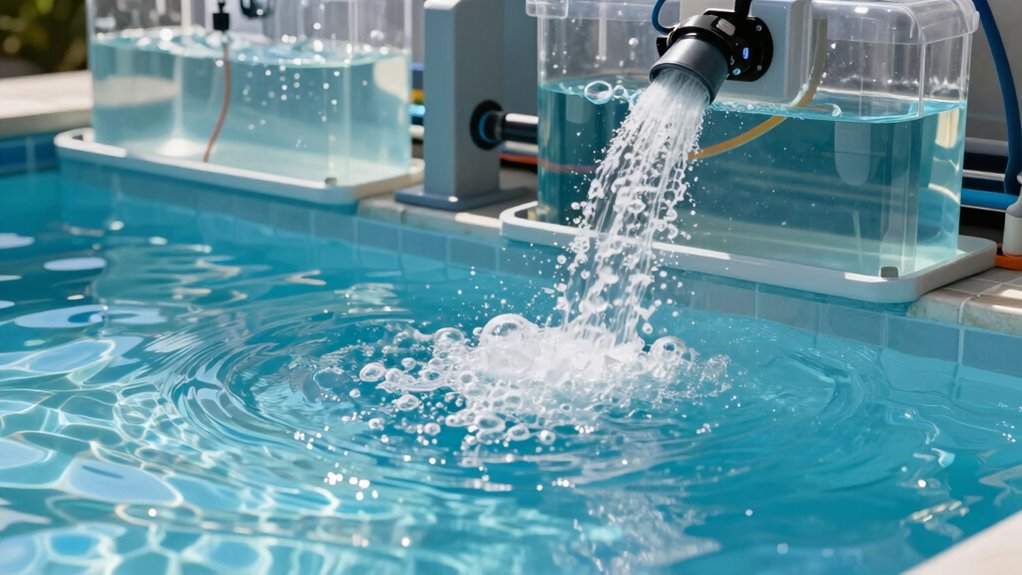
Have you ever wondered about the benefits and drawbacks of using ozone in water treatment? Ozone generation is a key process, creating ozone from oxygen, which is then used in water ozonation. One major advantage is its strong oxidizing power, effectively eliminating bacteria, viruses, and organic contaminants without leaving harmful residues. It’s quick and efficient, often requiring less chemical use. However, there are drawbacks too. Ozone is unstable and can quickly break down, so it must be produced on-site. This requires specialized equipment and safety measures, as ozone is a potent respiratory irritant. Additionally, water ozonation can be costly and complex to implement. Overall, ozone offers powerful disinfection but demands careful handling and infrastructure investment.
Why Do Most People Use Chlorine for Water Disinfection?
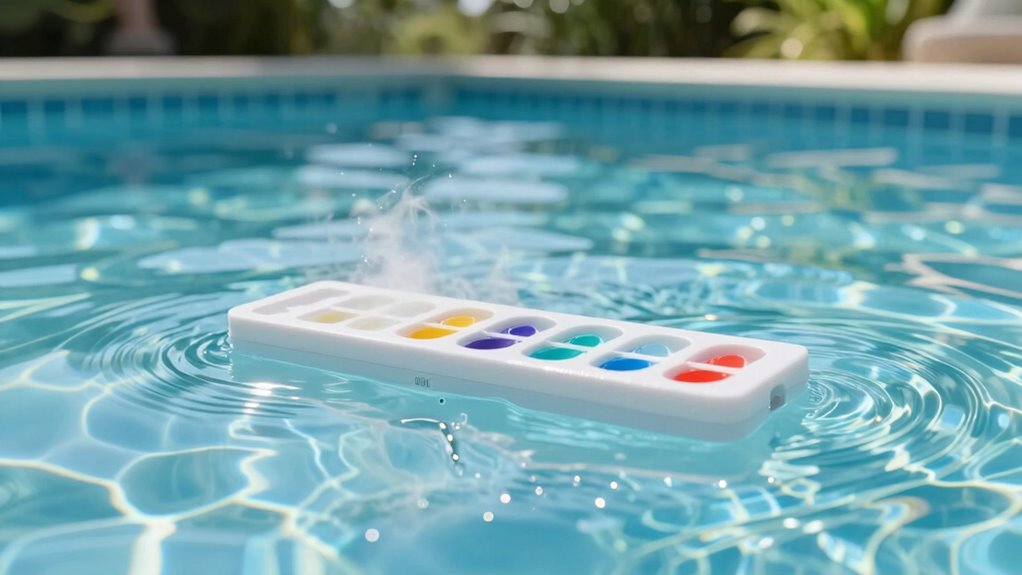
Ever wonder why chlorine remains the most popular choice for water disinfection? It’s because of its proven effectiveness, affordability, and long-lasting residual. Chlorine guarantees water purity by killing bacteria and viruses efficiently. Many people trust its safety when used properly, making it a reliable option. To help you understand, here’s a quick comparison:
| Factor | Chlorine | Other Methods |
|---|---|---|
| Water purity | High, with proper dosing | Varies, some less effective |
| Chlorine safety | Safe when managed correctly | Concerns over byproducts |
| Residual effect | Long-lasting | Short-lived or none |
| Cost | Low | Often higher |
Most opt for chlorine because it balances safety, cost, and proven disinfection.
Which Sanitizer Is Best for Different Water Types?

Choosing the right sanitizer depends on your specific water type, as different sources present unique challenges. For example, well water often contains higher levels of organic matter, making chlorine a reliable option due to its residual disinfectant properties. Surface water, like lakes or rivers, may require alternative treatment methods such as UV or ozone, which are effective without adding chemicals. Water filtration systems can also enhance sanitizer effectiveness by removing sediments and contaminants beforehand. If your water has high mineral content or impurities, a combination approach—using filtration followed by UV or ozone—can optimize safety. Ultimately, matching your water source with the appropriate sanitizer guarantees thorough disinfection and addresses the specific characteristics of your water, leading to safer, cleaner water.
What Are the Safety Considerations and Drawbacks of UV, Ozone, and Chlorine?

While UV, ozone, and chlorine are effective sanitizers, each comes with safety considerations and potential drawbacks you should be aware of.
- UV exposure can cause skin and eye injuries if not properly shielded.
- Ozone, as a powerful oxidizer, may cause respiratory issues and health risks if inhaled in high concentrations.
- Chlorine can produce harmful chemical exposure, leading to skin and eye irritation, and the formation of carcinogenic byproducts.
- Improper handling or overuse of any sanitizer increases risks of chemical exposure and safety hazards.
Understanding these safety considerations helps you minimize health risks. Always follow manufacturer instructions and safety guidelines to ensure proper, safe use of UV, ozone, and chlorine systems.
How Much Do Water Sanitizer Systems Cost and Require Maintenance?
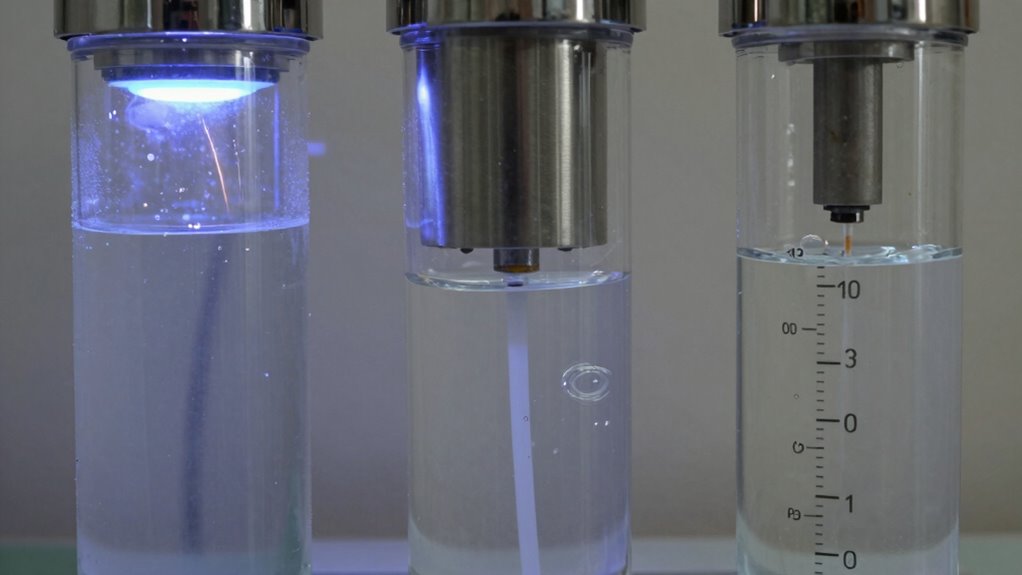
Water sanitizer systems vary in initial costs depending on their type and capacity, and you’ll want to factor in ongoing maintenance expenses like filter replacements or chemical refills. These systems also differ in how long they last and what upkeep is needed to keep them running efficiently. Understanding these costs helps you choose a solution that fits your budget and maintenance capabilities.
Initial Purchase Costs
Initial purchase costs for water sanitizer systems can vary widely, depending on the type and features you choose. To make a cost comparison easier, consider these factors:
- System type – UV systems tend to be less expensive upfront than ozone or chlorine setups.
- Capacity – Larger systems for bigger volumes cost more initially.
- Features – Advanced features like automatic controls add to the price.
- Installation considerations – Complex installation might increase upfront costs, especially if plumbing modifications are needed.
Understanding these factors helps you weigh the initial investment against your specific needs. Keep in mind that while some systems have higher upfront costs, they might save you money in the long run through efficiency and reduced chemical use.
Ongoing Maintenance Expenses
Ongoing maintenance costs play a significant role in the overall affordability of water sanitizer systems. When comparing options, a clear cost comparison helps you understand what you’ll regularly spend, whether on replacement parts, chemical supplies, or energy. UV systems typically have lower ongoing expenses since they require minimal consumables but need bulb replacements every year or so. Ozone systems may incur higher maintenance costs due to more complex equipment and periodic repairs. Chlorine systems usually involve ongoing chemical purchases, which can add up over time. Incorporating these expenses into your budget planning guarantees you’re prepared for routine costs and can choose the best system that balances upfront costs with long-term affordability. Regular maintenance is essential to keep your system operating safely and efficiently.
System Longevity and Upkeep
Understanding how long your water sanitizer system will last and what upkeep it requires is essential for making an informed investment. Typically, system maintenance needs vary based on component durability and usage. Expect to replace parts like UV bulbs or ozone generators every 1-3 years. Proper upkeep can extend system lifespan and ensure consistent performance. Keep these points in mind:
- Regularly inspect and replace UV bulbs or ozone cells as recommended.
- Clean filters and components to prevent buildup and maintain efficiency.
- Monitor system performance to identify early signs of wear.
- Schedule professional maintenance annually for prime operation.
Can You Combine Sanitizers for Better Water Safety?
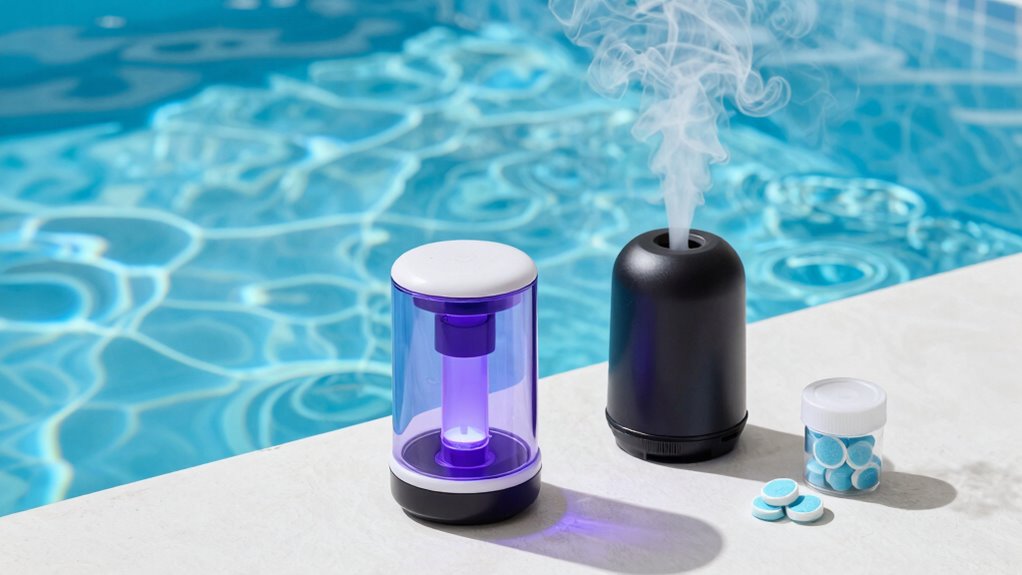
Combining sanitizers can sometimes improve water safety, but it’s important to do so carefully. Using alternative disinfectants, such as ozone and UV alongside chlorine, can create a more effective combined treatment, reducing the risk of pathogens. However, mixing sanitizers without proper knowledge can lead to undesirable chemical reactions or reduced effectiveness. Always follow manufacturer instructions and consult water treatment professionals before implementing combined treatment strategies. Combining different sanitizers may enhance overall disinfection, but it requires understanding each method’s role and limitations. Using multiple disinfectants responsibly can provide added security, especially in challenging water conditions. Just remember, the goal is to enhance safety without creating new hazards, so proper planning and guidance are essential.
Myths and Facts About Water Sanitizing Methods

Many water sanitizing myths persist, leading you to believe false claims about effectiveness. Scientific evidence, however, clarifies the true roles of different methods and dispels misconceptions. Understanding these facts helps you choose the safest, most effective water treatment options.
Common Water Sanitizing Myths
Despite common beliefs, not all water sanitizing methods are equally effective or safe. Many myths circulate about water treatment, leading to misconceptions. Here’s the truth:
- Chlorine kills all bacteria instantly — it takes time and proper concentration.
- UV light sterilizes water completely — it only works on exposed surfaces, not in turbid water.
- Ozone is safe without precautions — it’s a powerful oxidant requiring careful handling.
- Boiling kills everything — some viruses and protozoa need longer boiling times.
Understanding these sanitization methods helps you make informed decisions in water treatment. Not all approaches are suited for every situation, and safety always comes first. Clear facts prevent misinformation in water treatment practices.
Scientific Evidence Clarifies Roles
Understanding the facts behind water sanitization methods helps you distinguish myths from reality. Scientific evidence shows that each method relies on specific chemical reactions to eliminate pathogens effectively. For example, chlorine forms disinfectant compounds through chemical reactions that attack microorganisms’ cell structures. Ozone, a powerful oxidizer, reacts rapidly with contaminants, breaking down organic matter and microbes. UV light disrupts DNA in pathogens without adding chemicals. When evaluating these methods, consider their environmental impact. Chlorine can produce harmful byproducts, affecting aquatic ecosystems, while ozone and UV have minimal environmental footprints. Knowing these scientific facts helps you make informed decisions about water treatment options, aligning safety and environmental responsibility without falling for misconceptions.
Misconceptions About Effectiveness
While there are several water sanitizing methods available, misconceptions often lead people to overestimate or underestimate their effectiveness. Myth debunking helps clarify these effectiveness myths. Here are four common misconceptions:
- UV light kills all pathogens instantly – UV is effective but only on exposed surfaces, not waterborne microbes hidden in sediments.
- Ozone completely sterilizes water – Ozone effectively reduces bacteria but doesn’t eliminate all viruses or contaminants without proper dosing.
- Chlorine is outdated and ineffective – Chlorine remains reliable when used correctly, especially in large-scale water treatment.
- Any method guarantees safe water – No method guarantees absolute safety alone; combining approaches often offers better protection.
Understanding these myths helps you make informed decisions about water sanitizing methods and avoid overestimating their effectiveness.
Frequently Asked Questions
How Do UV, Ozone, and Chlorine Interact When Used Together?
When you use UV, ozone, and chlorine together, they can create synergistic effects that enhance sanitation. UV light quickly inactivates microorganisms, while ozone and chlorine chemically interact with contaminants to break down organic matter. These chemical interactions can boost overall effectiveness, but you should observe their levels carefully to prevent unwanted byproducts. Properly balancing these sanitizers ensures safer, more efficient water treatment with minimized risks.
What Environmental Impacts Do Each Sanitizer Have?
You should consider the environmental footprints and ecotoxicity concerns of each sanitizer. UV has a minimal impact, as it doesn’t produce harmful byproducts, but it consumes energy. Ozone effectively reduces microbial activity with low chemical residues, yet it can harm aquatic life if released improperly. Chlorine, while effective, creates chlorinated byproducts that threaten ecosystems and increase ecotoxicity concerns. Always weigh these impacts when choosing a sanitizer to protect the environment.
Are There Specific Water Conditions That Favor One Sanitizer Over Others?
You’ll find that water pH levels and mineral content influence which sanitizer works best. For example, UV systems perform ideally in low pH, clear water with minimal minerals, as they rely on light penetration. Ozone tolerates higher mineral content better, but its effectiveness may decrease if pH is too high. Chlorine is versatile but can be less effective in high pH or highly mineralized water.
How Do Sanitizer Byproducts Affect Human Health?
Sanitizer byproducts can impact your health by leaving chemical residues in the water, which might cause respiratory concerns or skin irritation if you’re exposed regularly. Chlorine produces chloramines, and ozone can generate reactive oxygen species, both potentially affecting sensitive individuals. UV doesn’t leave chemical residues, making it a safer choice for minimizing chemical-related health risks. Always monitor water quality and follow safety guidelines to protect your well-being.
Can These Sanitizers Eliminate All Types of Bacteria and Viruses?
You might think these sanitizers can eliminate all bacteria and viruses, but that’s not always true. Bacterial resistance can make some germs tougher to kill, and viruses vary in their susceptibility. UV, ozone, and chlorine are effective at virus eradication, but no sanitizer guarantees 100% elimination. To maximize safety, combine methods and follow proper disinfection protocols, understanding each sanitizer’s strengths and limitations.
Conclusion
Choosing between UV, ozone, and chlorine is like picking the perfect brush for your water masterpiece. Each has its own strengths and quirks, so weigh your needs carefully. When you understand their roles, you become the artist controlling the safety and clarity of your water canvas. With the right mix and a little knowledge, you’ll turn your water into a sparkling, pristine masterpiece—safe, fresh, and ready for your next refreshment.