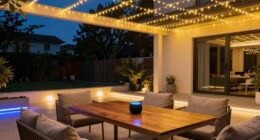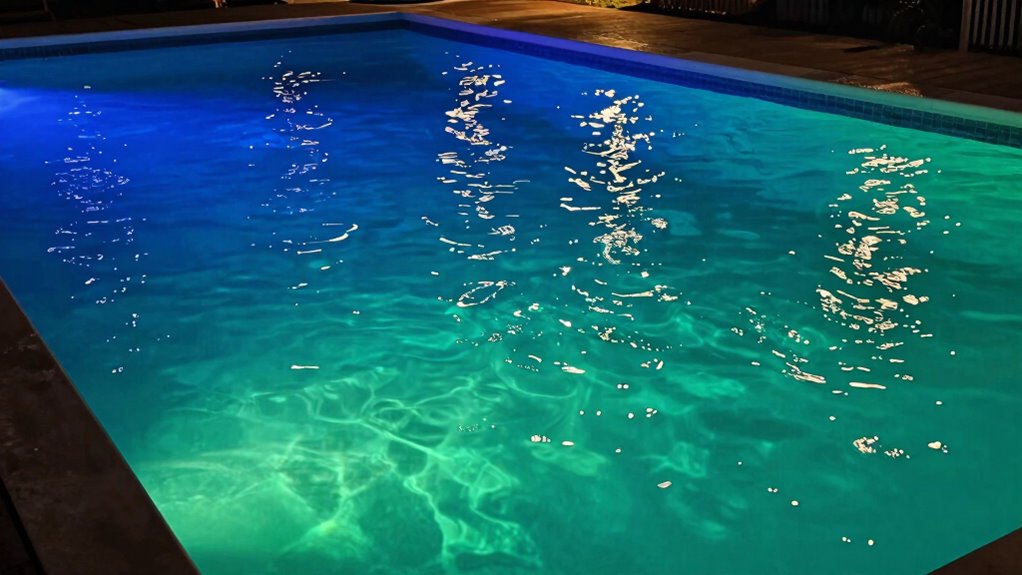
When evaluating pool LED lights, ‘brightness’ isn’t just about a single number like lumens. It’s influenced by how well the light is distributed, the color temperature, water clarity, and pool size. Higher lumens don’t always mean a brighter pool if the light isn’t focused or evenly spread. To get the best results, it’s important to take into account all these factors together. Keep exploring to learn how to make your pool glow perfectly.
Key Takeaways
- Brightness in pool LED lights is measured in lumens, not just wattage, as lumens indicate actual light output.
- Light distribution and focus affect perceived brightness more than lumen count alone.
- Color temperature and water clarity influence how bright the pool appears, regardless of lumen ratings.
- Proper installation and even light coverage are essential for effective brightness, not just high lumen numbers.
- Features like diffusion, control options, and water conditions significantly impact the perceived brightness of pool lighting.
What Does Brightness Mean in Pool Lighting?

Have you ever wondered what brightness really means when it comes to pool lighting? Brightness in pool lighting isn’t just about how much light you see; it also affects the overall lighting aesthetics, creating the ambiance you want. A brighter pool can look more inviting and lively, but it doesn’t necessarily mean higher energy consumption. LEDs allow you to achieve the perfect balance by providing sufficient illumination while being energy-efficient. When choosing your lights, consider how much brightness enhances your pool’s appearance without wasting power. Remember, the right brightness level depends on your personal style and the atmosphere you want to create, so focus on how the light impacts the overall look and feel of your pool area.
How Is Pool LED Brightness Measured? (Lumens, Watts, and More)

Understanding how brightness is measured helps you choose the right pool LED lights. Lumens indicate how much light a fixture produces, while watts show its energy consumption. Knowing these factors ensures you get bright, efficient lighting for your pool.
Understanding Lumens and Brightness
When evaluating pool LED lights, knowing how brightness is measured can make a big difference in choosing the right ones. Brightness is primarily quantified using lumens, which indicate how much light the fixture emits. A higher lumen count means a brighter light, but it doesn’t tell the whole story. Color rendering is also important because it affects how natural and vibrant the pool’s appearance looks underwater. Additionally, understanding lumens helps you compare energy consumption; more lumens often mean more efficient lighting. Keep in mind that wattage alone isn’t a reliable indicator of brightness, as LED lights use less energy while delivering ample light. By focusing on lumens and color rendering, you can select pool LED lights that are both bright enough and energy-efficient.
Watts and Energy Efficiency
While lumens measure how bright a pool LED light appears, wattage provides insight into how much energy the fixture consumes. Lower wattage typically means less energy consumption, making the light more efficient. Power ratings help you compare different LED options; a higher wattage doesn’t necessarily mean brighter, but it often indicates higher energy use. When selecting a pool LED, consider the balance between brightness and energy efficiency. An efficient fixture delivers sufficient illumination without increasing your energy costs. Look for lights with lower wattage but high lumen output to maximize efficiency. This way, you get the desired brightness while minimizing power consumption. Understanding wattage and power ratings ensures you choose a pool LED that’s both bright and cost-effective over time.
Why Higher Lumens Don’t Always Mean a Brighter Pool
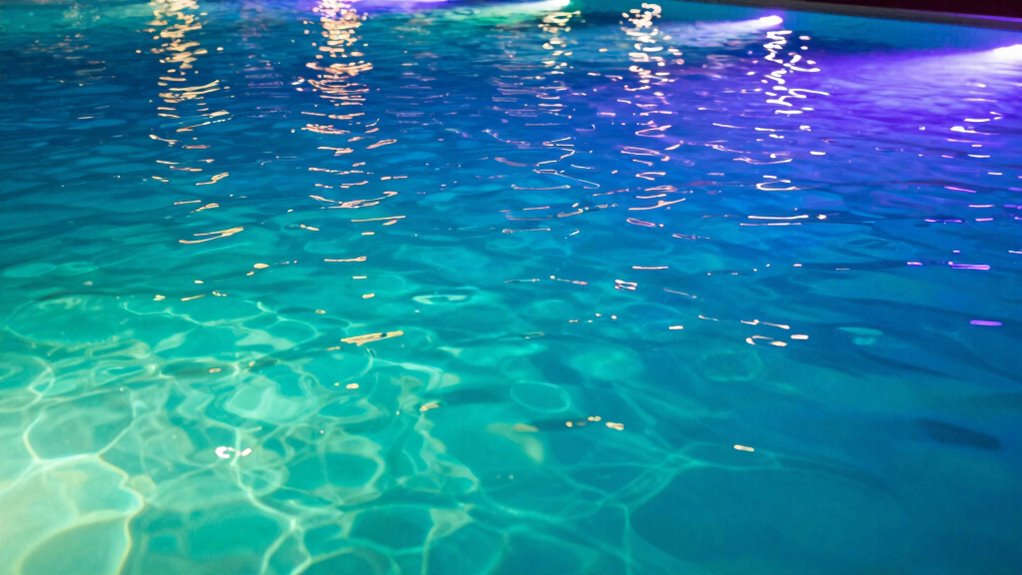
Even if a light has higher lumens, it might not make your pool appear brighter if the light isn’t distributed evenly. The way the light spreads across the water and surroundings plays a big role in overall brightness. Plus, the color temperature affects how vibrant the pool looks, regardless of lumen count.
Light Distribution Matters
A higher lumen rating doesn’t automatically mean your pool appears brighter. Light distribution plays a vital role in how your pool looks. Even with high lumens, if the light is poorly focused or unevenly spread, certain areas may be dimmer, reducing overall brightness. Properly directed light creates focal points that highlight features like steps, waterfalls, or sculptures, enhancing the pool’s aesthetic appeal. A well-designed lighting setup ensures even coverage, avoiding dark spots and creating a balanced glow. This not only improves visibility but also elevates the ambiance, making your pool more inviting and visually striking. Remember, the goal isn’t just brightness—it’s how evenly and thoughtfully the light fills the space, emphasizing focal points and enhancing the pool’s overall beauty.
Color Temperature Effects
Higher lumen ratings don’t necessarily make your pool look brighter because color temperature considerably influences how the light appears. A higher color temperature, like cool white, produces a bluish hue, while lower temperatures give warmer, yellowish tones. This impacts color rendering, making some shades pop more than others. Additionally, light diffusion affects how evenly the light spreads across the water, influencing perceived brightness.
Consider these points:
- Cooler temperatures enhance a crisp, vibrant glow but can seem less luminous.
- Warmer tones create a cozy ambiance but may reduce brightness perception.
- Proper color temperature improves color rendering, highlighting pool features.
- Light diffusion guarantees even distribution, making your pool appear brighter regardless of lumen count.
How Color and Color Temperature Affect Pool Brightness
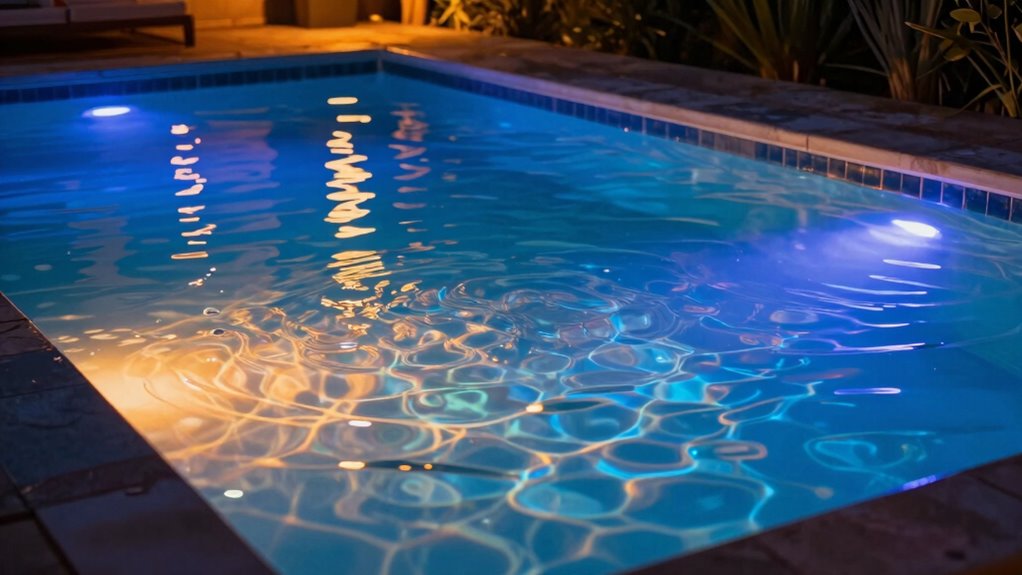
The choice of color and color temperature in pool LED lights directly influences how bright and vibrant your pool appears at night. Warm tones like amber create a cozy, inviting glow, while cool blues evoke calmness and clarity. Color psychology plays a role in how you feel about your pool’s atmosphere. Brightness isn’t just about lumen levels; color intensity and temperature also shape perception. Additionally, selecting colors that suit your mood can enhance the overall experience. Keep in mind, the right color choices can extend your LED lifespan by reducing unnecessary strain. Visualize your options with this imagery:
| Color | Mood/Effect | Typical Temperature (K) |
|---|---|---|
| Blue | Calm, invigorating | 5500K-6500K |
| Amber/Gold | Warm, cozy | 2700K-3000K |
| Green | Natural, serene | 5000K-5500K |
| Red | Energetic, dramatic | 2000K-2500K |
How Water Clarity and Depth Impact Light Visibility

Water clarity and depth play crucial roles in how effectively pool LED lights illuminate your swimming area. Clear water allows light to penetrate further, creating a brighter, more inviting pool. Conversely, murky water caused by poor water chemistry or inadequate pool maintenance reduces visibility and light transmission. Deeper areas can diminish the perceived brightness since light disperses over a larger volume, making illumination less intense at greater depths. To optimize your pool’s lighting, maintain proper water chemistry, regularly clean filters, and keep debris out. Additionally, understanding how water clarity affects light helps you choose the right LED lights for your pool’s depth and condition.
- Clear water maximizes light transmission
- Murky water absorbs and scatters light
- Proper pool maintenance improves clarity
- Depth influences perceived brightness
Why Beam Angle and Light Distribution Matter
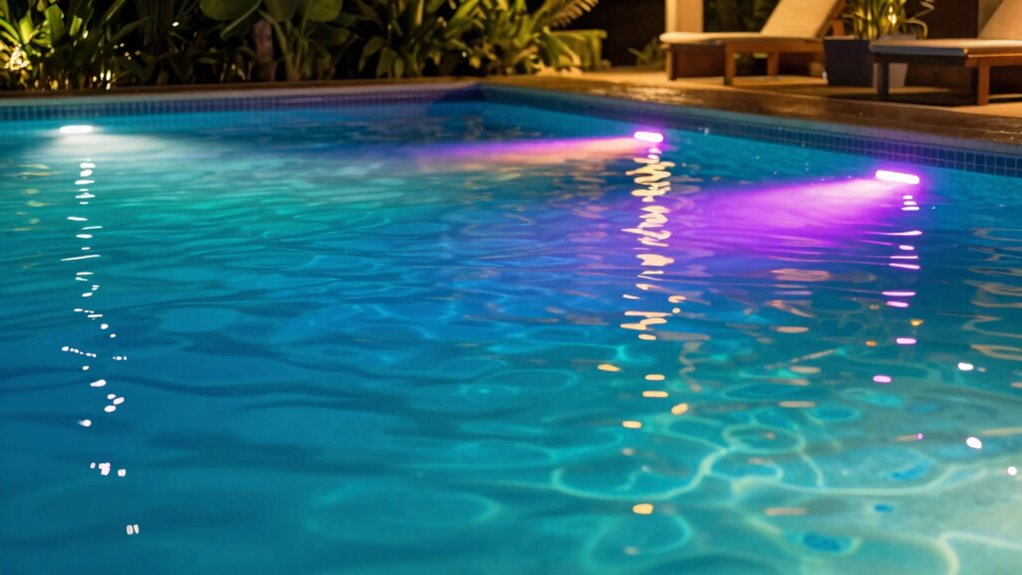
Choosing the right LED lights for your pool isn’t just about brightness; how the light spreads matters just as much. The beam angle determines how wide or narrow the light disperses, influencing the overall light distribution. A wider beam angle covers more area, creating a uniform glow, while a narrower one provides focused illumination for specific spots. Understanding this helps you avoid dark patches or overly bright zones. Here’s a quick comparison:
| Beam Angle | Light Distribution | Best For |
|---|---|---|
| 60° | Wide, even spread | General lighting |
| 30° | Focused, intense | Accent lighting |
| 120° | Very wide coverage | Large, open pools |
Choosing the right combination guarantees your pool is beautifully lit with even, effective illumination.
Types of Pool LED Lights: Brightness, Quality, and Features

Selecting the right pool LED lights involves understanding their brightness, quality, and features, which all impact the overall lighting experience. Different types of LEDs offer varying levels of color rendering, energy efficiency, and control options. High-quality lights provide vibrant, accurate colors that enhance your pool’s ambiance, while energy-efficient models save on power costs without sacrificing brightness. Features like dimming, color-changing capabilities, and smart controls let you customize your pool’s look effortlessly.
- Color rendering ensures your pool’s colors look natural and vivid
- Energy efficiency reduces electricity bills and environmental impact
- Brightness levels can vary based on LED quality and design
- Advanced features like remote control and automation elevate your experience
How to Choose the Right Brightness Level for Your Pool
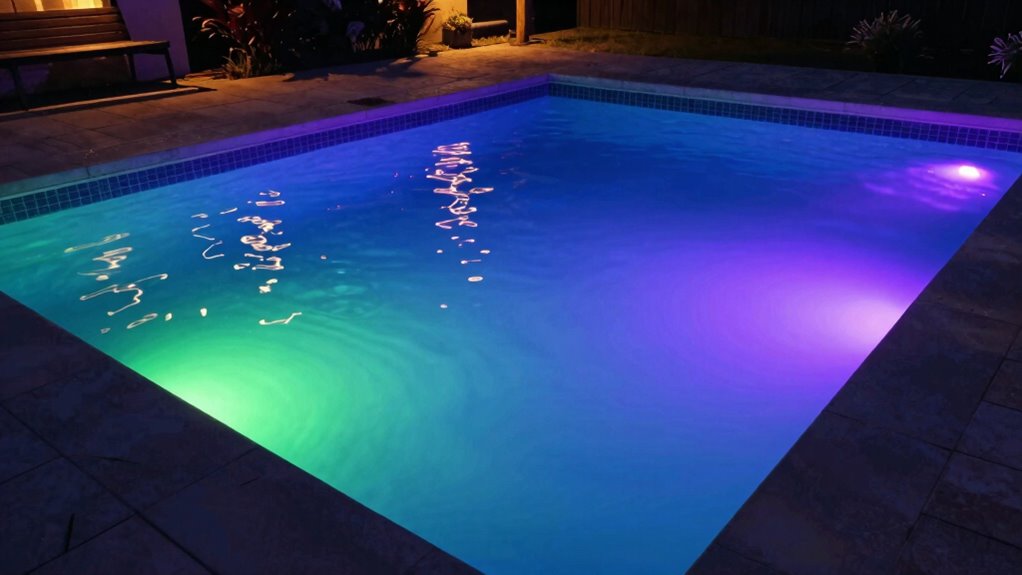
To pick the right brightness for your pool, start by considering its size and depth to guarantee the lights are effective. Think about the ambiance you want to create—brighter for lively gatherings or softer for relaxing evenings. Matching the brightness to your pool’s features helps you achieve the perfect look and feel.
Assess Pool Size and Depth
Understanding the size and depth of your pool is essential for determining the appropriate LED light brightness. Larger or deeper pools require more powerful lighting to ensure even illumination and safety. When evaluating your pool, consider its dimensions, shape, and depth variations, as these factors influence light coverage and brightness needs. Proper lighting enhances pool maintenance by making cleaning easier and helps you select suitable pool accessories for lighting.
Key points to consider:
- Bigger pools need higher brightness levels for visibility
- Deep pools require stronger lights to reach the bottom
- Irregular shapes may need multiple light points
- Brightness impacts safety and aesthetic appeal
Consider Desired Ambiance
Choosing the right brightness level for your pool’s LED lights depends largely on the ambiance you want to create. Consider your lighting design goals and the aesthetic considerations that match your space. If you prefer a relaxing, subdued glow, opt for dimmer settings that create a tranquil atmosphere. For lively gatherings or entertaining, brighter lights can energize the pool area. Think about how the lighting complements your overall landscape and architecture. The right brightness enhances safety without overpowering the scene. Remember, the goal is to achieve a balance that highlights your pool’s features while setting the mood you desire. By focusing on ambiance and aesthetic considerations, you ensure your pool lighting design complements your outdoor living space perfectly.
Common Mistakes When Selecting Pool Lights Based on Brightness
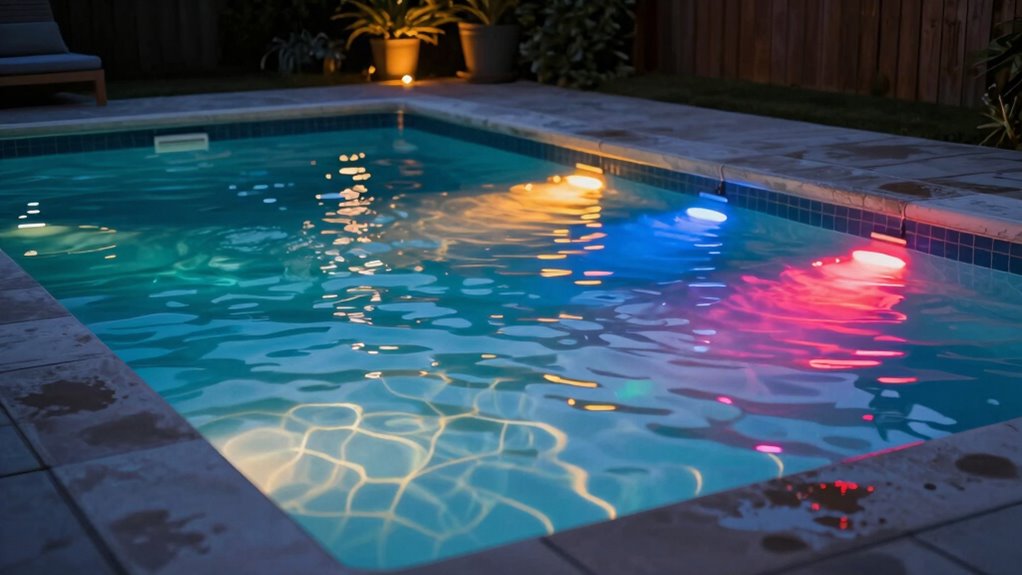
Many people assume that brighter pool lights automatically mean a better experience, but this isn’t always the case. Selecting lights based solely on brightness can lead to issues like glare, uneven lighting, or increased energy use. Avoid these common mistakes:
- Overestimating brightness needs without considering pool size or depth
- Ignoring proper lighting installation guidelines, which can impact effectiveness
- Overlooking maintenance tips that keep lights functioning at their best
- Choosing brightness levels without matching the ambiance you want
Focusing only on brightness can compromise safety and visual appeal. Instead, consider how lighting installation and maintenance tips influence overall performance. Properly selecting and maintaining your pool lights ensures a safe, beautiful swimming environment without unnecessary glare or energy waste.
Tips to Maximize Brightness and Safety in Your Pool Lighting
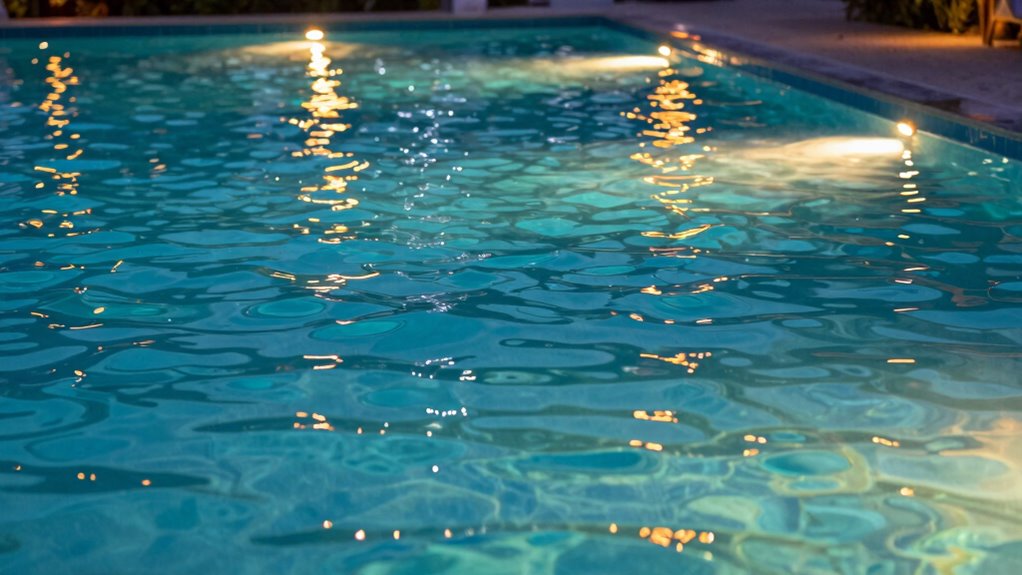
To maximize brightness and guarantee safety in your pool lighting, start by selecting high-quality fixtures designed for underwater use and appropriate for your pool’s size and depth. Proper installation ensures even illumination and reduces dark spots, enhancing safety. Regular pool maintenance, including cleaning fixtures and checking connections, keeps lights bright and functioning efficiently. Use energy-efficient LED bulbs to achieve energy savings without sacrificing brightness. Adjusting the angle and placement of lights can improve coverage and reduce glare, making the pool safer and more inviting. Always follow manufacturer instructions and consider professional installation for ideal results. By maintaining your pool lighting properly, you’ll enjoy a brighter, safer pool while minimizing energy costs and extending the lifespan of your fixtures.
Frequently Asked Questions
How Does Ambient Lighting Influence Perceived Pool Brightness?
Ambient lighting substantially influences how bright your pool appears. When the surrounding environment has warm color temperatures, it can make the pool seem less vibrant, even if the LED lights are bright. Conversely, cooler tones enhance the perceived brightness, making the pool glow more vividly. You’ll notice this effect more at night, so consider the ambient lighting and color temperature to create the desired pool ambiance and brightness perception.
Can Water Chemistry Affect LED Light Performance?
Think of your water chemistry as the silent conductor of your pool’s ambiance. Yes, water alkalinity and light color temperature can affect LED performance. High alkalinity may cause mineral buildup, dimming the lights over time. Meanwhile, improper light color temperature can distort perceived brightness. Keep your water balanced and select the right light settings to guarantee your LEDs shine their brightest, creating a stunning and inviting pool environment.
Are There Safety Standards for Pool LED Brightness Levels?
Yes, there are safety regulations and brightness standards for pool LED lights. These standards guarantee the lights aren’t too bright, preventing glare that could harm swimmers or distract boaters. Manufacturers must comply with these safety regulations, which specify maximum brightness levels and waterproofing requirements. By following these standards, you can enjoy a well-lit pool that’s safe and enjoyable without risking eye strain or accidents caused by excessive brightness.
How Does Energy Efficiency Relate to Brightness in LED Pool Lights?
Think of brightness measurement as your pool’s glow meter—more brightness can mean more energy consumption. Generally, energy efficiency in LED pool lights guarantees you get the right brightness without draining power. By choosing lights with lower energy consumption, you maintain suitable brightness while saving on electricity. This balance lets you enjoy a beautifully lit pool without sacrificing efficiency, proving that brighter isn’t always better when it comes to energy-smart choices.
What Is the Typical Lifespan of High-Brightness Pool LED Lights?
High-brightness pool LED lights typically last between 25,000 and 50,000 hours, depending on usage and quality. You should perform regular pool maintenance to guarantee their longevity and prevent issues that could shorten LED lifespan. Proper cleaning and avoiding power surges help maintain their brightness and durability. Keep in mind, investing in quality LEDs and routine upkeep ensures your pool stays vibrant and functional for many seasons.
Conclusion
Remember, brightness isn’t just a number—it’s about how your pool feels under the glow. As you choose your lights, consider water clarity, color, and ambiance, not just lumens. Think of your pool as a canvas, and the right lighting as the brushstrokes that bring it to life. Brightness is your tool, but harmony creates the magic—so light up smartly, and let your pool shine with both beauty and safety.