TL;DR

Get pool and patio gear delivered free with Prime
- Fast, free delivery on millions of items
- Prime Video, Amazon Music and more included
- Member-only deals all year
Floating LED pool lights are battery-powered or solar-powered fixtures that sit on the water and add decorative light without hardwiring into the pool. Choose a model made for aquatic use, check its waterproof rating and runtime, and treat it as ambiance—not a substitute for proper pool lighting, adult supervision, or drowning-prevention measures.
One floating light can turn a dark pool into a field of soft color, but it won’t make the water safer to swim in. That difference matters: floating LED pool lights create atmosphere, while appropriate pool lighting, clear rules, and attentive supervision help protect swimmers.
This guide gives you an overview for choosing a light that fits your pool and your evenings. You’ll learn how battery and solar models compare, what waterproof labels can—and can’t—tell you, how to get more reliable runtime, and how to use decorative lights without mistaking a glowing pool for a safe one.
Imagine hosting friends on a warm Friday night. A handful of dim, warm-white lights might make the water feel calm; vivid RGB colors and music-linked effects might suit a birthday party. The right choice depends on your space, your routine, and who will be near the water.
Pick rechargeable lights for predictable event use or shaded pools; choose solar when the light gets reliable direct sun.
Treat advertised runtime as a range: brightness and animated RGB effects can use power faster than dim, steady light.
Confirm aquatic-use instructions, inspect seals, and follow the maker’s charging and cleaning directions.
Use floating lights for ambiance, never as a replacement for suitable pool lighting, barriers, or adult supervision.
Test controls and placement before guests arrive, and keep floats clear of ladders, skimmers, and swimming paths.
What do floating LED pool lights actually do?
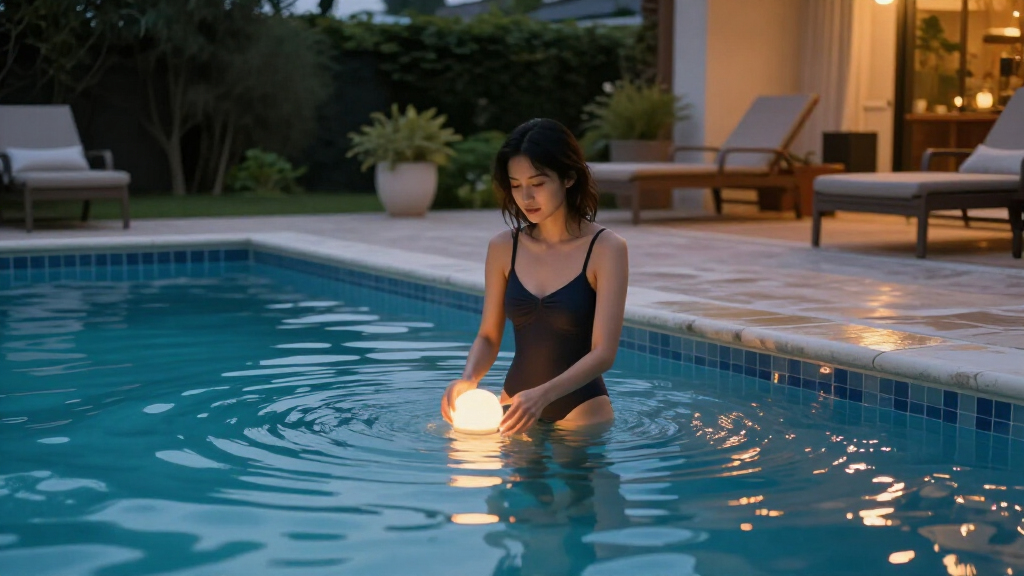
Floating LED pool lights are self-contained decorative lights designed to rest on the water, usually powered by rechargeable batteries or solar panels. Their job is to add visible color or soft illumination to the surface without a wired installation. They can enhance pool ambiance, but they do not replace a pool’s approved lighting or safety equipment.
Models usually come in different shapes and sizes: spheres, discs, lantern-style housings, and playful figures. A clear or frosted shell spreads light like a glowing paper lantern, while a colored shell can tint the water beneath it. That difference affects more than appearance: a diffuser makes the light source less harsh, while a strongly colored shell can make the water look more dramatic but reduce how clearly its surface details stand out. For example, two softly glowing white spheres near the steps may feel restful; a cluster of changing RGB lights can make a small party feel livelier.
Many lights offer color changes, brightness settings, and timed effects. Some use a remote, while others connect to a phone through Bluetooth or Wi-Fi. These options make it easier to adapt the mood, but each added feature creates another potential point of friction: you may need to pair a device, manage an app, or stay within connection range. A phone app is less useful if the light loses connection across the yard or the control instructions are confusing when guests are already waiting.
Think of these lights as movable accents, not underwater spotlights. Because they sit on the surface, they illuminate the water from above and produce reflections that change as the light drifts. Those reflections can make the pool look brighter while still distorting what you see below. If you want to swim after dark, use suitable pool lighting and follow local safety guidance instead of relying on a few decorative floats.
As an affiliate, we earn on qualifying purchases.
How do battery and solar lights compare?
Battery-powered models give you more predictable light on demand, while solar models reduce charging chores but depend on sunlight. Many rechargeable products advertise around 4–12 hours per charge; some designs report 8–12 hours, though bright output and color-changing effects can shorten a session. The practical tradeoff is control versus convenience: you can charge a battery model ahead of a specific event, while solar is easier for regular use only if the location and weather reliably provide enough light for charging. Solar performance varies with direct sun, season, shade, and how long the light charges.
Here’s a practical comparison. Picture a shaded courtyard pool: a solar light tucked beneath an overhanging tree may look elegant but collect too little sunlight to glow through a long dinner. A rechargeable model lets you charge indoors during the day and switch it on when guests arrive, making its runtime easier to plan. In a sunny, open yard, solar may be a convenient choice for regular, low-effort evening accents—but a run of cloudy days can still leave less stored energy than you expect.
| Feature | Rechargeable battery | Solar powered |
|---|---|---|
| Best fit | Planned events or shaded pools | Sunny locations and routine use |
| Power routine | Charge before use | Charge outdoors in daylight |
| Runtime | Often listed around 4–12 hours; varies by mode | Depends on sunlight and stored energy |
| Tradeoff | Needs charging and battery care | Less dependable after cloudy or short days |
Check what the maker means by “runtime”: the dim static setting may last much longer than maximum brightness with animated colors. This matters because a headline runtime is not necessarily the runtime you’ll get when the light is most visually striking. If your gathering runs from dusk until midnight, look for a published runtime at the setting you plan to use, not just the biggest number on the box. When no setting-specific figure is available, assume you may need to lower brightness or have a backup light ready.
Which features are worth paying for?
Floating LED pool lights are easiest to enjoy when their controls, brightness, and charging method suit your actual routine. A remote can save you from fishing a light out of the pool just to change a color, while app control can help schedule or coordinate multiple units. But extra connectivity adds complexity, and a signal that works beside the house may falter at the far end of a large yard. The useful question is not how many features a light has, but whether they make setup and operation easier in the place you’ll use it.
Start with the effect you want. For a quiet soak, choose warm white or a steady, low-brightness setting that doesn’t turn the water into a flashing display. For a celebration, RGB colors and music synchronization can add energy. One family might set two lantern-shaped lights to amber for a relaxed evening, then switch to blue and purple for a child’s birthday gathering—while keeping an adult stationed beside the pool. The tradeoff is that brighter, animated effects may consume power faster and can make it harder to see the water’s details, so they’re best treated as a temporary mood choice rather than the default for swimming.
Look for a diffuser or frosted lens if you prefer an even glow rather than a bright pinpoint. A stable shape may bob less in a breeze, while a freely floating sphere can drift around and create changing reflections. If your pool has a skimmer, ladder, or narrow corner, consider whether the light could snag or collect there; placement affects both how the pool looks and whether the float becomes an obstacle for swimmers or equipment.
- Choose simple controls if you want quick setup and fewer app issues.
- Choose adjustable brightness if you want both subtle evenings and brighter party color.
- Choose a tether or anchor option when you need a light to stay in one part of the pool.
- Check charging details, including cable type, charging time, and whether the charging port must stay dry.
Spend on features you’ll use weekly, not a long menu of effects you’ll try once. A dependable dimmer and easy charging often beat a complicated light show because they improve the parts of ownership you encounter every time: getting the light ready, setting the mood, and keeping the pool visible without unnecessary hassle.
How can you check safety before using one?
A floating light is suitable for pool use only when its maker specifies aquatic use and gives clear waterproofing instructions. Product information often lists an IP rating, and IP68 is commonly claimed for floating lights, but a rating alone does not tell you whether a product is safe for every pool chemical level, depth, or charging routine. Ratings describe particular ingress-protection conditions; they are not a promise that a light can withstand every kind of use indefinitely. Follow the manufacturer’s instructions and local electrical-safety guidance.
Before placing a new light in the water, inspect its casing, seams, battery compartment, and charging port. Don’t use a unit with cracks, a loose seal, swelling, corrosion, or unexplained flickering. These can indicate damage that compromises the enclosure, and water entering a battery compartment can cause failure or create an electrical or chemical hazard. Charge it only as directed and keep charging cables and plugged-in equipment away from the water; never charge a floating light while it is in the pool unless the manufacturer explicitly allows that method.
Most important, a glowing pool can make water look inviting without making it safe. Children need close, constant adult supervision around any pool, even when they can swim or the lights are on. A decorative float illuminates only its immediate area and may drift; it cannot reliably show a swimmer’s condition or replace approved pool lighting. Keep barriers and pool alarms in place where applicable, remove toys that might tempt a child into the water, and don’t let decorative lighting distract the supervising adult.
Use decorative lights for atmosphere, not as a drowning-prevention measure. If you cannot clearly see swimmers and the pool’s edges, pause swimming and improve the approved lighting first.
For instance, a host setting color modes from a phone on the patio shouldn’t also be the only adult watching children in the water. Assign supervision clearly, keep a charged phone available for emergencies, and switch the lights off or end swimming if visibility is poor. This keeps the light in its proper role: enhancing the setting without creating false confidence about what can be seen.
How do you set up and care for floating lights?
Set up a floating light by checking it, charging it as directed, and placing it where it won’t interfere with swimmers or pool equipment. A few minutes of preparation can prevent a dead light at dusk or a float tangled near a ladder. Testing ahead also helps separate a charging or control problem from a placement problem, rather than leaving you to troubleshoot both while guests are waiting. For an event, test the light the day before rather than opening the box as guests arrive.
- Read the product instructions. Confirm approved water use, charging rules, and any limits for chlorine, salt, or temperature. Those limits matter because pool conditions vary, and a product designed for one environment may have a shorter life or fail if used outside its stated range.
- Inspect and charge it. Check the seals and casing, then use the supplied charging method. Keep electrical charging gear well away from the pool.
- Test the controls outside the water. Try the remote, app, brightness settings, and timer before the evening begins. This shows whether the controls work and lets you choose a setting without handling the light over the water.
- Place it thoughtfully. Keep it clear of steps, skimmers, ladders, and swimmers’ paths. Use the supplied tether only as instructed; a tether can limit drifting but may itself become an entanglement hazard if used improperly.
- Clean and store it after use. Wipe the exterior with a damp cloth, dry it, and store it out of direct sun when not in use for a long stretch. Drying and storing it as directed helps protect seals and the battery from avoidable wear.
For example, after a Saturday gathering, rinse away surface residue if the maker recommends it, wipe the shell dry, and check for loose seals before putting the light in a storage bin. Avoid harsh cleaners unless the manual approves them; a strong solvent can cloud a lens or damage a gasket, which may reduce both light quality and the enclosure’s ability to keep water out.
Keep expectations realistic about maintenance. Batteries lose capacity over time, and solar panels need clean, unobstructed exposure to work well. If a light that once lasted all evening now fades after an hour, check its charging conditions and battery guidance before assuming the pool itself caused the problem. That gradual decline may indicate battery aging, while weak solar charging can point to shade, dirt, or shorter daylight; figuring out which applies helps you decide whether to adjust charging habits or replace the unit.
How can you get a polished look without overlighting the pool?
A polished pool-lighting setup uses a few intentional points of color instead of filling every patch of water with bright, changing light. One or two floats can create a gentle focal point; too many can make reflections busy and obscure the pool’s edges. This is not just a style issue: visual clutter and glare can make it harder to distinguish the waterline and see what is happening in the pool. The effect is a bit like lighting a dinner table: a soft glow feels welcoming, while glare steals attention.
Match the light to the setting. A small plunge pool often needs only one lantern or orb, while a long rectangular pool may benefit from several spaced along the surface. Try warm white for stone coping and greenery, or cool blue for a crisp modern look. If you have a pale deck, test the light before a party—bright white can bounce off the surface and feel harsher than expected. A short test lets you adjust the brightness or position before the reflections become distracting for guests.
Use a simple arrangement: place lights away from the main swimming route, then step back from the patio to see how the reflections look. If the pool appears cluttered, remove one light or lower its brightness. A tethered model can hold a position near a far corner, while free-floating designs work well when you want the pattern to shift gently with the breeze. These choices balance a composed look against convenience: tethering controls the arrangement, while free movement creates variety but may gather lights where you don’t want them.
Remember that decorative color can affect visibility. A vivid red or purple glow may look striking in photos but can make it harder to judge the pool’s depth and details. Keep approved pool lights on for swimming, reserve decorative effects for atmosphere, and stop swimming if you can’t see people and edges clearly. The best display leaves the water beautiful without hiding what’s happening in it.
Frequently Asked Questions
Are floating LED pool lights safe to use in a swimming pool?
Use only lights specifically designed for aquatic use, and follow the manufacturer’s waterproofing, charging, and maintenance instructions. Inspect the casing and seals before use. A decorative float is not a safety light or a substitute for close supervision, pool barriers, and appropriate pool lighting.
How long do floating LED pool lights stay on?
Battery life commonly falls around 4–12 hours, depending on the model, brightness, and lighting mode. Animated colors and high brightness can reduce runtime, so check the maker’s figures for the setting you plan to use and test the light before an event.
Are solar floating pool lights effective?
They can work well when their solar panels get several hours of direct daylight, but shade and cloudy weather reduce charging. A solar model may suit a sunny pool used most evenings; rechargeable battery power is usually more predictable for a planned late-night gathering.
Can you control floating pool lights with a phone or remote?
Many models include remote controls or Bluetooth- or Wi-Fi-based app control for colors, brightness, and effects. Check the connection range and setup requirements before buying, since a phone may not connect reliably across a large yard or through walls.
How should you clean and store floating LED pool lights?
Follow the product manual; many can be wiped gently with a damp cloth and dried before storage. Avoid harsh cleaners unless the maker approves them, and store the light as directed when you will not use it for an extended period. Check for cracks, residue, or damaged seals before its next swim.
Conclusion
Choose a floating LED pool light for the way you actually use your pool: dependable battery power for a planned evening, solar for a sunny daily accent, or simple controls if you want a glow without a technical setup. Check the aquatic-use instructions, test the light before guests arrive, and keep decorative color separate from the safety measures that protect swimmers.
When the evening settles and the water catches a soft ribbon of light, the best setup is the one that looks beautiful without asking you to stop paying attention.
Halloween Picks
halloween
As an affiliate, we earn on qualifying purchases.