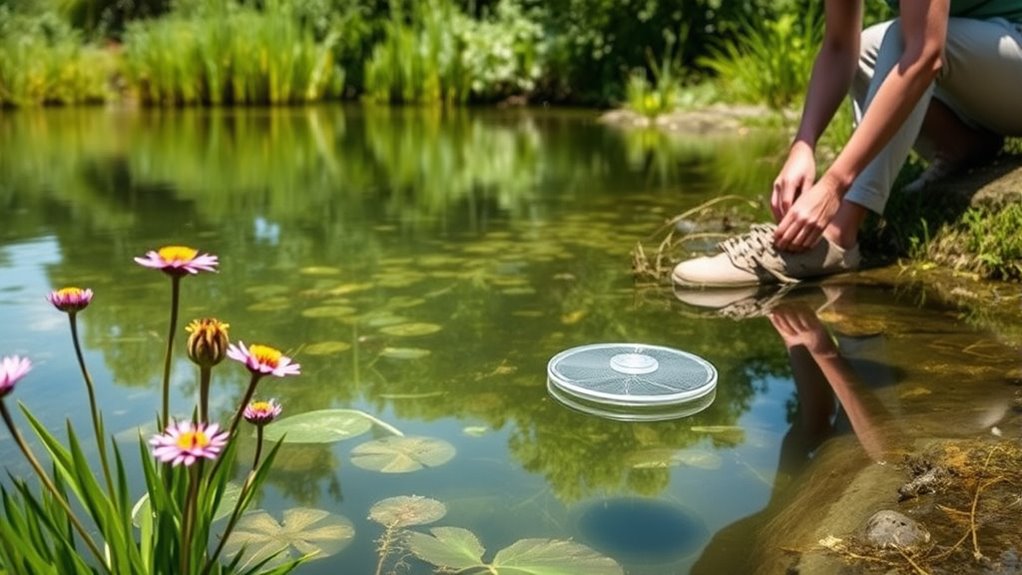

To control mosquitoesnon-chemically using floating devices, start by adding natural predators like fish in floating cages to reduce larvae safely. Use floating mats or plant covers to shade water and prevent mosquito breeding. You can also create DIY barriers with natural fibers or apply natural oils like vegetable oil or citronella to disrupt larvae development. Regularly clean and maintain your floating platforms and remove stagnant water around them. Keep exploring for more eco-friendly tips to keep mosquitoes at bay.
Key Takeaways
- Use floating cages or containers to house natural mosquito predators like fish, which reduce larvae naturally.
- Create floating barriers or mats from natural fibers to prevent mosquito breeding and block access to water surfaces.
- Apply natural oils (e.g., vegetable oil, citronella) evenly on water surfaces via floating devices to disrupt larvae development.
- Incorporate native aquatic plants on floating platforms to attract beneficial insects and provide shade, inhibiting mosquito larvae.
- Regularly clean and maintain floating devices to prevent debris buildup and stagnant water, minimizing mosquito breeding sites.
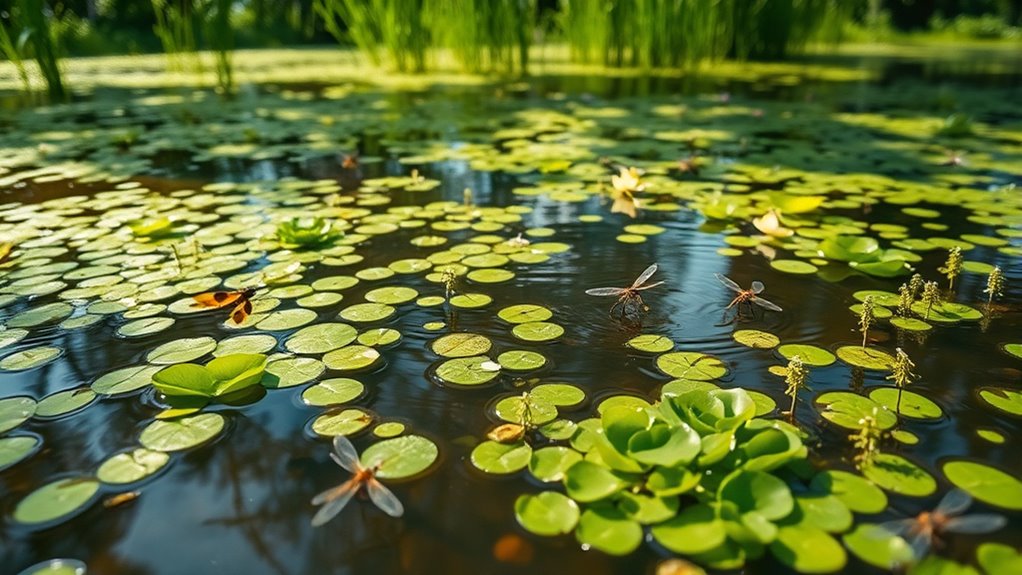
Floating devices play a vital role in mosquito control by providing a stable platform for applying treatments on water surfaces. When you’re aiming to reduce mosquito populations naturally, using biological methods and DIY techniques on these floating platforms can be highly effective. By leveraging natural predators or environmentally friendly solutions, you avoid the risks associated with chemical treatments, making your approach safer for both your family and the environment.
One of the most popular biological methods involves introducing natural predators like fish that feed on mosquito larvae. Goldfish, guppies, and mosquitofish are excellent choices because they thrive in water bodies and keep larvae populations in check. You can place these fish in floating cages or containers on the water surface, ensuring they have enough space and oxygen. This method offers a sustainable, long-term solution, as the fish continually hunt larvae, reducing mosquito breeding without harming the aquatic ecosystem.
Introducing natural predators like fish in floating cages effectively reduces mosquito larvae naturally and sustainably.
DIY techniques on floating devices also include creating barriers that prevent mosquitoes from laying eggs. For instance, you can set up floating mats or screens made from natural fibers or biodegradable materials. These act as physical barriers, discouraging female mosquitoes from accessing water surfaces for breeding. Additionally, you can add floating plant covers or mats that shade the water, reducing sunlight exposure and temperature, which further discourages mosquito larvae development.
Another effective DIY approach is to use natural oils or substances that disrupt the larval environment. For example, adding a thin layer of vegetable oil or essential oils like citronella on the water surface creates a film that suffocates mosquito larvae. When combined with floating devices that keep these oils dispersed evenly across the water, this method becomes a simple, chemical-free way to control mosquito populations.
To maximize the efficiency of your DIY techniques, keep your floating devices clean and monitor water levels regularly. Removing any debris or stagnant water from around the floating platforms prevents additional mosquito breeding sites. Incorporating native aquatic plants into floating gardens or rafts can also help attract beneficial insects and provide additional habitat for natural predators, further aiding your biological control efforts. Additionally, using proper maintenance and cleaning techniques can prolong the effectiveness of your floating devices and ensure the longevity of your mosquito control strategies.
Frequently Asked Questions
How Often Should I Inspect My Pond for Mosquito Breeding Sites?
You should inspect your pond weekly for mosquito breeding sites as part of regular pond maintenance. During each inspection, focus on breeding site identification by checking for standing water, debris, or stagnant areas where mosquitoes lay eggs. Consistent monitoring helps catch potential problems early, preventing mosquito populations from thriving. Regular inspections guarantee your pond remains a safe, enjoyable environment, reducing the need for chemical controls and promoting healthy pond ecosystems.
Are There Natural Predators Effective for Mosquito Control?
Have you wondered if natural predators can really tame the mosquito menace? Biological control with predators like fish, dragonfly nymphs, and certain birds can be surprisingly effective. These natural predators hunt mosquito larvae, reducing their population without chemicals. While predator effectiveness varies, introducing these allies into your pond creates a sustainable, eco-friendly barrier against mosquitoes. Keep monitoring, and you’ll see how these natural predators help keep your pond mosquito-free.
What Plants Help Reduce Mosquito Populations Around Water?
Plant barriers like citronella, lavender, and marigolds help reduce mosquito populations around water by repelling them naturally. Incorporate water plants such as water lilies and rushes to discourage mosquito breeding, as they cover standing water and make it less accessible. These plants create a natural barrier and habitat that deters mosquitoes, helping you enjoy your outdoor space without relying on chemicals. Regularly maintain these plants for best results.
Can Floating Covers Prevent Mosquito Breeding Without Chemicals?
Yes, floating covers can prevent mosquito breeding without chemicals. By installing a cover, you create a physical barrier that blocks mosquitoes from accessing the water to lay eggs. Incorporate biological control methods, like introducing natural predators or beneficial organisms, to enhance effectiveness. Make sure the cover fits snugly and is well-maintained to guarantee it remains mosquito-proof, providing a safe, chemical-free solution for water management around your property.
What Are the Signs of Mosquito Larvae in Water Bodies?
Finding mosquito larvae in your water is like spotting tiny floating grains or wriggly worms. To identify larvae, look for small, wriggling creatures just below the surface. Water testing helps confirm their presence, especially in stagnant or still water. Regularly inspect your ponds, birdbaths, and containers, and remove any standing water. Early larvae identification prevents mosquitoes from maturing, keeping your space safer and more comfortable.
Conclusion
By following these simple, non-chemical tips, you’ll turn your pond into a mosquito-free fortress—so mighty, even armies of mosquitoes won’t stand a chance! Say goodbye to swarms and itchy bites, and hello to peaceful, bug-free evenings. With just a little effort, you’ll be the hero who banished mosquitoes faster than they can say “bite me.” Your pond will become the ultimate oasis of calm, where mosquitoes fear to tread!