Protect your pool from snow damage by utilizing mesh covers for durability, avoiding draining it completely, and using pool salt to melt snow effectively. Proper pool cleaning includes running the pump in freezing temperatures, brushing debris off, and treating the water early in autumn. Turn off the pool heater to maximize cover protection and maintain water levels to prevent freezing around walls. These steps are essential for safeguarding your pool during winter. For more detailed insights into each protective measure, explore the nuances of pool maintenance in colder seasons outlined in the research findings.

Get pool and patio gear delivered free with Prime
- Fast, free delivery on millions of items
- Prime Video, Amazon Music and more included
- Member-only deals all year
Key Takeaways
- Use mesh covers to prevent snow accumulation and tears.
- Apply pool salt to melt snow and ice effectively.
- Maintain proper water levels to distribute snow weight.
- Turn off pool heater to maximize cover protection.
- Clean pool thoroughly before winter to prevent damage.
As an affiliate, we earn on qualifying purchases.
Pool Covers: Your Snow Shield
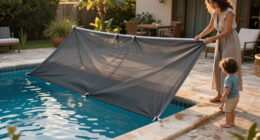
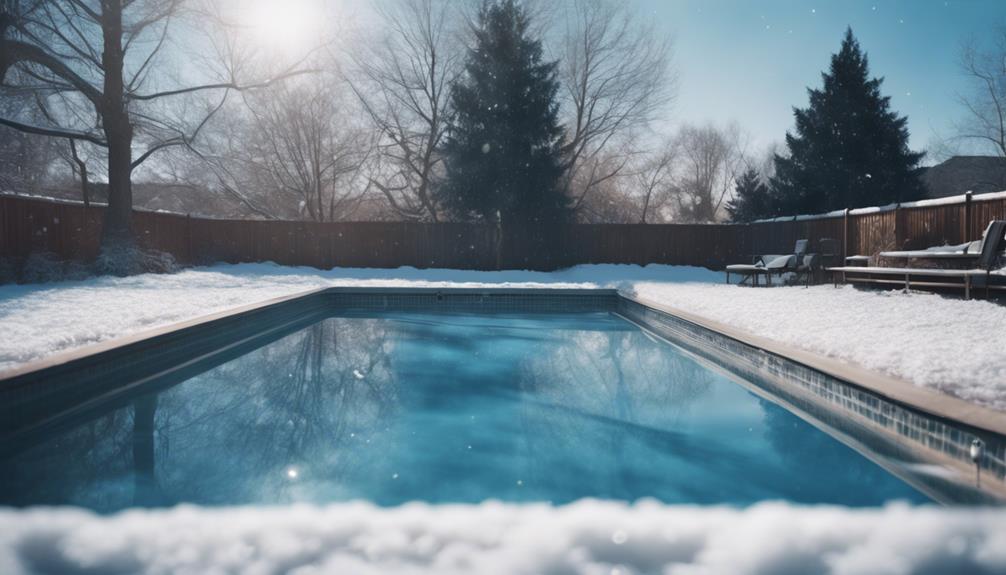
Utilizing pool covers as a snow shield is fundamental for safeguarding your pool during winter months. When facing snowy weather, a pool cover acts as the first line of defense, protecting your pool from potential damage.
Mesh covers are recommended for their durability, allowing them to withstand the weight of snow without tearing. However, solid covers can hold snow accumulation but may risk breaking when it melts.
It is essential never to drain an in-ground pool completely during the winter to prevent damage. Additionally, avoid disturbing ice on the cover as it can lead to tears.
Properly utilizing pool covers as a snow shield is essential in maintaining the integrity and longevity of your pool during the colder months.
Salt for Snow and Ice
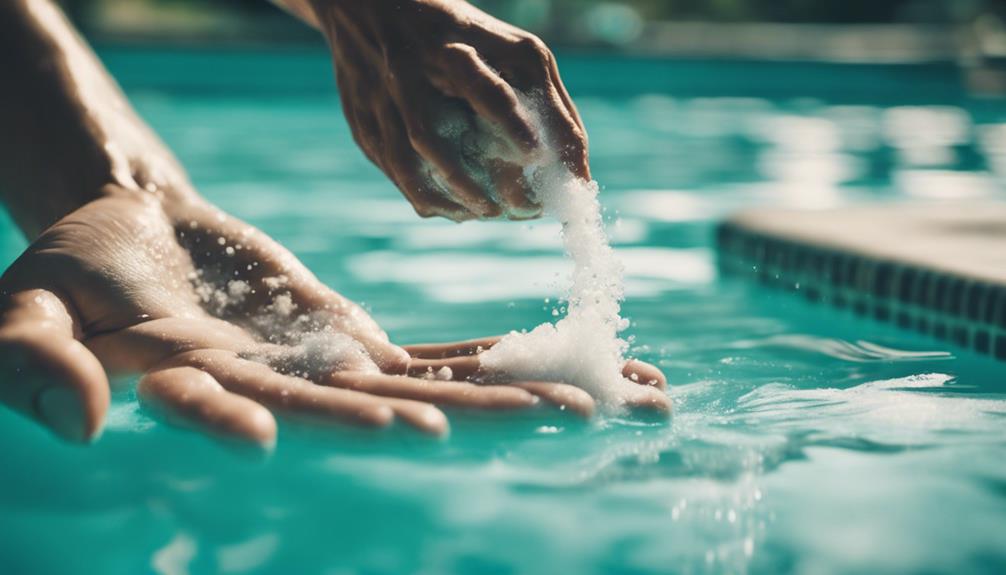
When combating snow and ice around your pool, incorporating salt can be an effective solution. Pool salt can help melt snow and ice on your pool cover, making it easier to remove.
It is important to use pool salt specifically, as sidewalk salt may contain harmful additives that can damage your pool or harm swimmers. After applying the salt, turn on the pool cover pump to eliminate any residue and melted snow.
This method is suitable for both salt water and chlorine pools, ensuring that your pool remains in good condition throughout the winter season. By properly maintaining your pool with salt for snow and ice, you can save money in the long run by preventing potential damage.
Cleaning Your Pool Properly
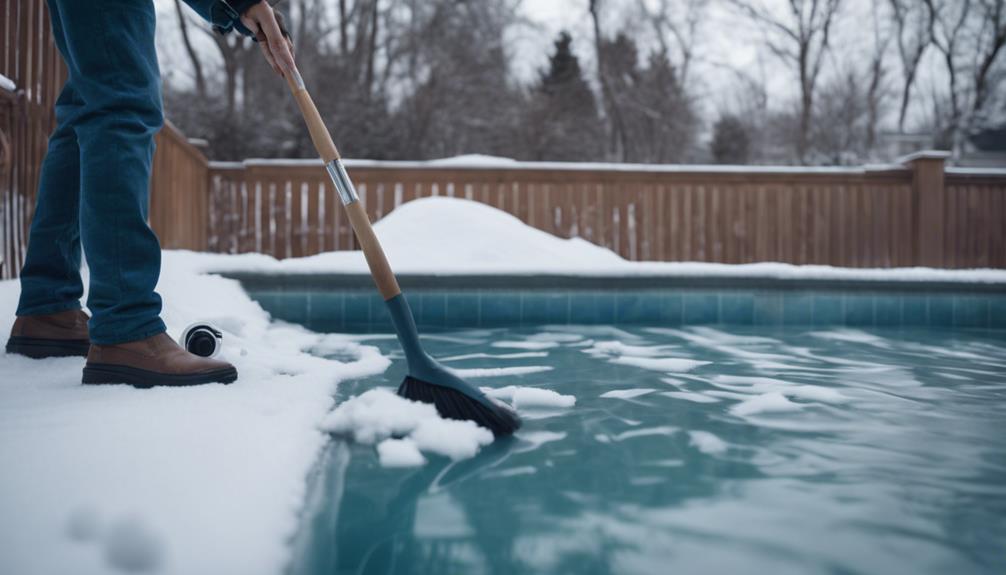
Maintaining a clean pool is essential for preserving water quality and preventing damage to the pool system. To clean your pool properly during the winter months, it is vital to keep the pool pump running even in freezing temperatures.
Before covering the pool, brush the sides to remove debris and guarantee a thorough cleaning. Additionally, draining the backwash line helps clean the pool filter efficiently.
Treating and cleaning the pool water early in autumn sets a good foundation for maintaining water quality throughout the winter. By following these steps and preventing germs and filth from entering the pool, you can ensure that your pool stays in prime condition during the snowy season.
Turn Off the Pool Heater
To maximize the effectiveness of your pool cover in protecting your pool from snow damage, it is important to turn off the pool heater during the winter months. Leaving the heater on can not only increase your electric bills but also compromise the natural protection provided by the cover. By turning off the pool heater, you not only save on heating costs but also allow the pool cover to do its job properly. Here is a table to illustrate the impact of turning off the pool heater:
| Pool Heater Status | Protection Provided by Pool Cover |
|---|---|
| Heater On | Natural protection compromised |
| Heater Off | Best protection maintained |
Maintain Water Levels Carefully
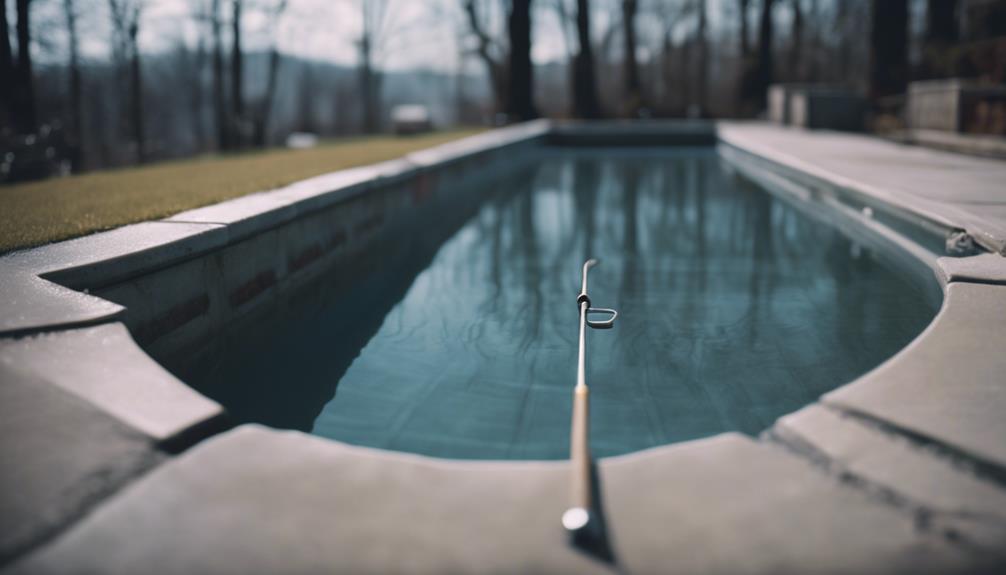
Proper maintenance of the water levels in your pool is essential for preventing snow damage and safeguarding the longevity of your pool cover. During the winter months, it is vital to monitor and adjust the water levels accordingly to protect your pool.
Here are three key points to keep in mind:
- Prevent Structural Damage: Maintaining the correct water level helps distribute the weight of snow evenly on the pool cover, averting any structural damage to the pool.
- Avoid Freezing: Sufficient water levels help prevent freezing around the pool walls, which can lead to cracks and other issues.
- Preserve Pool Cover: Proper water levels secure that the pool cover remains taut and effective in shielding the pool from snow and debris.
Frequently Asked Questions
Can I Use a Tarp or Regular Cover Instead of a Pool Cover for Snow Protection?
While a tarp or regular cover may offer some protection against snow, they are not as effective as a pool cover designed for this purpose. Pool covers are specifically engineered to withstand winter weather conditions.
Is It Necessary to Remove Snow From the Pool Cover During a Snowstorm?
It is important to remove snow from the pool cover during a snowstorm to prevent excessive weight that may damage the cover. Regularly clearing snow helps maintain the cover's integrity and guarantees proper protection for your pool.
How Often Should I Check the Pool Cover Pump During the Winter Season?
Regularly inspect your pool cover pump during the winter season. Like a diligent guardian, check it weekly to guarantee functionality. Prevention is key to safeguarding your pool from snow damage. Stay proactive to maintain a pristine pool.
Can I Use a Leaf Blower to Remove Snow From the Pool Cover?
Using a leaf blower to remove snow from a pool cover is not recommended. The forceful air can damage the cover or push snow into the pool. Stick to safe methods like gently sweeping or using a soft-bristled broom.
Should I Add Antifreeze to the Pool Water Before Covering It for the Winter?
Adding antifreeze to pool water before covering it for winter is unnecessary and potentially harmful. Properly winterizing the pool with a cover, maintaining water level, and ensuring equipment is in good condition are sufficient measures to protect the pool.
Conclusion
To wrap up, safeguarding your pool from snow damage is crucial for its longevity and functionality. According to a study by the Association of Pool & Spa Professionals, 85% of pool damage in colder months is attributed to snow accumulation.
Implementing proactive measures such as using sturdy pool covers, maintaining appropriate water levels, and turning off pool heaters can help protect your pool and prevent costly repairs.
Prioritizing winter pool maintenance will help guarantee your pool stays in top-notch condition year-round.
Halloween Picks
halloween
As an affiliate, we earn on qualifying purchases.