To build a DIY backyard floating platform, start by planning your size and weight capacity, then select water-resistant materials like marine plywood or composite decking and rust-proof hardware. Create a sturdy base with pontoons or floatation devices, attach the decking securely, and anchor the platform to prevent drifting. Regularly inspect and maintain the structure for safety and longevity. For detailed steps and tips, explore further to ensure a successful and safe project.
Key Takeaways
- Select water-resistant materials like pressure-treated lumber or composite decking for durability and water safety.
- Create a stable base using pontoons or floatation devices to support the platform’s weight.
- Securely attach the decking to floats, ensuring the structure is level and well-anchored to prevent drifting.
- Install safety features such as guardrails or safety ropes, especially if children will use the platform.
- Regularly inspect, seal, and maintain the platform to ensure safety, stability, and longevity over time.
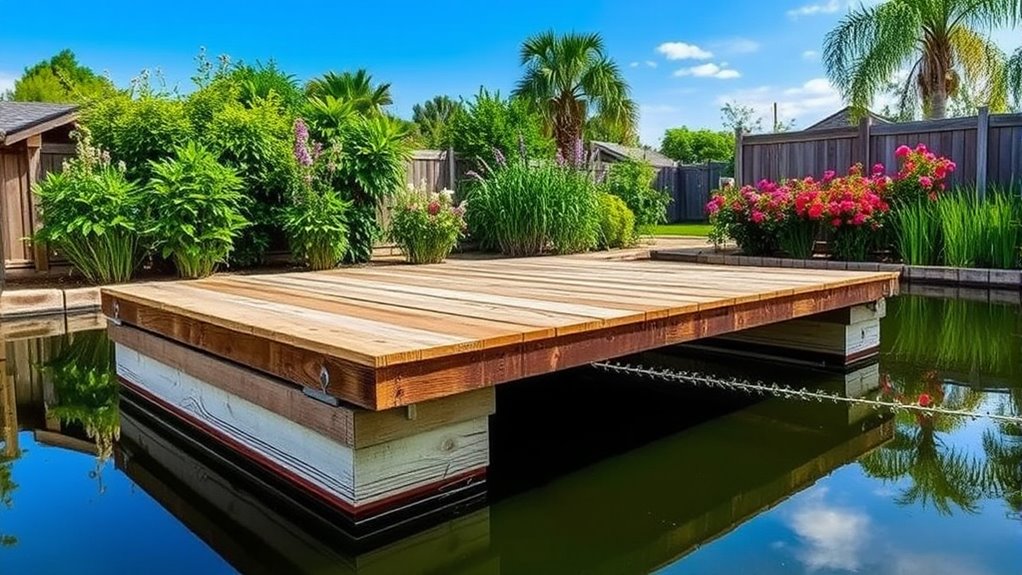
Building a backyard floating platform is a rewarding project that can transform your outdoor space into a relaxing retreat. Before you start, it’s essential to prioritize water safety and choose the right materials. Your platform will be in direct contact with water, so ensuring safety isn’t just about stability; it’s about protecting everyone who uses it. Clear safety guidelines should be in place, especially if children will be involved. Make sure your platform is sturdy enough to support weight without tipping or shifting. Incorporate features like guardrails or safety ropes if necessary, and keep in mind that the platform should be anchored securely to prevent drifting. These safety measures will give you peace of mind and ensure your floating platform remains a safe haven for relaxation and fun.
When it comes to material selection, think about durability, buoyancy, and resistance to water damage. You want to use materials that can withstand constant contact with water, such as pressure-treated lumber, composite decking, or marine-grade plywood. These materials resist rot, insect damage, and warping, which are common concerns for outdoor structures in aquatic environments. Avoid using untreated wood or materials that aren’t rated for water exposure, as they’ll deteriorate quickly, leading to costly repairs or safety hazards. Additionally, choose hardware made of stainless steel or galvanized metal to prevent rusting. Proper material selection is critical because it directly impacts the longevity and safety of your floating platform.
Once you’ve picked your materials, measure and plan your platform carefully. Consider the size you want and the weight capacity needed to support furniture, people, or any additional features you might add later. When assembling, follow manufacturer instructions for hardware and fasteners to ensure everything stays secure. Also, make sure to seal and treat your wood or composite surfaces with appropriate waterproof sealants to extend their lifespan. Regular inspections and maintenance will help identify early signs of wear and keep your platform safe and functional over time.
Keep in mind that the construction process requires precise planning. You’ll need to create a stable base, usually with pontoons or floatation devices, which will keep your platform afloat. Attach your decking securely to the floats, ensuring everything is level and well-anchored. Remember that understanding the structural integrity of your design is crucial for safety and durability. Regularly check your platform for signs of wear or instability, and perform maintenance as needed. Building a floating platform isn’t just about construction; it’s about creating a safe, durable space where you can unwind for years to come. With careful attention to water safety and material selection, your backyard floating platform will become a favorite spot for relaxation, gatherings, and enjoying the water in your own backyard.
Frequently Asked Questions
What Safety Precautions Should I Take During Construction?
You should prioritize construction safety by wearing protective gear like gloves and goggles to prevent injuries. Keep your workspace tidy to avoid trip hazards, and handle tools carefully to prevent accidents. Follow hazard prevention guidelines, such as securing materials properly and working in well-ventilated areas. Always read instructions thoroughly and don’t rush your work. Staying alert and cautious guarantees a safer building process and helps you avoid unnecessary risks.
How Much Does a Floating Platform Typically Cost?
A floating platform usually costs between $500 and $2,500, depending on size and materials. Don’t let the expense scare you—proper cost estimation assists you stay within your budget. You can save by choosing affordable materials or DIY options. With careful budget planning, you’ll find a solution that fits your finances and meets your backyard needs. Remember, investing in quality ensures safety and durability for your floating platform.
Can I Customize the Platform’s Size and Shape Easily?
Yes, you can customize the platform’s size and shape easily. Platform customization allows you to tailor the design to fit your space and preferences, offering shape flexibility to create rounded, square, or irregular forms. With modular components and adjustable materials, you can modify dimensions as needed. This flexibility makes it simple to design a floating platform that perfectly matches your backyard’s layout and your personal style.
What Materials Are Best for Longevity and Durability?
For longevity and durability, you should opt for marine-grade wood or treated lumber. Imagine a sturdy, weather-resistant platform that withstands rain, sun, and waves without warping or rotting. Marine-grade wood is specially designed for water exposure, offering resilience and strength, while treated lumber is infused with preservatives to combat decay. Together, these materials create a lasting foundation, ensuring your floating platform remains solid and beautiful for years to come.
How Do I Prevent the Platform From Drifting Away?
To prevent your floating platform from drifting away, you should use effective anchoring methods like mooring anchors, weights, or tie lines. Secure the platform firmly to these anchors, ensuring it stays in place even with changing water conditions. Regularly check and adjust the anchors as needed to maintain stability. Proper anchoring and drift prevention techniques keep your platform steady, safe, and enjoyable for everyone.
Conclusion
Now that your floating platform is in place, it becomes more than just a deck—it’s your personal oasis amid the waves. Like a sturdy boat sailing on your backyard lake, it invites you to drift into relaxation and adventure. With each plank, you’ve crafted a haven where memories will ripple outward, echoing joy and serenity. So, anchor your worries and let this floating sanctuary carry you to a world of peace and endless summer days.