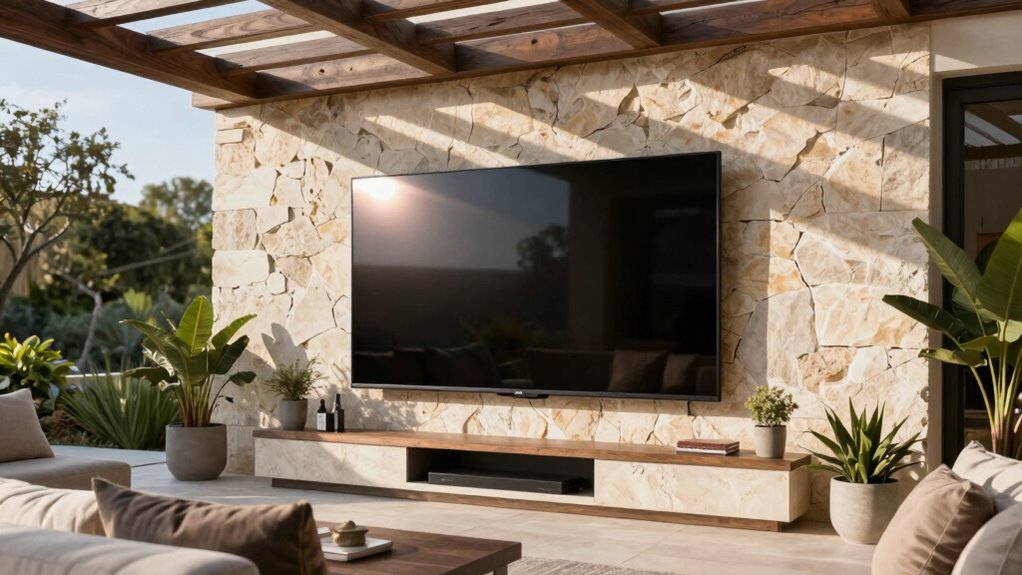
To guarantee a great outdoor TV setup, avoid placing it in direct sunlight and mount it at eye level for comfort. Protect it from heat by using vents, enclosures, or fans, and steer clear of glare by positioning the TV in shaded spots or angling it away from sunlight. Don’t forget to manage cabling properly and secure the mount well. Keep an eye on these tips, and you’ll learn how to maximize your outdoor viewing experience safely.
Key Takeaways
- Mount your outdoor TV at eye level facing main seating to minimize glare and ensure comfortable viewing angles.
- Avoid installing the TV in direct sunlight or unshaded areas to prevent glare and overheating.
- Use vents, cooling fans, or shaded enclosures to protect the TV from excessive heat and improve longevity.
- Ensure proper cable management and secure mounting to prevent damage from wind, debris, or wear.
- Regularly clean vents and screens, and use weatherproof covers to shield the TV from environmental elements.
How to Choose the Best Placement for Your Outdoor TV
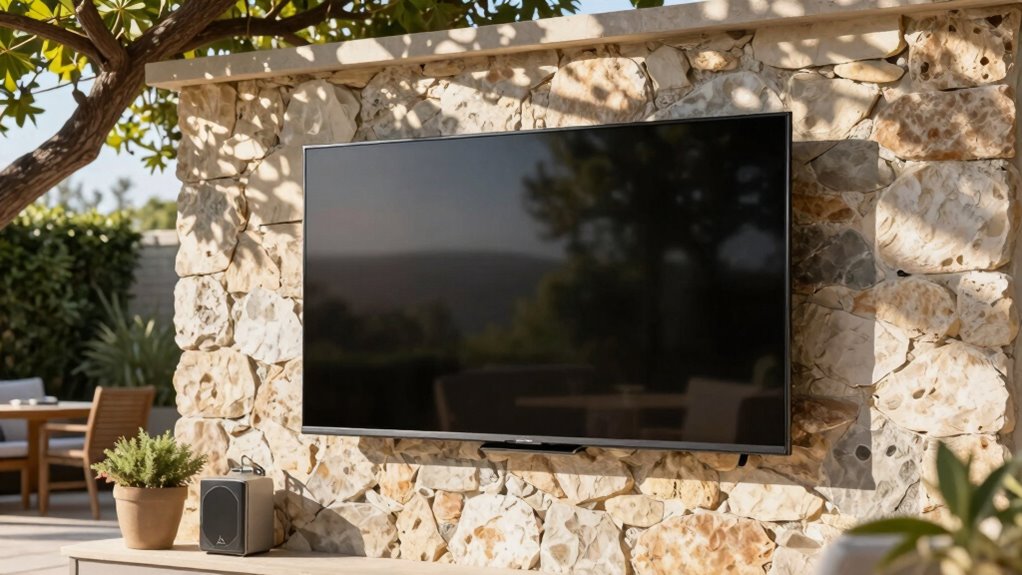
Choosing the right placement for your outdoor TV is essential to guarantee ideal viewing and durability. You should consider the mounting height carefully; too high and you’ll strain your neck, too low and it might be prone to damage. Aim for a comfortable viewing height, typically around eye level when seated. The viewing angle is equally important—position the TV so it’s directly facing your main seating area to minimize glare and distortion. Keep in mind that an perfect angle enhances picture clarity and reduces the need for constant adjustments. Also, avoid placing the TV where direct sunlight hits it, as glare can ruin the viewing experience. Proper placement ensures you enjoy your outdoor entertainment while protecting your investment from weather-related issues.
How Heat Can Damage Outdoor TVs: and How to Protect Them
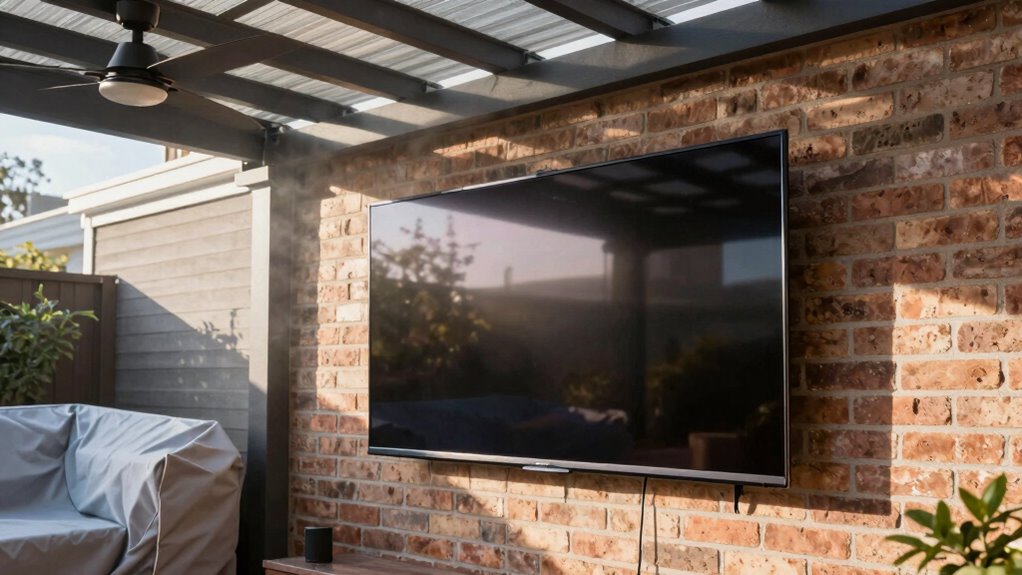
Heat can considerably damage your outdoor TV if you don’t take proper precautions. Excessive temperatures cause internal components to overheat, leading to malfunctions or permanent damage. To prevent this, ensure your TV has adequate thermal protection, such as vents or heat-resistant enclosures. Installing cooling solutions like fans or shaded mounting spots helps dissipate heat and maintain ideal operating temperatures. Avoid placing your TV in direct sunlight for long periods, as this accelerates heat buildup. Regularly check that vents are clear and unobstructed. Using protective covers during extreme heat can also shield your outdoor TV from temperature spikes. By implementing these measures, you safeguard your investment and keep your outdoor viewing experience enjoyable all season long.
How Glare Affects Outdoor Viewing: and How to Minimize It
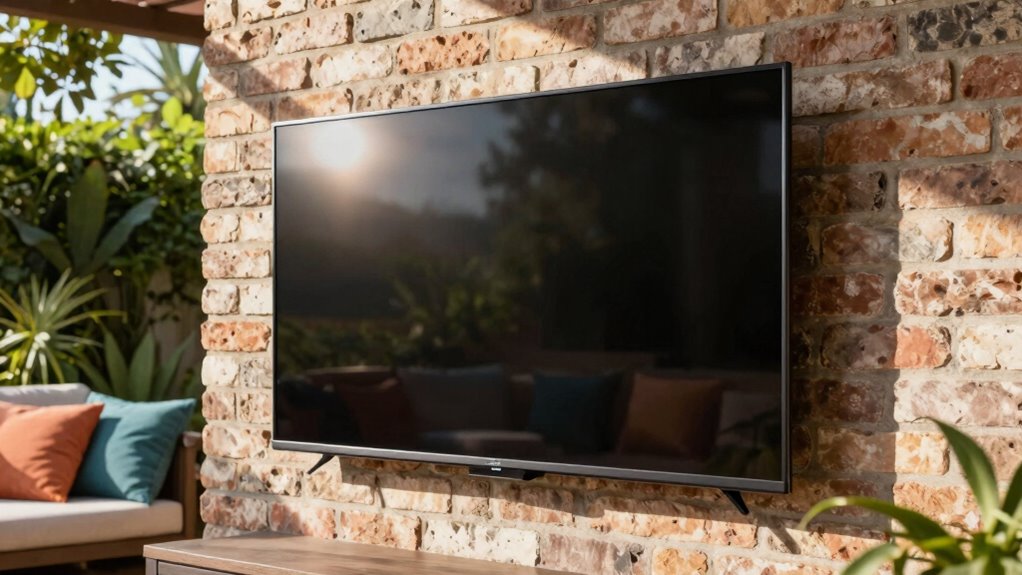
Glare from sunlight can substantially diminish your outdoor TV viewing experience by washing out images and making it difficult to see details. To combat this, adjusting your TV’s screen brightness is essential; lowering it slightly can help reduce glare’s impact. Additionally, investing in glare reduction accessories, such as anti-reflective screens or shades, can make a significant difference. Positioning your TV in a shaded area or angling it away from direct sunlight also minimizes glare and improves visibility. Remember, the goal is to find a balance where the screen is bright enough for outdoor conditions but not so bright that glare becomes a problem. Proper placement and screen adjustments are key to enjoying a clear, vibrant outdoor viewing experience.
What Common Outdoor TV Placement Mistakes Should You Avoid?
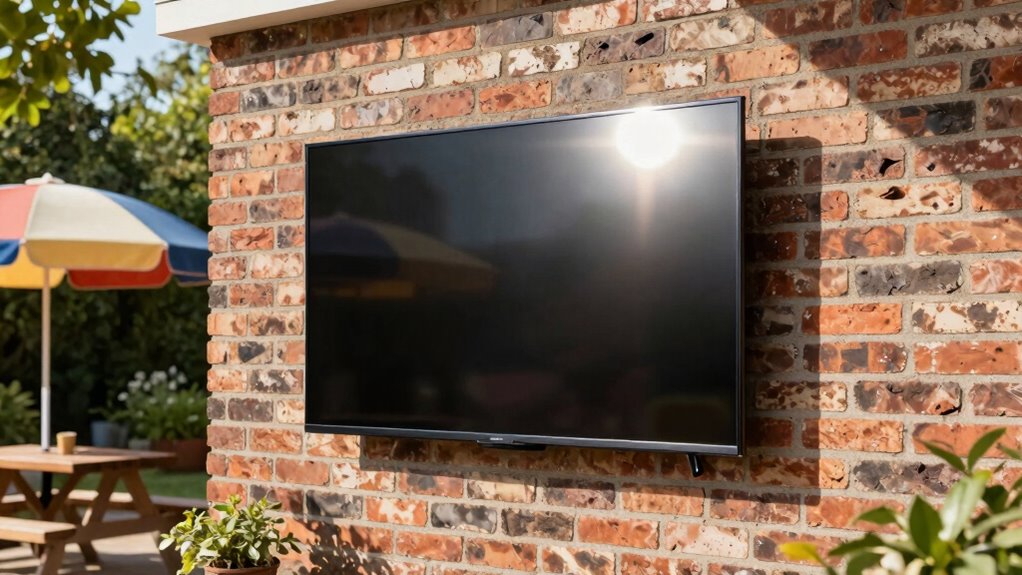
One of the most common mistakes in outdoor TV placement is installing the TV in a location with direct sunlight or unpredictable shadows, which can cause glare and wash out the screen. To prevent this, choose a shaded spot or use shading devices like awnings. Poor cable management can lead to clutter and damage, so plan your wiring neatly and securely. Also, pay attention to mounting height; mounting the TV too high or too low can strain your neck and affect viewing comfort. Ensure the TV is at eye level when seated, and leave enough clearance for proper ventilation. Avoid placing the TV where it’s exposed to heavy wind or debris, which can damage the screen or mounting hardware. Proper placement enhances your outdoor viewing experience and long-term durability.
Tips to Make Your Outdoor TV Last for Years
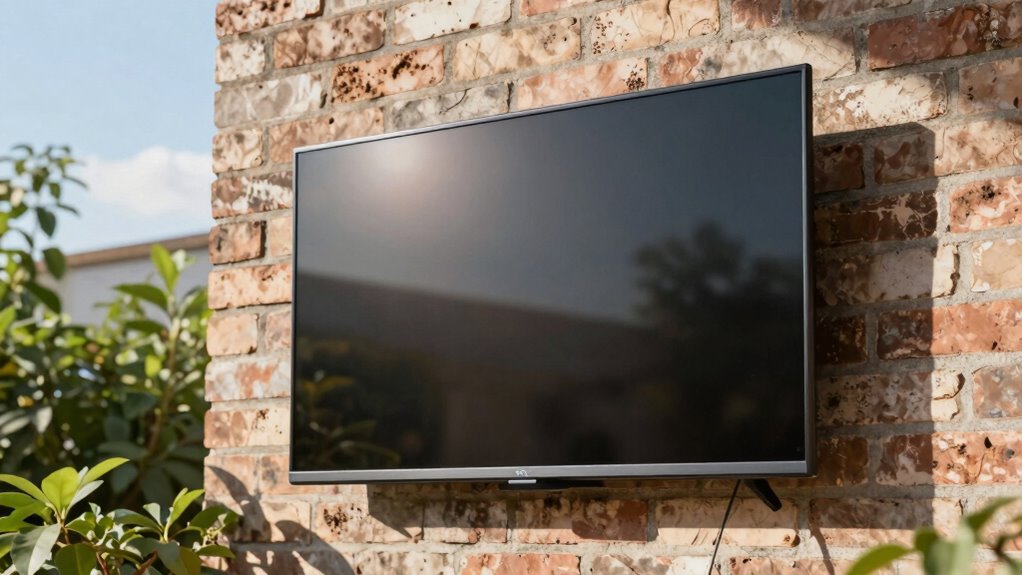
To guarantee your outdoor TV stands the test of time, proper maintenance and protective measures are key. Start by weatherproofing your TV with a durable enclosure or cover to shield it from rain, dust, and UV rays. Regularly clean the screen and vents to prevent dirt buildup that can affect performance. Ensure the mounting is secure and check for any signs of wear or corrosion, especially if exposed to harsh weather. Use corrosion-resistant hardware and consider installing a protective shield to reduce glare and heat exposure. Investing in a weatherproof TV designed specifically for outdoor use boosts durability, making sure it withstands seasonal changes. Consistent upkeep and quality protection are essential to prolong your outdoor TV’s lifespan and enjoy it for years to come.
Frequently Asked Questions
What Are the Best Materials for Outdoor TV Enclosures?
You should choose weatherproof materials like aluminum or high-quality plastics for outdoor TV enclosures. These materials resist rust and corrosion. Look for enclosures with UV resistant coatings to prevent sun damage and fading. Metal options with powder coating are durable and withstand harsh weather, while polycarbonate plastics offer impact resistance. Combining these materials guarantees your outdoor TV stays protected from the elements and lasts longer, giving you peace of mind.
How Often Should Outdoor TV Screens Be Cleaned?
You should clean your outdoor TV screens at least once a month—more if you notice dirt buildup that could turn your view into a smudgy mess! Dirt, pollen, and dust can accumulate faster than you think, turning your screen into a blurry, grimy spectacle. Regular cleaning maintains your screen clear, prevents damage, and ensures you enjoy crisp, vibrant visuals every time you watch. Don’t let grime ruin your outdoor entertainment!
Can Outdoor TV Mounts Withstand Extreme Weather Conditions?
Outdoor TV mounts are designed to withstand extreme weather conditions when you choose models with weatherproof coatings. Look for vandal resistant mounts, which add extra durability against tampering and harsh elements. Properly installed, these mounts can handle rain, snow, and intense sunlight. However, always check the manufacturer’s specifications and guarantee you select a mount rated for your specific climate to keep your outdoor TV safe and secure year-round.
What Are Signs of Heat Damage on Outdoor TVS?
Think of your outdoor TV as a delicate flower—heat damage shows in subtle signs. You’ll notice heat discoloration, where colors fade or shift unnaturally, and screen fogging, with a blurry or hazy display. These signs indicate your TV’s internal components are stressed by excessive heat. Keep an eye out for these issues to protect your investment and enjoy clear, vibrant entertainment outdoors without risking damage.
How Do I Hide Cables for a Clean Outdoor Setup?
You can hide cables for a clean outdoor setup by using concealed wiring techniques and effective cable management. Install conduit or cable covers along walls or under trim to keep wires out of sight. Use adhesive cable clips or zip ties to organize and secure cords neatly. Running cables behind fixtures or within weatherproof conduit guarantees a tidy look while protecting your wiring from the elements.
Conclusion
By avoiding common mistakes like poor placement, excessive heat, and glare, you can guarantee your outdoor TV stays protected and lasts a lifetime—possibly even longer than your favorite show’s marathon! Pay attention to the tips outlined here, and you’ll enjoy crystal-clear viewing in your backyard oasis for years to come. Don’t let the elements turn your outdoor entertainment into a fleeting illusion—protect your investment and make every viewing moment unforgettable.