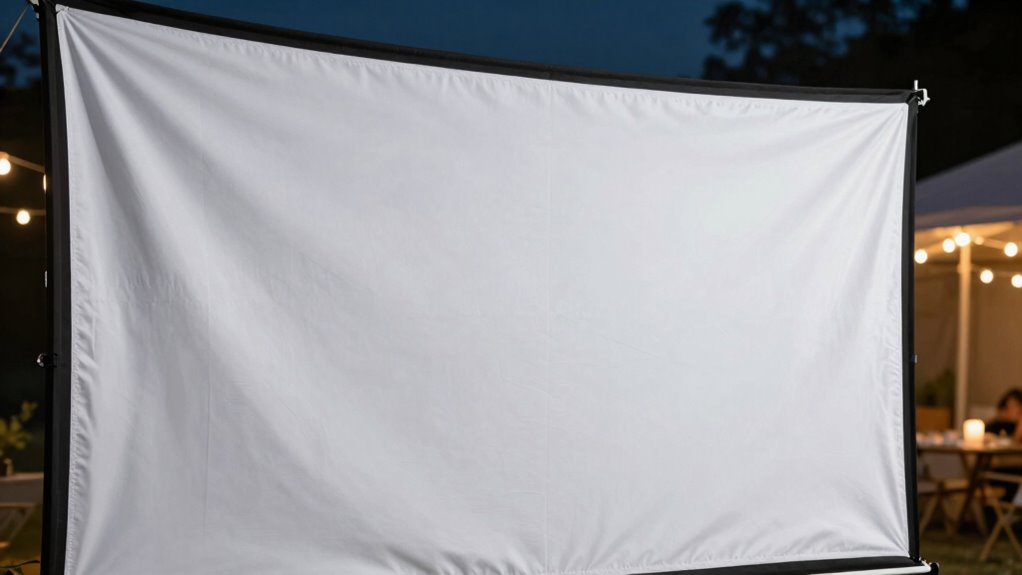

Choosing the right projector screen material can transform your backyard movie nights by boosting image brightness, clarity, and outdoor visibility. Reflective surfaces like high-contrast or gray screens work well in bright environments, while matte white surfaces balance brightness and color accuracy. Darker materials reduce glare and enhance contrast, especially in ambient light. Proper selection also minimizes reflections and enhances sound clarity. Keep exploring to discover how specific materials and setup tips can make your outdoor cinema experience even better.
Key Takeaways
- Reflective, high-gain screen materials enhance brightness and visibility in outdoor lighting conditions.
- Matte white or gray surfaces balance color accuracy and reduce glare for clearer images.
- Light-blocking screens or strategic positioning mitigate ambient light interference.
- Textured or matte surfaces improve image contrast and minimize reflections.
- Proper screen material selection improves both image quality and overall viewing experience outdoors.

Choosing the right projector screen material is vital for achieving the best image quality, whether you’re setting up a home theater or a professional presentation space. When it comes to outdoor movie nights in your backyard, the material you select can make or break the experience. Outdoor lighting is a key factor—ambient light from streetlamps, porch lights, or even moonlight can wash out the image if your screen material isn’t suited for bright conditions. For backyard setups, you need a screen that’s designed to reflect light efficiently, so your projected image remains vivid and clear despite the outdoor lighting. Matte white surfaces are popular because they offer a good balance of brightness and color accuracy, but if you want to combat ambient light more effectively, a high-contrast or gray screen material might be necessary. These darker surfaces absorb some of the stray light, helping your picture stand out more, especially when the sky isn’t fully dark.
Sound quality is another often-overlooked element that’s vital to enjoying your outdoor movie night. While the screen material itself doesn’t directly influence sound, the installation and environment do. For example, choosing a textured or matte surface can sometimes reduce reflections that might interfere with sound clarity if you’re using a projector with built-in speakers or a nearby sound system. You might also want to think about integrating sound-absorbing materials around your setup or using external speakers positioned correctly to ensure clear audio. The proximity of the screen to your sound sources and the type of material used can impact how well sound travels, so selecting a screen that minimizes glare and uneven reflections helps keep your audio experience crisp and immersive. Additionally, understanding the impact of outdoor lighting on projection quality can help you better tailor your setup to ensure optimal viewing conditions. Incorporating ambient light control strategies, such as using light-blocking screens or positioning your setup to minimize light interference, can greatly enhance your viewing experience. Proper planning of the surrounding environment can also help mitigate glare and reflections, ensuring a more consistent image quality. Being aware of how different biodiversity-friendly materials interact with the environment can also influence the longevity and performance of your outdoor setup.
In essence, your choice of projector screen material impacts both the visual and auditory experience of your backyard movie night. Outdoor lighting conditions demand a surface that can handle ambient light without losing brightness or detail, while sound quality benefits from thoughtful placement and the right environment around the screen. The best outdoor screens are those that balance reflectivity, contrast, and ambient light resistance, all while complementing a sound setup that keeps dialogue and effects sharp. When you pay attention to these details, your backyard becomes a true cinematic escape, delivering movies that look and sound incredible no matter how bright the night sky is.
outdoor projector screen material
As an affiliate, we earn on qualifying purchases.
As an affiliate, we earn on qualifying purchases.
Frequently Asked Questions
How Durable Is Different Projector Screen Material Outdoors?
Different projector screen materials vary in durability outdoors, especially with screen tension and weather resistance. You’ll find that vinyl screens typically hold up well because they’re weather-resistant and maintain tension better over time. Fabric screens may sag or degrade faster if exposed to moisture or fluctuating temperatures. To guarantee longevity, choose a material specifically designed for outdoor use, and regularly check and adjust screen tension to prevent warping or sagging.
Can Screen Materials Be Cleaned Easily Without Damage?
Yes, most screen materials can be cleaned easily without damage. You should use gentle cleaning methods, like a soft cloth or sponge with mild soap and water, to avoid harming the material’s flexibility. Avoid harsh chemicals or abrasive scrubbers, as they might cause tears or discoloration. Regular cleaning keeps your screen clear and in good condition, ensuring the best picture quality during your backyard movie nights.
Which Material Offers the Best Color Accuracy?
If you want vibrant, true-to-life images, choose a screen material optimized for superb color calibration, ensuring your movie nights shine with rich hues. Matte white fabrics often offer excellent color accuracy and balanced image clarity, making them a popular choice. These materials help your projector truly showcase its potential, giving you crisp visuals and accurate colors, so each backyard movie becomes an immersive, unforgettable experience.
Are There Eco-Friendly Projector Screen Options Available?
Yes, eco-friendly projector screen options are available. You can choose recyclable fabrics that are durable and sustainable, reducing environmental impact. Biodegradable films are another great choice, breaking down naturally over time and minimizing waste. By opting for these materials, you create an eco-conscious backyard movie experience, helping protect the environment while enjoying your favorite films. Eco-friendly screens combine functionality with sustainability, making your movie nights greener and more responsible.
How Does Material Affect Projection Brightness and Contrast?
The material you choose can make your backyard movie night feel like you’re in a private cinema! It dramatically affects projection brightness and contrast, especially when considering the projection angle and ambient light. A matte, high-quality screen minimizes glare and boosts contrast, even when the sky’s bright or the angle isn’t perfect. To get the clearest picture, pick a material designed for peak brightness and contrast, no matter how tricky the lighting or angles.
Conclusion
Choosing the right projector screen material can truly transform your backyard movie nights. Remember, “the devil is in the details,” and selecting the perfect surface enhances picture quality and creates a more immersive experience. Whether you opt for matte white, gray, or specialized screens, your effort pays off in unforgettable movie nights under the stars. So, don’t settle for less—invest in quality, and let your backyard become the ultimate outdoor cinema.