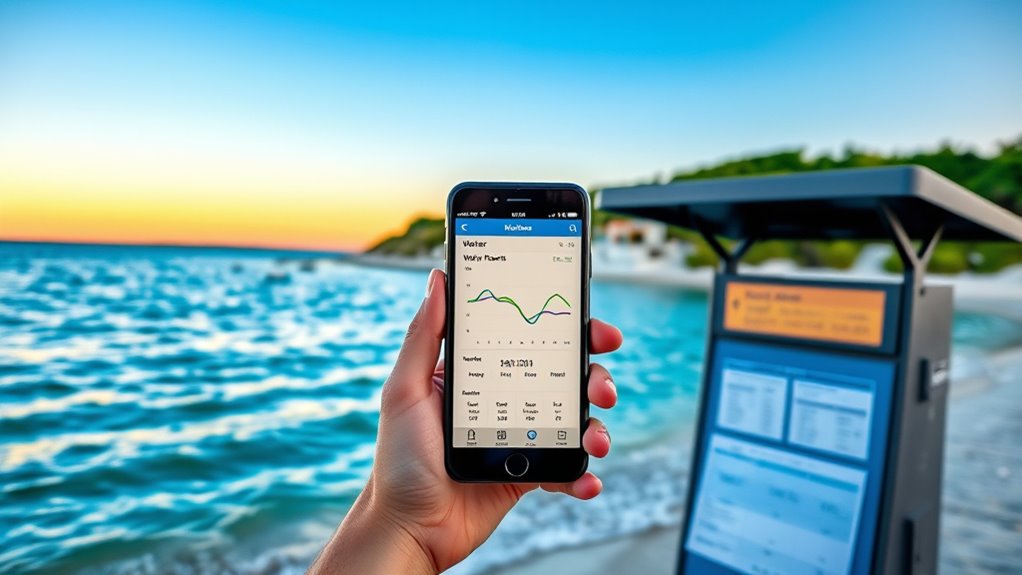

To monitor water quality reports for beaches, regularly check trusted sources like local health departments or environmental agencies online. Focus on bacterial indicators such as E. coli and enterococci, and pay attention to safety thresholds and recent pollution alerts. Keep track of temporary closures or advisories to protect yourself and your family. Staying aware of updates guarantees you enjoy safe beach outings, and you’ll find even more helpful tips as you explore further.
Key Takeaways
- Regularly check local health department or environmental agency websites for updated water testing reports.
- Subscribe to beach alerts and notifications for real-time water quality updates.
- Review bacterial indicator levels like E. coli and enterococci to assess safety.
- Pay attention to advisories, closures, and explanations of pollution events.
- Bookmark trusted sources and stay informed about recent pollution incidents and remediation efforts.

Monitoring water quality reports for beaches is vital to guarantee your safety and enjoy a healthy swimming environment. When you plan a day at the beach, checking these reports helps you make informed decisions about where and when to swim. Water quality reports provide essential information about potential pollution sources that could threaten your health, such as bacteria levels, chemical contaminants, or runoff from nearby urban areas. By staying updated, you can avoid areas with high pollution levels and reduce the risk of waterborne illnesses.
Monitoring beach water quality reports helps ensure safe swimming and protect your health.
To effectively monitor these reports, start by identifying official sources of water quality data. Many local health departments, environmental agencies, or beach management authorities publish regular updates online. These reports typically include details like bacterial counts, levels of pollutants, and recent water testing results. Bookmarking these websites or subscribing to their notifications ensures you receive timely alerts about water conditions, especially during peak swimming seasons or after heavy rains when pollution sources may increase.
Understanding pollution sources is key to interpreting water quality reports. Common pollution sources include stormwater runoff, sewage overflows, and agricultural runoff, all of which can introduce harmful bacteria and chemicals into the water. Heavy rainfall often worsens pollution levels by washing contaminants into the ocean or lake, so it’s especially important to check water quality reports after storms. If reports indicate elevated bacteria levels, it’s wise to postpone swimming until the water quality improves. Ignoring these warnings can expose you to health risks like gastrointestinal illnesses, skin infections, or ear infections.
While reviewing water quality reports, pay close attention to the bacteria levels, particularly E. coli and enterococci counts. These bacteria are standard indicators used to assess the safety of water for recreational activities. If the reports show that bacterial counts exceed recommended safety thresholds, it’s a clear sign to avoid swimming in that area. Many agencies also provide explanations for recent pollution events or ongoing issues, so reading these notes can help you understand the context and make smarter choices.
In addition, pay attention to any advisories or warnings issued by authorities. Sometimes, beaches are temporarily closed or have restricted access due to high pollution levels or ongoing remediation efforts. Respect these guidelines; they’re in place to protect your health. Regular monitoring and understanding of water quality indicators can help you make better decisions and reduce health risks. By consistently monitoring water quality reports, you become better equipped to enjoy safe swimming, avoid pollution sources, and minimize your exposure to harmful contaminants. Staying informed is your best defense against waterborne health risks, ensuring your beach outings remain fun, safe, and healthy.
Frequently Asked Questions
How Often Are Water Quality Reports Updated?
Water quality reports are typically updated weekly, but this can vary depending on the beach and local regulations. You should pay attention to the sampling frequency, which influences how current the data is. More frequent sampling generally means better report accuracy. By checking updates regularly, you can guarantee you’re getting the most recent information, helping you make safe decisions about beach visits and water activities.
What Pollutants Are Most Commonly Tested at Beaches?
Imagine the water as a silent guardian of your beach experience. You’re most often tested for bacteria like E. coli and Enterococci, which threaten beach safety. Water testing also checks for pollutants like heavy metals, nutrients, and chemicals from runoff. Staying aware of these common pollutants helps you make informed decisions, ensuring your days at the beach are safe and enjoyable. Regular testing keeps the water safe for everyone.
Can I Access Real-Time Water Quality Data Online?
Yes, you can access real-time water quality data online. Many local health departments and environmental agencies provide live updates based on water testing procedures that follow beach water standards. Check their official websites or dedicated apps for current reports, which help you stay informed about pollutant levels and safety conditions before heading to the beach. This way, you can guarantee a safe and enjoyable beach experience.
How Do Weather Conditions Affect Water Quality Reports?
Ever wondered how weather impacts water quality reports? Storm runoff often introduces pollutants into the water, worsening its condition, while temperature fluctuations can promote algae growth and bacteria, making beaches unsafe. Heavy rains can cause spikes in contamination levels, prompting health advisories. By understanding these weather effects, you can better interpret water quality data, recognizing that adverse conditions often lead to decreased water safety. Stay informed to protect yourself and enjoy safe swimming experiences.
Are There Health Advisories Linked to Specific Water Contaminants?
Yes, health advisories are often linked to specific water contaminants. When contaminant sources like sewage, runoff, or industrial waste enter the water, authorities conduct health risk assessments to determine potential health risks. If contaminants such as bacteria, chemicals, or viruses reach unsafe levels, advisories are issued to protect beachgoers. Stay informed by checking official reports, as these advisories help you avoid health issues caused by contaminated water.
Conclusion
By regularly checking water quality reports, you can confidently enjoy beach days without worry. Some might think it’s a hassle, but staying informed guarantees your safety and peace of mind. Plus, many reports are easy to access online and update frequently. So, take a few minutes to review the latest data—you’ll be glad you did when you’re relaxing by clean, safe waters with friends and family. Your beach days will be safer and more enjoyable!