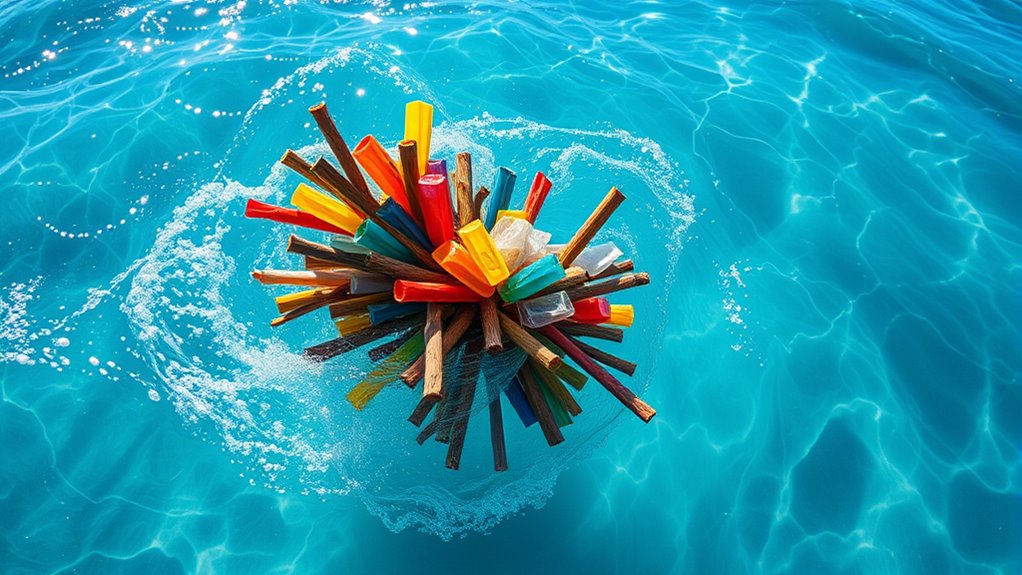

Floating debris, like plastics, interacts closely with ocean currents, which transport and spread them across vast areas. Surface currents, driven by wind, create gyres that trap floating debris, causing pollution to accumulate in places like the Great Pacific Garbage Patch. Deep currents also influence the movement of microplastics and other pollutants, dispersing them far from their source. Understanding these interactions helps reveal how ocean currents shape the global distribution of marine debris—explore further to see how you can help.

Get pool and patio gear delivered free with Prime
- Fast, free delivery on millions of items
- Prime Video, Amazon Music and more included
- Member-only deals all year
Key Takeaways
- Surface currents driven by wind patterns create large gyres that influence floating debris movement.
- Deep ocean currents, powered by temperature and salinity, interact with surface flows, affecting debris distribution at various depths.
- Gyres trap floating debris, including plastics, concentrating pollution in specific ocean regions like the Great Pacific Garbage Patch.
- Collisions and shifts in currents can disperse debris over wider areas, connecting surface and deep-sea pollution.
- Ocean currents and floating debris are interconnected, shaping how pollutants travel and accumulate across global marine environments.
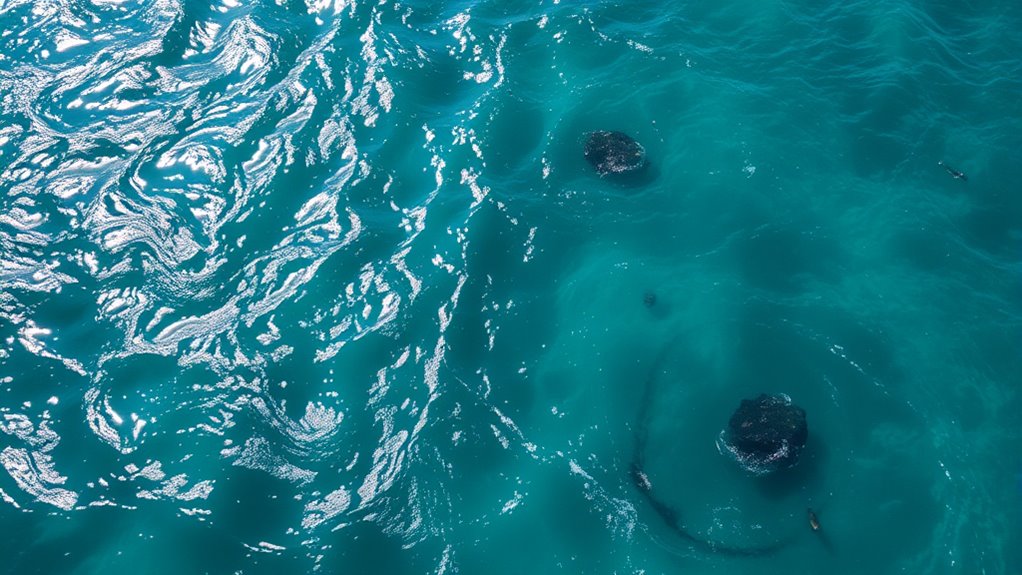
Have you ever wondered how massive sheets of water move across the oceans? The answer lies in the intricate dance of floating and ocean currents. These currents are like invisible highways, transporting water, nutrients, and even marine debris across vast distances. As you observe the ocean’s surface, you might notice floating trash or plastic pollution drifting along with the flow. This debris gets caught in currents, sometimes traveling thousands of miles before washing ashore or sinking. Marine debris, especially plastic pollution, poses a serious threat to marine life, as animals mistake it for food or become entangled. Understanding how currents work helps you grasp how this pollution spreads and why it’s such a globally significant issue.
Ocean currents are driven by a combination of wind patterns, Earth’s rotation, differences in water temperature, and salinity. Surface currents, which move water at the ocean’s top layer, are primarily influenced by wind. These winds push water along, creating large circular patterns called gyres. The gyres in the Pacific, Atlantic, and Indian Oceans trap floating debris, including plastic pollution, making it difficult to remove once it accumulates. Deep currents, on the other hand, are driven by differences in temperature and salinity, creating a vast underwater conveyor belt that circulates water over thousands of miles. This interconnected system plays a critical role in regulating climate and distributing nutrients crucial for marine ecosystems. Additionally, floating debris can be dispersed over different areas when currents change direction or collide, further complicating cleanup efforts.
As you learn more about the interaction between floating and ocean currents, you realize how they shape the distribution of marine debris. Plastic pollution, in particular, often accumulates in the center of gyres, forming what’s known as the Great Pacific Garbage Patch. This mass of floating debris illustrates how currents concentrate pollutants in specific areas, making cleanup efforts both essential and challenging. When currents collide or change direction, they can disperse debris over larger regions, affecting remote islands or deep-sea environments. This continuous movement means that once plastic pollution enters the ocean, it becomes part of a complex system where it can persist for decades, breaking down into microplastics that further contaminate marine food chains.
Understanding the interaction between floating debris and ocean currents underscores the importance of reducing plastic pollution and preventing marine debris from entering the ocean in the first place. Your actions, like reducing single-use plastics and supporting ocean conservation efforts, can contribute to minimizing the spread of debris. Recognizing how currents influence the distribution of marine debris helps you appreciate the interconnectedness of ocean health and the global effort needed to address plastic pollution. Ultimately, the dynamic nature of ocean currents makes it clear that protecting our oceans requires a collective commitment to reduce pollution at its source and support sustainable practices.
As an affiliate, we earn on qualifying purchases.
Frequently Asked Questions
How Do Floating Debris Affect Ocean Current Patterns?
Floating debris affects ocean current patterns by causing debris accumulation, which can alter the flow and create localized disruptions. As pollution disperses, it can block or redirect currents, impacting marine ecosystems and navigation. You may notice that large debris patches slow down water movement or shift current paths, highlighting how human-made waste influences natural ocean dynamics and emphasizes the importance of reducing pollution to maintain healthy ocean currents.
Can Ocean Currents Influence Climate Changes Locally?
Yes, ocean currents can influence local climate changes. When currents carry warm water to coastal areas, they can raise temperatures, impacting local weather patterns. Conversely, cold currents can cool regions, affecting marine pollution levels and accelerating coastal erosion. You might notice milder winters or increased erosion in areas where currents bring in warmer or colder waters, demonstrating how ocean circulation directly shapes local climate conditions.
What Role Do Floating Organisms Play in Currents?
You might not realize it, but floating organisms like marine plankton play a key role in currents by aiding seed dispersal across vast areas. As they drift with the flow, they help distribute nutrients and genetic material, supporting marine ecosystems. Their movement influences the distribution of marine life and can even impact local oceanic conditions, making them essential components of the ocean’s natural circulation and environmental health.
How Are Human Activities Impacting Ocean Current Systems?
You impact ocean current systems through pollution accumulation and tourism. When you dispose of waste improperly, chemicals and plastics enter the water, disrupting natural flow patterns and harming marine life. Tourism increases boat traffic and coastal development, which can alter current pathways and cause erosion. Your actions directly influence ocean health, so by reducing pollution and supporting sustainable tourism, you help maintain balanced and healthy ocean currents.
Do Floating Icebergs Alter Ocean Surface Currents?
Yes, floating icebergs can alter ocean surface currents. As iceberg movement shifts, it can cause current disruption by blocking or redirecting water flow. Large icebergs, especially in polar regions, displace significant amounts of water, which can influence local current patterns. Your awareness of iceberg movement helps you understand how these floating masses impact ocean dynamics, ultimately affecting climate regulation and marine ecosystems around them.
Conclusion
As you navigate the dance of floating and ocean currents, remember they’re like a gentle, guiding hand steering your journey through endless blue. These currents symbolize life’s constant flow, carrying you forward through calm and storm alike. Just as a leaf rests on swirling water, you’re part of a larger, interconnected world. Embrace this rhythm, knowing that like the ocean’s currents, your path is shaped by unseen forces guiding you toward new horizons.
Fall Picks
fall essentials
As an affiliate, we earn on qualifying purchases.