TL;DR

Get pool and patio gear delivered free with Prime
- Fast, free delivery on millions of items
- Prime Video, Amazon Music and more included
- Member-only deals all year
A recent Livingetc report describes how bioethanol fireplaces have moved beyond the glass-heavy, novelty-style models that once gave them a poor reputation. Designers now offer real-flame, chimney-free options in architectural and wood-stove-inspired styles, but the fires do not reproduce wood’s crackle, and their heating performance varies by model.
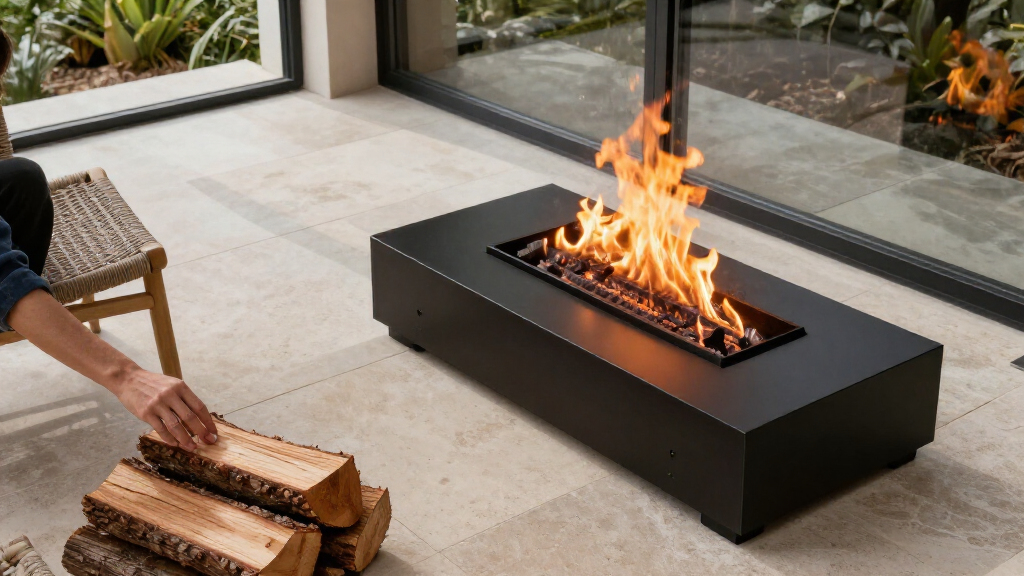
Bioethanol fireplaces have undergone a design shift, with newer models moving beyond the shiny, glass-heavy burners that once made the category look like a novelty, according to a recent report by Livingetc. The chimney-free appliances use a real flame and now come in more integrated designs, giving homes without a flue another way to add a fireside feature without wood-burning installation.
Livingetc quoted industry representatives who described a move toward cleaner lines, restrained finishes and architectural forms. Designs now include sculptural suspended fireplaces, long linear burners, plaster surrounds and stone features, as well as stoves modeled on traditional wood burners. Some products also offer app controls or smart-home integration, according to Daniel Sanders, director of Modus Fireplaces.
The flames are produced by burning bioethanol, rather than by LEDs. That gives the appliances a real flame, but not every quality of a wood fire: Jon Butterworth, director at Arada, said bioethanol models do not provide the crackling sound or changing appearance of burning logs. He described them as an alternative for people who like the traditional stove look.
Examples cited in the report range from a stove-style model with a 3-kilowatt heat output and a stated four-hour burn time to smaller decorative units with lower listed heat outputs. These are product specifications reported for particular models, not a measure of what every bioethanol fire can deliver. The supplied material does not provide independent testing or a direct comparison with wood-burning stoves.
A Fireplace Without a Chimney
For people in homes without a chimney or flue, the design changes broaden the options for creating a fireplace-like focal point. The products can be positioned more flexibly than conventional wood burners, and a flueless design may avoid the chimney work required for a traditional installation. That could appeal to some renters or homeowners who want a visible flame without building a chimney, though suitability depends on the specific property and product.
The distinction between a real flame and a full wood-burning experience matters. Bioethanol fires may offer visual warmth and some heat, but the report does not establish that they can replace a primary heating system or match the sound, fuel use or performance of a log burner. Buyers need to check the particular unit’s specifications and instructions rather than treating the category as uniform.
Popular right now

Roborock RockMow X130H Wire-Free 4WD Robot Lawn Mower

Vitamix VX1 Professional-Grade Blender, 64 oz, Black

Dyson Airsmooth Styling Brush
As an affiliate, we earn on qualifying purchases.
From Novelty Burners to Integrated Designs
The early models described in Livingetc’s report were often wall-mounted boxes or tabletop burners, frequently with glass and shiny finishes. Richard Fewings, owner of Glowing Embers, said those products helped give bioethanol fires a reputation as novelty items. The report presents the recent design evolution as a response to that perception: manufacturers and designers are placing more emphasis on the flame and on making the appliance fit the room.
Fewings said his company now sells units made by foundries that also produce high-end wood burners, and that customers can struggle to distinguish some models from conventional stoves at a distance. That is his account of the products and customer response, rather than an independent test. Butterworth likewise pointed to stove-inspired proportions, glass-fronted doors, dark finishes and ceramic logs as features that can create a convincing fireside appearance.
“Early bioethanol fires were mostly cheap wall boxes and tabletop burners with a thin blue flame, and due to this they gained a bad reputation as a novelty item.”
— Richard Fewings, owner of Glowing Embers, as quoted by Livingetc
Heating, Safety and Running Costs
The supplied report material does not establish how much heat a bioethanol fireplace delivers in a typical room, how efficiently it uses fuel, or how its running costs compare with other heating options. Product figures cited are model-specific. It also does not provide independent testing of flame appearance, customer perceptions or claims about installation savings.
Details about ventilation, fuel handling, clearances and other safety requirements are not included in the supplied material. Those requirements can depend on the appliance and where it is used, so readers should consult the manufacturer’s instructions and relevant local guidance before buying or operating one. The source does not specify whether any particular model is suitable for every home or rental property.
Check the Model Before Buying
The report describes a continuing design shift but gives no announced launch schedule or industry-wide performance standard. For prospective buyers, the next step is to compare the specifications and operating instructions for the exact model under consideration, including its stated heat output, burn time, fuel requirements and installation conditions. Claims about resemblance to a wood burner should be weighed against the clear limitation that bioethanol does not reproduce the crackle or changing logs of a wood fire.
Anyone considering a unit for regular warmth should also confirm whether its output suits the room and whether the manufacturer permits use in that setting. The source offers no broader guidance on safe operation or heating suitability, leaving those questions to product documentation and applicable local requirements.
Key Questions
Do bioethanol fireplaces need a chimney?
The report describes them as flueless appliances that do not require a chimney or flue. Installation and use conditions still depend on the particular model and the home.
Do they have real flames?
Yes. The report says bioethanol fires burn fuel to produce a real flame, rather than using an LED imitation. Their appearance and performance can vary by model.
Do they feel exactly like a wood-burning fire?
No. Arada director Jon Butterworth told Livingetc that bioethanol models do not reproduce the crackling sound or the changing appearance of burning logs, even when their styling resembles a traditional stove.
Can a bioethanol fireplace heat a room?
Some products list a heat output, and the report cites examples with outputs of about 2 to 3 kilowatts. Those figures apply to specific models; the supplied material does not establish how well they heat a room or whether they can serve as primary heating.
What should buyers check before choosing one?
Check the exact product’s heat and burn-time specifications, fuel requirements, operating instructions and installation conditions. The report does not provide safety guidance or confirm that any model suits every property, so consult the manufacturer and relevant local guidance.
Source: livingetc.com