
TL;DR

Get pool and patio gear delivered free with Prime
- Fast, free delivery on millions of items
- Prime Video, Amazon Music and more included
- Member-only deals all year
University of Florida researchers, through the Southeastern Coastal Center for Agricultural Health and Safety, are studying whether self-management of pain and ergonomic modifications reduce back pain in nursery and landscape workers. Early findings point to improvements in pain and work task difficulty.
Researchers at the University of Florida are conducting a study on whether self-management of pain and ergonomic modifications can effectively address back pain among nursery and landscape workers, a workforce in which pain is so routine that many treat it as part of the job. Preliminary findings from the study’s first phase show improvements in pain and work task difficulty, according to the research team.
The study is being carried out by scientists from the UF-based Southeastern Coastal Center for Agricultural Health and Safety (SCCAHS), including faculty from UF’s College of Public Health and Health Professions (PHHP) and the Department of Family, Youth and Community Sciences (FYCS). The lead researcher is Kim Dunleavy, a clinical professor in UF’s Department of Physical Therapy.
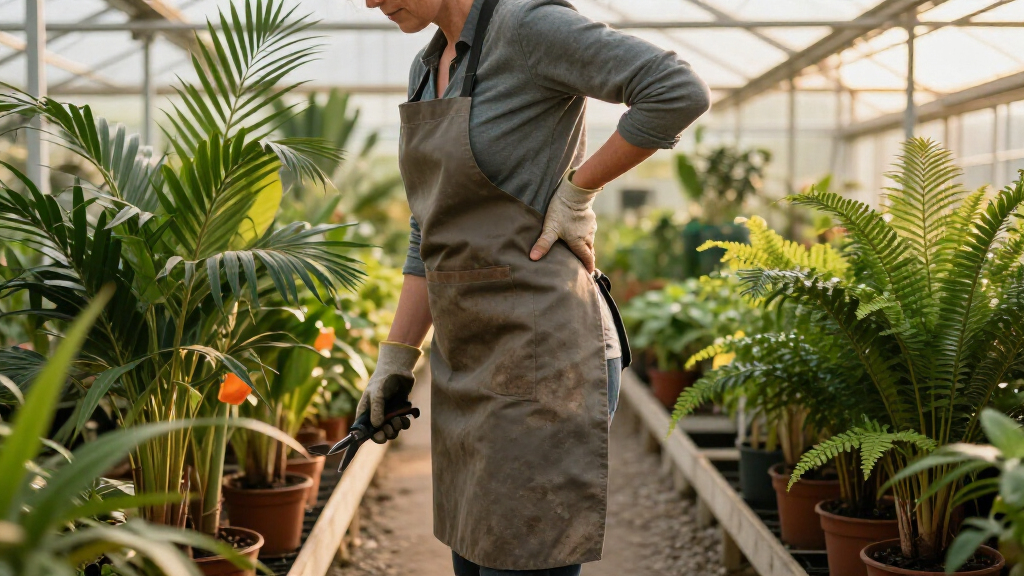
In the first phase of the study, stakeholders from the nursery and landscape industry — including supervisors, workers, and insurance consultants — confirmed that many employees keep working despite pain. Workers described long hours spent lifting heavy plants, carrying materials, digging, and working in bent or awkward positions, all of which can accumulate physical strain over time.
Early interviews highlighted the seasonal and weather-related variability in horticulture workloads, meaning solutions must be practical for both employees and employers. According to the researchers, study participants said preventing back injuries would not require major changes in workplace practices, but pointed to the need for tailored interventions for the horticulture industry, greater workplace awareness of pain, and more guidance on injury prevention — an area where formal training is often limited.
Costs of Working Through Pain
Back pain affects both workers and businesses in the horticulture sector, Dunleavy said. Reduced productivity, the loss of experienced workers, and injury costs carry major consequences for companies, while workers who depend on their bodies for their income face the risk of longer-term injuries, burnout, and difficulty staying in the trade.
The study also flags medication risks. Dunleavy noted that back pain can lead workers to rely on opioids, muscle relaxers, or over-the-counter medications such as acetaminophen and anti-inflammatories, each of which carries potential negative health side effects. The preliminary results, according to the researchers, point to the value of teaching workers about those medication risks and encouraging simple pain-management strategies before pain becomes a more serious or long-term problem.
Top picks for "university florida study"
As an affiliate, we earn on qualifying purchases.
How the Study Reached Workers
The research is grounded in interviews with horticulture workers and industry leaders, along with input from supervisors and insurance consultants during the study’s first phase. Participants, according to Dunleavy, expressed appreciation to their companies for enabling their participation and emphasized the importance of having options that allow them to continue working while reducing pain.
The findings were reported by the University of Florida’s Institute of Food and Agricultural Sciences (UF/IFAS), with a full article written by Chris Vivian available on the UF/IFAS website. The work sits within a broader effort by SCCAHS, a UF-based agricultural health and safety center, to address occupational hazards in farming and related industries across the Southeast.
“Not only is back pain debilitating for workers who rely on their bodies for income, reduced productivity, losing experienced workers, and overall costs for injury have major consequences for companies.”
— Kim Dunleavy, clinical professor, UF Department of Physical Therapy and lead researcher
What the Preliminary Results Do Not Yet Show
The findings described so far are preliminary and come from the study’s first phase. The researchers have not yet published final results, and no specific data — such as the number of participants, measured effect sizes, or comparison against a control group — has been disclosed in the available reporting.
It remains unclear how durable the reported improvements in pain and work task difficulty are over time, and whether the interventions tested will translate across the range of nursery and landscape operations with different workloads and staffing. The timeline for the study’s completion and publication has not been announced.
Toward Tailored Industry Interventions
The researchers indicate the work points toward tailored injury-prevention strategies for horticulture, including workplace awareness efforts and training on simple pain-management techniques. Additional phases of the study are expected to build on the first-phase findings, though specifics have not been announced.
Readers seeking detail can consult the full article by Chris Vivian on the UF/IFAS website. Employers and workers in the nursery and landscape sector may see the eventual results inform guidance on ergonomics and pain self-management practices.
Key Questions
Who is conducting the study on back pain in horticulture workers?
Scientists from the University of Florida-based Southeastern Coastal Center for Agricultural Health and Safety (SCCAHS), including faculty from UF’s College of Public Health and Health Professions and the Department of Family, Youth and Community Sciences. Kim Dunleavy, a clinical professor in UF’s Department of Physical Therapy, is the lead researcher.
What is the study testing?
Whether self-management of pain and ergonomic modifications are effective in addressing back pain among nursery and landscape workers in the horticulture industry.
What have the preliminary findings shown?
According to Dunleavy, early results are encouraging, with improvements in work task difficulty and pain. The findings also highlight the importance of educating workers about pain-medication risks and introducing simple pain-management strategies early.
Why is back pain such a problem in horticulture work?
Workers spend long hours lifting heavy plants, carrying materials, digging, and working in bent or awkward positions. Pain is so common that many workers view it as part of the job and continue working through it, which can lead to injuries, burnout, and reliance on pain medications.
Where can I read more about the study?
A full article by Chris Vivian is available on the UF/IFAS website, the news source of the University of Florida’s Institute of Food and Agricultural Sciences.
Source: rss
Fall Picks
fall essentials
As an affiliate, we earn on qualifying purchases.