
To combine floating with breathwork, start your session by setting an intention to focus on your breathing. Once in the float tank, observe your natural breath, then gently guide it into slow, intentional patterns like diaphragmatic breathing or counting breaths. Use the silence and weightlessness to deepen your inward focus, noticing how your breath influences your calmness. Continuing this practice can release even greater relaxation and mindfulness—exploring these techniques further will enhance your experience.
Key Takeaways
- Set an intention to focus on breath awareness before entering the float tank.
- Practice slow, deliberate breathing during the float to deepen relaxation and mindfulness.
- Use the silence and darkness to enhance inward focus on your breath and internal sensations.
- Incorporate specific breathing techniques, like diaphragmatic or counting breaths, during the session.
- Consistently combine breathwork with floating to develop greater mental clarity and emotional resilience over time.
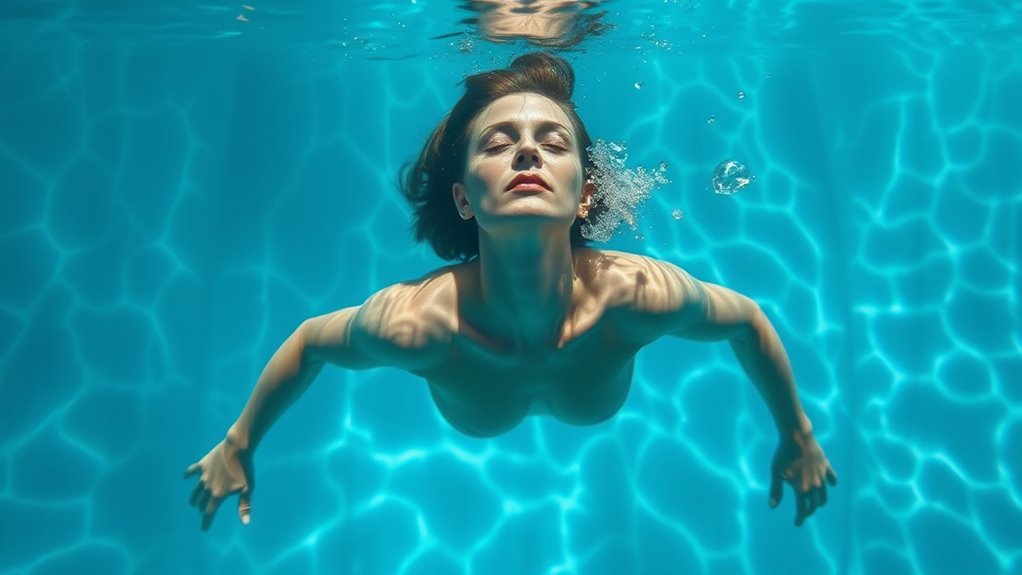
If you’re looking to deepen your relaxation and enhance your mental clarity, combining floating and breathwork offers a powerful method. Both practices are rooted in mindfulness techniques that encourage you to focus inward, quiet the mind, and experience a profound sense of calm. When you float in a sensory deprivation tank, your body is suspended weightlessly, minimizing external stimuli and allowing your mind to settle naturally. This environment heightens your awareness of internal sensations and thoughts, creating an ideal space for effective breathwork. By intentionally controlling your breathing during floating sessions, you can amplify the calming effects and access a deeper state of relaxation.
Combining floating and breathwork deepens relaxation and enhances mental clarity through mindful, inward-focused practices.
Sensory deprivation plays an essential role here. When external distractions fade away, your brain shifts into a different mode—one more receptive to mindfulness techniques. You become more aware of your breath, heartbeat, and mental chatter without judgment or resistance. This heightened awareness helps you recognize patterns and areas of tension that might otherwise go unnoticed. Incorporating breathwork into floating sessions means consciously slowing down your breath, deepening inhalations, and extending exhalations, which further promotes relaxation and mental clarity. Over time, this combination trains your mind to remain present and centered, even outside of the tank.
To make the most of this synergy, start by entering the float tank with a specific intention to focus on your breath. As you lie back in the water, close your eyes and observe your natural breathing pattern. Then, gently guide yourself into a mindful breathing exercise—perhaps counting your breaths or practicing diaphragmatic breathing. The sensory deprivation environment minimizes external noise and visual input, so your focus naturally turns inward. This inward focus enhances your mindfulness techniques, helping you stay grounded and present. The stillness and weightlessness of floating make it easier to access meditative states, allowing your breath to become slower and more deliberate. Additionally, practicing controlled breathing during floating can help deepen your relaxation even further.
Practicing this combination regularly can considerably improve your mental clarity and emotional resilience. The quiet, controlled environment supports the development of a calm, focused mind. As you become more comfortable with integrating breathwork during floating, you’ll notice increased ease in managing stress and a greater capacity for mindfulness in daily life. This approach isn’t just about relaxation; it’s about cultivating a deeper connection with your inner self and fostering ongoing mental clarity through intentional breathing and sensory deprivation. Over time, you’ll find it easier to access a peaceful, centered state anytime you need it, both inside and outside the tank.
Frequently Asked Questions
Can Beginners Safely Practice Floating and Breathwork Together?
Yes, beginners can safely practice floating and breathwork together, but start slowly and listen to your body. Use mindfulness meditation to stay present, focusing on your breath and sensations. Incorporate relaxation techniques to ease into each practice, ensuring you’re comfortable and calm. Always practice in a safe environment, and consider consulting a professional if you’re unsure. With patience, you’ll build confidence and enjoy the calming benefits of both methods.
How Often Should I Combine Floating With Breathwork Sessions?
You should aim for 2 to 3 combined floating and breathwork sessions per week, allowing your body to adapt and benefit without overdoing it. Focus on the ideal timing by spacing sessions evenly, ideally on different days, to maximize relaxation and mental clarity. Listen to your body’s signals, and adjust the frequency if you notice any fatigue or discomfort. Consistency is key to experiencing the full benefits.
Are There Specific Health Conditions That Prevent Combining These Practices?
Think of your body as a delicate garden that needs careful tending. Certain medical contraindications, like cardiovascular issues or severe respiratory problems, can make combining floating and breathwork risky. Mental health considerations, such as anxiety or panic disorders, may also influence safety. Always consult a healthcare professional before trying these practices together, ensuring your mental and physical health are prioritized and your garden remains healthy and thriving.
What Equipment or Space Is Needed for Effective Sessions?
You’ll need a comfortable, quiet space for your float tank essentials and breathwork setup. A float tank requires a clean, temperature-controlled environment with minimal noise and light. For breathwork, prepare a mat, cushions, or a chair for seated exercises. make certain you have a timer, relaxing music if desired, and a towel. Creating a peaceful atmosphere helps you focus, deepen your practice, and maximize the benefits of combining floating with breathwork.
How Do I Know if I’M Ready to Try Combining These Techniques?
Like a seasoned sailor sensing the tide, you’ll know you’re ready when your mindfulness readiness and emotional stability feel steady. If you can comfortably stay present during breathing exercises and float sessions without feeling overwhelmed, it’s a good sign. Trust your intuition—if you’re curious and confident, you’re prepared to explore combining these techniques. Remember, progress comes with patience and self-awareness, not rushing into the deep end.
Conclusion
By combining floating and breathwork, you activate a powerful way to deepen relaxation and enhance mental clarity. Studies show that just 10 minutes of floating can reduce stress hormones by up to 40%, making your practice even more effective. When you integrate mindful breathing with the weightless sensation of floating, you create a calming experience that rejuvenates both your body and mind. So, give this combo a try—you might just find your inner peace becomes more accessible than ever.