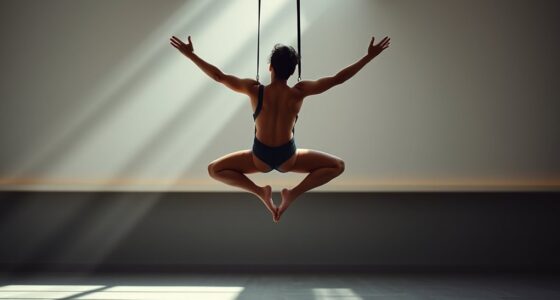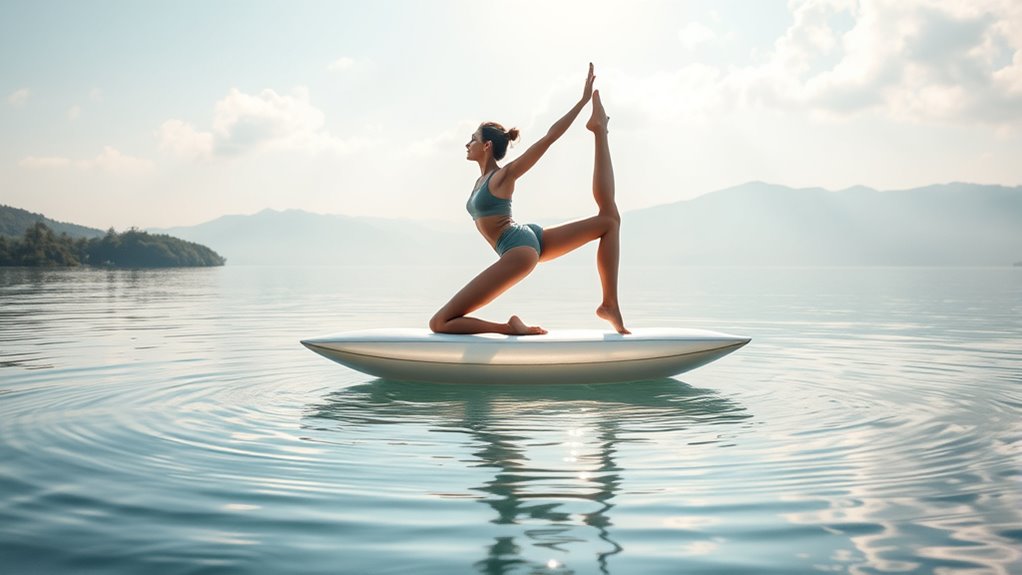

Merging floating and yoga movements creates a dynamic flow that boosts your core strength while enhancing balance and mindfulness. Water’s buoyancy reduces impact and supports deeper, controlled movements, allowing you to focus on breath and stabilizing muscles. As resistance challenges your stability, you engage your core for better posture and coordination. This gentle yet powerful practice promotes relaxation and strength-building, helping you discover new levels of stability. Keep exploring, and you’ll uncover even more ways to deepen your technique and confidence.
Key Takeaways
- Incorporate buoyant water resistance to enhance core engagement during yoga flows.
- Use floating poses to improve balance, stability, and proprioception for a stronger core.
- Synchronize breath with movement to deepen core activation and mindful awareness.
- Merge gentle water-supported transitions with traditional core-strengthening poses for safe progression.
- Leverage water’s impact reduction to explore advanced core-focused poses with confidence.
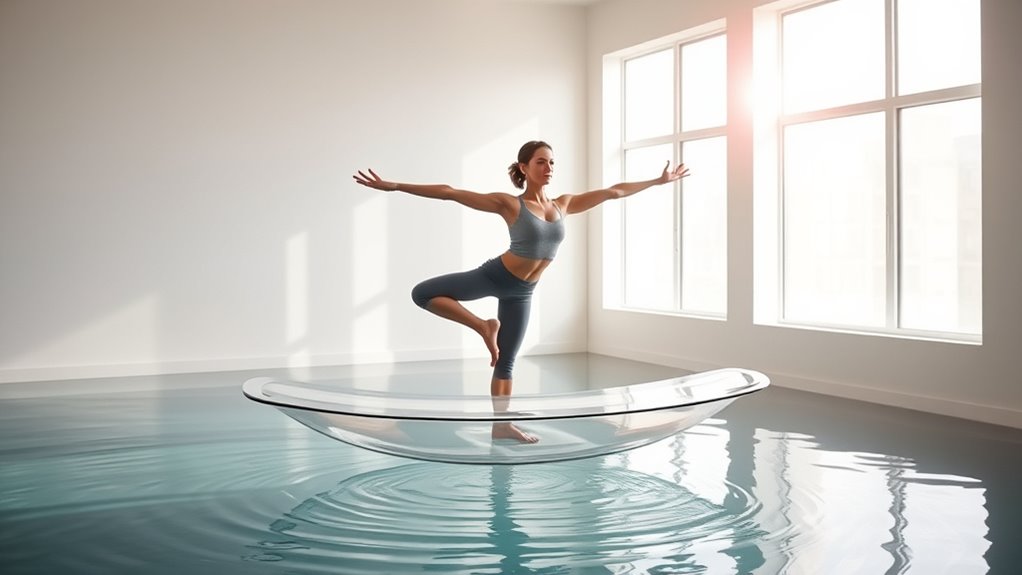
Float + Yoga Flow combines the serenity of yoga with the gentle support of water, creating a unique experience that enhances your practice. When you practice in this environment, you immediately notice how the water’s buoyancy reduces impact and allows for deeper, more conscious movements. This setting makes it easier to focus on breath control, a essential element of both yoga and core strength. As you breathe deeply and steadily, you start to synchronize your inhalations and exhalations with your movements, helping to calm your nervous system and improve your overall concentration.
Water’s buoyancy enhances mindful movement and deepens breath control for a calming yoga experience.
In this flow, breath control isn’t just about inhaling and exhaling; it’s about harnessing your breath to stabilize your core. The water acts as a natural resistance, requiring you to engage your abdominal muscles more intentionally with each movement. As you focus on maintaining steady, controlled breaths, you’ll find your core muscles activating more effectively. This heightened awareness of your breath and core engagement creates a foundation that supports balance techniques. Water’s support helps you refine your postures, making it easier to hold poses longer and with better alignment.
Balance techniques play a essential role in Float + Yoga Flow because water challenges your stability in a gentle way. With each pose, you learn to distribute your weight evenly, activating tiny stabilizer muscles that often go unnoticed on land. Because the water supports your body, you can experiment with more challenging positions without fear of falling. This encourages you to deepen your practice, improve proprioception, and develop better coordination. As you become more attuned to your body’s movements and how your muscles respond, your overall balance improves, both in water and on land.
You’ll notice that the water’s gentle resistance makes it necessary to stay present and mindful. This heightened awareness helps you refine your breath control and balance techniques simultaneously, creating a feedback loop that strengthens your core. Over time, you develop a more integrated approach to your practice, where breath, balance, and strength work together seamlessly. The water’s support allows you to explore advanced postures safely, pushing your limits without strain. Incorporating beneficial ingredients like collagen and hyaluronic acid can further enhance your practice by supporting skin health and hydration. As you progress, this integrated focus on breath and balance translates into improved stability and core strength outside the water. Float + Yoga Flow isn’t just about exercising; it’s about cultivating a mindful, balanced approach that elevates your entire practice.
Frequently Asked Questions
Can Beginners Safely Practice Float + Yoga Flow?
Yes, beginners can safely practice float + yoga flow if they start slow and listen to their bodies. This practice helps improve balance challenges and breath control, but it’s essential to focus on proper technique. Take your time, avoid pushing too hard, and consider working with an instructor initially. With patience and mindfulness, you’ll build strength and confidence while enjoying the benefits of this calming, strengthening routine.
What Equipment Is Needed for Float + Yoga Flow?
Imagine building your foundation like a sturdy bridge—your equipment essentials are key. You’ll need a good yoga mat for grip, comfortable clothing, and optional safety gear like a float belt or resistance bands for added support. These essentials guarantee stability and safety during your flow. Always check that your gear is in good condition, so you can focus on your moves without worry, making every session smooth and secure.
How Often Should I Practice for Optimal Results?
You should practice float + yoga flow 3 to 4 times a week for ideal results. Consistent practice helps build core strength and improves flexibility. Make sure to listen to your body to prevent injury, and avoid overdoing it. Incorporate rest days to allow recovery and injury prevention. Regular sessions will enhance your progress, making your core stronger and your movements more fluid over time.
Are There Any Contraindications for This Practice?
You should be mindful if you have pre-existing injuries or concerns about water safety, as certain moves might strain sensitive areas or require caution in the water. Always listen to your body, and consult a healthcare professional if needed. If you’re new to this practice, start slow, and avoid pushing through pain. This gentle approach guarantees your journey remains safe and enjoyable, like a calm lake reflecting the sky.
How Does Float + Yoga Flow Improve Mental Well-Being?
Float + Yoga Flow enhances your mental well-being by promoting mindfulness meditation and stress reduction. As you focus on your breath and movements, you become more present, calming your mind. The gentle flow helps release tension and reduces anxiety, leaving you feeling centered and refreshed. Regular practice strengthens your mental resilience, making it easier to handle daily stressors with clarity and calmness.
Conclusion
As you blend floating moves with your yoga flow, you’re sculpting a stronger core and elevating your practice to new heights. Think of this fusion as a dance between strength and grace, each move building upon the last like notes in a symphony. Keep flowing, stay mindful, and let your core be the anchor that keeps your practice grounded yet soaring. With every breath, you’re crafting a resilient foundation that supports you through life’s waves.