
To pick the right wetsuit thickness, match the neoprene layers to your water temperature. For cold waters below 50°F, go with 5-7mm suits for maximum insulation. In 50-70°F water, choose 3-5mm for balanced warmth and flexibility. For warmer waters above 70°F, 1-3mm or rash guards work best. Focus on a snug fit and flexible materials to stay comfortable. Keep reading to learn how to choose the perfect suit for your needs.
Key Takeaways
- Match wetsuit thickness to water temperature: 1-2mm for warm, 3-5mm for moderate, 5-7mm for cold waters.
- Use a wetsuit thickness chart to select the appropriate layer based on activity and climate conditions.
- Thicker neoprene (5mm+) provides better insulation but reduces flexibility; balance based on comfort needs.
- Consider additional features like stretch panels and seamless design to enhance warmth and mobility.
- Proper fit is essential; measure chest, waist, hips, and height to ensure snug, comfortable insulation without restriction.
Why Choosing the Right Wetsuit Thickness Matters for Comfort and Safety
Choosing the right wetsuit thickness is essential because it directly affects your comfort and safety in the water. When selecting a wetsuit, consider neoprene durability, as thicker material generally offers better resilience against tears and abrasions, ensuring your suit lasts longer. Additionally, wetsuit aesthetics matter; a suit that fits well and looks good boosts your confidence and motivation. The right thickness also helps regulate your body temperature, preventing chills or overheating. Wearing an ill-suited wetsuit can compromise your safety, making you more vulnerable to hypothermia or fatigue. By understanding how neoprene durability and aesthetics influence your choice, you ensure a better experience in the water — staying comfortable, protected, and confident during your activities.
How Water Temperature Affects Your Wetsuit Choice
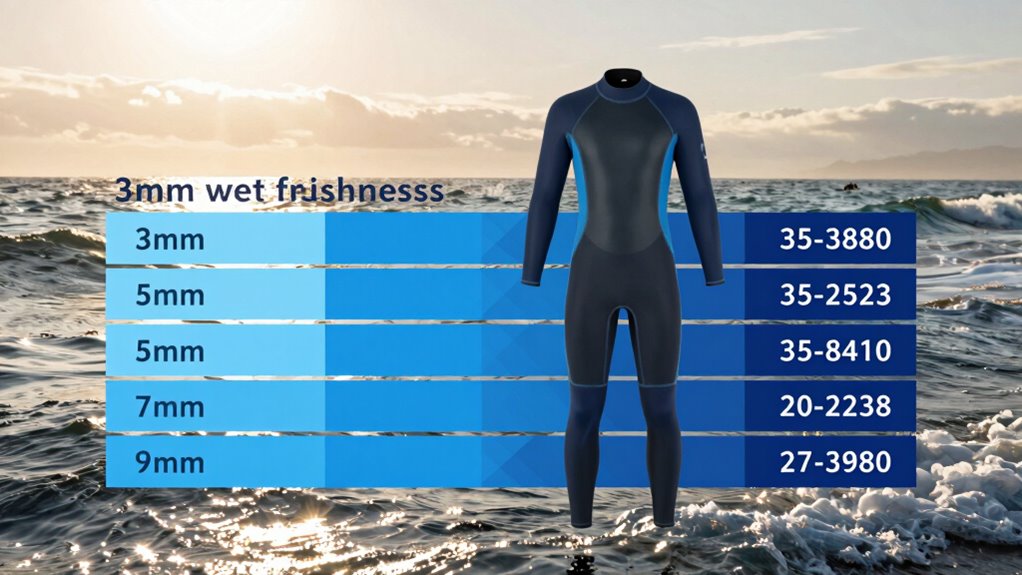
Water temperature is a key factor in selecting the right wetsuit because it directly influences how much insulation you need to stay comfortable and safe. Cooler water requires better thermal insulation, which depends on neoprene properties like thickness and stretch. Thicker neoprene provides more insulation but reduces flexibility, so choose wisely based on temperature. For example:
| Water Temperature | Recommended Wetsuit Thickness |
|---|---|
| 50°F (10°C) and below | 5-7mm for full coverage |
| 50°F–60°F (10°C–15.5°C) | 3-5mm wetsuit with accessories |
| 60°F–70°F (15.5°C–21°C) | 2-3mm wetsuit |
| Above 70°F (21°C) | 1-2mm or rash guard |
Understanding neoprene’s properties helps optimize thermal insulation, ensuring your wetsuit keeps you warm without sacrificing mobility.
Reading a Wetsuit Thickness Chart: A Simple Guide
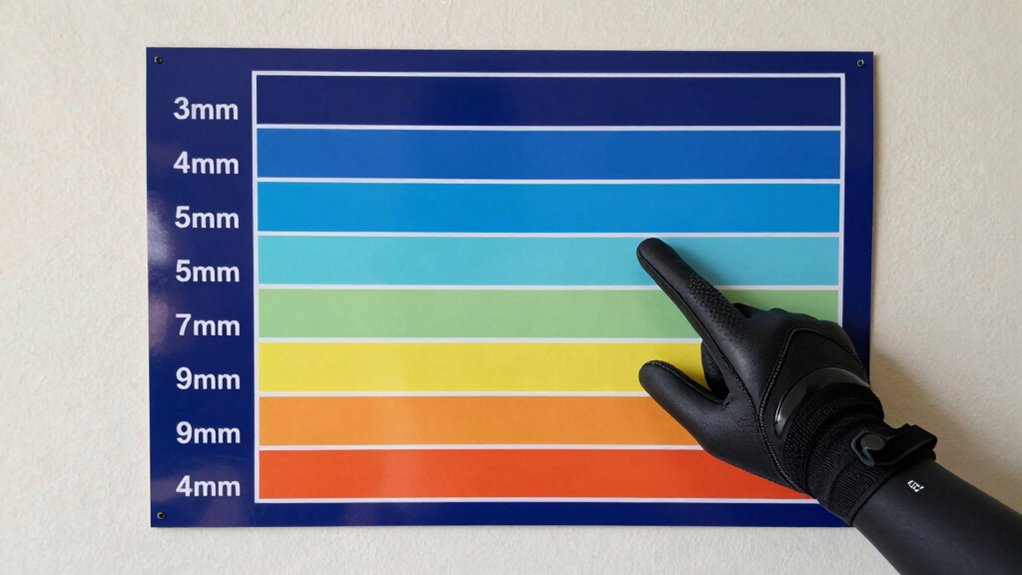
Reading a wetsuit thickness chart is straightforward once you understand how to interpret the information it provides. The chart shows different thickness levels, usually in millimeters, indicating how much neoprene is used in wetsuit layering. Thicker neoprene provides more insulation, essential for cold water conditions. Pay attention to the neoprene properties, such as stretch and durability, which influence comfort and flexibility. Thinner wetsuits, like 3mm, suit warmer waters, while 5mm or more are better for colder environments. The chart helps you match water temperatures with appropriate wetsuit thickness, ensuring you stay warm without sacrificing mobility. By understanding these key points, you can quickly select the right wetsuit for your activity and water conditions.
Best Wetsuit Thicknesses for Different Water Sports and Conditions
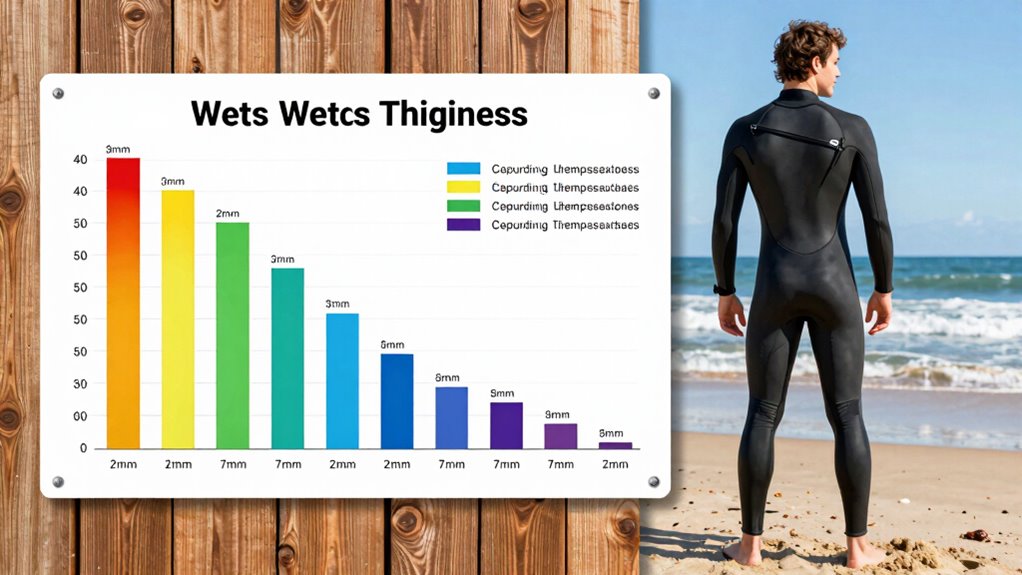
The right wetsuit thickness depends on your specific water sport and the conditions you’ll face. For surfing in warm water, a 2mm wetsuit offers enough neoprene durability and flexibility without overheating. If you’re diving or snorkeling in cooler waters, a 5mm to 7mm wetsuit provides extra insulation, ensuring you stay warm longer. For colder environments, consider a 7mm or thicker suit with reinforced neoprene to withstand harsh conditions. The wetsuit color can also impact your visibility and safety; brighter shades like yellow or orange improve visibility in murky waters. Remember, thicker neoprene offers better insulation but can reduce mobility. Choose a suit that balances neoprene durability, comfort, and your activity’s temperature demands for ideal performance.
Tips to Find a Comfortable, Flexible Wetsuit Fit
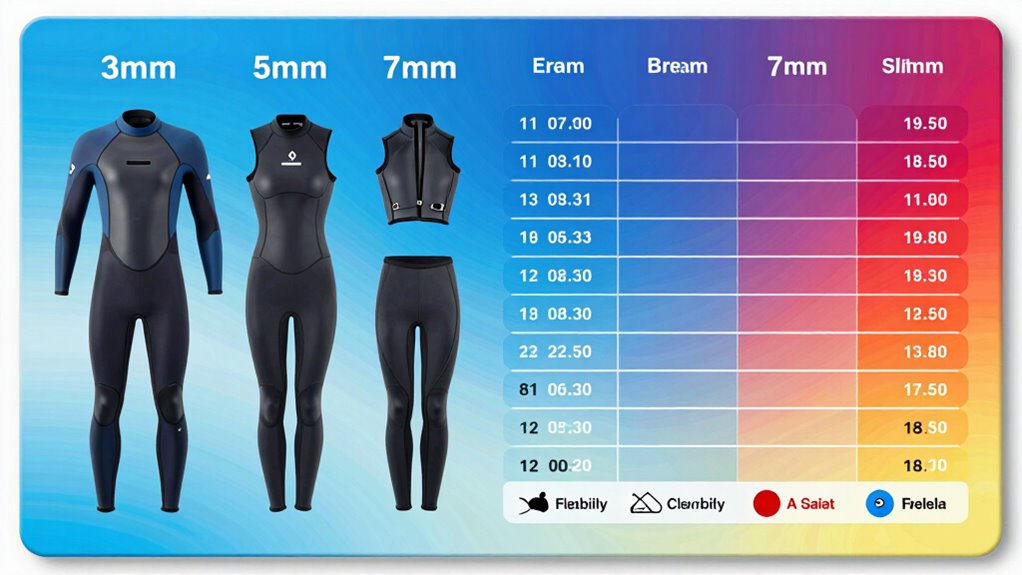
To guarantee your wetsuit feels comfortable and flexible, start by choosing the correct size that fits snugly without restricting movement. Look for material features like stretch panels or flexible neoprene that enhance mobility. Don’t forget to make proper fit adjustments, such as zipping up correctly and checking for gaps or tight spots.
Correct Size Selection
Finding the right wetsuit size is essential for comfort and flexibility during your water activities. To achieve this, focus on proper wetsuit layering and neoprene thickness. Your wetsuit should fit snugly without feeling restrictive, allowing full movement without pinching or sagging. Measure your chest, waist, hips, and height accurately, then compare these to the manufacturer’s sizing chart. Keep in mind that thicker neoprene provides more warmth but can be less flexible, so choose a size that balances warmth with mobility. When trying on wetsuits, move your arms, bend your knees, and simulate your activity to ensure comfort. A well-fitting wetsuit enhances your experience, prevents chafing, and maintains insulation, so take your time selecting the correct size for an ideal fit.
Material Flexibility Features
When choosing a wetsuit, paying attention to material flexibility features can make a significant difference in comfort and movement. Neoprene elasticity and material stretchability determine how well the wetsuit moves with you, reducing restriction and fatigue. Look for suits with high-quality neoprene that offers excellent stretchability, allowing for natural motion. Flexibility features such as seamless panels or strategic panel placement enhance overall comfort. Additionally, consider the thickness and layering of the neoprene, as thinner, more elastic materials often provide better mobility. Features like flexible collars and articulated joints also contribute to a more comfortable fit. By prioritizing these material flexibility features, you’ll enjoy a wetsuit that moves effortlessly with you and minimizes discomfort during active pursuits.
- High-quality neoprene with enhanced elasticity
- Seamless or strategically panelled designs
- Flexible collars and articulated joints
- Thin, stretchable neoprene layers
Proper Fit Adjustments
Ensuring a proper fit is essential for maximizing both comfort and flexibility in your wetsuit. To achieve this, try on different sizes and styles, paying attention to neoprene durability—stiffer neoprene offers more support, while softer materials provide greater flexibility. Adjust the wetsuit’s tightness so it contours your body without restricting movement or causing discomfort. Check the wetsuit color, as some shades may fade or stretch differently over time, affecting fit. Make sure the suit fits snugly around your neck, wrists, and ankles without cutting off circulation. If needed, use wetsuit-specific stretch panels or adjustable features to fine-tune the fit. Remember, a well-fitted wetsuit lets you move freely while maintaining warmth and durability during your water activities.
What to Do If Your Wetsuit Is Too Cold or Too Warm
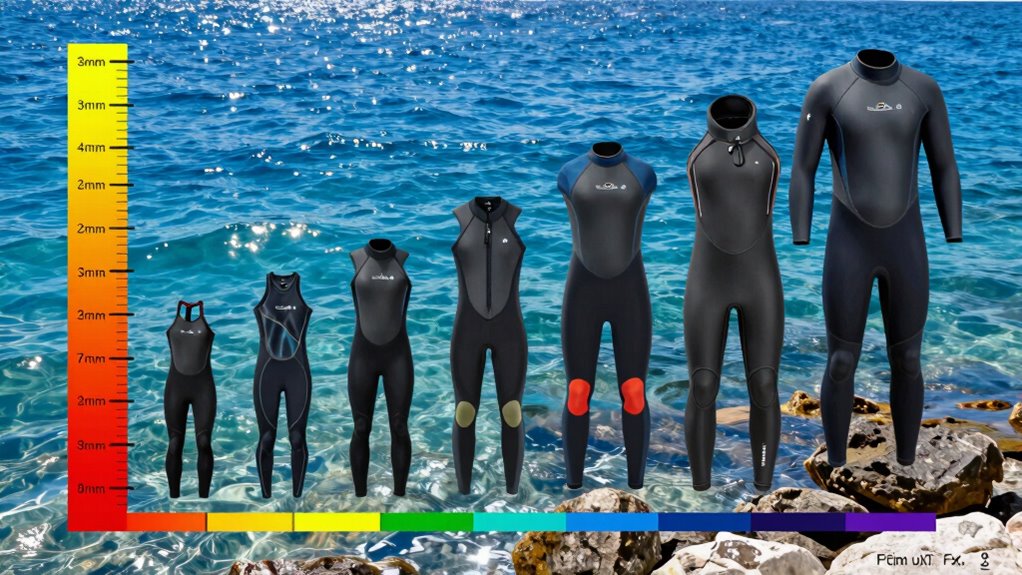
If your wetsuit feels too cold or too warm, it’s important to modify your gear rather than sticking with an uncomfortable temperature. You can modify your wetsuit layering or enhance neoprene insulation for better comfort. To warm up a too-cold wetsuit, consider adding a wetsuit vest or hood, which increases neoprene insulation without bulk. If you’re too warm, remove a layer or wear a thinner wetsuit. You might also try switching to a different thickness suited for the current water temperature. Additionally, ensure your wetsuit fits properly to prevent water flushing and heat loss. Keep in mind, slight adjustments like sealing leaks or adding a wetsuit spray can improve insulation and temperature regulation during your activity.
Expert Recommendations for Wetsuit Thickness Based on Water Temperature and Activity
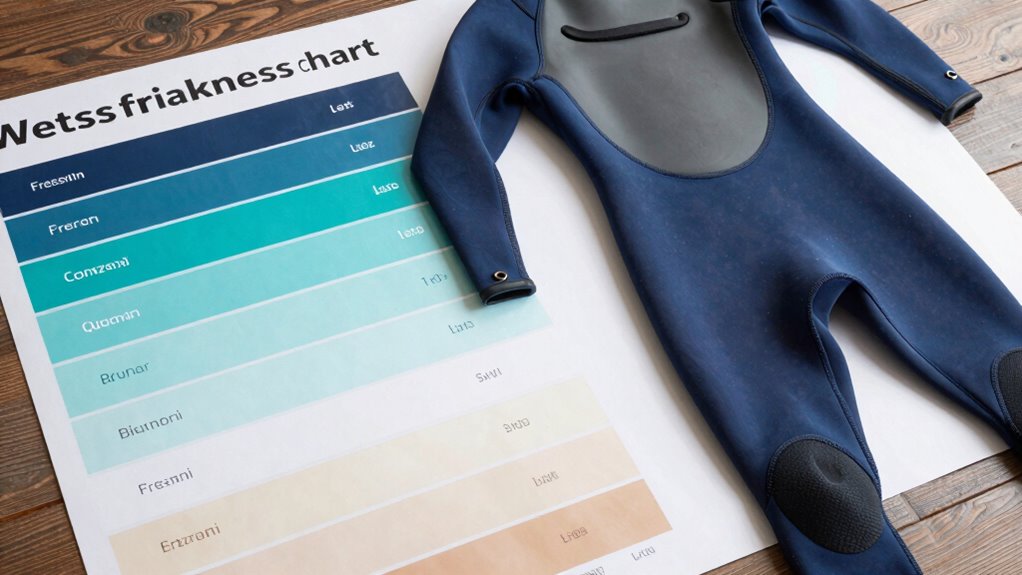
Choosing the right wetsuit thickness depends on both water temperature and the activity you’re engaging in. Experts recommend considering wetsuit materials with ideal thermal insulation properties to stay warm without overheating. For colder waters (below 50°F/10°C), a 5-7mm suit with thick neoprene offers maximum insulation, ideal for extended dives or surf sessions. In moderate temperatures (50-70°F/10-21°C), a 3-5mm wetsuit strikes a good balance for activities like snorkeling or short dives. When water warms above 70°F/21°C, a 1-3mm suit or a wetsuit vest may suffice for surfing or swimming. Remember, different wetsuit materials, such as crushed neoprene or thicker lining, can enhance thermal insulation properties, ensuring you stay comfortable and protected during your activity.
Frequently Asked Questions
How Often Should I Replace My Wetsuit for Optimal Insulation?
You should replace your wetsuit every 2 to 3 years to guarantee peak insulation. Regularly inspecting for signs of wear, tears, or thinning helps maintain wetsuit longevity and effective insulation. Over time, neoprene loses its insulating properties, making it less effective in keeping you warm. By replacing it when necessary and taking good care of it, you’ll maximize its lifespan and keep your body warm during cold water adventures.
Can Layering Be Used to Adjust Wetsuit Warmth Effectively?
Layering strategies can definitely help you adjust your wetsuit warmth effectively. By adding thermal layering underneath your wetsuit, you trap more heat and stay warmer in cold water. Use thin, insulating materials like thermal rash guards or neoprene vests to boost insulation without restricting movement. This approach allows you to customize your warmth, making it a versatile solution for varying water temperatures, especially if you don’t want to buy a thicker wetsuit.
Are There Specific Brands Known for Better Thermal Protection?
Sure, some brands are practically the superheroes of thermal protection. Think O’Neill, Rip Curl, and Xcel—they’re renowned for their brand reputation and thermal innovation. They’ve cracked the code on keeping you warm while looking cool. If you want to avoid turning into a human popsicle, investing in these brands guarantees you get first-rate insulation and cutting-edge technology. Your surf sessions will thank you, and so will your frozen toes.
How Does Water Salinity Influence Wetsuit Performance?
Salinity effects markedly impact wetsuit performance by altering water density. Higher salinity increases water density, making it feel colder and reducing your body’s insulation, which can lead to quicker heat loss. You’ll notice this especially in saltier waters like the ocean compared to freshwater. To stay warm, consider using a thicker wetsuit or additional thermal layers when diving or surfing in highly saline environments, ensuring better thermal protection against the denser water.
What Maintenance Tips Extend My Wetsuit’s Insulating Properties?
To extend your wetsuit’s insulating properties, regularly perform wetsuit repairs to prevent water leaks and maintain warmth. After each use, use proper drying techniques—avoid direct sunlight and hang it inside out in a cool, shaded area to prevent material degradation. Store it flat or on a wide hanger to preserve shape. Proper maintenance keeps your wetsuit effective, comfortable, and ready for your next adventure.
Conclusion
Choosing the right wetsuit thickness keeps you comfortable and safe in the water. Imagine you’re planning a winter surf trip—selecting a 5mm wetsuit instead of a 3mm keeps you warm and focused. By understanding water temperatures and your activity, you can make smarter choices. Don’t guess—use a wetsuit thickness chart to find your perfect fit. Staying warm means longer, more enjoyable water adventures, so pick wisely and surf confidently!