If your wakeboard bindings don’t fit properly, heel lift can occur, ruining your balance and control. When your heels slip out of the bindings, it becomes harder to make precise turns or land tricks smoothly. This happens if your boots are too loose or the bindings aren’t adjusted right. To stay stable and confident on the water, you need a snug fit that keeps your heels secure. Keep going to discover how to prevent heel lift and improve your grip.
Key Takeaways
- Heel lift causes instability, reducing control and responsiveness during wakeboarding tricks and turns.
- Properly fitting bindings keep the heel secure, preventing wobbling and maintaining balance.
- Loose heels from poor fit or strap tension lead to loss of leverage on the board.
- Heel lift increases the risk of falls and injuries by compromising ankle stability.
- Selecting bindings with supportive heel cups and adjustable straps ensures a snug, secure fit for better control.
Why Heel Fit Is Crucial for Wakeboarding Control
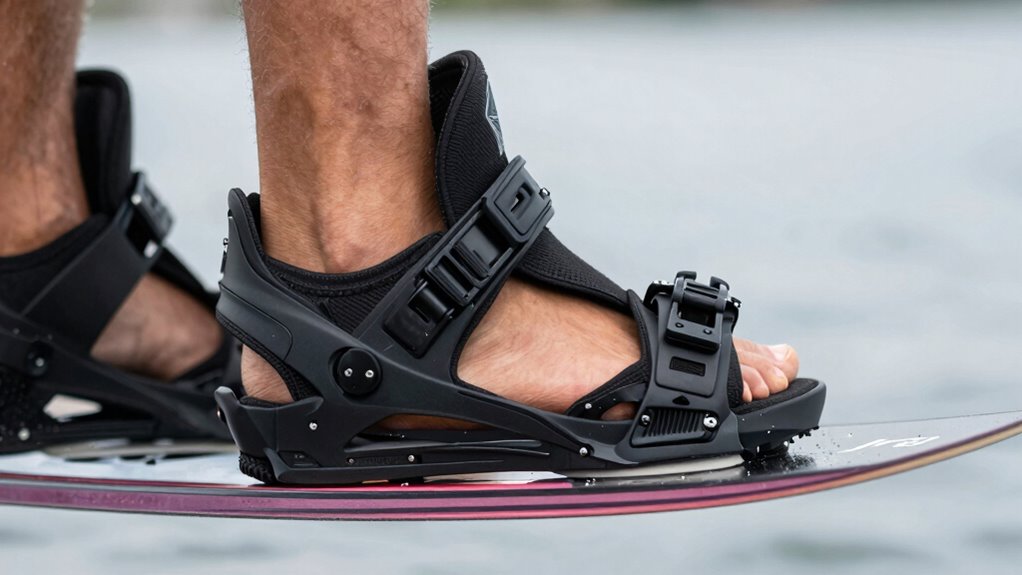
A proper heel fit is essential for maintaining control while wakeboarding because it directly influences your ability to stay balanced and respond to your movements. When your heel fits snugly in the binding, it prevents unnecessary heel lift that can throw off your balance. A secure heel fit enhances control enhancement by giving you better leverage and connection to the board. If your heel feels loose or too tight, you’ll struggle to make precise turns or stay centered, risking falls or reduced confidence. Comfort also plays a role; a well-fitted heel allows you to focus on your ride without distraction. Ultimately, ensuring your heel fits correctly helps you maintain stability, improve responsiveness, and enjoy a smoother wakeboarding experience.
How Heel Lift Hurts Your Balance and Tricks
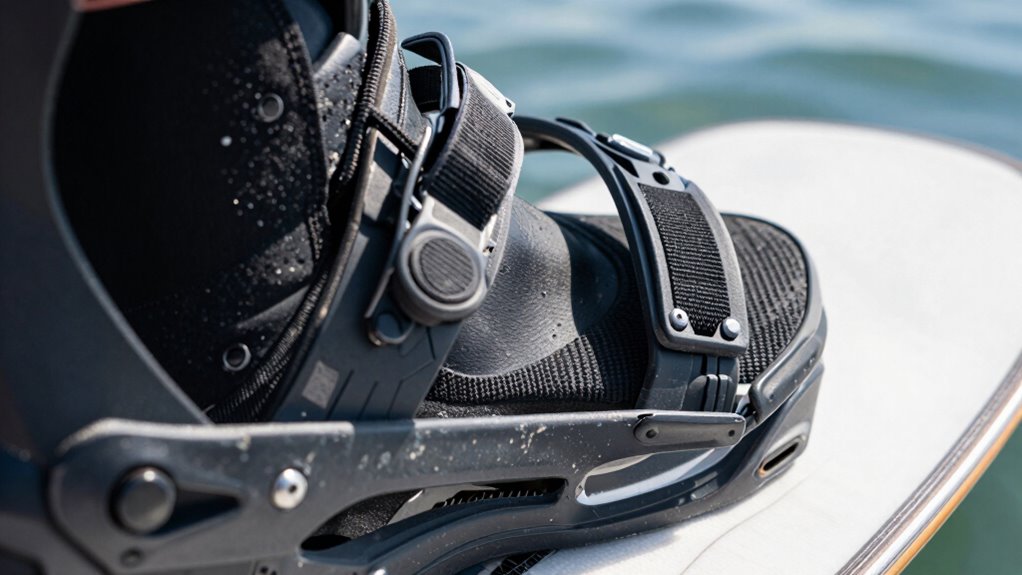
When your heel lifts even slightly out of the binding, it disrupts your balance and makes executing tricks much harder. Heel slip reduces ankle stability, causing you to wobble or lose control mid-air. This instability forces you to overcompensate, risking falls or awkward landings. To understand the impact, consider this table:
| Issue | Effect | Solution |
|---|---|---|
| Heel slip | Less control during tricks | Proper fit and snug bindings |
| Reduced ankle stability | Increased wobbling and falls | Custom lace tension |
| Balance loss | Difficulty maintaining stance | Correct binding positioning |
| Trick execution | Harder to land precise tricks | Secure heel fit |
| Safety risk | Higher chance of injury | Regularly check fit |
Heel lift compromises your balance, making tricks unsafe and less effective.
How to Tell If Your Bindings Are Causing Heel Lift?
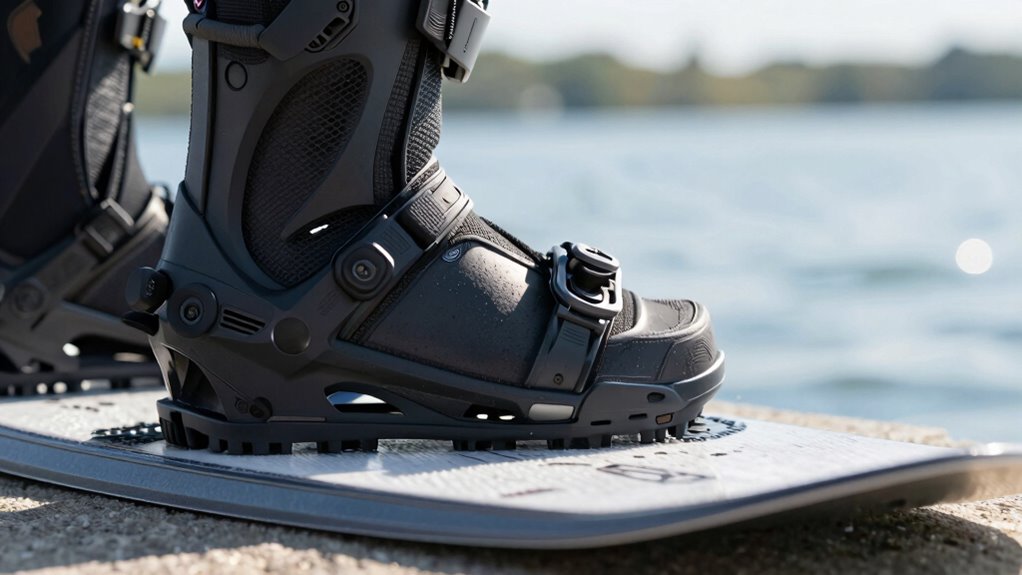
To identify if your bindings are causing heel lift, pay close attention to how your boots fit and how they feel during rides. If you notice your heels lifting out of the bindings or feeling loose, it’s a sign they may not be providing proper binding comfort. Check for these signs:
- Your toes feel crammed, but your heels lift when you ride.
- The boots feel overly loose around your heel, despite tightening the straps.
- You experience heel lift early in your session, regardless of how foot size matches the binding.
These issues often stem from poor foot size compatibility or improper fit, which compromises control. Ensuring your bindings fit snugly and comfortably will minimize heel lift and improve your wakeboarding experience.
Tips to Prevent Heel Lift and Keep Your Heels Secure
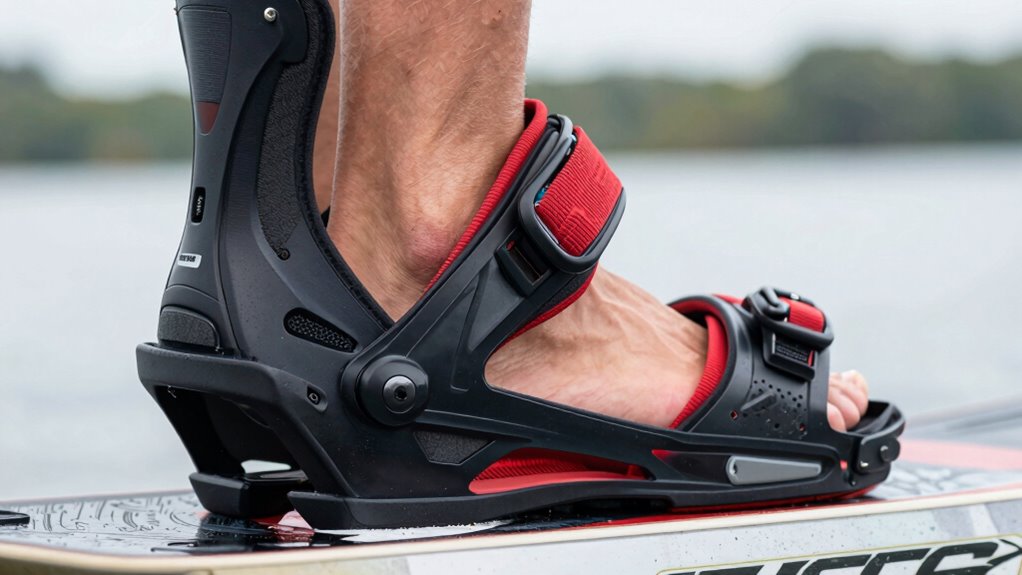
Ensuring your heels stay secure during wakeboarding starts with making simple adjustments to your bindings and riding technique. First, focus on heel comfort—your boots should fit snugly without causing discomfort, which helps prevent heel lift. Check that the straps are tight enough to hold your heels firmly in place, but not so tight that they cut off circulation or cause pain. Proper strap tightness provides the needed support while maintaining comfort. Additionally, ensure your heels are seated properly in the heel cup before tightening the straps. Remember, a secure fit encourages better control and reduces heel lift. Regularly adjust your bindings to find the right balance between heel comfort and strap tightness, keeping your heels locked in and your wakeboarding experience smooth.
Choosing Wakeboard Bindings That Minimize Heel Lift

Choosing wakeboard bindings that minimize heel lift starts with selecting the right type and fit for your riding style. Focus on bindings with a secure heel cup that snugly cradles your heel, preventing unnecessary movement. Adjust the strap tension so it’s firm enough to hold your heel in place without causing discomfort. To find the best fit, consider these tips:
- Ensure the heel cup contours to your heel shape for maximum support
- Tighten straps evenly, avoiding excessive pressure that could cause heel lift
- Try bindings with adjustable strap tension to customize fit as needed
Frequently Asked Questions
Can Custom Insoles Improve Heel Fit in Wakeboard Bindings?
Yes, custom insoles can improve heel fit in wakeboard bindings. They enhance heel comfort by filling gaps and providing better sole support, which reduces heel lift. When your heel stays secure, you gain more control and stability on the water. Custom insoles mold to your foot’s shape, ensuring a snug fit that prevents slipping and improves overall performance. So, investing in them can make a noticeable difference in your ride.
Does Foot Size Influence Heel Lift in Wakeboard Bindings?
Yes, your foot size influences heel lift in wakeboard bindings. If your foot length is too long or your ankle circumference is larger than the binding’s design, you’ll likely experience heel lift. Proper fit depends on snugly accommodating both measurements. To improve control, choose bindings that match your foot length and ankle size, or consider custom insoles to fill gaps, ensuring your heel stays secure and responsive during rides.
Are There Specific Brands Known for Better Heel Fit?
Some brands are better known for their heel comfort and precise binding sizing, which helps reduce heel lift. You should check out brands like Ronix, Liquid Force, and CWB, as they focus on snug fit and better heel support. When choosing, make certain of proper binding sizing for your foot, because a perfect fit minimizes heel lift and maximizes control, giving you a better wakeboarding experience overall.
How Often Should Wakeboard Bindings Be Replaced for Optimal Fit?
Think of your wakeboard bindings like a trusted pair of shoes—they need replacing when they no longer support you. Usually, you should replace your bindings every 1-2 seasons, especially if the binding material wears or the heel cup design no longer holds your heel securely. Over time, wear causes heel lift, reducing control. Regular inspection helps you catch issues early, ensuring consistent performance on the water.
Do Different Wakeboarding Styles Require Different Binding Fits?
Yes, different wakeboarding styles require different binding fits. If you prefer wakeboarding tricks or wake jumps, you’ll want a snug fit to prevent heel lift issues, which can ruin your control. Comfort also matters—if your bindings are too tight, they cause discomfort, but too loose, they lead to heel lift issues. Choose bindings that match your style to improve control and overall comfort on the water.
Conclusion
Remember, a chain is only as strong as its weakest link—your wakeboard control depends on your bindings fitting perfectly. If heel lift is throwing off your balance and tricks, it’s time to take action. Choose bindings that keep your heels snug and secure, and don’t settle for less. After all, a tight fit is the key to mastering your ride. Stay vigilant, and enjoy the water—because a good grip makes all the difference!