To stop rust before it starts on your saltwater kayak, regularly rinse it with fresh water after each trip to remove salt residue, and inspect for cracks or corrosion spots. Use corrosion-resistant hardware like stainless steel or titanium, and apply marine-grade protective coatings or waxes designed for saltwater environments. Store your kayak in a dry, ventilated area, elevating it to prevent moisture buildup. Keep these tips in mind to extend its lifespan—more tips await if you keep exploring.

Get pool and patio gear delivered free with Prime
- Fast, free delivery on millions of items
- Prime Video, Amazon Music and more included
- Member-only deals all year
Key Takeaways
- Rinse the kayak with fresh water immediately after saltwater use to remove salt deposits and prevent corrosion.
- Use corrosion-resistant hardware like stainless steel or titanium to minimize rust risk.
- Regularly inspect fittings, seams, and metal parts for signs of salt residue, cracks, or corrosion.
- Apply marine-grade protective coatings or waxes designed for saltwater environments to extend durability.
- Store the kayak in a dry, well-ventilated area, elevated and away from direct sunlight, to prevent long-term rust and damage.
As an affiliate, we earn on qualifying purchases.
Why Saltwater Damages Kayaks and How to Prevent It
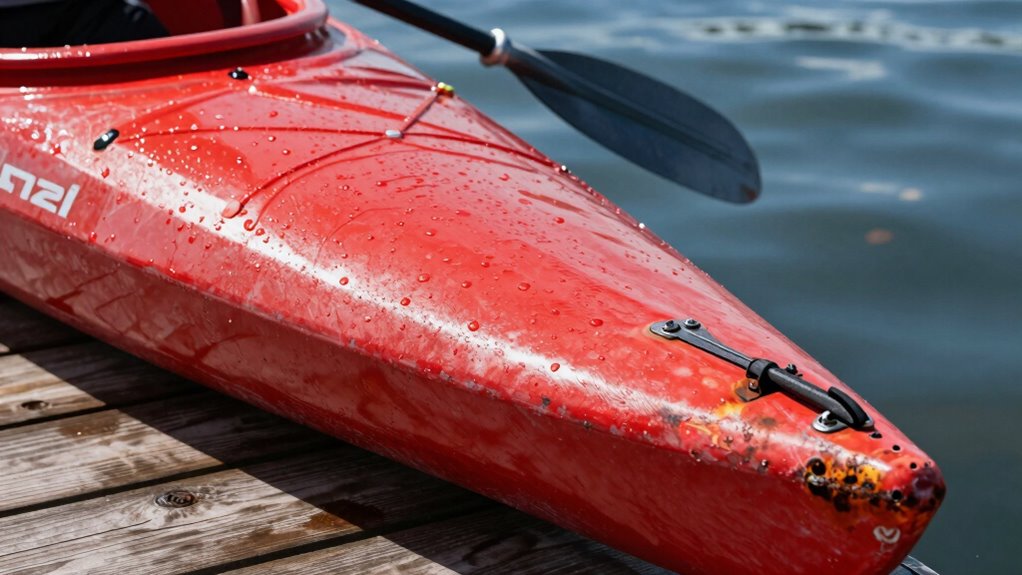
Saltwater can cause considerable damage to kayaks because its salty, corrosive nature accelerates the deterioration of materials like metal and certain plastics. To combat this, effective corrosion prevention starts with proper material selection. Choose kayaks made from corrosion-resistant materials, such as polyethylene or composite plastics, which stand up better against salt exposure. Avoid using aluminum or uncoated steel, as these metals are prone to rust when exposed to saltwater. Regularly rinsing your kayak with fresh water helps remove salt residue, reducing the risk of corrosion. Applying protective coatings or waxes designed for marine environments can also extend your kayak’s lifespan. By understanding how saltwater affects your kayak and selecting the right materials, you can considerably improve its durability and performance in salty conditions.
How to Inspect Your Kayak for Saltwater Damage Before Each Trip
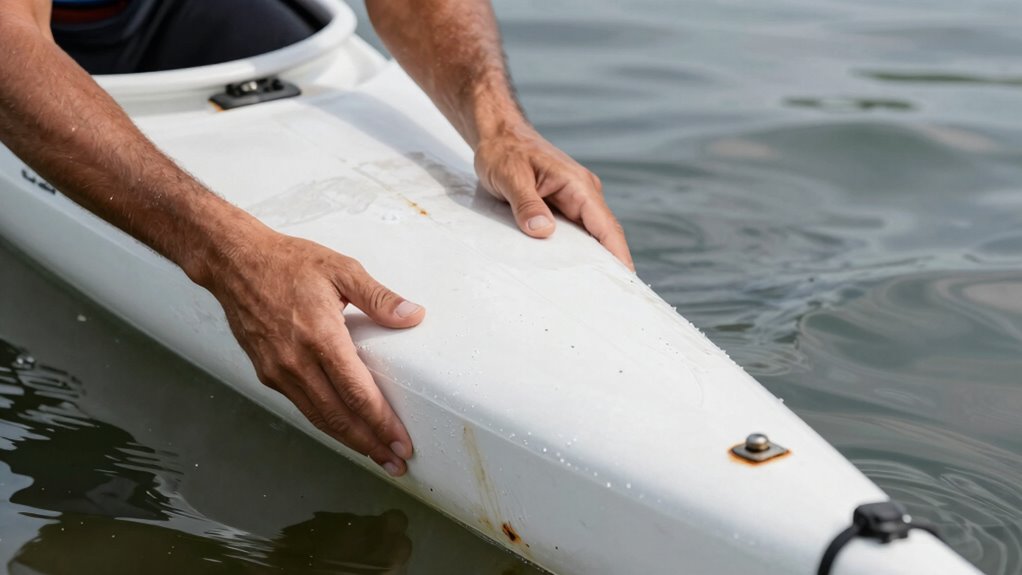
Before each trip, take a close look at your kayak for saltwater damage. Use your eyes to spot cracks, corrosion, or discoloration, especially around fittings and seams. Checking for signs of corrosion helps catch issues early and keeps your kayak in top shape.
Visual Inspection Techniques
To guarantee your kayak stays in top condition, it’s essential to perform a thorough visual inspection before each trip. Use a color coded inspection system to quickly identify areas needing attention—red flags for damage, yellow for minor wear, and green for good condition. Incorporate a tool based assessment by carrying a flashlight and mirror to check hard-to-see spots. Look for cracks, chips, and corrosion spots, especially around fittings and seams. Carefully examine the hull for signs of salt residue or pitting. Use the table below to guide your inspection:
| Area | Inspection Focus |
|---|---|
| Hull | Salt residue, cracks, discoloration |
| Fittings | Corrosion, looseness |
| Seams & Joints | Salt deposits, wear |
Checking for Corrosion
Regularly inspecting your kayak for corrosion is essential to guarantee it remains seaworthy and safe. Before each trip, check all metal components, including rivets, fittings, and rudder parts, for signs of rust or discoloration. Rust prevention starts with early corrosion detection; look for pitting, flaking paint, or white powdery deposits, which indicate corrosion is beginning. Use a flashlight to examine hard-to-see areas and run your fingers over metal surfaces to feel for roughness or weakness. Address any corrosion immediately by cleaning the affected area with a rust remover and applying a protective coating. Consistent inspections help catch issues early, preventing further damage and ensuring your kayak stays in prime condition for saltwater adventures.
How to Clean Your Kayak After Saltwater Adventures
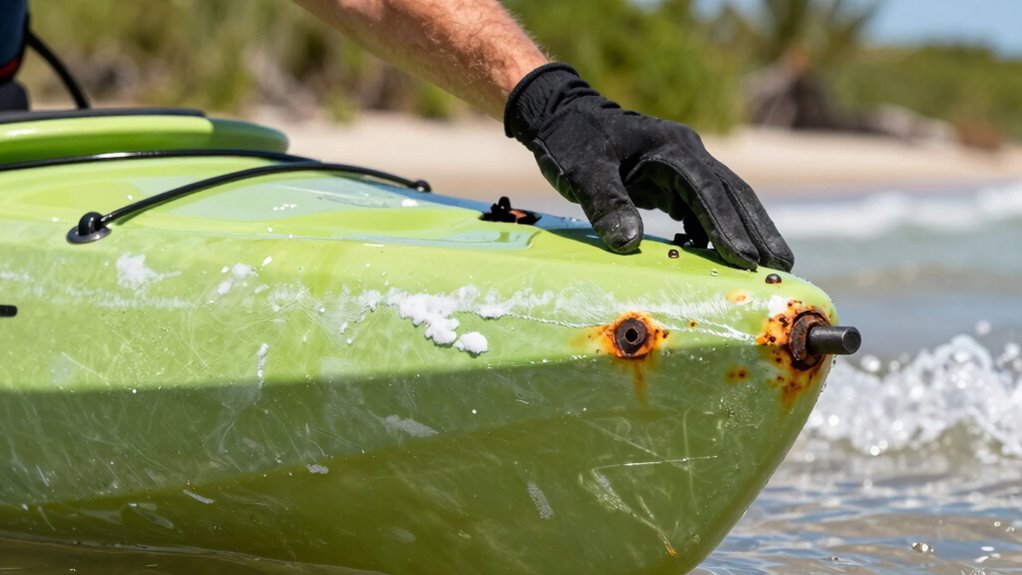
After a saltwater kayak trip, performing a thorough cleaning on your boat is vital to prevent corrosion and damage. Proper kayak cleaning involves three key steps: first, rinse the entire kayak with fresh water immediately after your trip to remove salt residues. Second, focus on salt removal from crevices and fittings using a soft brush or cloth, ensuring no salt deposits remain. Third, inspect for any signs of corrosion or damage, especially around metal parts, and dry the kayak thoroughly to prevent moisture buildup. Pay special attention to areas where salt can settle, like hatches and seams. Regular salt removal and cleaning protect your kayak’s integrity, extend its lifespan, and keep it ready for your next adventure.
How to Protect Your Kayak With Coatings and Sealants
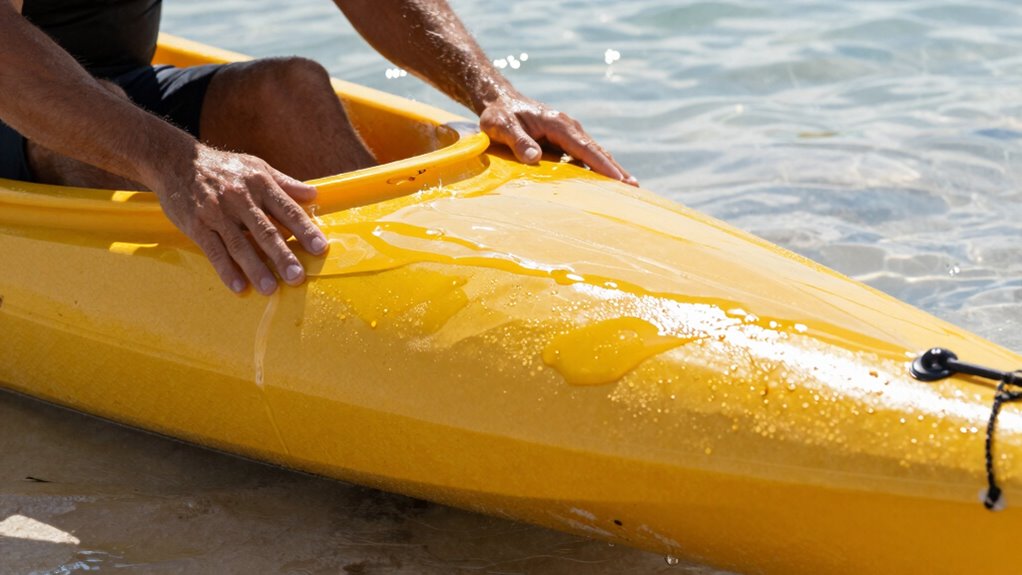
Choosing the right coatings and sealants is essential to keep your kayak protected from saltwater damage. When applying them properly, you guarantee a long-lasting barrier against corrosion and wear. Let’s explore how to select the best products and use them effectively.
Choosing the Right Coatings
Selecting the right coatings is essential to protecting your kayak from the harsh effects of saltwater. A quality gel coat provides a durable, smooth exterior that resists corrosion and UV damage. To prevent marine growth, anti fouling coatings are vital, especially for submerged areas. When choosing coatings, consider these factors:
- Compatibility with your kayak’s material, ensuring proper adhesion and flexibility.
- Resistance to saltwater, UV rays, and physical impacts.
- Ease of application, such as spray or brush-on options, for a smooth finish.
Opt for a high-quality gel coat for the hull’s exterior, and apply anti fouling paint on submerged surfaces. This combination safeguards your kayak from rust, marine growth, and wear, extending its lifespan in saltwater environments.
Applying Sealants Properly
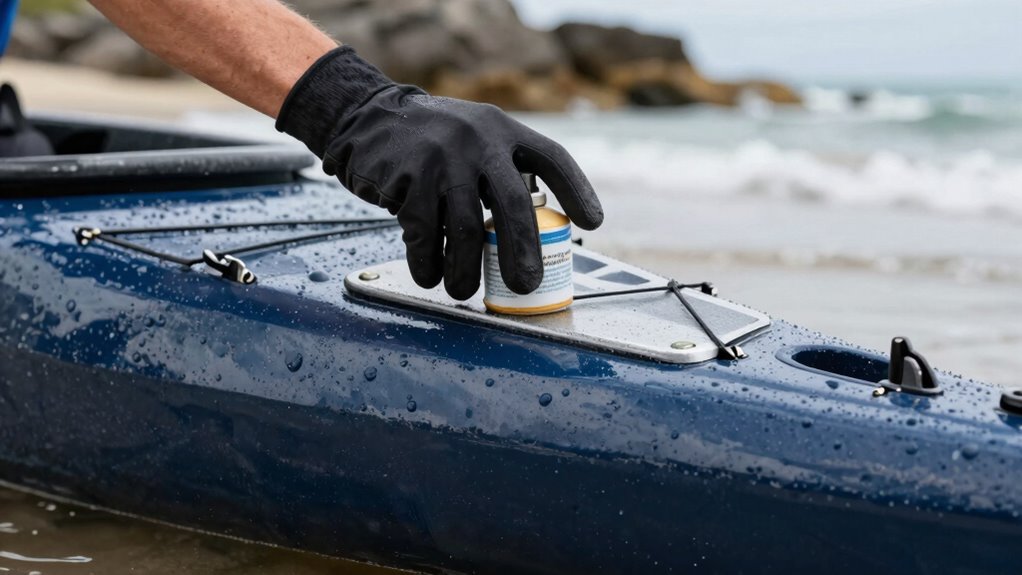
To effectively protect your kayak from saltwater damage, applying sealants properly is essential. Start by cleaning the surface thoroughly to remove dirt, salt, and grease, ensuring good adhesion. Use the right application techniques, such as applying a thin, even layer with a brush or roller, and avoid overapplying, which can lead to uneven coverage or drips. Make sure to follow the manufacturer’s instructions for drying times and curing periods. Proper application not only creates a solid barrier against moisture but also enhances sealant longevity, saving you time and money in the long run. Regular inspections and touch-ups will help maintain the integrity of the coating, keeping your kayak protected from saltwater corrosion and rust.
Best Storage Tips to Minimize Saltwater Damage During Off-Season
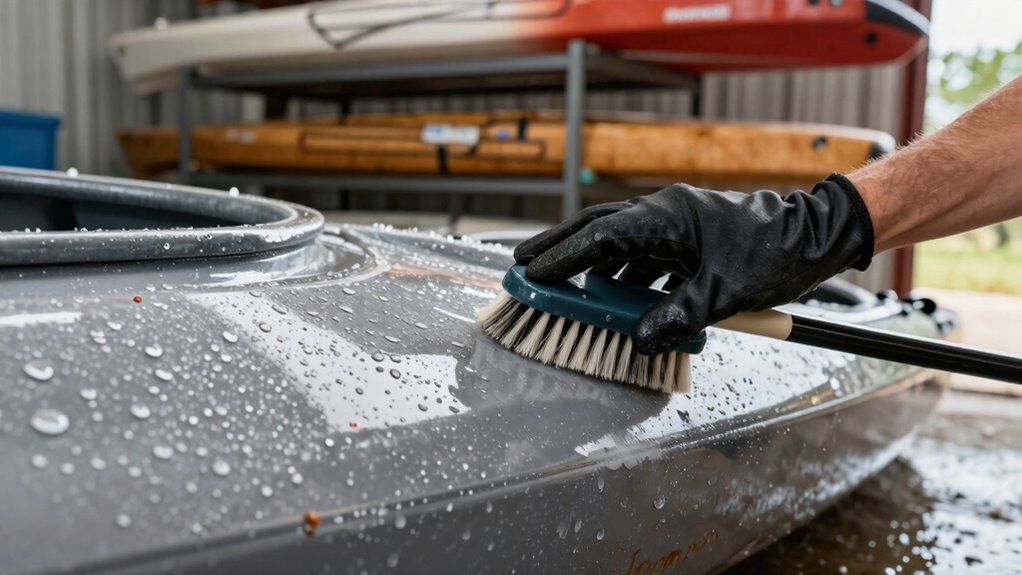
Proper storage during the off-season is essential to protect your kayak from saltwater corrosion and deterioration. When you’re not kayak paddling, saltwater ecology can cause corrosion, especially if moisture lingers. To minimize damage, follow these tips:
- Store your kayak in a dry, well-ventilated area away from direct sunlight.
- Elevate it off the ground on supports to prevent contact with damp surfaces.
- Regularly inspect and rinse your kayak with fresh water before storage, removing any residual salt or debris.
These steps help prevent rust and salt buildup, ensuring your kayak remains in good condition for future adventures. Proper storage not only extends your kayak’s lifespan but also maintains its performance and safety during your next paddle.
Choosing Saltwater-Resistant Materials and Accessories
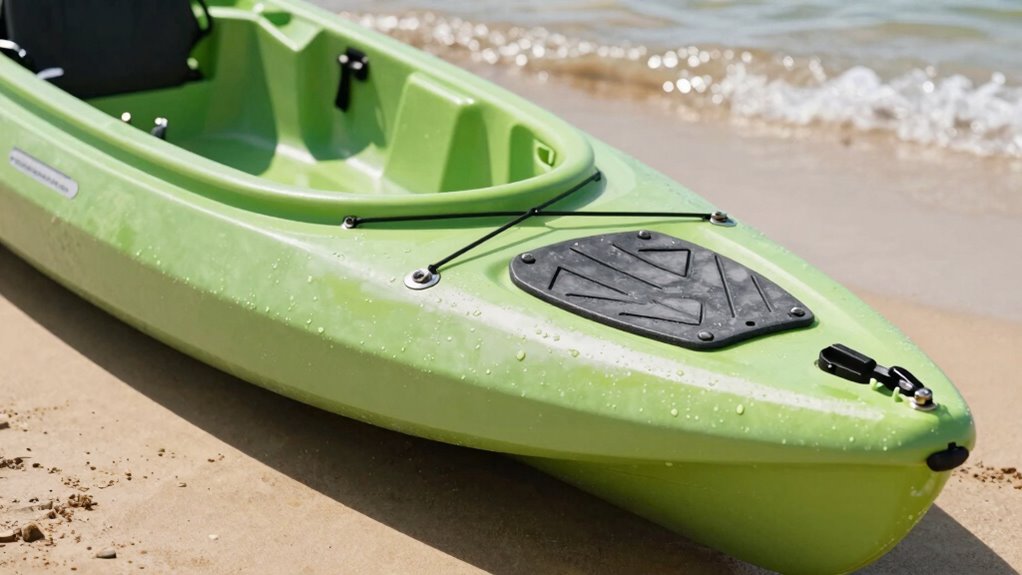
When choosing materials and accessories for your saltwater kayak, it’s vital to prioritize those designed to resist corrosion and deterioration. Look for corrosion resistant hardware like stainless steel or titanium, which withstand harsh conditions better than standard metal. Marine grade adhesives are also essential—they form a strong, waterproof bond without rusting or degrading over time. Selecting these materials ensures longevity and safety on your adventures. Here’s a quick comparison:
| Material/Accessory | Benefits |
|---|---|
| Corrosion resistant hardware | Prevents rust, extends lifespan, maintains integrity |
| Marine grade adhesives | Waterproof, durable, resistant to saltwater damage |
| Aluminum fittings | Lightweight, corrosion-resistant |
| Plastic components | Rust-proof, affordable, easy to replace |
Choosing the right materials keeps your kayak in top shape and ready for saltwater adventures.
Establishing a Routine Maintenance Schedule for Saltwater Kayak Care
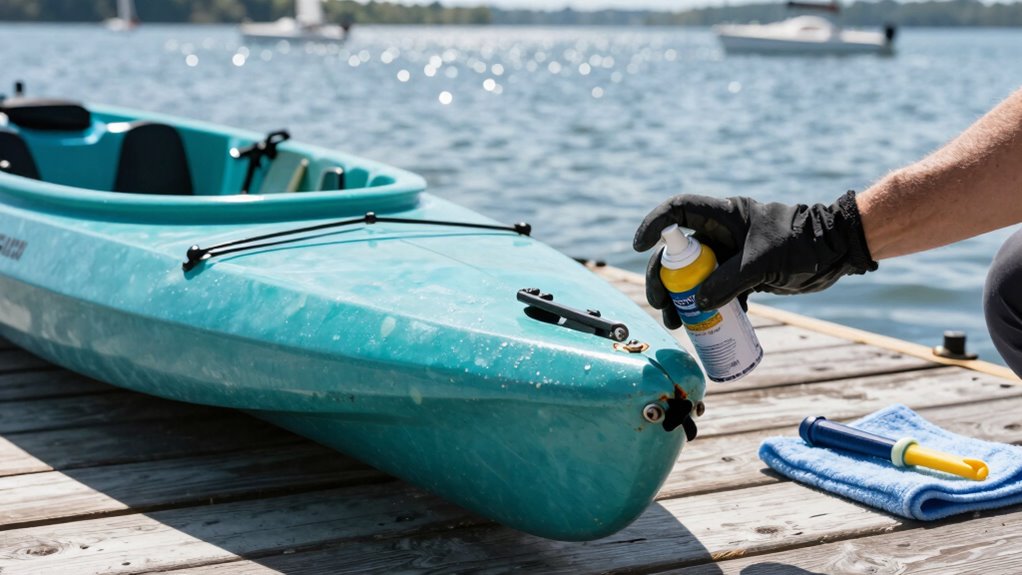
Establishing a routine maintenance schedule is essential for keeping your saltwater kayak in ideal condition and extending its lifespan. Regularly check the kayak hull for signs of corrosion, cracks, or damage, and perform kayak hull inspection at least once a month. Additionally, prioritize kayak interior maintenance by cleaning and drying the cockpit, storage compartments, and hatches to prevent mold and corrosion. To stay on track, consider these steps:
- Schedule bi-weekly rinsing with fresh water after each saltwater outing.
- Conduct monthly kayak hull inspections for rust or damage.
- Perform thorough cleaning and drying of the interior after each use.
Frequently Asked Questions
What Are the Signs of Early Rust Formation on a Kayak?
You’ll notice early rust signs as paint chips or discoloration on your kayak’s metal parts. These small chips often appear where the paint has worn away, exposing the metal underneath. Discoloration, like reddish or brownish stains, can also indicate rust beginning to form. Keep a close eye on areas prone to moisture, and address these signs promptly to prevent rust from spreading and damaging your kayak further.
Can I Use Household Products to Remove Salt Corrosion?
Yes, you can use household solutions to tackle salt corrosion, but beware—these everyday items can be mighty warriors against rust! Mix baking soda and water for a gentle scrub or use vinegar for stubborn spots. Just remember, for long-lasting corrosion prevention, always rinse thoroughly afterward and dry your kayak. Don’t rely solely on household products; regular maintenance is your best shield against saltwater’s relentless attack.
How Often Should I Replace Kayak Hardware Exposed to Saltwater?
You should replace kayak hardware exposed to saltwater every 1 to 2 years, depending on its hardware lifespan. Regular inspections help you spot signs of corrosion or wear early. If you notice rust, pitting, or compromised integrity, substitute the hardware promptly to ensure safety and performance. Don’t wait too long, as saltwater accelerates deterioration; timely replacement keeps your kayak in top condition and prevents costly repairs.
Are There Eco-Friendly Ways to Clean Saltwater Residue?
Imagine washing away the ocean’s whisper with gentle hands. You can use biodegradable cleaners or natural remedies like vinegar and baking soda to clean saltwater residue eco-friendly. These solutions break down safely, preserving marine life and your kayak’s integrity. You’ll feel good knowing you’re protecting the environment while maintaining your kayak’s performance. With these natural methods, saltwater residues vanish, leaving only smooth, rust-free surfaces and a cleaner conscience.
What Are the Best Practices for Drying My Kayak Thoroughly?
To dry your kayak thoroughly, use effective drying techniques like wiping it down with a clean, absorbent towel after each use. You should also prop it up in a shaded, well-ventilated area to guarantee all moisture evaporates. For storage tips, keep it in a dry, cool spot away from direct sunlight, and consider using a cover to protect it from humidity. Regularly check for any remaining dampness to prevent rust and damage.
Conclusion
Regular maintenance is key to preventing saltwater damage and extending your kayak’s lifespan. By inspecting, cleaning, and protecting your kayak consistently, you’ll keep it in top condition and ready for every adventure. Did you know that saltwater can cause corrosion in just a few hours? Staying proactive with routine care reduces the risk of costly repairs and keeps your kayak performing like new, so you can enjoy the water worry-free season after season.
Columbus Day / Indigenous Peoples' Day Picks
long weekend sales
As an affiliate, we earn on qualifying purchases.