
Choosing the right towable tube rope length is key because it directly impacts your control, safety, and ride comfort. Shorter ropes give you sharp turns and better control, ideal for choppy water or thrill-seekers. Longer ropes create a smoother, more relaxed ride perfect for calm conditions. Adjusting the length based on water, rider skill, and boat specs can improve your experience greatly. Keep exploring to discover how to find the best length for your fun on the water.
Key Takeaways
- The correct rope length balances control, safety, and ride comfort, significantly impacting your overall towing experience.
- Shorter ropes provide more control and quick turns, ideal for choppy waters and thrill-seekers; longer ropes offer a relaxed ride.
- Adjusting rope length based on water conditions, rider skill, and boat size enhances safety and ride quality.
- Proper rope length reduces jerks, absorbs shocks, and prevents accidents, ensuring a smoother, more enjoyable ride.
- Material choice and regular maintenance of the rope are essential for durability, safety, and optimal performance.
What’s the Best Towable Tube Rope Length for Beginners?
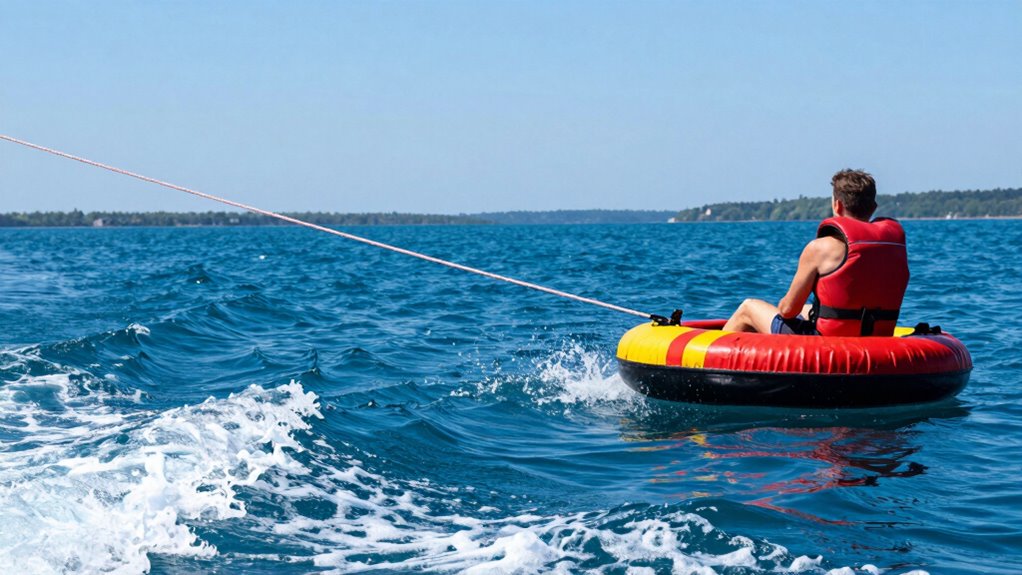
When you’re just starting out, choosing the right towable tube rope length can make a big difference in your comfort and safety on the water. For beginners, a rope length between 60 to 75 feet usually works best. This length provides enough distance from the boat to reduce the risk of sudden jerks, helping you maintain control. It also allows space to react if weather conditions change unexpectedly. Always wear proper safety gear, like life jackets, and check weather conditions before heading out. Shorter ropes can be safer in choppier weather or crowded areas, while longer ropes are better for open water and calm conditions. Remember, selecting the right length enhances your safety and makes your tubing experience more enjoyable.
How Do Different Rope Lengths Affect Your Tubing Experience?
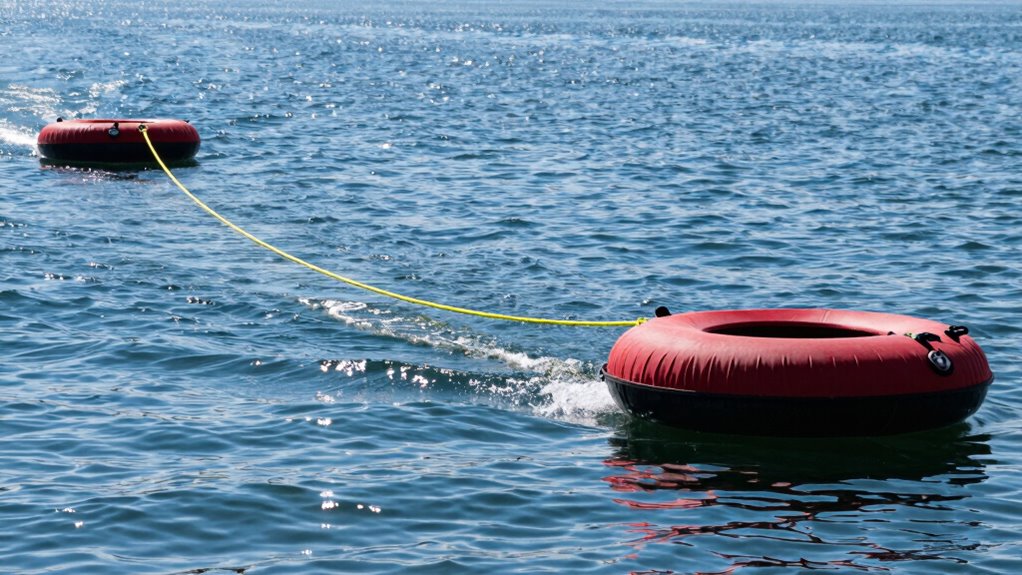
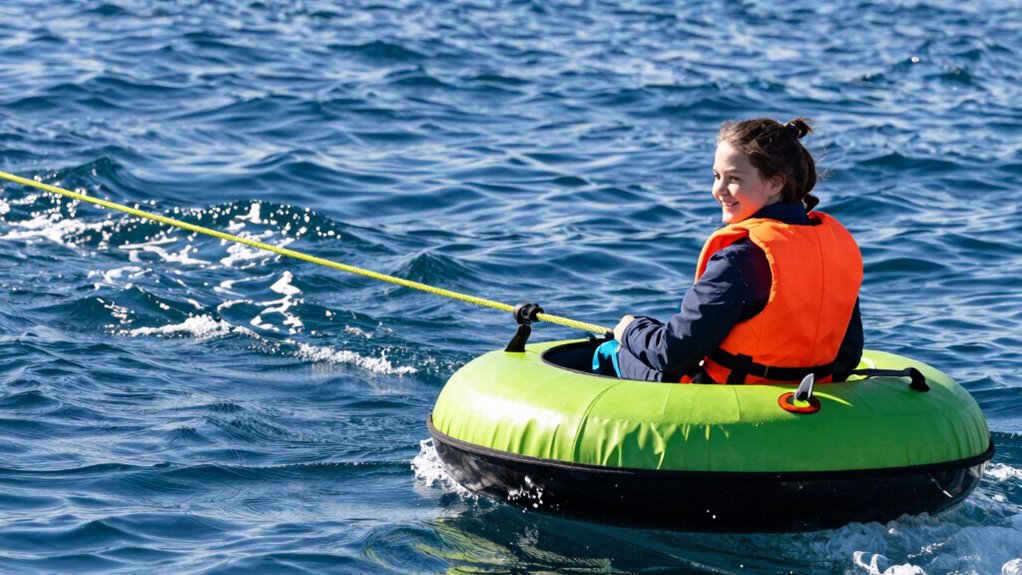
The length of your towable tube rope directly impacts how smoothly and safely your ride feels. Longer ropes provide more slack, which can reduce the jerkiness caused by sudden turns or waves, thanks to better rope elasticity. This extra flexibility absorbs shocks, making the ride more comfortable and safer, especially for inexperienced riders. However, longer ropes also mean increased safety considerations, as the distance from the boat can make it harder to maintain control. Shorter ropes offer more direct control, reducing the risk of collisions or unintentional swings. Ultimately, choosing the right rope length balances ride comfort with safety, considering how much rope elasticity you need to minimize sudden jolts while keeping the tubing experience secure.
Choosing the Right Rope Length Based on Water Conditions and Rider Skill
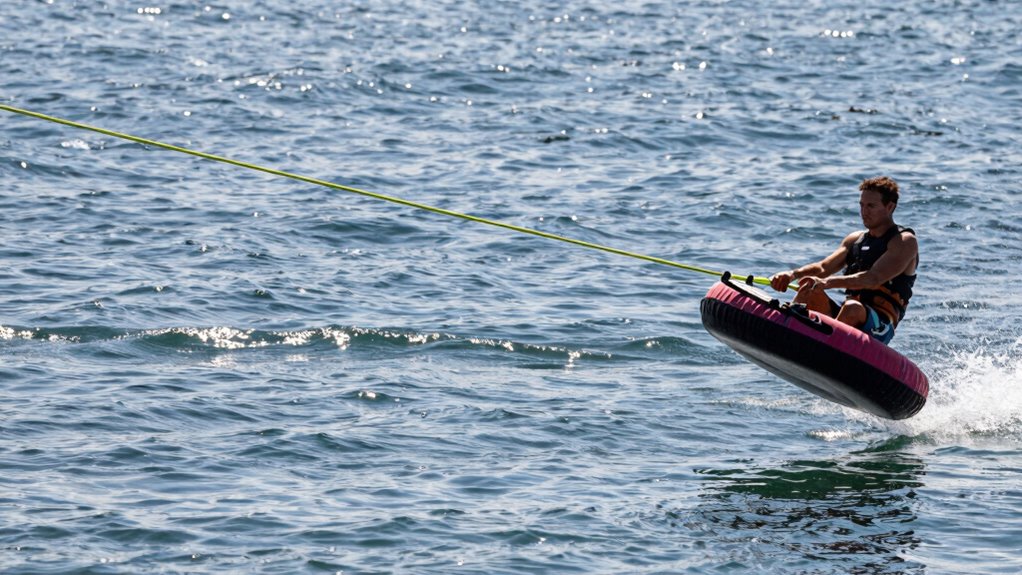
Your water conditions and riding experience play a big role in selecting the right rope length. When the water is choppy or crowded, a shorter rope offers more control, especially for beginners. Conversely, experienced riders in calm waters might prefer a longer rope for a smoother, more exhilarating ride.
Water Conditions and Rope Length
Choosing the right rope length depends heavily on water conditions and rider skill. Calm, flat water allows for longer ropes, giving you extra control and a smoother ride. In choppy or rough waters, shorter ropes help maintain stability and reduce risks. Always check marine regulations to verify your rope length complies with local safety standards. Proper safety gear is essential, especially in unpredictable water conditions, to protect you and other riders.
- Feel the thrill of gliding smoothly across serene waters, confident in your choice.
- Experience the adrenaline as waves challenge your skills and test your limits.
- Feel secure knowing your gear and rope meet safety regulations.
- Embrace the freedom of a well-suited length that enhances your ride.
- Avoid accidents and frustration by adjusting your rope to water and skill level.
Rider Skill and Rope Length
Rider skill plays a essential role in determining the ideal rope length for towable tubes. If you’re confident on the water, you can handle a shorter rope, making the ride more thrilling and responsive. However, if your rider confidence is still developing, a longer rope provides extra stability and control, reducing the risk of accidents. Rope safety is also fundamental—using a length suited to your skill level helps prevent sudden jolts or unexpected swings that can cause injury. As your skills improve, you can gradually shorten the rope to enhance the ride’s excitement. Always match your rope length to your ability, water conditions, and comfort level, ensuring a safe, enjoyable experience for everyone on board.
Key Factors to Consider When Picking a Tow Rope Length

Selecting the right tow rope length is essential for both safety and performance on the water. The length impacts your control, comfort, and water safety, so choose wisely. Consider your boat’s size and engine power—longer ropes may cause instability if your boat isn’t big enough. Think about rider skill levels; beginners require shorter ropes for better control. Remember, regular boat maintenance guarantees peak performance and safety during towing. The environment also matters—choppy water demands shorter ropes to reduce sway. Ultimately, always check local regulations for legal rope lengths.
- Feel confident that you’re in control and safe
- Enjoy a smooth, exhilarating ride
- Minimize risks of accidents or injuries
- Maintain your boat’s performance and longevity
- Keep everyone on board safe and happy
How to Adjust Rope Lengths Easily for Different Riders and Skill Levels
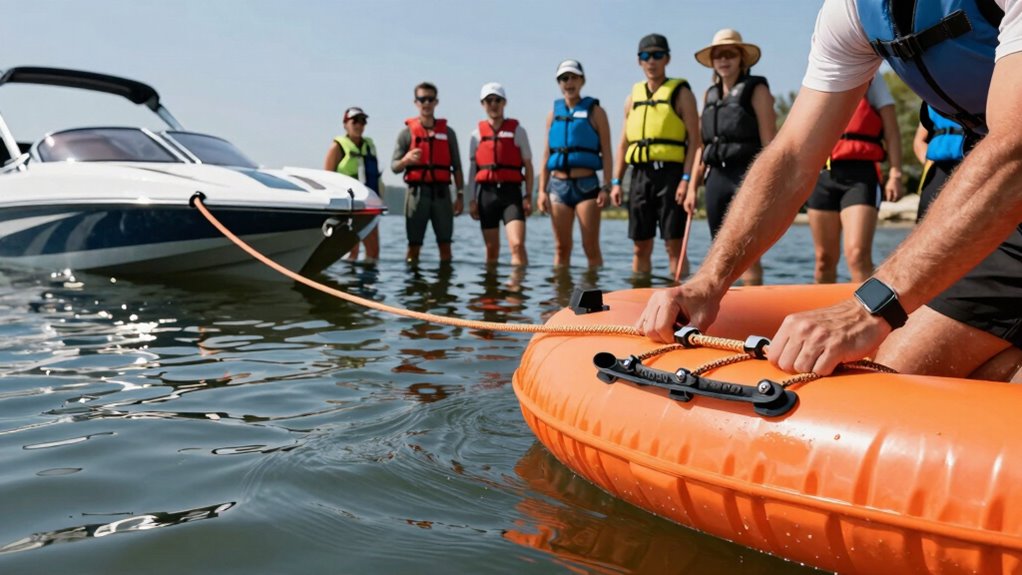
Adjusting the rope length quickly makes switching riders easier and safer. Matching the length to each rider’s skill level improves their experience and confidence. Using clear markings on the rope helps you make precise adjustments every time.
Adjust Rope Length Quickly
Changing the rope length on your towable tube is quick and straightforward, making it easy to customize for different riders and skill levels. You can quickly adjust by untieing a simple knot or sliding the rope through the attachment points. Keep your rope organized with proper rope storage, so it’s ready when you need to change lengths. This flexibility keeps everyone safe and comfortable on the water.
- Feel confident knowing you can adapt the ride instantly
- Enjoy seamless progressions for different skill levels
- Save time with easy knot tying and untying
- Reduce frustration with organized rope storage
- Keep the adventure flowing without delays
Match Rider Skill Levels
To make certain everyone has a fun and safe experience on the water, it’s important to tailor the rope length to each rider’s skill level. Beginners benefit from shorter ropes, which enhance rider comfort and control, reducing the risk of falls or accidents. As riders gain confidence and skill, you can lengthen the rope to increase the challenge and excitement of the ride. Adjusting the rope length based on skill levels helps maintain water safety by ensuring riders aren’t overwhelmed or under-challenged. Pay attention to how comfortable each rider feels at different lengths, and don’t hesitate to fine-tune as needed. This personalized approach keeps the ride enjoyable and secure for everyone, regardless of their experience.
Use Clear Markings
Clear markings on your tow rope make it easy to set and change lengths quickly for different riders. When adjusting rope lengths, visible markers help you prioritize water safety and ensure everyone’s comfort. Using durable rope materials with clear, contrasting markings lets you confidently change lengths on the fly, preventing accidents. Proper markings help you avoid guesswork, so you can focus on fun rather than uncertainty.
- Instantly adjust for beginners or experts, keeping everyone safe
- Minimize risks by ensuring consistent, correct rope length
- Save time during water activities with quick visual cues
- Build trust with riders through clear, reliable markings
- Enhance overall water safety by maintaining proper tension and distance
Common Mistakes to Avoid When Selecting Your Tow Rope Length
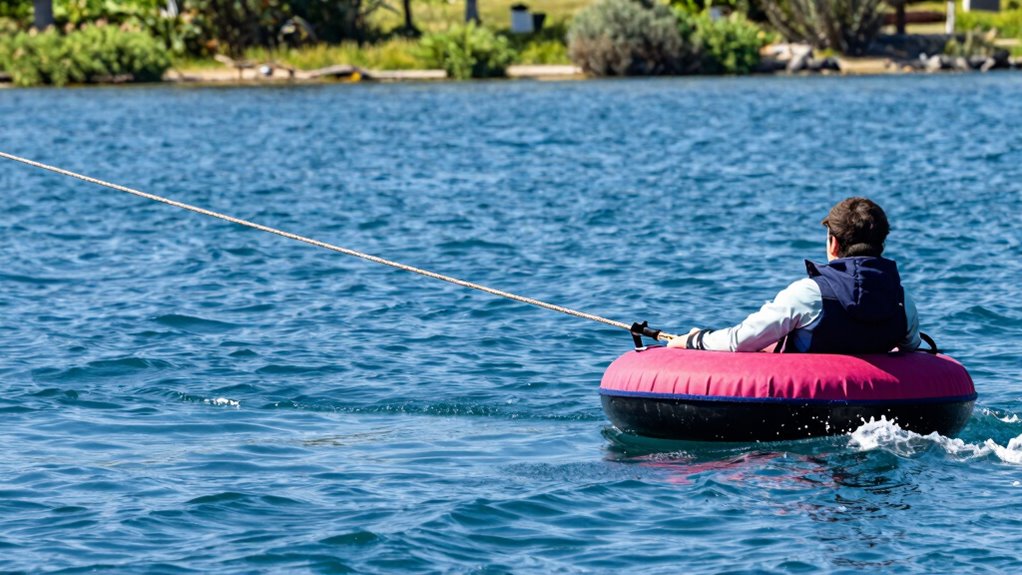
Choosing the right tow rope length is essential for a safe and enjoyable tubing experience, but many people make common mistakes that can lead to accidents or discomfort. One mistake is selecting a rope that’s too long, which can compromise towing safety by making control difficult and increasing the risk of collisions. Conversely, a rope that’s too short may cause jerky pulls and discomfort. Also, neglecting proper rope storage can damage the rope, weakening its strength over time. Always inspect your rope regularly and store it properly out of direct sunlight and sharp objects. Avoid using frayed or tangled ropes, as they could unexpectedly break during use. Being mindful of these mistakes helps ensure a smooth, safe ride and extends the lifespan of your tow rope.
Expert Tips for Finding the Perfect Towable Tube Rope Length
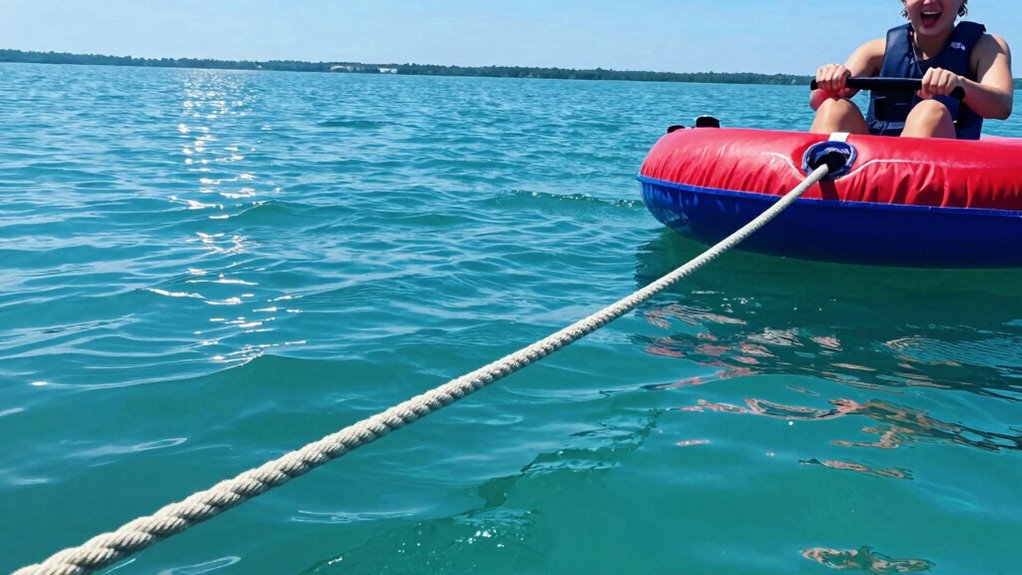
Finding the right towable tube rope length starts with understanding how different lengths affect your ride. The perfect length balances boat speed and comfort, ensuring a smooth, exciting experience. Shorter ropes provide more control and quicker turns, ideal for thrill-seekers. Longer ropes offer a more relaxed, stable ride, perfect for beginners or those seeking fun without intense pulls. Consider rope material—nylon stretches more, giving a softer ride, while Spectra or Dyneema are stiffer and better for high boat speeds. Expert tips include matching your boat’s speed to the rope length and choosing durable, high-quality materials that withstand tension.
- Feel the rush of the water as you master every turn
- Experience the thrill of faster rides safely
- Enjoy a soft, smooth pull that keeps everyone comfortable
- Trust a rope that won’t fray or break
- Make every ride unforgettable with perfect length choices
Frequently Asked Questions
How Does Tow Rope Material Impact Ride Quality and Safety?
You should choose a tow rope with material safety and durability considerations in mind. A high-quality, UV-resistant nylon or polyester guarantees a strong, flexible, and safe ride. These materials withstand water exposure and tension, reducing the risk of snapping or fraying. A durable rope keeps you safe and provides a smooth experience, while a lower-quality material might compromise safety and performance, making your ride less enjoyable and more risky.
What Are the Legal Regulations Regarding Tow Rope Lengths?
Ever wondered if your tow rope complies with safety standards? Regulations overview shows that legal limits on tow rope lengths vary by location but generally prioritize rider safety. Authorities set these standards to prevent accidents and ensure safe distances between boats and riders. Always check local laws before riding, and remember that adhering to these regulations helps protect everyone on the water. Are you doing your part to stay safe?
How Often Should I Replace My Towable Tube Rope?
You should replace your towable tube rope every 2-3 years or sooner if you notice fraying, cuts, or signs of wear. Proper storage tips include rinsing it with fresh water after use and keeping it in a cool, dry place away from direct sunlight. When towing, use correct techniques to reduce stress on the rope, which helps extend its lifespan and ensures safety on the water.
Can Different Boat Types Affect the Ideal Rope Length?
Different boat types can absolutely change your ideal rope length, especially when you consider boat speed and water conditions. Faster boats require longer ropes to prevent excessive bouncing and ensure safety, while rough water demands shorter, more controlled lengths for stability. Larger boats with more power might handle longer ropes better, but you need to adapt based on your specific water conditions and the type of boat you’re using.
What Maintenance Is Required to Keep My Tow Rope in Good Condition?
To keep your tow rope in good condition, regularly check the knot maintenance to guarantee it stays secure and smooth. After each use, store it in a cool, dry place away from direct sunlight and chemicals, as proper storage tips help prevent wear and deterioration. Avoid dragging the rope on rough surfaces, and rinse it with fresh water after saltwater use to prolong its lifespan.
Conclusion
Finding the perfect towable tube rope length is like tuning a musical instrument—you want harmony for a smooth ride. By considering your skill level, water conditions, and rider comfort, you can craft an experience that’s exhilarating yet safe. Remember, the right rope length isn’t just a number; it’s the key to discovering endless fun and unforgettable moments on the water. So, choose wisely and let the good times roll!