
Touring and all-around SUPs serve different paddling needs, and understanding their key differences can transform your experience. Touring boards are designed for long-distance travel on calm waters, emphasizing glide, stability, and efficiency. All-around boards offer versatility, handling varied conditions like small surf or rivers with ease, making them ideal for casual paddling and beginners. Knowing which suits your activities guarantees better performance and safety—discover more details that can help you choose the perfect board.
Key Takeaways
- Touring SUPs are longer, narrower, and optimized for efficiency and stability on long-distance, flat water trips.
- All-around SUPs are shorter, wider, and designed for versatility, handling various water conditions and activities.
- Material and construction differ, with touring boards prioritizing lightweight durability, while all-around boards focus on buoyancy and sturdiness.
- Touring boards excel in open water, supporting longer paddles and gear, whereas all-around boards suit casual paddling and mixed environments.
- Selecting the right SUP depends on water conditions, activity goals, and skill level, with each type offering unique performance benefits.
What Are Touring and All-Around SUPs? An Overview
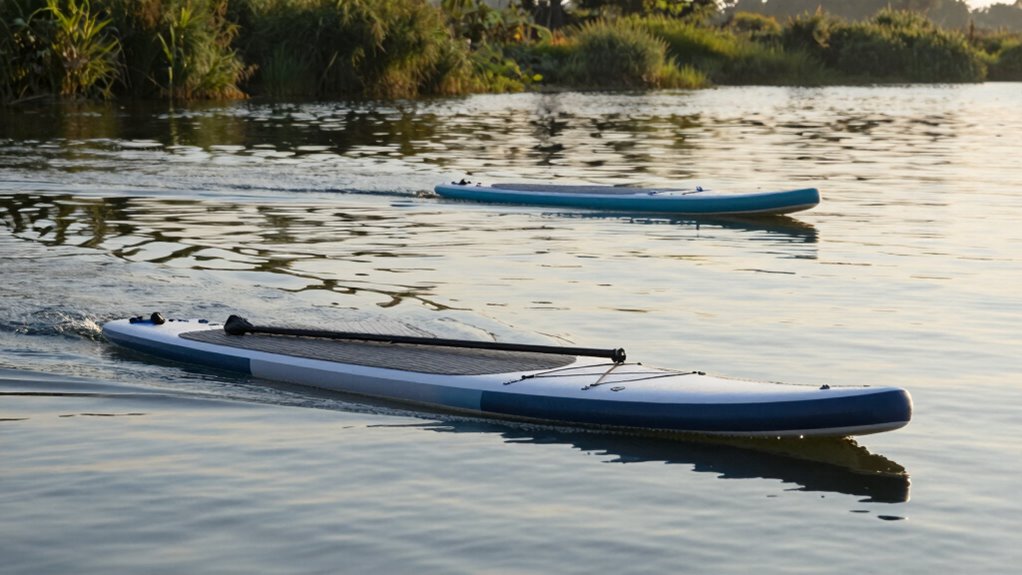
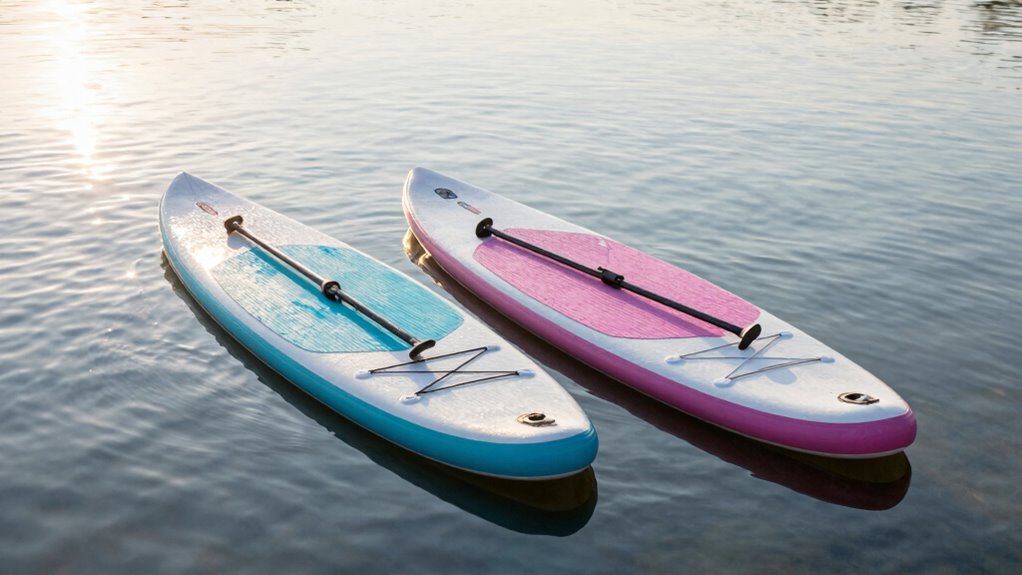
Ever wondered what sets touring and all-around stand-up paddleboards (SUPs) apart? The key differences lie in paddle length and deck shape. Touring SUPs typically have longer paddles, which help you reach further and maintain efficiency over long distances. They also feature a narrower, streamlined deck shape that promotes speed and glide, ideal for covering large stretches of water. All-around SUPs, on the other hand, usually have shorter paddles and a wider deck shape, providing better stability and maneuverability for beginners or casual paddlers. This versatility makes them perfect for varied water conditions. Understanding these design elements helps you choose the right board for your needs, whether you’re exploring remote waterways or enjoying relaxed paddling on calmer lakes.
How Do Touring and All-Around SUPs Differ in Design and Construction?
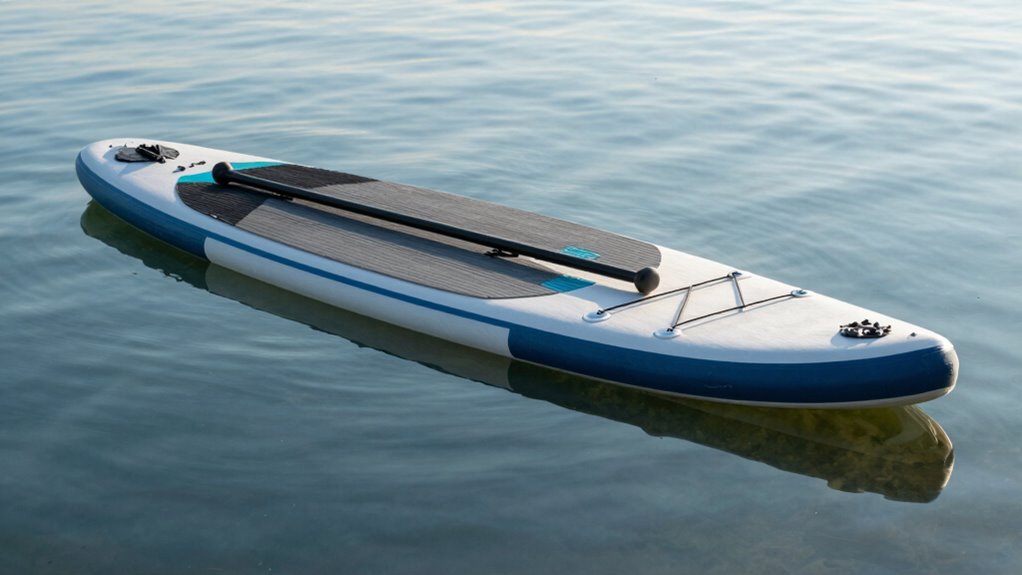
Touring and all-around SUPs differ markedly in their design and construction, reflecting their intended uses. Touring boards typically use lightweight, durable board materials like epoxy or carbon fiber to reduce weight and improve glide over long distances. Their narrower shape and pointed noses help cut through water efficiently, with a focus on ideal weight distribution for stability at higher speeds. In contrast, all-around SUPs are constructed with more buoyant, sturdy materials such as polyethylene or foam cores, making them heavier but more durable and forgiving. Their wider, more stable shape and rounded noses prioritize balance and maneuverability, especially in diverse water conditions. These design differences directly influence how each board performs and feels, aligning with their specific riding styles and environments.
Which Water Conditions Are Best for Touring vs. All-Around SUPs?
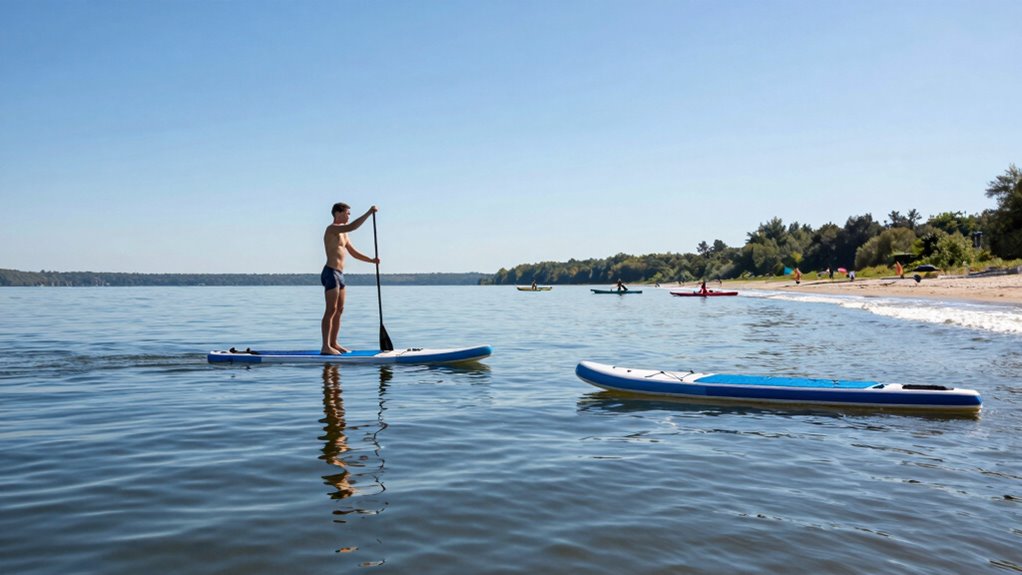
Your choice of SUP depends on the water conditions you’ll encounter. Touring boards excel on calm, open water like lakes and long rivers, where smooth paddling is key. All-around SUPs are more versatile, handling a variety of water types, including small waves and choppier conditions.
Ideal Water Conditions
Different water conditions favor different types of SUPs. For touring SUPs, calm, flat water like lakes or protected bays are ideal, allowing you to focus on long-distance paddling without instability. These conditions support surfing versatility, making it easier to maintain a straight course and glide smoothly. All-around SUPs excel in slightly more varied conditions, such as small waves or choppier water, where stability balance is key. They’re designed to handle a range of environments, offering enough stability to navigate minor surf or rougher water while still being versatile enough for calm conditions. Overall, choosing the right SUP depends on matching your water environment with the board’s design, ensuring you enjoy a smooth, safe, and enjoyable paddle experience.
Suitable Water Types
Choosing the right water conditions is vital for getting the most out of your SUP. For touring SUPs, calm, open waters like lakes or protected bays are ideal, providing ample space and stability for long-distance paddling. All-around SUPs excel in a variety of conditions, including small surf, rivers, and choppier lakes, making them versatile for different water types. Prioritizing water safety is essential; always assess water conditions before paddling and avoid rough or fast-moving waters if you’re inexperienced. Your paddle techniques should adapt to the water type—long, smooth strokes work well on flat water, while quick, controlled movements help maintain stability in choppier conditions. Matching your SUP to suitable water types ensures a safer, more enjoyable experience.
How Does Your Intended Use Influence Your SUP Choice?
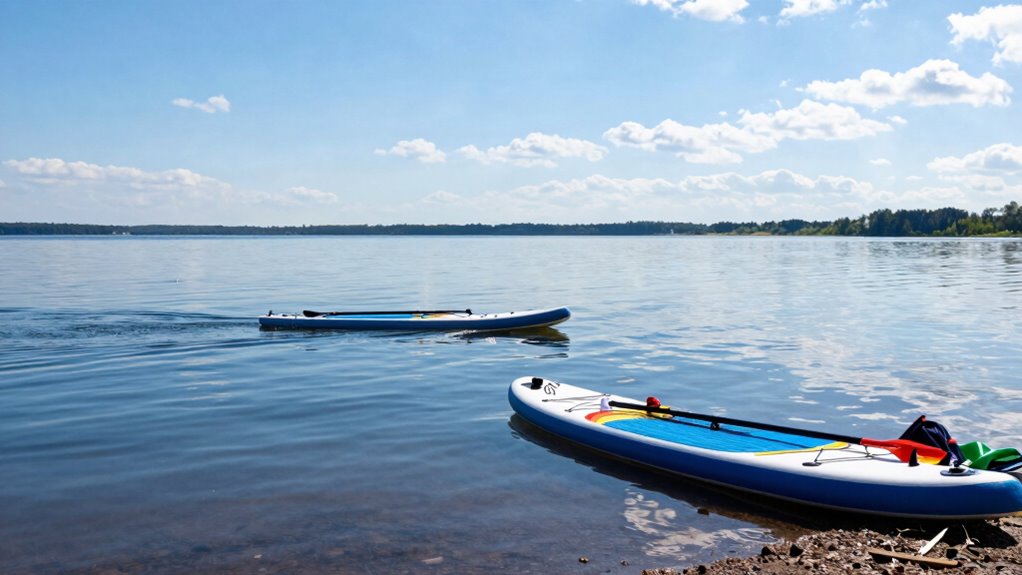
Your intended use shapes which SUP is right for you, especially when considering water conditions and activity-specific features. If you’ll paddle on rougher waters, you’ll need a board designed for stability and durability. For specific activities like fishing or yoga, look for features tailored to those needs to get the most out of your paddleboard.
Water Conditions Compatibility
The water conditions where you plan to paddle considerably influence whether a touring or all-around SUP suits your needs. If you’re paddling in areas with higher wave intensity or strong wind influence, your choice matters. Touring SUPs excel in open water and choppier conditions, providing stability and glide. All-around SUPs are better for calm lakes and gentle rivers, offering maneuverability in lighter conditions. Consider these factors:
- Wave intensity: Higher waves favor touring boards for stability and efficiency.
- Wind influence: Stronger wind requires more stable, streamlined boards.
- Water type: Choppy or open water calls for touring, while flat water suits all-around boards.
Matching your SUP to water conditions ensures safer, more enjoyable paddling.
Activity Specific Features
When selecting a SUP, considering your primary activity guarantees you get the right features for a seamless experience. For touring, look for boards with material innovation that enhances durability and glide efficiency, making longer trips easier. All-around boards benefit from versatile features suited to surfing, fitness, or casual paddling, so choose those with specific design elements for each activity. Portability considerations are vital if you plan to transport your board frequently; lightweight materials and compact designs make carrying and storing effortless. If you’re into multi-purpose use, prioritize a board that balances activity-specific features with ease of transport. Understanding how material innovation and portability considerations influence your SUP choice ensures you select a board that performs well and fits your activity needs perfectly.
What Performance Features Matter Most for Touring and All-Around Boards?
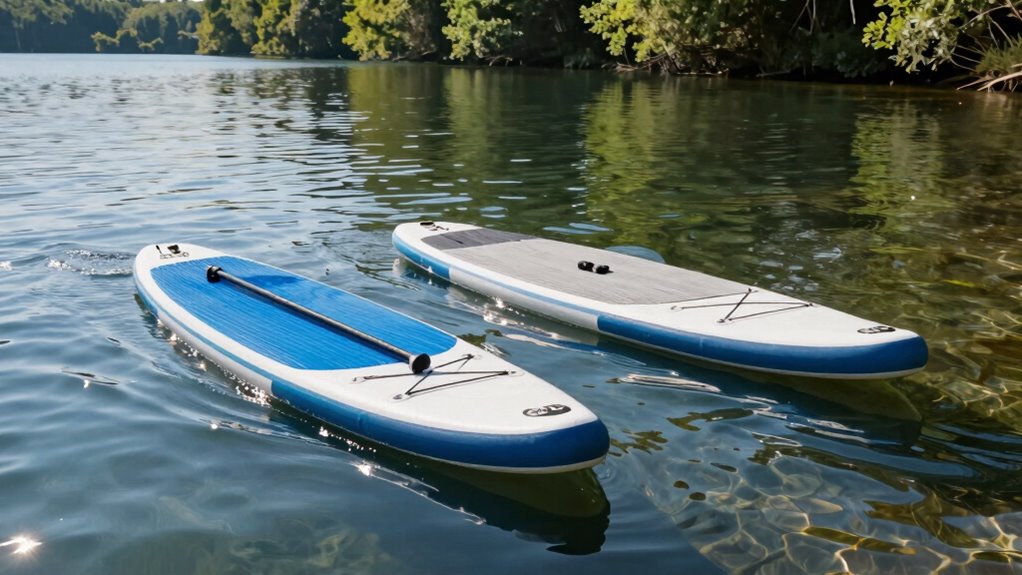
Selecting the right features is essential when choosing a touring or all-around stand-up paddleboard, as these boards are designed for different styles of paddling and conditions. For touring boards, focus on stability and glide, which help you cover long distances efficiently. All-around boards prioritize maneuverability and versatility, making them great for beginners or casual paddling. Key performance features include:
- Shape and length: Longer, narrower boards improve paddling technique and speed for touring, while shorter, wider boards enhance control for all-around use.
- Board storage options: Adequate bungee cords and storage compartments ensure you can carry gear without affecting performance.
- Construction and weight: Lighter boards enhance maneuverability, especially in varying conditions.
Who Should Consider a Touring SUP? and Who Benefits Most From All-Around Boards?
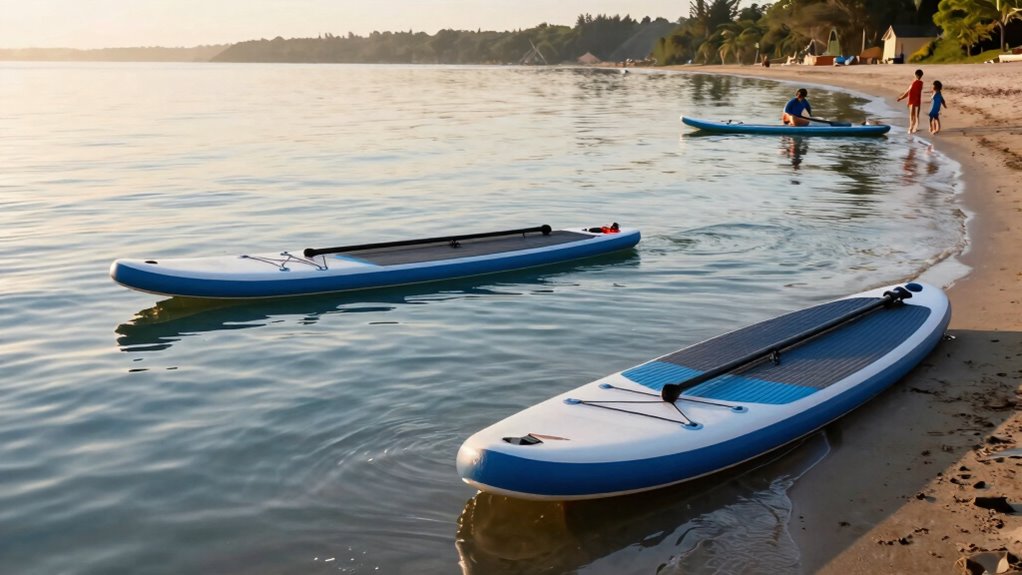
Touring SUPs are ideal for paddlers who prioritize long-distance cruising, exploring remote waterways, or multi-day trips. If you enjoy covering large distances, you’ll benefit from a board designed for stability, glide, and efficiency. These boards often come with specialized paddleboard accessories and ample storage solutions, making it easier to carry gear, food, and supplies. If you’re planning extended trips, a touring SUP helps you stay comfortable and focused on the water, without worrying about space or stability. Conversely, if you prefer casual paddling, playing around in calmer waters, or doing quick trips, all-around boards are perfect. They’re versatile, easier to maneuver, and less specialized, making them suitable for beginners and recreational paddlers alike.
How to Evaluate SUP Features and Specs for Your Needs?
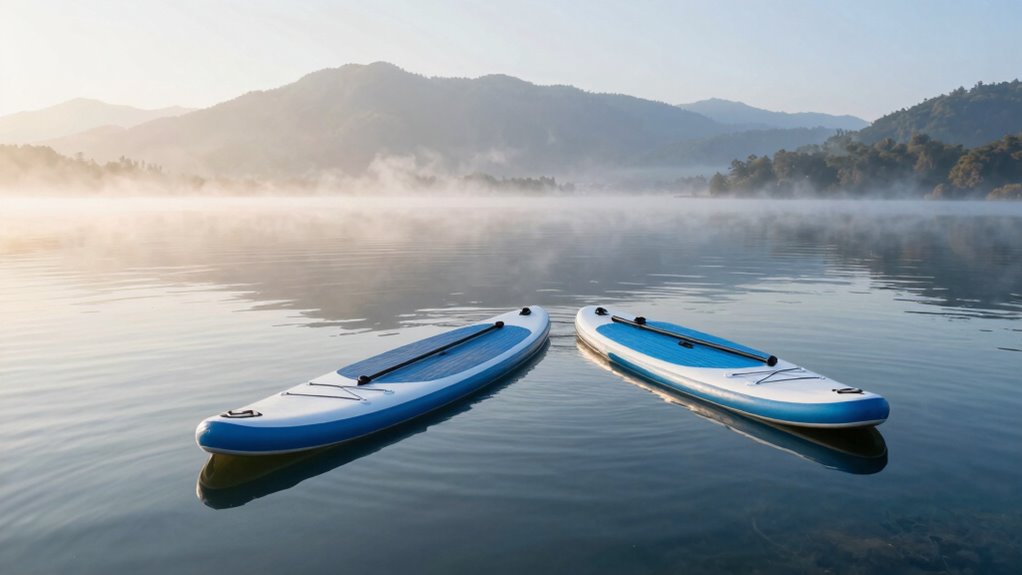
Understanding how to evaluate SUP features and specs helps you choose the board that best fits your paddling style. Focus on material durability to guarantee your board withstands regular use and environmental exposure. Consider weight considerations, as a lighter board is easier to transport but may be less stable or durable. When appraising specs, keep these points in mind:
- Material durability: Look for high-quality materials like epoxy or reinforced PVC to extend your board’s lifespan.
- Weight considerations: Balance between lightweight design for portability and sturdiness for stability.
- Size and shape: Match the dimensions to your paddling environment and skill level for optimal performance.
Common Mistakes to Avoid When Choosing Between Touring and All-Around SUPs?
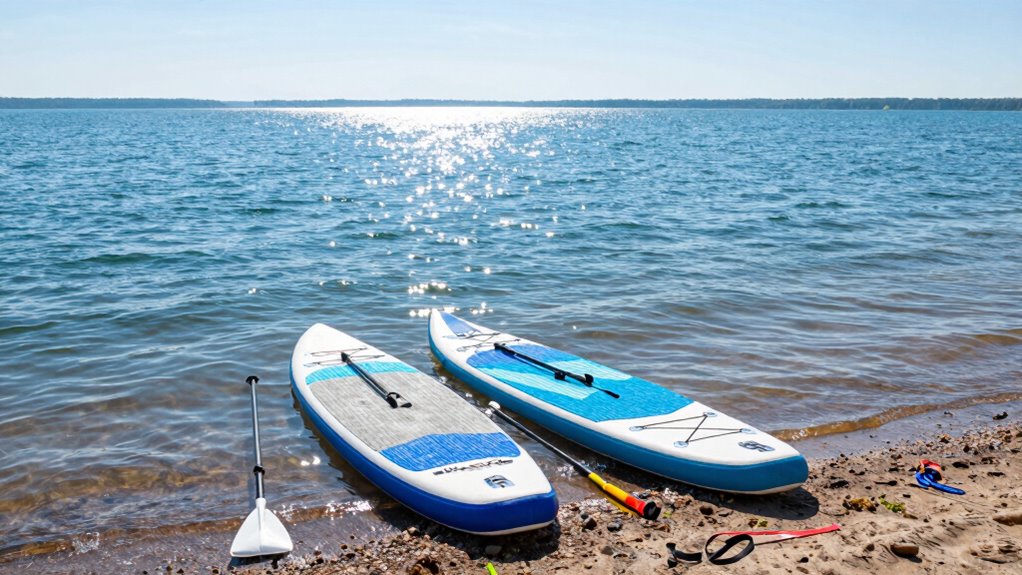
One common mistake is choosing a board based solely on its type without considering your specific paddling needs and environment. For example, a touring board isn’t ideal if you prefer calm lakes and short trips. Pay attention to paddle length; a longer paddle provides efficiency on longer tours but can be cumbersome for casual paddling. Deck padding is also indispensable—more padding offers comfort, especially on longer trips. Don’t overlook your skill level; a board with too much width or volume might be unstable for beginners. Use this quick guide to match your needs:
| Paddle Length | Deck Padding | Best Use |
|---|---|---|
| Longer for touring | Thicker for comfort | Long-distance paddling |
| Shorter for maneuverability | Less padding | Recreational cruising |
| Adjustable options | Varies | Versatile use |
Practical Tips for Transitioning From All-Around to Touring SUPS?
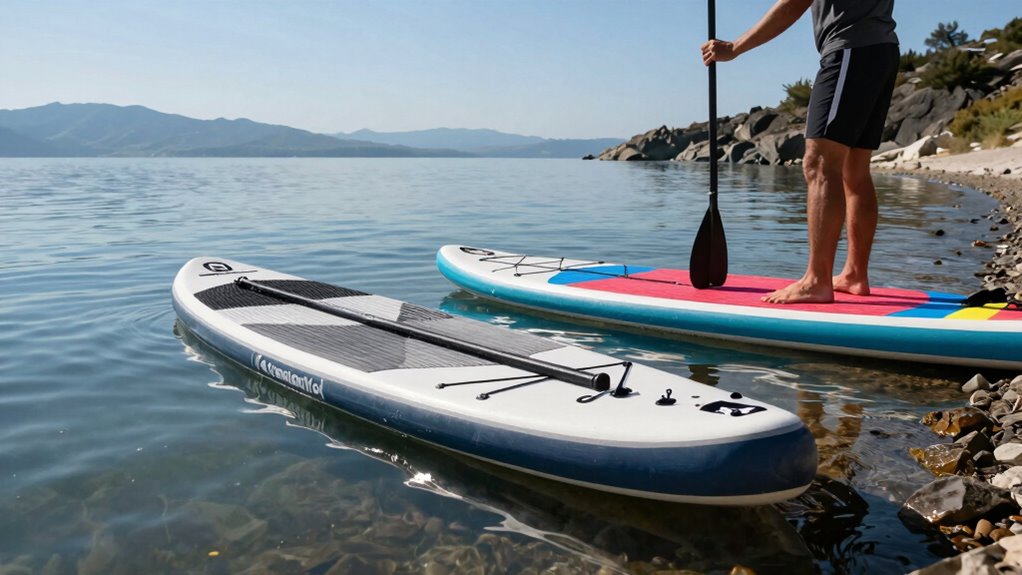
Switching from an all-around SUP to a touring board requires some adjustments to guarantee you get the most out of your new setup. First, consider your board storage options; touring boards are longer and may need more dedicated space. Next, adjust your paddle length—touring paddles are typically longer to help with efficiency over long distances. To make the transition smoother:
- Experiment with different paddle lengths to find your ideal fit
- Secure your board properly during transportation to prevent damage
- Practice paddling techniques specific to touring, like sustained strokes and straight-line tracking
These tweaks improve stability and comfort, helping you enjoy longer trips. Remember, adapting your gear and skills ensures you maximize your touring experience and truly benefit from your new SUP.
Frequently Asked Questions
How Does Board Weight Impact Touring Versus All-Around Performance?
Board weight substantially impacts your performance balance on touring and all-around SUPs. A lighter board feels more agile and easier to maneuver, enhancing your overall experience, especially on longer trips. Heavier boards, however, offer more stability but can be less responsive. Your choice should match your skill level and intended use, ensuring the board weight complements your performance goals for better control and enjoyment on the water.
Can I Use a Touring SUP in Calm Lakes or Small Rivers?
Sure, you can definitely use a touring SUP in calm lakes or small rivers—think of it as bringing a sleek cruiser to a leisurely paddle. While it’s designed for longer distances, its stability and glide make it perfect for calm water suitability and small river maneuverability. Just watch out for narrow spots or currents; its length might make tight turns trickier, but overall, it’s a versatile choice.
What Storage Options Are Available on Touring SUPS?
You’ll find various storage options on touring SUPs, including deck storage and hatch accessibility. Deck storage allows you to secure gear directly on the board’s deck, often with bungee cords, while hatch compartments provide waterproof, secure spaces underneath the deck. These features help you carry essentials like water, snacks, or safety gear comfortably and conveniently, making your paddling experience more enjoyable and organized, especially on longer trips or adventures.
Are There Specific Safety Features Unique to Each SUP Type?
Think of your SUP as a trusty sidekick with secret safety features. Touring SUPs often come equipped with emergency features like reflective stripes and extra tie-downs, making them safer for long trips. All-around SUPs emphasize safety gear like grab handles and non-slip decks for quick rescue. Both types prioritize your safety, but touring models lean into specialized emergency features for extended adventures, giving you peace of mind on the water.
How Does Paddle Length Vary Between Touring and All-Around Boards?
You’ll find that paddle length varies between touring and all-around boards to optimize your comfort and efficiency. Touring paddles are typically longer, allowing for better reach during long-distance paddling, while all-around paddles are shorter for maneuverability. Customization is key, and you should consider paddle material differences—carbon fiber offers lightweight durability, whereas aluminum is more affordable. Adjusting paddle length guarantees a comfortable stroke, making your paddling experience smoother and more enjoyable.
Conclusion
Ultimately, choosing between touring and all-around SUPs comes down to understanding your goals, matching your conditions, and prioritizing your performance needs. Whether you seek adventure, versatility, or comfort, knowing the difference helps you make smarter choices, avoid costly mistakes, and enjoy every paddle stroke more. By aligning your board with your intentions, your skill level, and your environment, you set yourself up for success, satisfaction, and endless enjoyment on the water.