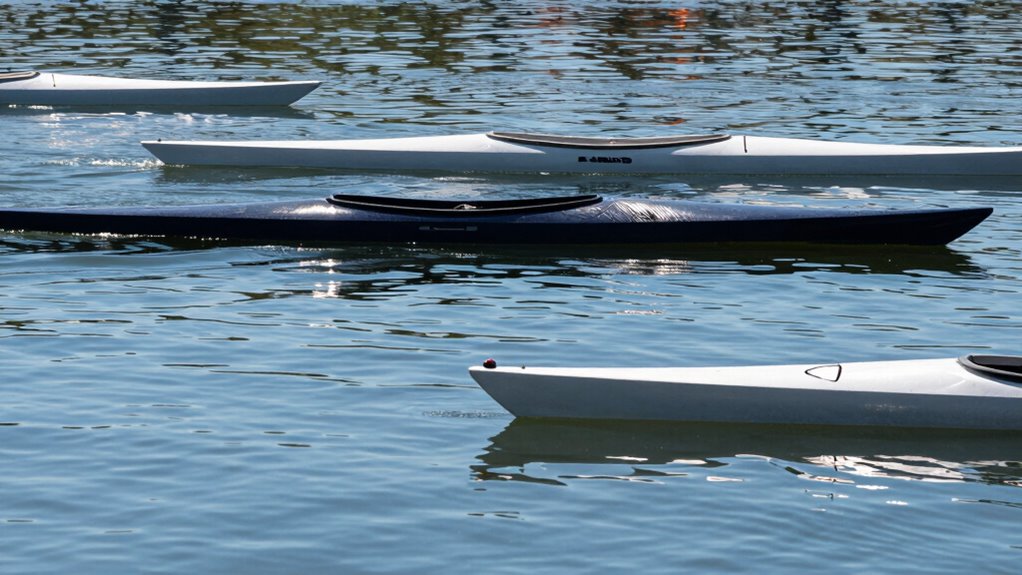

Kayak hull shapes influence how your kayak tracks and spins. V-shaped hulls slice through water smoothly, helping you go straight with less effort. Flat-bottom hulls provide stability but tend to drift and are slower. Rounded hulls turn easily and are more maneuverable but may not track as well. Your paddling style and water conditions determine which shape works best. Keep exploring to discover exactly which hull shape fits your adventure goals.
Key Takeaways
- Narrow, pointed hulls (V-shaped) improve tracking and reduce spinning by directing water flow efficiently along the kayak’s length.
- Flat-bottom hulls increase stability but can cause more water resistance, affecting straight-line tracking.
- Rounded hulls enhance maneuverability but may lead to less precise tracking, making the kayak spin more easily.
- The hull’s edge design (sharp vs. rounded) influences how water flows around the kayak, impacting stability and the tendency to spin.
- Longer, sleeker hulls tend to track straight better, while shorter, wider hulls are more prone to spinning or drifting.
Which Hull Shape Suits Your Paddling Style?
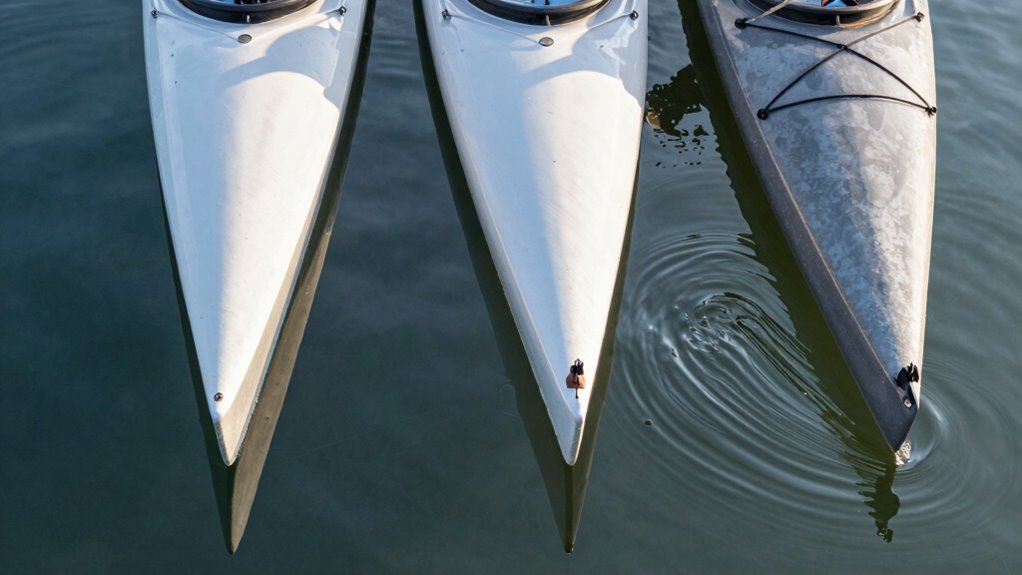
Choosing the right hull shape depends largely on your paddling style and the conditions you’ll encounter. If you enjoy kayak fishing, look for a hull that offers stability and maneuverability, so you can stand comfortably and reach your gear easily. For recreational paddling, a hull designed for balance and ease of use makes every trip more enjoyable. Flat or slightly rounded hulls provide excellent stability, helping you stay steady whether you’re casting or exploring calm waters. Narrower hulls tend to track straight and are faster, making them ideal for covering longer distances or paddling against the wind. Consider how you’ll use your kayak most often, and select a hull shape that enhances your experience, whether it’s fishing, leisurely paddling, or exploring new waters.
What Are the Main Types of Kayak Hull Shapes?
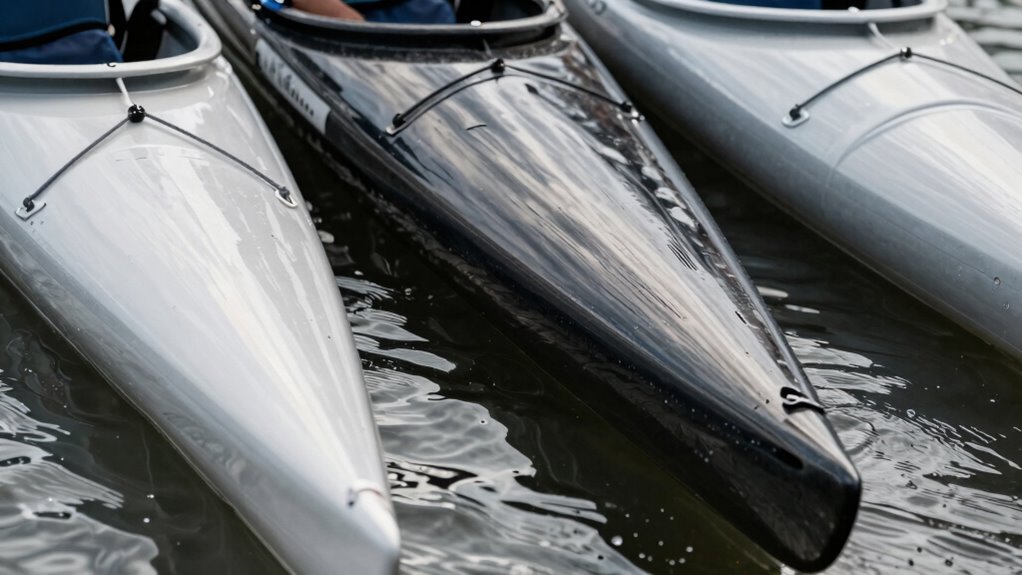
Understanding the main types of kayak hull shapes helps you choose the right boat for your needs. You’ll find differences between flat and V-shaped hulls, as well as rounded versus sharp edges, which affect stability and speed. Additionally, planning and rocker design play key roles in how your kayak handles on the water.
Flat vs. V-Shaped Hulls
When it comes to kayak hull shapes, the main differences lie between flat and V-shaped designs, each offering distinct advantages depending on your paddling needs. Flat hulls provide excellent fishing stability, making them ideal for casting and stationary activities. They tend to be more forgiving on calm water and are easier to balance. V-shaped hulls, on the other hand, excel in recreational speed and maneuverability. They cut through water more efficiently, helping you paddle faster and with less effort. The key distinctions include:
- Flat hulls offer superior stability for fishing and relaxing on calm waters.
- V-shaped hulls deliver better speed and agility for quick turns and open water paddling.
- Flat designs tend to track straight, minimizing spins.
- V-shaped hulls are more responsive but can be less stable at rest.
Rounded vs. Sharp Edges
Have you ever noticed how the edges of a kayak hull influence its performance on the water? The edge design plays a pivotal role in handling and stability. Rounded edges create a smoother, more forgiving ride, reducing drag and making the kayak easier to maneuver. They often work well with lightweight hull materials like fiberglass or plastic, which benefit from their shape’s flexibility. Sharp edges, on the other hand, enhance tracking and speed by slicing through water more efficiently. These edges are common in racing or touring kayaks, where precision matters. The hull material also affects edge durability: tougher materials like polyethylene withstand impacts on sharp-edged designs better, while softer plastics suit rounded edges for easier repair. Your choice depends on your paddling style and water conditions.
Planning and Rocker Design
What are the main types of kayak hull shapes, and how does their planning and rocker design influence performance? Planning and rocker directly affect maneuverability, stability, and speed. Different hulls incorporate specific features:
- Flat-bottom hulls offer excellent material durability and stability but have limited storage capacity and less agility.
- V-shaped hulls cut through water smoothly, enhancing speed and tracking while maintaining durability.
- U-shaped hulls provide a balance of stability and maneuverability, ideal for varied conditions and increased storage capacity.
- S-shaped or multi-chined hulls improve turning ability and agility, though they may sacrifice some straight-line tracking.
Your choice depends on your desired performance, storage capacity, and material durability, which all stem from planning and rocker design.
How Do Hull Shapes Affect Tracking and Stability?
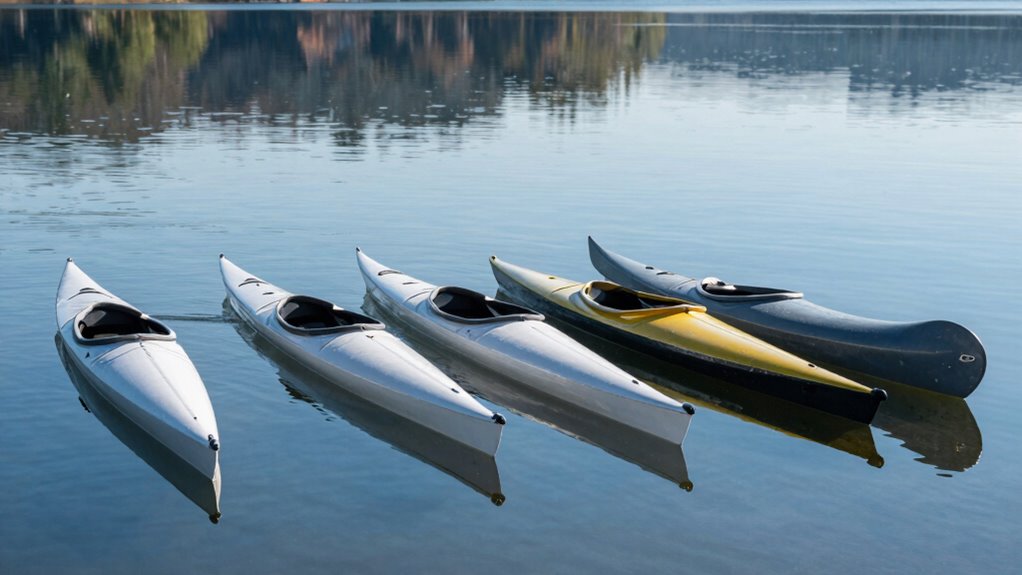
The shape of a kayak’s hull plays a vital role in how well it tracks and maintains stability on the water. A narrower, longer hull improves tracking, helping you stay straight with less effort, while a wider hull offers greater stability, ideal for beginners or recreational paddling. The hull shape influences how water flows around the kayak, affecting its tendency to spin or stay on course. Material durability also impacts performance; strong, resilient materials ensure the hull maintains its shape and tracking ability over time. Additionally, color options can sometimes aid visibility on the water, indirectly supporting safer orientation. Ultimately, choosing the right hull shape and durable materials ensures your kayak performs reliably, giving you confidence whether you’re cruising straight or steering through choppy conditions.
What Are the Key Design Features of V-Shaped (Planning) Hulls?
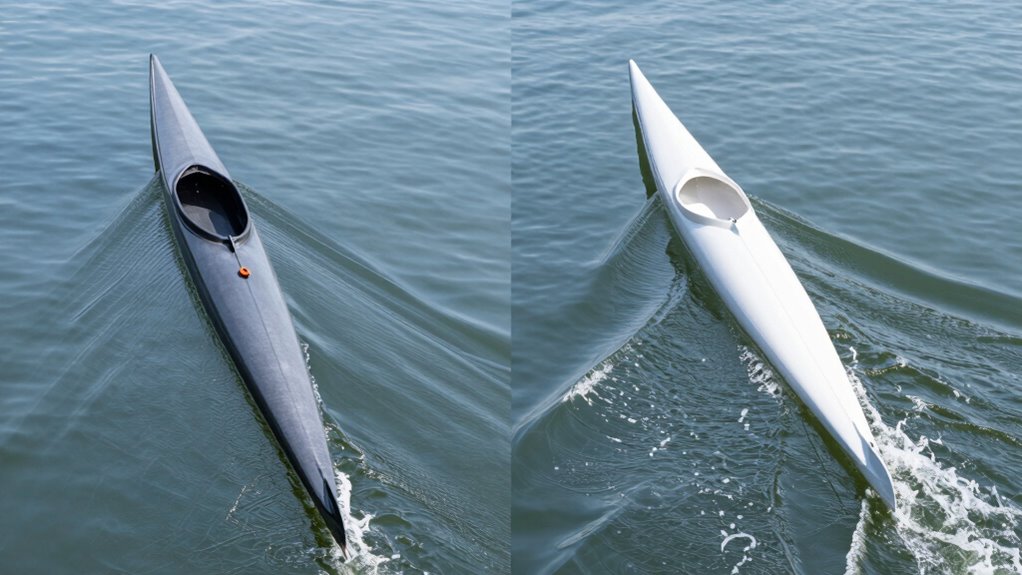
V-Shaped (Planning) hulls are designed to cut through water efficiently, providing quick acceleration and maneuverability. Their key features include:
V-Shaped hulls excel in cutting through water for swift, agile kayaking experiences.
- A sharp, pointed bow that slices water easily, reducing drag.
- Narrow, V-shaped sides that improve turning responsiveness.
- Reinforced fiber materials, such as fiberglass or carbon fiber, ensuring durability and lightweight performance.
- Varied color options that enhance visibility and personalization, often achieved through fiber reinforcement techniques that allow for vibrant, long-lasting finishes.
These design elements work together to deliver a kayak that’s agile and fast on the water. The fiber reinforcement not only boosts strength but also allows for customizable color options, making your kayak both functional and stylish.
Why Are Flat-Bottom Hulls Stable but Slower?
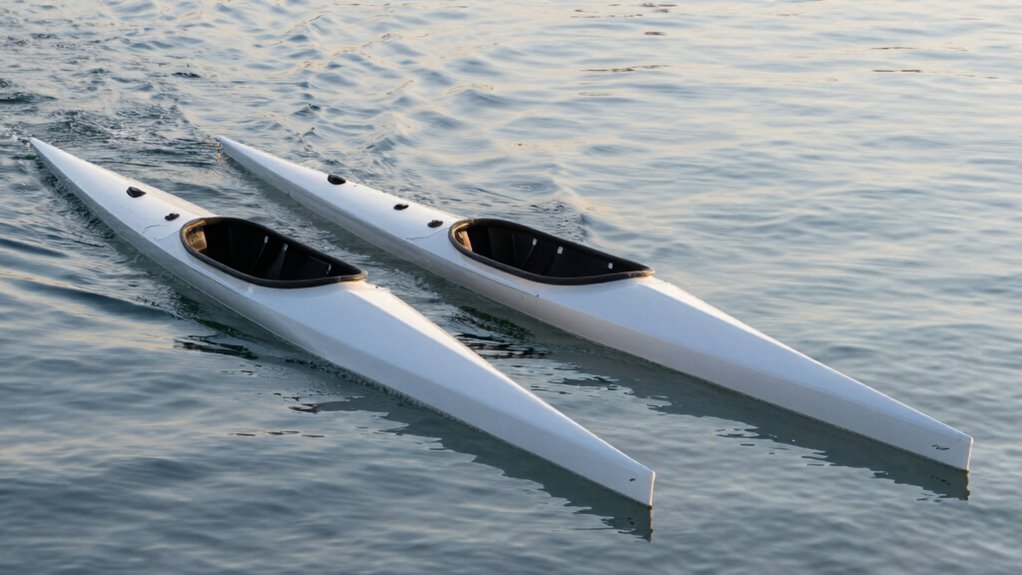
Flat-bottom hulls offer remarkable stability because their broad, flat surfaces provide a large contact area with the water, making it easier to balance, especially on calm surfaces. However, this design reduces hydrodynamic efficiency, causing the kayak to move slower through the water. The flat shape creates more water resistance as you paddle, which impacts speed. Additionally, hull material plays a role; heavier materials add to the overall weight, further decreasing speed. While flat-bottom hulls excel in stability and ease of balance, their shape isn’t optimized for speed or agility. You’ll find them ideal for beginners or calm water conditions, but if you want quick, agile paddling, other hull shapes might serve you better.
How Do Rounded and Rounded-V Hulls Improve Maneuverability?
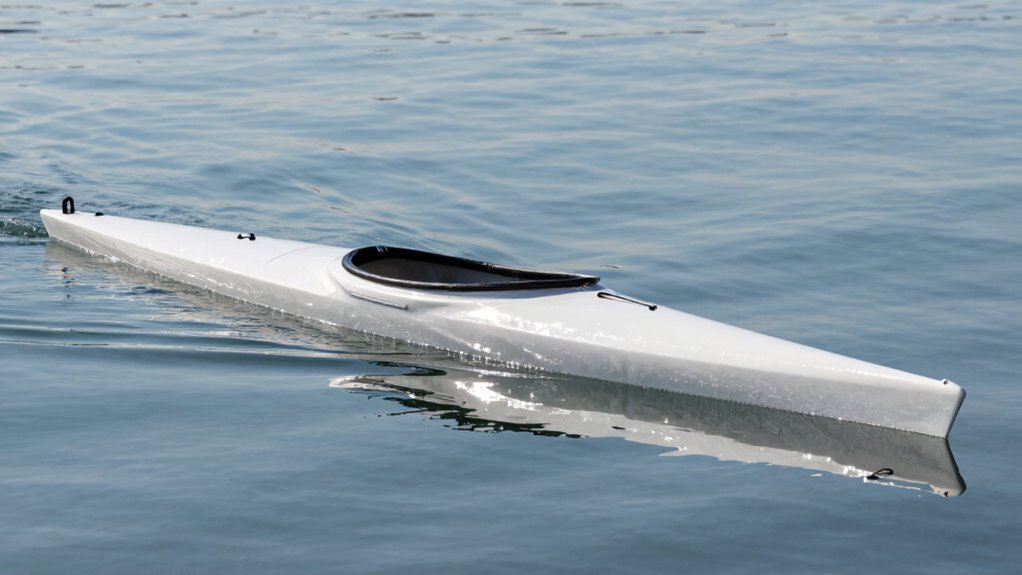
Ever wonder how rounded and rounded-V hulls enhance a kayak’s maneuverability? These hull shapes improve hydrodynamic efficiency by allowing smoother, more responsive turns. They work by reducing water resistance and increasing control, making quick adjustments easier. Consider these key points:
Rounded and rounded-V hulls boost kayak agility through smoother turns and better control.
- They facilitate sharper turns due to their curved profiles.
- The hull material properties, like flexibility, allow better responsiveness.
- Rounded shapes decrease drag, enabling faster directional changes.
- Rounded-V hulls combine stability with agility, balancing control and ease of movement.
Which Hull Shapes Are Best for Straight Tracking?
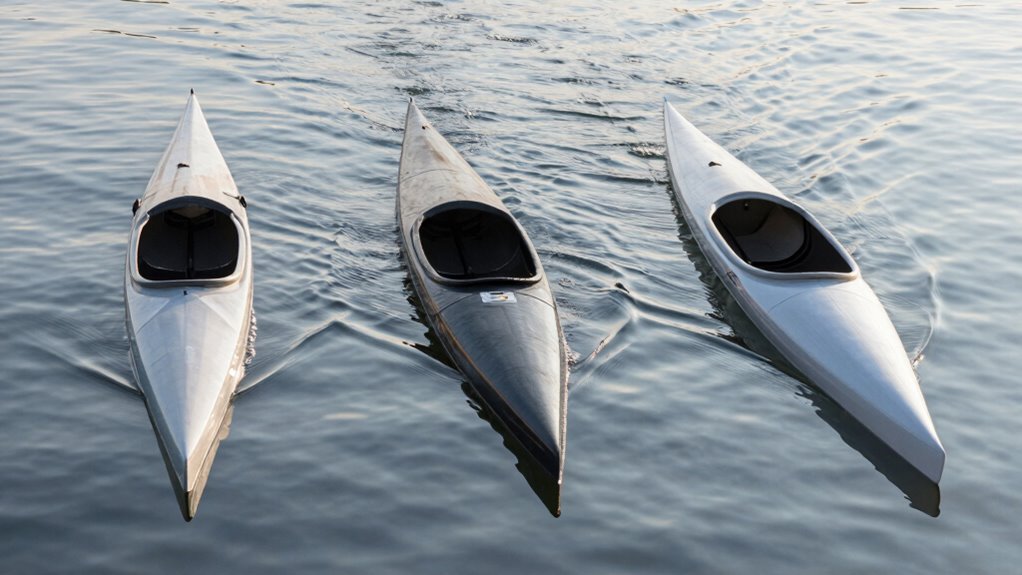
Choosing the right hull shape is key when you want your kayak to track straight and true across the water. For stability and directness, consider hulls with a V-shaped or flat bottom. These designs cut through water efficiently, helping you stay on course even in choppy conditions. Think about color options; brighter hues improve visibility, and sleek designs often include handy storage compartments for gear. A well-chosen hull fosters confidence and reduces the need for constant correction. To visualize, here’s a quick comparison:
| Hull Shape | Best for | Storage Options |
|---|---|---|
| V-shaped | Long-distance, straight tracking | Multiple compartments |
| Flat bottom | Calm water, beginner-friendly | Simple, accessible |
| Slightly rounded | Versatile, steady tracking | Secure, spacious |
How Can You Choose the Right Hull Shape for Your Goals?
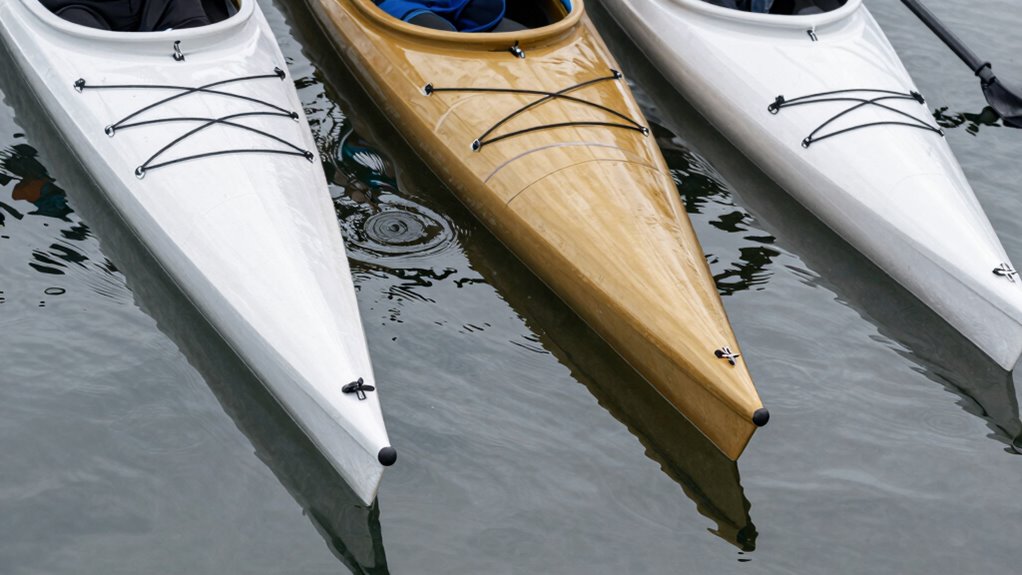
To select the right hull shape, start by defining your primary paddling goals. If you’re into fishing kayak adventures, look for designs that offer stability and ample storage. For recreational paddling, prioritize comfort and maneuverability. Consider these factors:
- Stability needs—choose wider hulls for balance during fishing or casual paddling.
- Speed requirements—sleek, narrow hulls are better for faster paddling over longer distances.
- Tracking performance—hulls with keels track straighter, ideal for steady trips.
- Handling and turning—rounder hulls excel in maneuverability, better for exploring tight spots.
Matching these traits with your activity ensures you pick a hull that enhances your experience, whether fishing, exploring, or leisurely paddling.
Tips for Maintaining and Optimizing Your Kayak’s Hull Performance
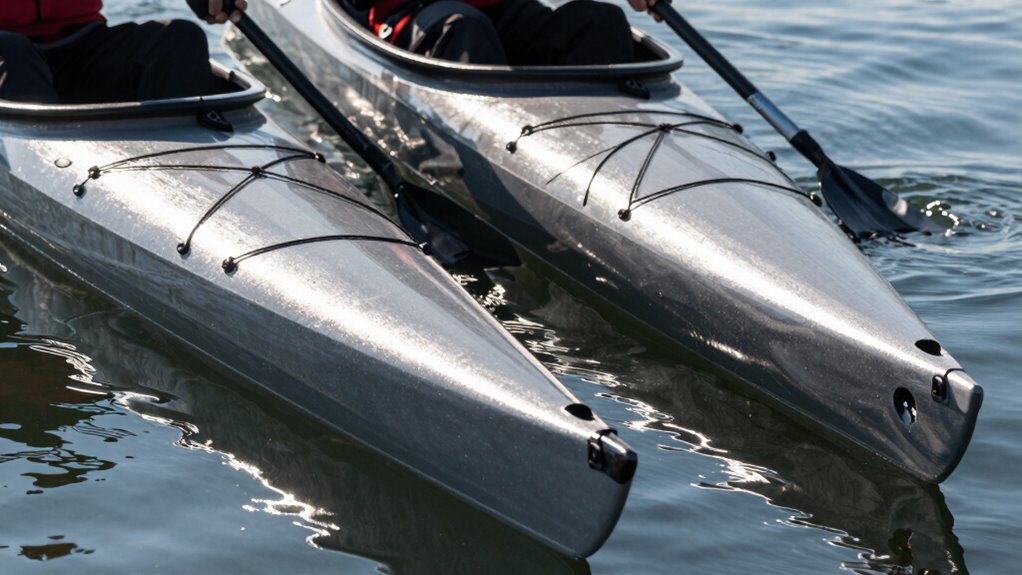
Maintaining your kayak’s hull in top condition is key to ensuring peak performance on the water. Regular kayak maintenance, including hull cleaning, helps prevent damage and keeps your kayak sliding smoothly. After each outing, rinse the hull with fresh water to remove salt, dirt, and debris that can cause erosion or reduce speed. Inspect the hull for cracks, dents, or scratches, and repair any damage promptly to avoid worsening issues. Store your kayak in a cool, dry place, ideally off the ground, to protect the hull from UV damage and warping. Applying a protective wax or polish periodically can also improve water resistance and keep the hull looking new. Consistent care guarantees your kayak performs at its best, whether you’re paddling straight or steering through tricky waters.
Frequently Asked Questions
How Do Different Hull Shapes Perform in Rough Water Conditions?
In rough water, your kayak’s hull shape markedly impacts wave absorption and stability dynamics. A rounded hull excels at absorbing waves, offering smoother rides in choppy conditions. Meanwhile, a wider, more stable hull provides better stability, preventing tipping in turbulent waters. You’ll find that these designs help you stay balanced and comfortable, allowing you to navigate rough water confidently without sacrificing control or speed.
Can a Kayak’s Hull Shape Influence Its Weight and Portability?
Imagine lifting a kayak, feeling its weight shift as you assess its portability. Yes, hull shape influences kayak weight and portability concerns; sleeker, narrower designs tend to be lighter and easier to carry, while wider, more voluminous hulls add weight. Your choice impacts how comfortably you transport it, especially over long distances or rough terrains, making hull shape a key factor in balancing performance with convenience.
Are Certain Hull Types More Suitable for Beginners or Experts?
You’ll find beginner-friendly designs like wider, stable hulls easier to control, making them perfect for novices. Expert-level hulls, such as narrow or specialized shapes, suit seasoned paddlers seeking speed and agility. If you’re just starting out, choose a hull that offers stability and ease of handling. For advanced paddlers, expert level hulls provide the performance and responsiveness needed for more challenging conditions and techniques.
How Does Hull Material Interact With Shape to Affect Performance?
Your kayak’s hull material and shape work together to influence performance. A durable hull, often made from sturdy plastic, ensures longevity and impacts how the kayak handles rough conditions. Material flexibility allows the hull to absorb shocks and adapt to water dynamics, enhancing maneuverability. Combining a strong, flexible material with the right shape gives you a balance of durability and responsiveness, making your kayaking experience smoother and more enjoyable.
What Maintenance Is Required to Keep Hull Shapes Functioning Optimally?
To keep your kayak hull shape functioning ideally, you need regular hull cleaning to remove dirt, algae, and debris that can affect performance. Additionally, applying a sealant helps protect the hull from scratches and UV damage, maintaining its shape and glide. Check for cracks or damage periodically, and store your kayak properly, avoiding prolonged exposure to harsh elements. Proper maintenance ensures your kayak remains smooth and efficient on the water.
Conclusion
Think of your kayak like a sleek boat slicing through the water’s dance. Choosing the right hull shape is like tuning an instrument—you set the tone for your journey. Whether you want to glide straight like a arrow or spin with agility, understanding these shapes helps you master your craft. With the right hull, you become the captain of your adventure, steering confidently through the rhythmic waves of your paddling voyage.