When choosing between drop-stitch and PVC inflatable kayaks, consider durability, maintenance, and your water conditions. Drop-stitch kayaks are tougher, more resistant to punctures, and excel in rough water, but they cost more and require gentle handling. PVC kayaks are lighter, easier to store, and more affordable but can be less durable over time and vulnerable to UV damage. To discover which material suits your adventures best, explore the detailed differences further.
Key Takeaways
- Drop-stitch kayaks are more durable, resistant to punctures, and maintain shape under higher pressures, making them last longer in harsh conditions.
- PVC kayaks are more susceptible to UV damage and punctures but are easier and cheaper to repair and replace.
- Drop-stitch materials generally provide better longevity due to higher tensile strength and superior rigidity over time.
- PVC’s flexibility can lead to quicker wear and tear if not properly stored and maintained, reducing lifespan.
- Overall, drop-stitch kayaks tend to last longer with proper care, while PVC models are more affordable but may need more frequent repairs.
How Are Drop-Stitch and PVC Kayaks Built?
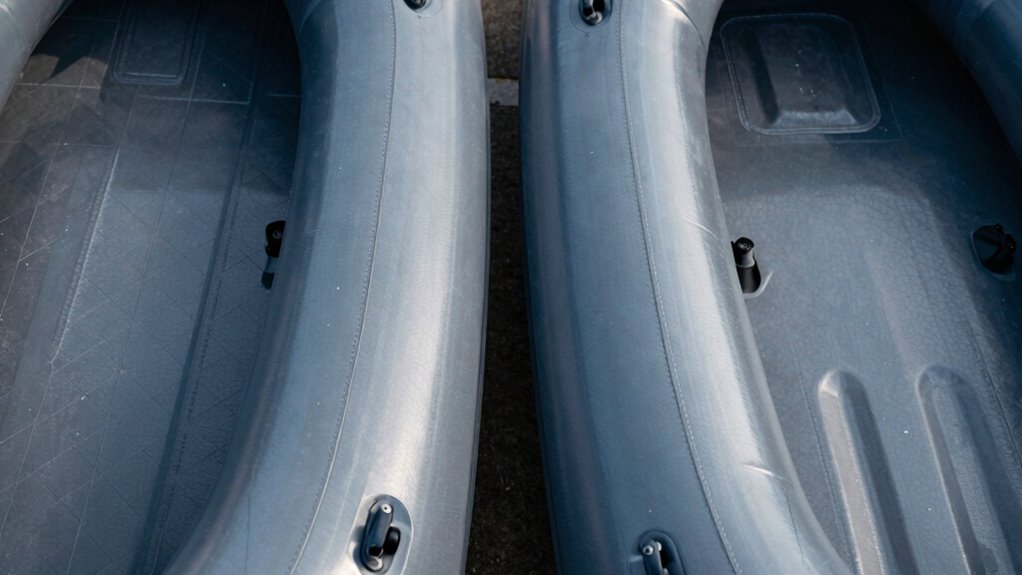
Drop-stitch and PVC kayaks are built using different manufacturing techniques that influence their durability and performance. With drop-stitch construction, the material manufacturing involves sewing thousands of tiny fibers between the top and bottom layers, creating a dense, high-pressure structure. This structural design allows the kayak to be inflated to higher pressures, resulting in a rigid, boat-like feel. PVC kayaks, on the other hand, are made by heat-welding sheets of polyvinyl chloride together, forming a seamless, flexible shell. The structural design of PVC models emphasizes flexibility and ease of manufacturing, making them more lightweight and budget-friendly. Both methods impact how the kayak handles on water, with drop-stitch offering increased stiffness and stability, while PVC provides versatility and affordability.
Which Material Is More Durable and Damage-Resistant?
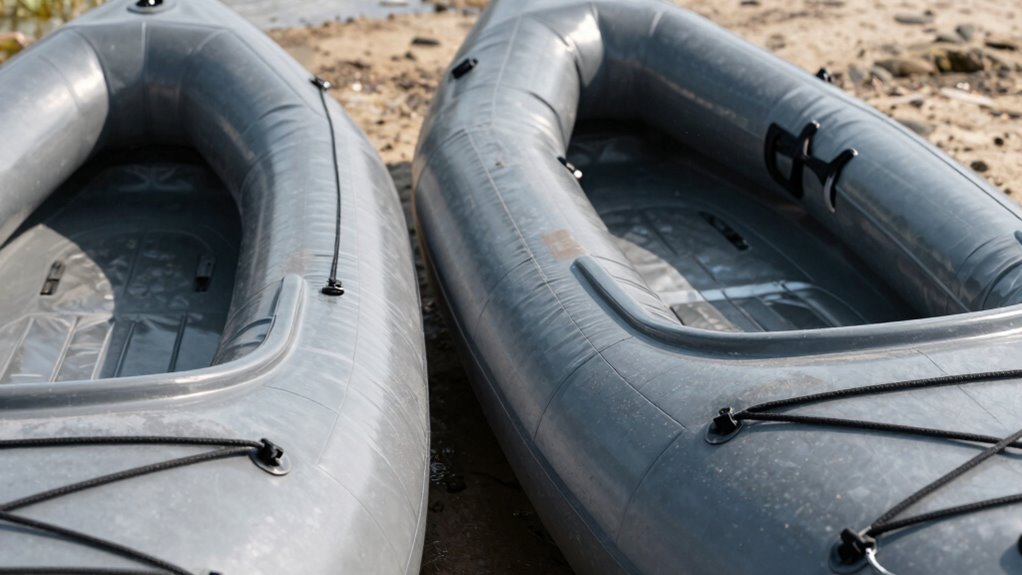
When choosing an inflatable kayak, you want a material that offers strength and flexibility to withstand rough waters. Resistance to punctures is equally important to prevent damage during your trips. Comparing these factors can help you pick a durable, damage-resistant kayak that lasts.
Material Strength and Flexibility
Choosing the right inflatable kayak material depends heavily on its durability and resistance to damage. Material strength and flexibility determine how well your kayak withstands stress and deformation. Drop-stitch construction offers high tensile strength, allowing it to handle higher air pressure without stretching or warping, which enhances stability. PVC, on the other hand, has good flexibility thanks to its material elasticity, making it resistant to cracking and tearing under normal use. With proper air pressure, both materials maintain their shape, but drop-stitch’s rigidity provides superior durability in rough conditions. PVC’s flexibility makes it less prone to damage from mild impacts. Overall, if you need a more resilient kayak that maintains form under pressure, drop-stitch is your best bet, while PVC offers decent strength with added flexibility.
Resistance to Punctures
Both drop-stitch and PVC materials offer solid resistance to punctures, but their durability varies depending on the type of impact. Drop-stitch tends to be more resistant to sharp objects because its dense fabric core adds extra protection, preventing small punctures from spreading. PVC, on the other hand, can be more vulnerable to punctures from sharp objects if not reinforced properly. However, PVC is more susceptible to UV damage, which can weaken the material over time, making it more prone to punctures and tears. To maximize durability, you should be cautious around sharp objects regardless of the material. Regularly inspecting your kayak for signs of UV damage can help prevent punctures and ensure your kayak remains damage-resistant and long-lasting on the water.
How Do Maintenance and Repairs Differ for Drop-Stitch and PVC Kayaks?

Maintenance and repairs for drop-stitch and PVC kayaks differ primarily because of their distinct construction materials and how they respond to damage. Drop-stitch kayaks tend to have more complex repair procedures due to their layered construction, making repair complexity higher. In contrast, PVC kayaks are generally easier to patch and fix because of their single-layer material. Cleaning requirements also vary; drop-stitch surfaces often need gentle cleaning to avoid damaging internal fibers, while PVC surfaces can withstand more vigorous cleaning.
Drop-stitch kayaks need gentle cleaning and professional repairs, while PVC kayaks are easier to patch and clean vigorously.
- Drop-stitch kayaks may require professional repairs for significant damage
- PVC kayaks often need simple patches for punctures
- Regular cleaning helps prolong both types’ lifespan but must be tailored to each material
How Long Do Drop-Stitch and PVC Inflatable Kayaks Last?
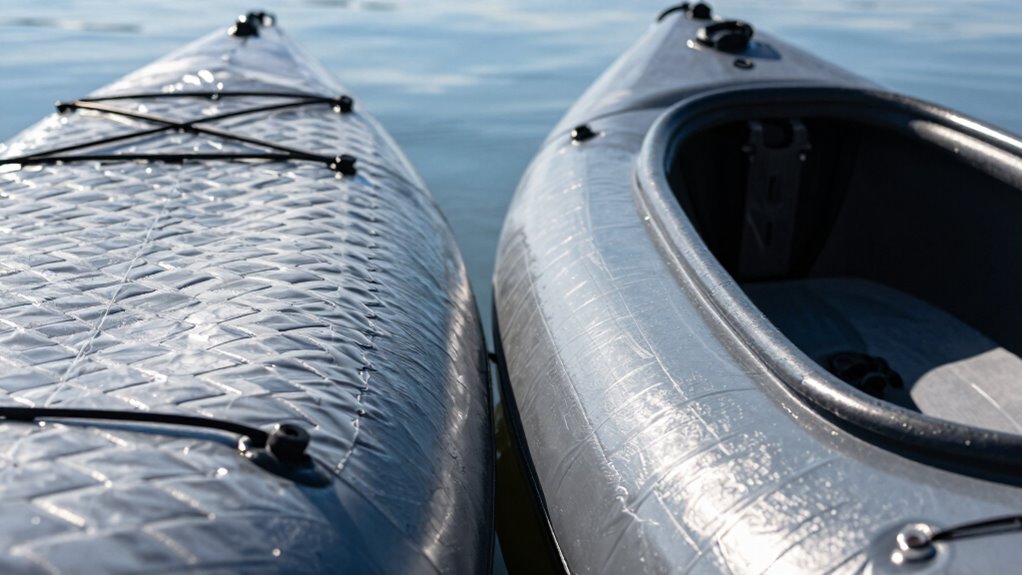
The lifespan of your inflatable kayak depends largely on the quality of its materials and how well you care for it. Drop-stitch and PVC kayaks each have different durability profiles, affecting how long they stay in top condition. Proper maintenance can extend their useful life, but understanding their inherent strengths helps set realistic expectations.
Durability and Material Quality
Drop-stitch and PVC inflatable kayaks are designed to withstand regular use, but their durability depends on quality and care. High-quality materials offer better UV resistance, protecting against sun damage and reducing color fading over time. The strength of the material influences how well your kayak resists punctures and abrasions, extending its lifespan. Properly caring for your kayak can also prevent premature wear and tear.
- Choose kayaks with reinforced seams and thicker PVC layers for added durability
- Store your kayak in a shaded, dry area to minimize UV exposure and color fading
- Regularly inspect for small tears or weak spots to catch issues early and prevent further damage
Maintenance and Longevity
With proper care, your inflatable kayak can last many years, but its longevity depends on how well you maintain it. Store your kayak in a cool, dry space away from direct sunlight to prevent UV damage, and avoid sharp objects that could puncture the material. Proper storage space, like a padded bag or a dedicated shed, helps preserve its shape and integrity. Regularly rinse off salt, dirt, and debris after each use, especially if you paddle in saltwater. Additionally, consider color options when choosing your kayak—darker shades tend to fade less over time, maintaining their appearance longer. Keeping your kayak clean, protected, and correctly stored ensures it stays durable and enjoyable for many seasons.
Are Drop-Stitch or PVC Kayaks Easier to Transport and Store?
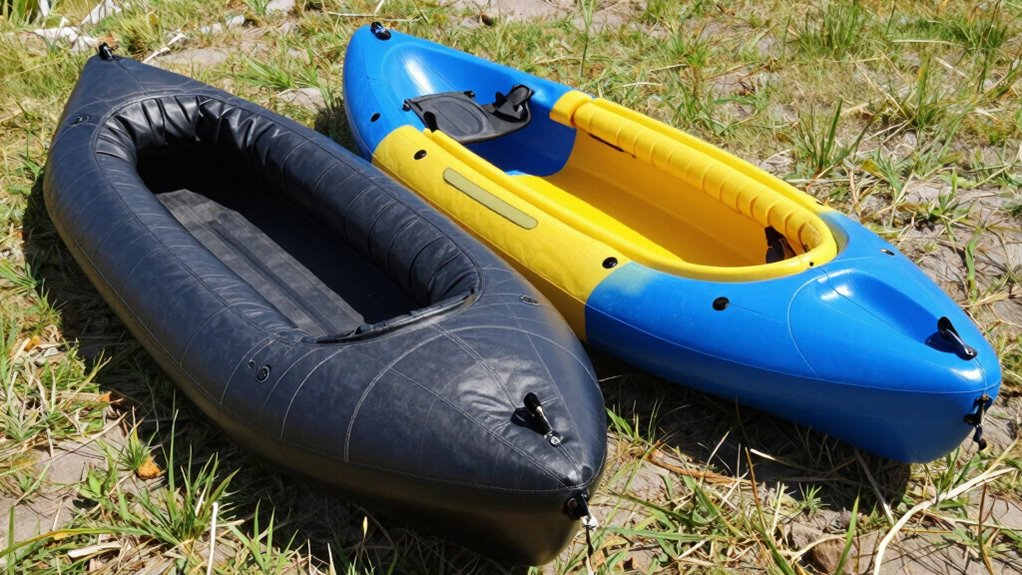
When it comes to transporting and storing inflatable kayaks, choosing the right material can make a significant difference. Drop-stitch kayaks tend to be more rigid and maintain their shape, which can make deflation and packing slightly more complex but still manageable. PVC kayaks are often lighter and more flexible, making them easier to fold and pack away for storage.
PVC kayaks are lighter, more flexible, and easier to fold for convenient storage and transport.
- Drop-stitch models offer good portability but might require more effort to deflate fully.
- PVC kayaks excel in storage simplicity, easily folding into compact sizes.
- Both materials are lightweight, but PVC’s flexibility generally makes transportation more convenient.
Ultimately, PVC kayaks usually provide better portability ease and easier storage, making them ideal if you prioritize quick setup and compact storage.
Which Material Offers Better Value and Affordability?
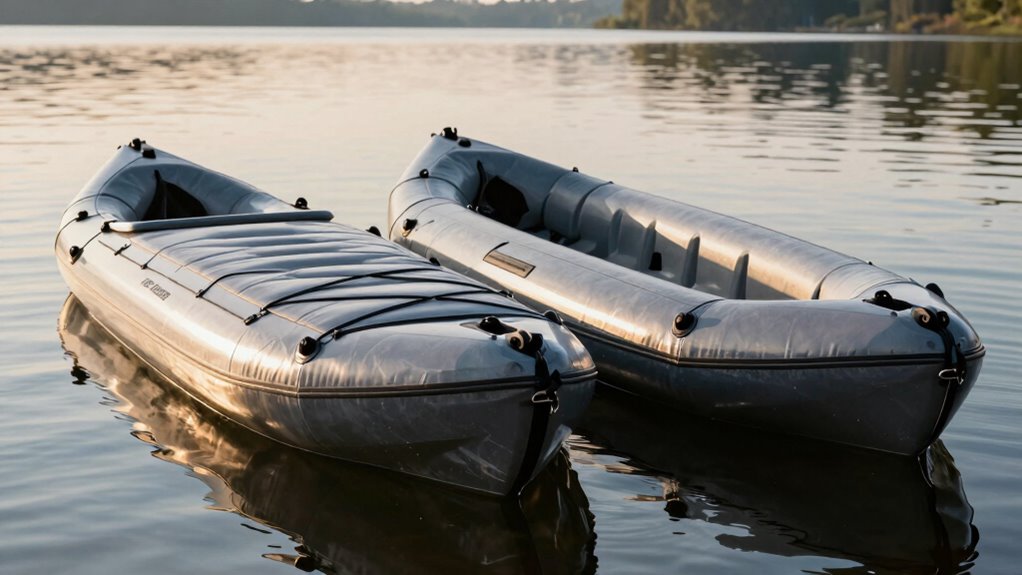
Choosing the right material for your inflatable kayak often comes down to cost and overall value. A thorough cost comparison reveals that PVC kayaks are typically more affordable upfront, making them a great choice if you’re on a tight budget. Drop-stitch kayaks, while often more expensive initially, offer better durability and performance, which can save you money in the long run. Affordability factors include not just the initial price but also maintenance costs, repair expenses, and lifespan. PVC models usually require less investment upfront but may wear out faster, leading to more frequent replacements. Conversely, drop-stitch kayaks tend to have a higher initial cost but can provide better long-term value through increased durability and longevity. Consider how much you’re willing to invest for the best overall value.
Which Inflatable Kayak Material Performs Best in Different Water Conditions?
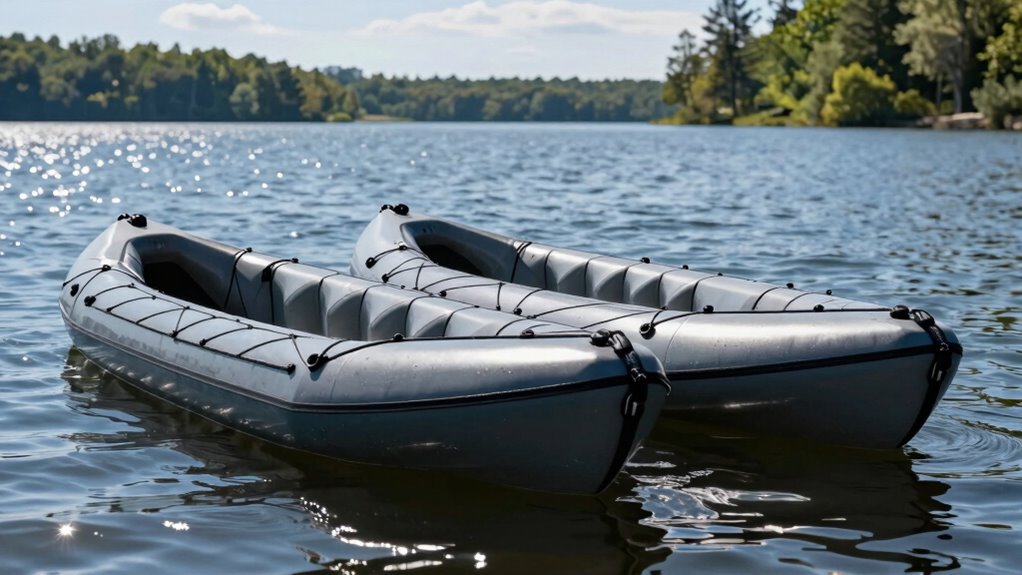
Different water conditions demand specific material qualities for inflatable kayaks to perform ideally. For calm lakes, lightweight PVC offers good flexibility and ease of storage. In rough rivers, drop-stitch materials provide superior durability and rigidity, essential for handling turbulent conditions. When paddling in saltwater, waterproofing techniques become vital to prevent damage from corrosion and moisture. Consider how your inflatable kayak’s material affects inflatable kayak storage—stiffer materials like drop-stitch are easier to pack tightly, while PVC is more flexible but less durable under stress.
- PVC works well in calm, protected waters but may struggle with abrasions.
- Drop-stitch excels in demanding environments with high durability and stiffness.
- Waterproofing techniques ensure your kayak withstands water exposure regardless of conditions.
Frequently Asked Questions
Are Drop-Stitch or PVC Kayaks More Environmentally Friendly?
Drop-stitch kayaks are generally more eco-friendly than PVC because they often use recycled materials and have a better recyclability of materials at the end of their life. PVC kayaks, however, involve more environmentally harmful manufacturing processes and are harder to recycle. If eco-friendliness matters to you, drop-stitch options tend to be a more sustainable choice, reducing your environmental impact during both production and disposal.
How Do Weight Capacities Compare Between Drop-Stitch and PVC Kayaks?
You’ll find drop-stitch kayaks typically handle higher weight capacities thanks to their superior material durability and tight construction, giving you confidence on the water. PVC kayaks, while sturdy, usually have lower weight tolerance, making them ideal for lighter loads. Imagine the difference as you paddle—drop-stitch’s strength supports bigger loads, while PVC keeps things light and nimble. Choose based on how much weight you plan to carry and your adventure style.
Can Both Materials Be Customized With Accessories or Attachments?
Both drop-stitch and PVC kayaks offer good accessory compatibility and attachment options. You can customize your kayak with gear holders, mounts, or fishing accessories, as both materials support various attachments. Drop-stitch kayaks often feature reinforced areas for added durability, making it easier to secure accessories, while PVC models have flexible surfaces. Overall, regardless of material, you’ll find plenty of options to personalize your kayak and enhance your paddling experience.
How Do Initial Costs Differ for Drop-Stitch Versus PVC Inflatables?
You might think drop-stitch inflatables are pricier initially, but a closer look shows PVC kayaks often cost less up front. While drop-stitch models tend to be more durable and resistant to punctures, their manufacturing complexity raises the price. So, your choice depends on your budget and how much durability matters. Consider the price comparison and durability factors carefully to find the right inflatable for your adventures.
Which Material Is Better Suited for Beginner Paddlers?
For beginner paddlers, PVC inflatables are better suited due to their ease of use and straightforward maneuverability. You’ll find PVC kayaks lighter and more forgiving, making them easier to handle on the water. They generally require less maintenance and are less complex to inflate and deflate, helping you gain confidence quickly. Drop-stitch kayaks, while durable, tend to be more rigid and may be slightly trickier for beginners to control.
Conclusion
When choosing between drop-stitch and PVC kayaks, you’re selecting the ultimate champion of water adventures. Drop-stitch might last longer than your favorite superhero, while PVC offers unbeatable affordability. No matter which you pick, you’ll dominate lakes, rivers, and even the wildest rapids. So gear up, paddle fiercely, and prepare for epic journeys—these materials are built to turn you into the unstoppable king or queen of the water!