
Even indoors, mistakes like storing your SUP in areas with high humidity, fluctuating temperatures, or direct sunlight can cause slow leaks over time. Rushing deflation, pinching the material, or mishandling during storage can weaken seams and valves. Using improper racks or wall mounts may put stress on the board, and neglecting regular inspections allows small leaks to go unnoticed. Keep your SUP in stable, controlled environments and handle it carefully to avoid these common pitfalls—more details await you.
Key Takeaways
- Storing the SUP in high humidity environments causes moisture seepage, weakening seams and promoting slow leaks.
- Allowing temperature fluctuations indoors leads to material expansion, contraction, and stress on seams, increasing leak risks.
- Improper inflation levels during storage put strain on valves and seams, causing slow deterioration and leaks over time.
- Failing to regularly inspect and address small leaks or seal deterioration allows leaks to worsen gradually.
- Storing the board without proper ventilation or in direct sunlight accelerates material degradation, leading to slow leaks.
Why Indoor Storage Can Still Cause Leaks in Your SUP
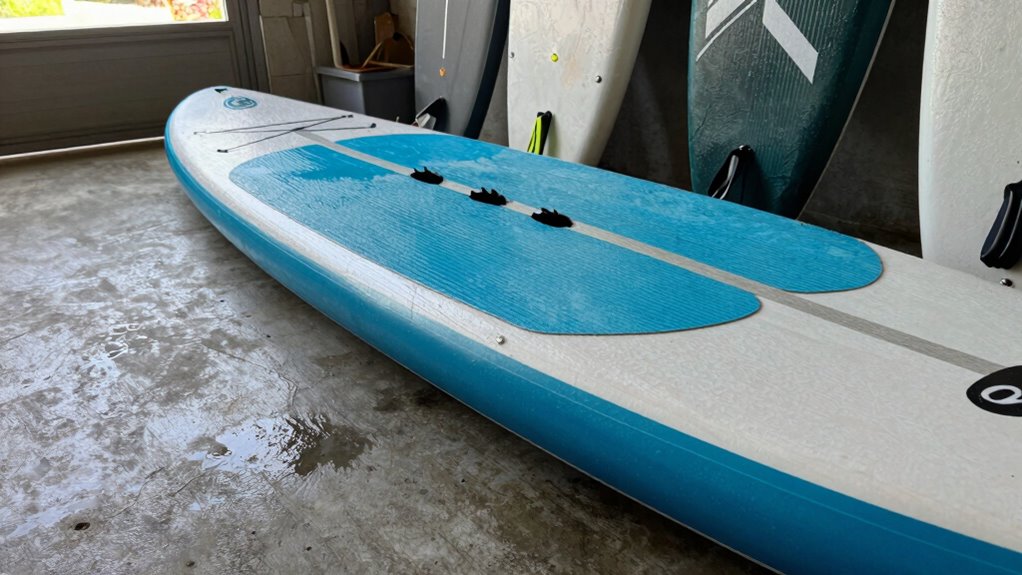
Even when you store your SUP indoors, leaks can still occur if you’re not careful. High indoor humidity can seep into your paddleboard, weakening seams and causing tiny cracks over time. Fluctuating temperatures also play a role; sudden shifts can expand and contract the materials, stressing the structure and creating weak spots. Without proper temperature control, these changes accelerate deterioration and increase the risk of leaks. Even in climate-controlled environments, maintaining consistent humidity levels and temperature is essential. If your indoor space isn’t properly ventilated or heated, condensation can form, leading to moisture buildup inside the board. Keeping your storage area stable helps preserve your SUP’s integrity and prevents slow leaks from developing unnoticed.
The Key Environmental Conditions to Keep Your SUP Safe
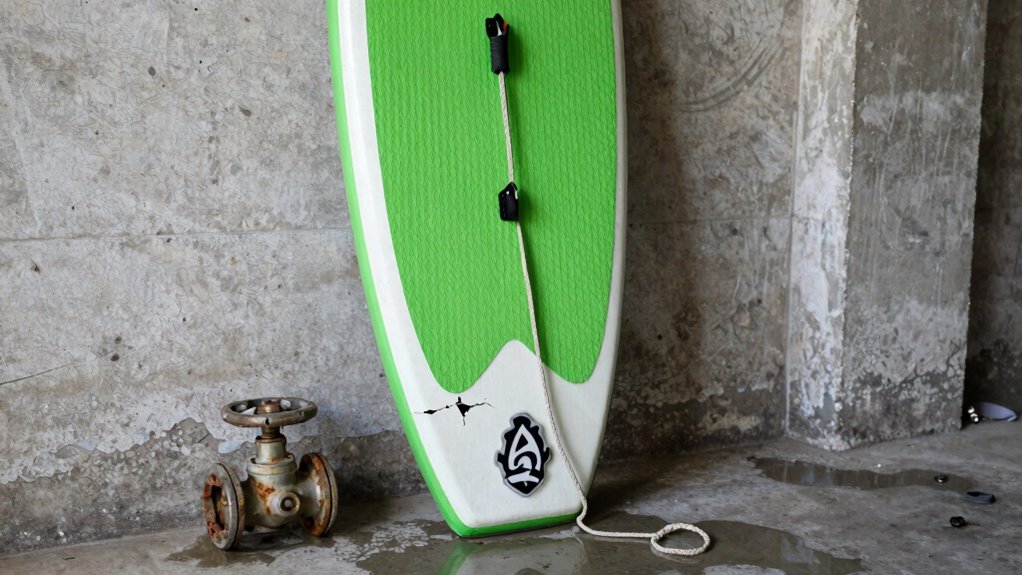
Maintaining the right environmental conditions is essential for keeping your SUP in top shape. Material durability depends heavily on avoiding prolonged UV exposure, which can weaken the board’s surface and cause cracks or leaks over time. Store your SUP in a shaded area or indoors, away from direct sunlight, especially during hot months. Temperature fluctuations can also affect the integrity of the material, so keep it in a stable environment. Humidity and moisture should be controlled to prevent mold and material degradation. Proper ventilation helps reduce moisture buildup. By managing these conditions—limiting UV exposure, maintaining stable temperatures, and controlling humidity—you protect your SUP’s structure, extend its lifespan, and prevent slow leaks caused by environmental stressors.
Common Mistakes When Deflating and Handling Your SUP
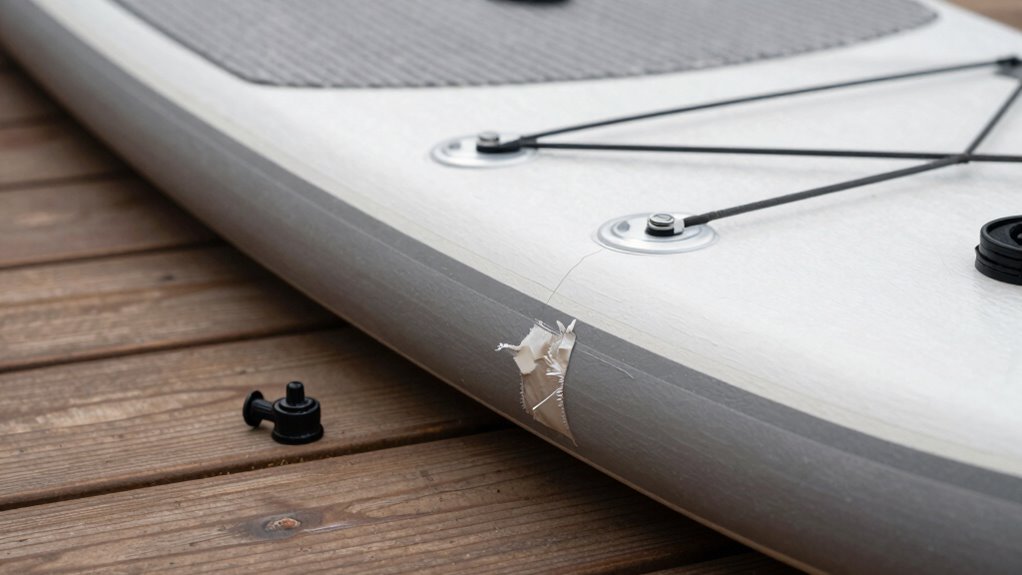
Many people make the mistake of rushing the deflation process or handling their SUP improperly, which can lead to damage. Take time to clean your board after each use; dirt and debris can cause abrasions if not removed before deflating. Avoid pinching or bending the board excessively when deflating, as this can weaken the material over time. Proper paddle maintenance is also essential—make sure to rinse it and check for cracks to prevent future issues. When deflating, do so slowly and evenly to prevent air from forcing its way into weak spots. Storing your board properly after cleaning and deflating helps maintain its integrity and prevents slow leaks caused by unnecessary stress or damage during handling.
How to Use Racks and Wall Mounts Without Damaging Your Board
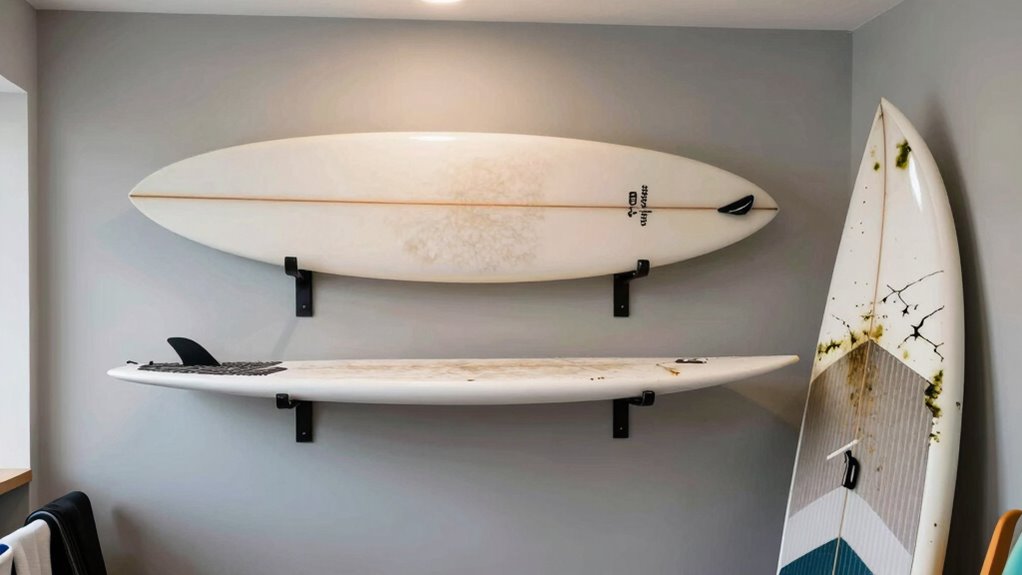
To safeguard your board when using racks and wall mounts, start by choosing proper mounting hardware that supports its weight. Make sure not to overload the rack, as excessive weight can cause damage. Securely fastening the mount to the wall ensures your board stays safe and stable over time.
Choose Proper Mounting Hardware
Choosing the right mounting hardware is essential to protect your storage board from damage. The hardware you select should support the board’s weight and ensure proper weight distribution across mounting points. Use sturdy brackets, hooks, or wall mounts designed for your board’s size and material. Avoid hardware that’s too weak or incompatible, as it can cause warping or falling. Proper mounting hardware distributes weight evenly, preventing stress points that lead to cracks or damage over time. Check weight ratings and installation instructions carefully. If your board is heavy, consider multiple mounting points to spread out the load. This not only safeguards your board but also prolongs its lifespan, ensuring it remains secure and functional indoors or outdoors.
Avoid Excessive Weight Load
Are you ensuring your storage board isn’t overloaded? Overloading can cause damage or slow leaks over time. To prevent this, pay attention to weight distribution and rack capacity. Here are three tips:
- Distribute weight evenly across the rack to avoid stress on any one point.
- Check the rack capacity and don’t exceed it; overloading weakens the board and mounting hardware.
- Regularly inspect your setup for signs of strain or sagging, adjusting the load as needed.
Securely Fasten to Walls
Properly securing your storage board to walls or racks helps prevent accidents and prolongs its lifespan. Use wall anchors suited for your wall type to guarantee a strong hold without risking damage. When mounting, place foam padding behind contact points to cushion the board and prevent scratches or dents. Avoid over-tightening screws, which can crack or warp the board’s surface. Make sure racks or wall mounts are level and securely anchored into studs or appropriate drywall anchors. Regularly check the fastenings for stability, especially after storms or impacts. Using wall anchors and foam padding correctly helps keep your board safe, minimizes damage, and ensures it stays securely in place for years to come.
Tips to Keep Your SUP Seal Tight During Storage
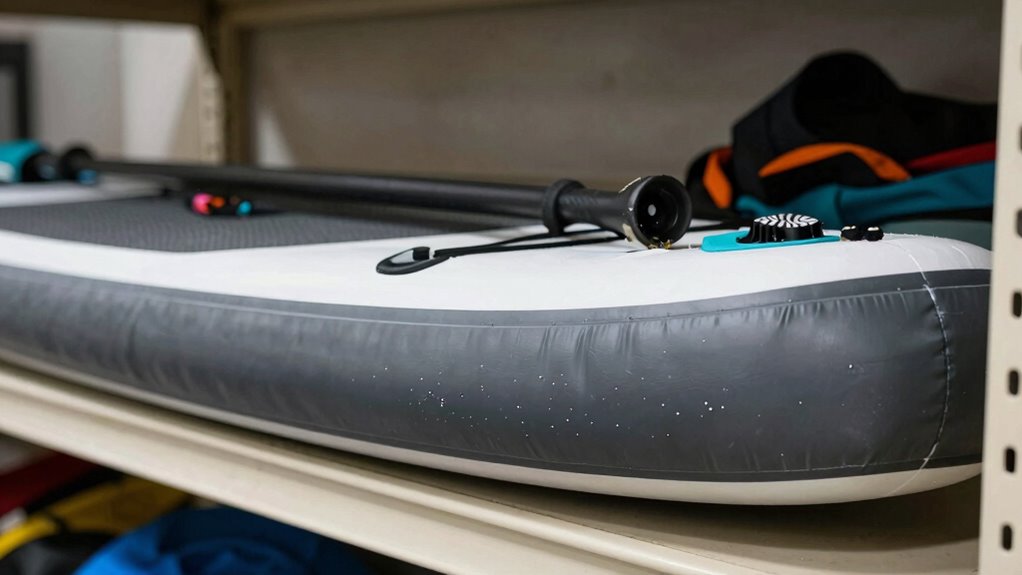
To keep your SUP seal tight during storage, make sure it’s properly inflated—not too firm or too soft. Store your board in an environment that’s cool, dry, and away from direct sunlight to prevent damage. Paying attention to these details helps maintain your board’s integrity and prolongs its lifespan.
Proper Inflation Levels
Maintaining the correct inflation level is essential for ensuring your SUP stays sealed tight during storage. Proper inflation accuracy prevents overinflation or underinflation, which can cause slow leaks over time. To keep your board in top shape, focus on:
- Regular pressure monitoring—use a reliable gauge to check your SUP’s pressure before storing.
- Avoiding overinflation—excess pressure stresses the seams and material.
- Ensuring consistent pressure—small fluctuations can lead to leaks; stay within the recommended PSI range.
Correct Storage Environment
Ensuring your SUP is stored in the right environment is essential for keeping it sealed tight. Avoid exposing it to direct sunlight, as UV exposure can weaken the material and cause leaks over time. Store your board indoors or in a shaded, covered area to protect it from harmful rays. Additionally, keep it away from temperature fluctuations; extreme heat can expand the material and compromise the seal, while cold temperatures can make it brittle. Maintain a consistent environment with moderate temperatures to prevent stress on the seams and valves. Using a dedicated storage space that’s cool, dry, and protected from direct sunlight helps preserve your SUP’s integrity. Proper storage environment is key to preventing slow leaks and extending the lifespan of your board.
Regular Inspection Tips to Detect and Prevent Leaks
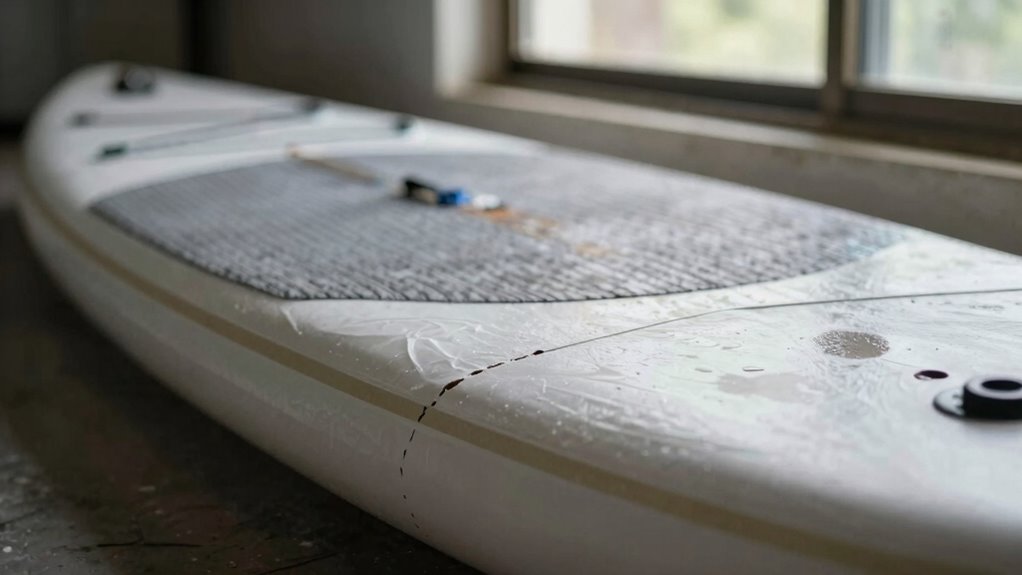
Regular inspections are essential for catching leaks early before they cause costly damage or safety hazards. To improve leak detection and keep your storage in top shape, focus on these tips:
Regular inspections prevent costly damage and safety hazards from leaks.
- Check for visible signs of moisture or corrosion around the storage area regularly.
- Listen for any hissing or dripping sounds that may indicate a slow leak.
- Inspect seals, joints, and valves for cracks or deterioration, ensuring proper storage maintenance.
Perform these inspections weekly or after any extreme temperature changes. Keep a log of your findings to notice patterns or recurring issues. Address small leaks immediately to prevent them from worsening. Consistent, proactive inspection helps you catch problems early, maintaining the integrity of your SUP storage and avoiding indoor leaks that can cause long-term damage.
Frequently Asked Questions
Can Using the Wrong Cleaning Products Damage My Sup’s Seal?
Using the wrong cleaning chemicals can definitely damage your SUP’s seal. Harsh or abrasive cleaning products may degrade the seal material, leading to potential leaks over time. To prevent seal damage, stick to gentle, recommended cleaning chemicals and avoid strong solvents or alcohol-based cleaners. Proper cleaning ensures your board remains airtight and in good condition, preventing slow leaks and extending its lifespan.
How Does Storing My SUP Near Sunlight Affect Its Longevity?
Like a fairy tale’s enchanted forest, sunlight can cast a curse on your SUP’s longevity. Storing your board near sunlight exposes it to UV damage and sunlight degradation, which weaken the material over time. This accelerates wear, fading colors, and may cause cracks or leaks. To preserve your SUP’s performance, keep it in a shaded spot, away from direct sunlight, and protect it from UV rays.
Are There Specific Wall Mounts That Are Safer for Different SUP Sizes?
Yes, there are specific wall mounts designed for different SUP sizes that guarantee safety and compatibility. You should look for a SUP rack that offers adjustable features or multiple slots to accommodate various board widths and lengths. Always check the wall mount compatibility to ensure it can handle your SUP’s weight and size. Properly installed, a suitable wall mount will keep your board secure and prevent accidents or damage.
What Are the Signs of a Slow Leak Before Water Damage Occurs?
You can spot signs of leaks early by checking for unexplained damp spots, mold, or a musty smell around your storage area. Look for small puddles or water stains on walls and floors, as these indicate early detection of a slow leak. Keep an eye on your SUP regularly, especially after storage, to catch any signs of leaks early before they cause significant water damage.
How Often Should I Perform Maintenance to Prevent Leaks?
You should perform maintenance regularly, ideally every 3 to 6 months, to prevent leaks. Stick to a consistent inspection schedule that includes checking for cracks, loose fittings, and signs of moisture around your SUP storage area. Regular maintenance frequency helps catch issues early, avoiding slow leaks that can cause water damage over time. By staying proactive, you make certain your SUP stays in good condition and prevent costly repairs.
Conclusion
Think twice before assuming indoor storage is completely leak-proof. Even small mistakes, like improper deflation or neglecting regular inspections, can cause slow leaks over time. But here’s the truth: with proper care and attention, you can keep your SUP in perfect condition and enjoy every paddle without worries. Believe it or not, a little extra effort now can save you from costly repairs later—your board’s longevity depends on it.