
When deciding between a dry suit and a thick wetsuit for cold-water diving, consider your water temperature, dive duration, and comfort. Dry suits provide better insulation, keep you dry, and are ideal for extremely cold or prolonged dives, but they can be less flexible and more expensive. Thick wetsuits are suitable for moderate cold, offer more flexibility, and are easier to manage. Understanding these differences helps you choose the best suit—explore further to find your perfect fit.
Key Takeaways
- Dry suits provide superior insulation and prevent water entry, making them ideal for extremely cold water below 50°F (10°C).
- Thick wetsuits are suitable for moderate cold water conditions when properly fitted and layered, offering flexibility and ease of use.
- Dry suits allow better buoyancy control and longer dives but are more expensive and require regular maintenance.
- Wetsuits are more affordable, simpler to don, and effective for shorter or less extreme cold-water dives.
- The choice depends on water temperature, dive duration, comfort preferences, and budget considerations.
Why Is Thermal Protection Important for Cold-Water Diving?

Have you ever wondered why thermal protection is essential for cold-water diving? It’s because maintaining proper thermal regulation is *vital* to stay safe and comfortable underwater. Without adequate insulation, your body loses heat rapidly, increasing the risk of hypothermia, which can impair judgment, slow your movements, and even become life-threatening. Cold water pulls heat away from your body much faster than air, so wearing a suitable dry suit or thick wetsuit helps preserve your core temperature. This protection allows you to dive longer without discomfort or danger. Proper thermal protection isn’t just about comfort—it’s about preventing serious health issues caused by prolonged exposure to cold water. Ensuring you stay warm helps you enjoy your dive safely and fully.
How Do Dry Suits and Wetsuits Differ in Design and Function?
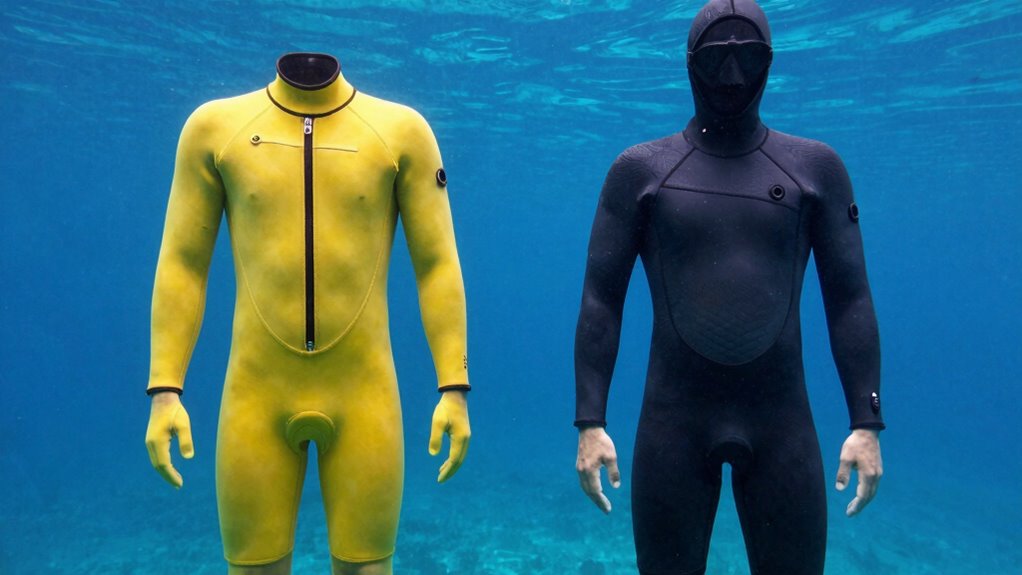
Dry suits and wetsuits are designed to provide thermal protection, but they do so in fundamentally different ways. Wetsuits use neoprene, which has low thermal conductivity, trapping a thin layer of water between your skin and the suit. Your body warms this water, providing insulation. The material’s flexibility allows for a snug fit that moves with you, making wetsuits comfortable and easy to don. Dry suits, on the other hand, are usually made from waterproof fabrics like vulcanized rubber or trilaminate materials, keeping you completely dry. They rely on layered insulation worn underneath to retain heat. Their design prioritizes sealing and durability over flexibility, so they tend to be less stretchy but offer superior waterproofing. This fundamental difference affects how each suit functions in cold water environments.
What Are the Main Benefits of Using a Dry Suit in Cold Water?

Using a dry suit in cold water offers superior insulation, keeping you warmer for longer periods. Its water-tight design prevents cold water from seeping in, enhancing comfort and safety. Plus, you’ll experience increased mobility and comfort compared to bulkier options.
Superior Insulation Properties
When diving into cold water, the superior insulation properties of a dry suit provide a significant advantage. Unlike wetsuits, dry suits are designed with materials that have low thermal conductivity, reducing heat transfer from your body to the surrounding water. The material thickness further enhances insulation, creating a barrier that traps warm air inside. This layered insulation helps you stay warmer for longer periods, even in frigid conditions. By minimizing heat loss, a dry suit ensures your core temperature remains stable, preventing hypothermia. This effective insulation also allows you to extend your dive time comfortably, making dry suits an excellent choice for cold-water exploration. Overall, the combination of low thermal conductivity and increased material thickness makes dry suits superior insulators in icy environments.
Enhanced Water Tightness
Because cold water can quickly penetrate less secure suits, the enhanced water tightness of a dry suit offers vital protection. Unlike wetsuits, dry suits are designed with seals and waterproof zippers that prevent water from entering, keeping you dry and warm. This water tightness ensures that even in frigid conditions, you stay insulated longer, reducing the risk of hypothermia. While neoprene wetsuits offer some flexibility, dry suits rely on materials that can be less flexible but provide superior water resistance. Keep in mind, suit maintenance is essential to maintain this water tightness; regular checks of seals and zippers prevent leaks. With a dry suit’s enhanced water tightness, you can confidently extend your diving or water activities into colder environments.
Increased Mobility and Comfort
While dry suits excel at preventing water from entering, they also offer notable advantages in mobility and comfort. Unlike thick wetsuits, dry suits allow you to stay dry and warm without sacrificing flexibility. This means you can move more freely, making your dives more comfortable and less tiring. Your diving gear remains lightweight and less restrictive, which is especially beneficial in colder water temperatures where bulkiness can hinder movement. The ability to customize insulation layers inside the dry suit also enhances comfort, so you’re not stuck with a rigid, uncomfortable fit. Overall, dry suits improve your overall experience by combining ease of movement with a comfortable, dry environment, allowing you to focus on exploring rather than battling restrictive gear in cold water.
Why Might a Thick Wetsuit Be Enough for Your Cold-Water Dives?

A thick wetsuit can often provide sufficient insulation for cold-water dives, especially if you choose the right material and thickness. Proper layering techniques, like adding a thin thermal vest underneath, can boost warmth without sacrificing mobility. Maintaining your suit is also key; regular suit maintenance guarantees it stays flexible and free of damage that could let in cold water. Thick wetsuits made from high-quality neoprene trap a layer of water that your body warms, creating insulation. If your dives are not extremely deep or lengthy, a well-fitting, properly maintained thick wetsuit might be all you need. It’s a practical choice, especially if you prefer simplicity and ease of use over the complexity of dry suits.
What Factors Should You Consider When Choosing Between a Dry Suit and a Wetsuit?

When choosing between a dry suit and a wetsuit, consider the water temperature you’ll encounter and how well each suits those conditions. Think about how buoyancy and mobility will affect your comfort and safety during your activities. Evaluating these factors will help you pick the gear that best fits your needs.
Water Temperature Compatibility
Choosing between a dry suit and a wetsuit largely depends on the water temperature you’ll be diving or swimming in. For colder waters, thermal regulation becomes critical, and a dry suit offers better insulation by preventing water permeability. In warmer conditions, a wetsuit allows some water exchange, helping regulate your body temperature naturally. Consider the following factors:
| Water Temperature Range | Suit Recommendation |
|---|---|
| Above 70°F (21°C) | Wetsuit, thin or no wetsuit |
| 60-70°F (15-21°C) | Wetsuit, thick or semi-dry |
| 50-60°F (10-15°C) | Thick wetsuit or semi-dry |
| 40-50°F (4-10°C) | Dry suit preferred |
| Below 40°F (4°C) | Dry suit with thermal undergarments |
Understanding water permeability and how your suit manages thermal regulation helps you stay comfortable and safe.
Buoyancy and Mobility
Since buoyancy and mobility are essential for a comfortable and safe dive, understanding how your suit impacts these factors helps you make an informed choice. A dry suit generally offers better thermal regulation, keeping you warm without adding bulk, but it can be less flexible, affecting your suit flexibility and movement. Wetsuits, especially thicker ones, provide more natural flexibility, allowing easier movement and better buoyancy control through your body’s natural position in the water. Consider how important precise buoyancy control and ease of movement are for your diving style. If you value thermal regulation and staying warm with less effort, a dry suit might be better. If mobility and suit flexibility are top priorities, a wetsuit could suit your needs better.
How Comfortable and User-Friendly Are Dry Suits Compared to Wetsuits?

Dry suits tend to be less comfortable and more challenging to use than wetsuits, especially for beginners. They can restrict movement and require proper fitting to prevent leaks, impacting your overall thermal comfort. Donning a dry suit often involves more effort, making the user experience less intuitive than slipping into a wetsuit. Wetsuits mold closely to your body, providing warmth with minimal fuss, which many find more comfortable over extended periods. Dry suits, while offering superior insulation in cold water, may feel bulky and less flexible, especially during quick movements. If you’re new to diving or snorkeling, this added complexity can affect your confidence and enjoyment. Overall, wetsuits tend to be more user-friendly, delivering a more comfortable and straightforward experience in cold water conditions.
What Are the Cost Differences Between Dry Suits and Wetsuits?
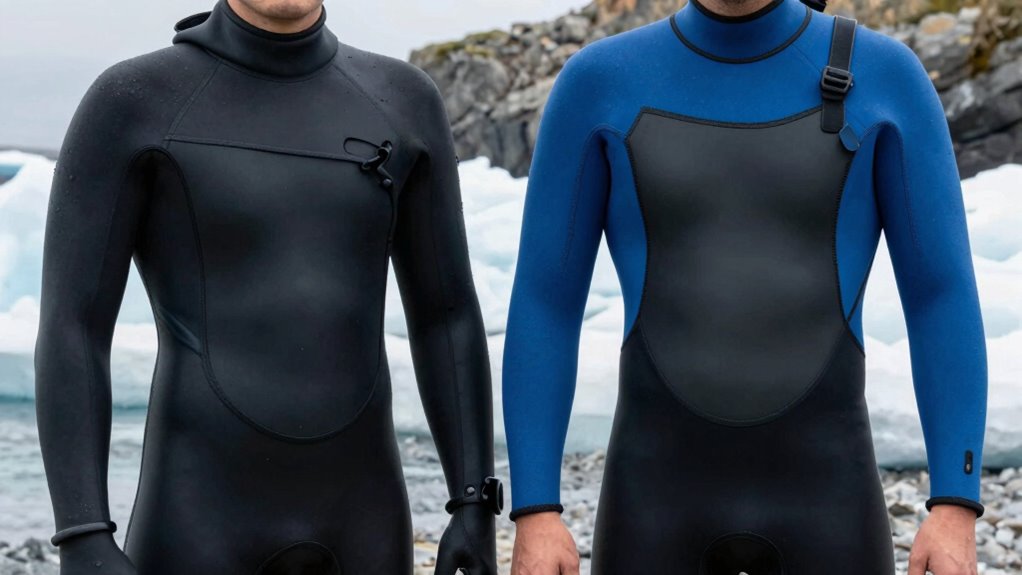
The cost difference between dry suits and wetsuits can be significant, impacting your overall budget for water gear. Typically, dry suits are more expensive upfront, often costing between $1,000 and $3,000, while wetsuits range from $200 to $600. When considering a cost comparison, remember that dry suits usually have higher maintenance expenses due to specialized parts and periodic repairs. Additionally, dry suits require more careful storage and regular inspections to prevent leaks. Wetsuits, on the other hand, generally have lower maintenance costs but may need replacing more frequently as they wear out.
- Dry suits often involve higher initial investment
- Maintenance expenses are particularly greater for dry suits
- Wetsuits are cheaper upfront but may need frequent replacement
How Do Dry Suits and Wetsuits Affect Safety and Buoyancy Control?
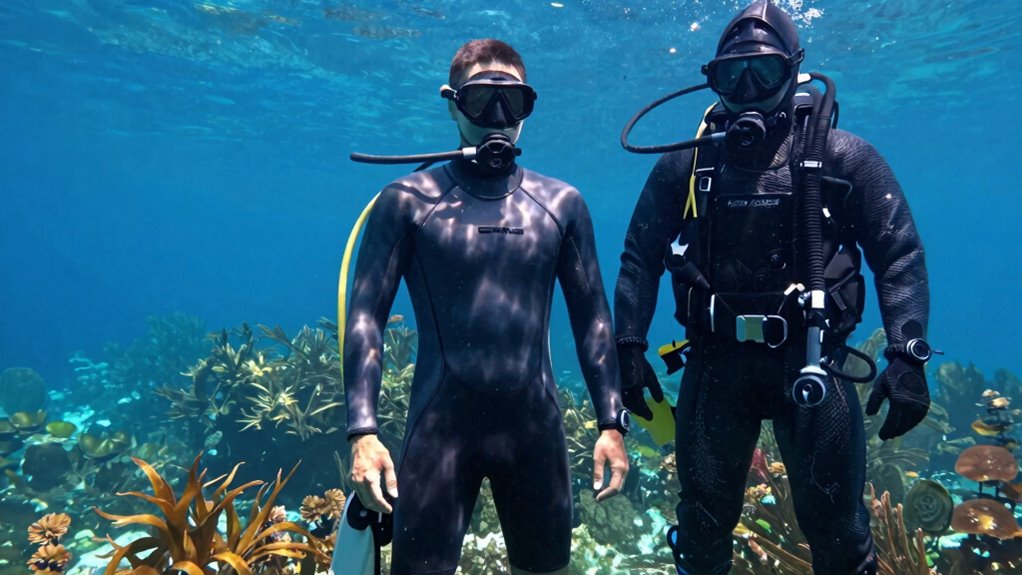
Your choice between a dry suit and wetsuit directly impacts your safety and buoyancy control. Dry suits offer more precise buoyancy adjustments, while wetsuits rely on thickness and fit. Additionally, each suit type affects how you use safety equipment like buoyancy compensators or signaling devices.
Buoyancy Impact Differences
While dry suits and thick wetsuits both help keep you warm, they influence buoyancy in different ways, impacting your safety and control underwater. Dry suits are typically less compressible, maintaining consistent buoyancy because their material flexibility minimizes changes in volume as you descend. Conversely, wetsuits compress with depth, reducing buoyancy and requiring you to add buoyancy control devices. The thermal conductivity of dry suits allows for better insulation without sacrificing buoyancy stability, while wetsuits can become more rigid when compressed, affecting your movement. Understanding these differences helps you manage your buoyancy more effectively.
- Dry suits offer stable buoyancy due to less compression.
- Wetsuits require adjustment as they compress at depth.
- Material flexibility influences how buoyancy shifts during the dive.
Safety Equipment Compatibility
Dry suits and wetsuits each interact differently with safety equipment, affecting your ability to maintain control and respond effectively in emergencies. With dry suits, you can wear additional thermal layering underneath, which can influence the fit and accessibility of your diving gear. This extra insulation offers better thermal protection but may require adjustments to your gear setup to ensure quick access in emergencies. Wetsuits, on the other hand, rely on water-filled chambers for insulation, so they typically fit more snugly, making it easier to don and doff safety equipment quickly. Both suit types impact how comfortably you can wear safety gear like knives, lights, and gauges. Understanding how your suit interacts with your diving gear ensures you maintain safety, buoyancy, and quick response times underwater.
When Is a Dry Suit the Best Choice for Cold-Water Diving?
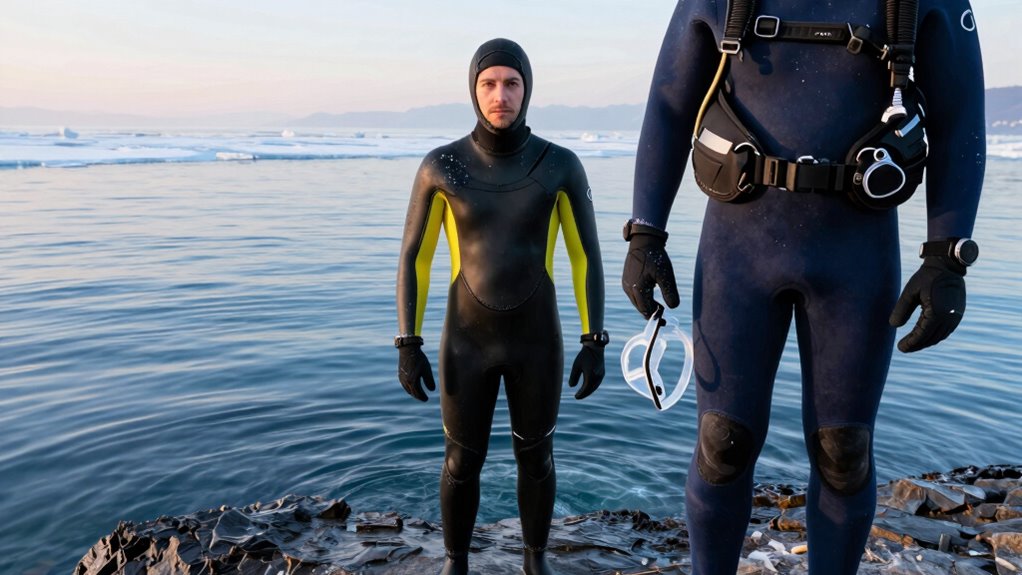
Ever wondered when a dry suit is the best choice for cold-water diving? You should consider it when maintaining warmth requires more than just adjusting thermal layers or increasing wetsuit thickness. Dry suits excel in scenarios where water temperatures are consistently below 50°F (10°C) or when extended dive times demand superior insulation. They are ideal if you need to prevent water entry entirely, especially in turbulent or highly variable conditions. Additionally, dry suits are better suited for divers with allergies or sensitivities to neoprene, as they allow for customizable undergarments. You might also prefer a dry suit if your dive involves frequent surface intervals or multi-day trips, where keeping dry helps preserve comfort and warmth. Overall, dry suits are the top choice when maximum thermal protection and versatility are essential.
When Is a Thick Wetsuit Sufficient for Staying Warm Underwater?
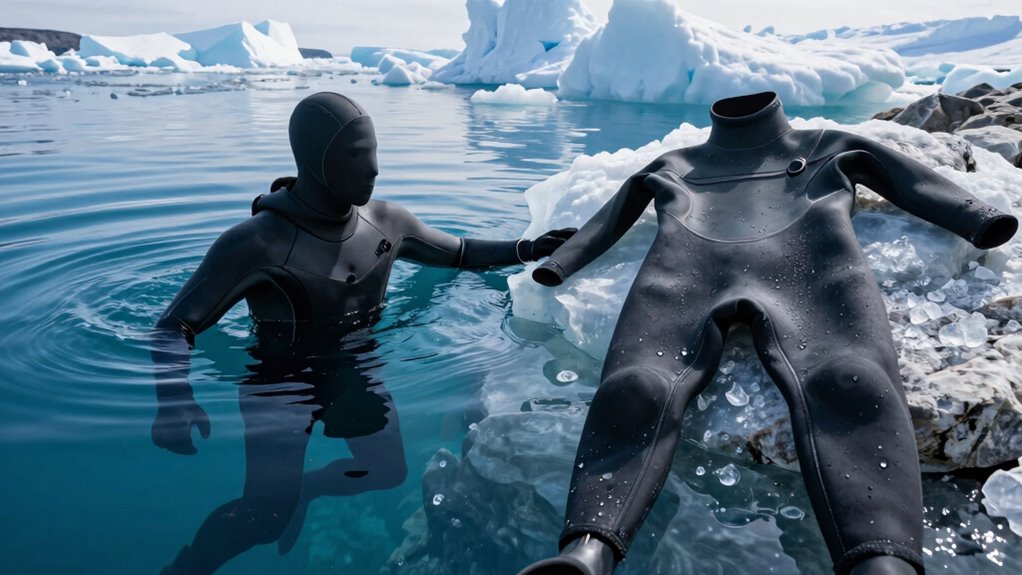
A thick wetsuit can be a practical choice for staying warm underwater when water temperatures are moderate to cold but not extreme. It provides effective thermal layering, trapping body heat to keep you comfortable during dives. When choosing a thick wetsuit, guarantee it fits snugly without restricting movement, maximizing insulation. Proper suit maintenance is essential; rinse it thoroughly after each dive to prevent wear and tear, and store it in a cool, dry place. Regularly inspect for any damage or deterioration that could compromise its thermal properties. If your diving conditions are consistently within the suit’s temperature range, a thick wetsuit offers reliable warmth without the added bulk of a dry suit. This makes it ideal for many recreational cold-water divers.
Frequently Asked Questions
How Do Dry Suits Impact Mobility and Flexibility Underwater?
Dry suits can limit your mobility and flexibility underwater due to their design, which creates mobility restrictions. The bulkiness of a dry suit often results in flexibility limitations, making it harder to move freely compared to a wetsuit. However, with proper fit and practice, you can minimize these restrictions and still enjoy a comfortable diving experience. Just be aware that dry suits generally require an adjustment period for peak mobility.
What Maintenance Is Required for Dry Suits Versus Wetsuits?
Did you know dry suits last up to five times longer with proper care? You should regularly inspect for suit repairs, especially seals and zippers, and clean your dry suit after each use to prevent damage. For storage tips, hang your dry suit in a cool, dry place away from direct sunlight. Wetsuits require less maintenance—just rinse, dry, and store flat or on a hanger. Proper upkeep guarantees longevity for both.
Are Dry Suits Suitable for Beginner Cold-Water Divers?
Dry suits can be suitable for beginner cold-water divers, but consider the dry suit cost and your comfort level. They offer excellent insulation and dry warmth, especially in very cold water. However, they tend to be more expensive and require more maintenance than wetsuits. If you’re new, a thick wetsuit might be easier to start with, but if you plan for colder conditions, investing in a dry suit could be worthwhile once you’re comfortable diving.
How Do Dry Suits Perform in Extreme Cold Conditions?
Did you know that dry suits maintain warmth even in water temperatures below 32°F? They excel in extreme cold conditions because of their superior thermal insulation and water resistance. You’ll stay dry and warm, as dry suits prevent water from contacting your skin, unlike wetsuits. This makes them ideal for prolonged exposure in freezing water, ensuring you remain comfortable and safe during your dives in the harshest environments.
Can Wetsuits Be Customized for Better Fit and Comfort?
You can definitely customize wetsuits for better fit and comfort through wetsuit tailoring and neoprene modifications. By adjusting seams, adding panels, or inflating certain areas, you guarantee a snug, comfortable fit. Neoprene modifications like thicker or more flexible panels help enhance mobility and insulation. These customizations make your wetsuit more comfortable, improve performance, and keep you warmer in cold water, so you can enjoy your dives or surf sessions even longer.
Conclusion
Choosing between a dry suit and a thick wetsuit boils down to your diving needs and the coldness of the water. Think of your gear as your armor against the chill—each option offers its own shield. By understanding their differences, you can select what’s best for your safety and comfort. Remember, the right suit isn’t just clothing; it’s your partner in turning icy depths into warm, inviting worlds waiting to be explored.